

Most single-use coffee packaging ends up in landfills, but compostable alternatives are changing the game in both American and global markets. With more than 95 million cups of coffee consumed every day in the United States alone, eco-conscious millennials and Gen Z consumers want practical ways to reduce waste. This guide explains how compostable coffee packaging breaks down naturally, the materials behind it, and the certifications to look for as you search for truly sustainable choices.
Table of Contents
- What Is Compostable Coffee Packaging?
- Types of Compostable Coffee Packaging Materials
- How Compostable Packaging Breaks Down Naturally
- Certifications and Global Legal Requirements
- Comparing Compostable vs. Recyclable Packaging
- Practical Disposal and Common Pitfalls
Key Takeaways
| Point | Details |
|---|---|
| Compostable Packaging Benefits | Compostable coffee packaging breaks down entirely in industrial composting facilities, reducing landfill waste and supporting environmental sustainability. |
| Material Types | Common compostable materials include Polylactic Acid (PLA) and cellulose-based products, offering diverse properties for functional packaging. |
| Composting Types | There are two main composting types: industrial and home compostable, each with different breakdown times and requirements. |
| Disposal Challenges | Proper disposal of compostable packaging requires awareness of local composting facilities and their specific guidelines to maximize environmental benefits. |
What Is Compostable Coffee Packaging?
Compostable coffee packaging represents an innovative solution to the growing environmental challenge of single-use packaging waste in the coffee industry. Unlike traditional plastic or aluminum packaging that ends up in landfills, compostable materials break down completely in industrial composting facilities, transforming into nutrient-rich organic matter.
At its core, compostable coffee packaging is designed to mimic natural decomposition processes. These specialized materials are typically crafted from plant-based sources like corn, sugarcane, or bamboo fibers that can fully disintegrate within 180 days under controlled composting conditions. Research from Wageningen University reveals that compostable bio-based coffee capsules offer the most environmentally sustainable packaging option, significantly reducing greenhouse gas emissions compared to conventional packaging.
The key characteristics of compostable coffee packaging include:
- Total biodegradability in industrial composting facilities
- Minimal environmental contamination
- Reduction of long-term waste accumulation
- Support for circular economy principles
- Potential for organic material regeneration
Pro tip: Check your local composting facility’s specific requirements before disposing of compostable packaging to ensure proper breakdown and maximum environmental benefit.
Types of Compostable Coffee Packaging Materials
Compostable coffee packaging represents a diverse array of innovative materials designed to address the environmental challenges of traditional single-use packaging. Researchers have discovered promising bioplastic solutions derived from coffee industry by-products, including unexpected sources like coffee flour, mucilage, husks, silverskin, and spent coffee grounds.
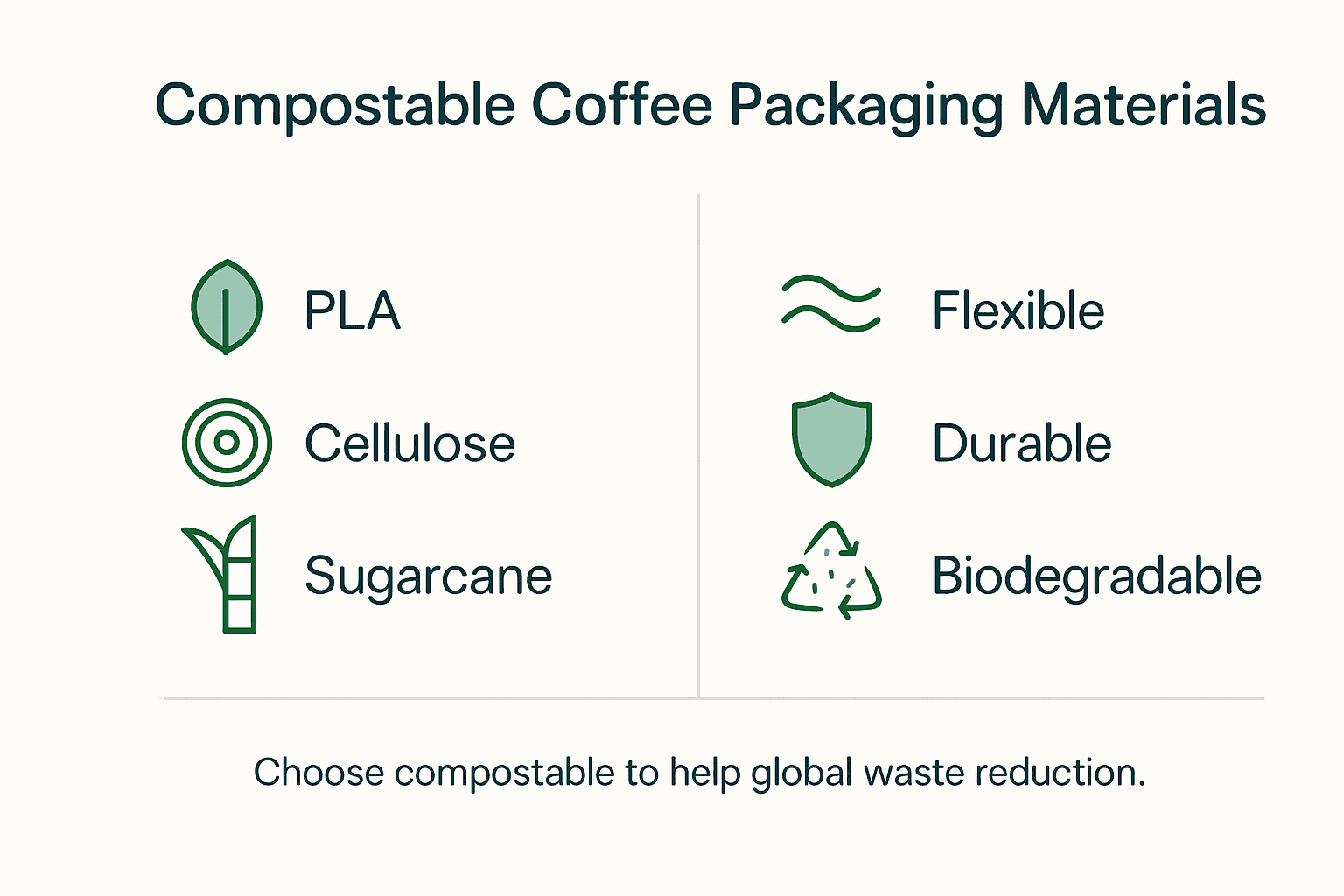
Two primary categories of compostable packaging emerge: industrial compostable and home compostable materials. Industrial compostable packaging breaks down rapidly in commercial composting facilities under precisely controlled temperature, moisture, and oxygen conditions. These advanced materials typically utilize polylactic acid (PLA) and other renewable bioplastics engineered to decompose more efficiently than traditional packaging.
The most common compostable coffee packaging materials include:
- Polylactic Acid (PLA) from corn starch
- Cellulose-based materials from plant fibers
- Coffee ground-derived bioplastics
- Sugarcane bagasse
- Hemp and bamboo composites
Each material offers unique properties, from flexibility to durability, while maintaining a core commitment to environmental sustainability. Advanced manufacturing techniques like extrusion, compression, and injection molding enable the transformation of these organic materials into functional packaging solutions.
Here’s a summary of common compostable coffee packaging materials and their unique features:
| Material Type | Main Source | Strengths | Common Applications |
|---|---|---|---|
| Polylactic Acid (PLA) | Corn starch | Strong and heat-resistant | Coffee pods, bags |
| Cellulose composites | Plant fibers | Breathable, flexible | Coffee pouches, labels |
| Sugarcane bagasse | Sugarcane | Compostable, robust | Inner linings, packaging |
| Coffee ground bioplastics | Spent grounds | Recycled content, durable | Capsule shells, films |
| Hemp/bamboo composites | Hemp, bamboo | Renewable, sturdy | Exterior wraps, boxes |
Pro tip: Always verify the specific composting requirements for your chosen packaging to ensure proper disposal and maximum environmental benefit.
The following table highlights differences between industrial and home compostable coffee packaging:
| Composting Type | Required Facility | Breakdown Time | Consumer Considerations |
|---|---|---|---|
| Industrial Compostable | Special compost facility | ~180 days | Limited municipal access |
| Home Compostable | Home compost bin | 180–365 days | Convenient but slower process |
How Compostable Packaging Breaks Down Naturally
Researchers have developed innovative bio-based polymer blends that transform compostable packaging into natural components through advanced microbial processes, breaking down complex materials into simple, environmentally friendly elements. The decomposition journey begins when microorganisms encounter the packaging material, triggering a sophisticated biological breakdown mechanism.
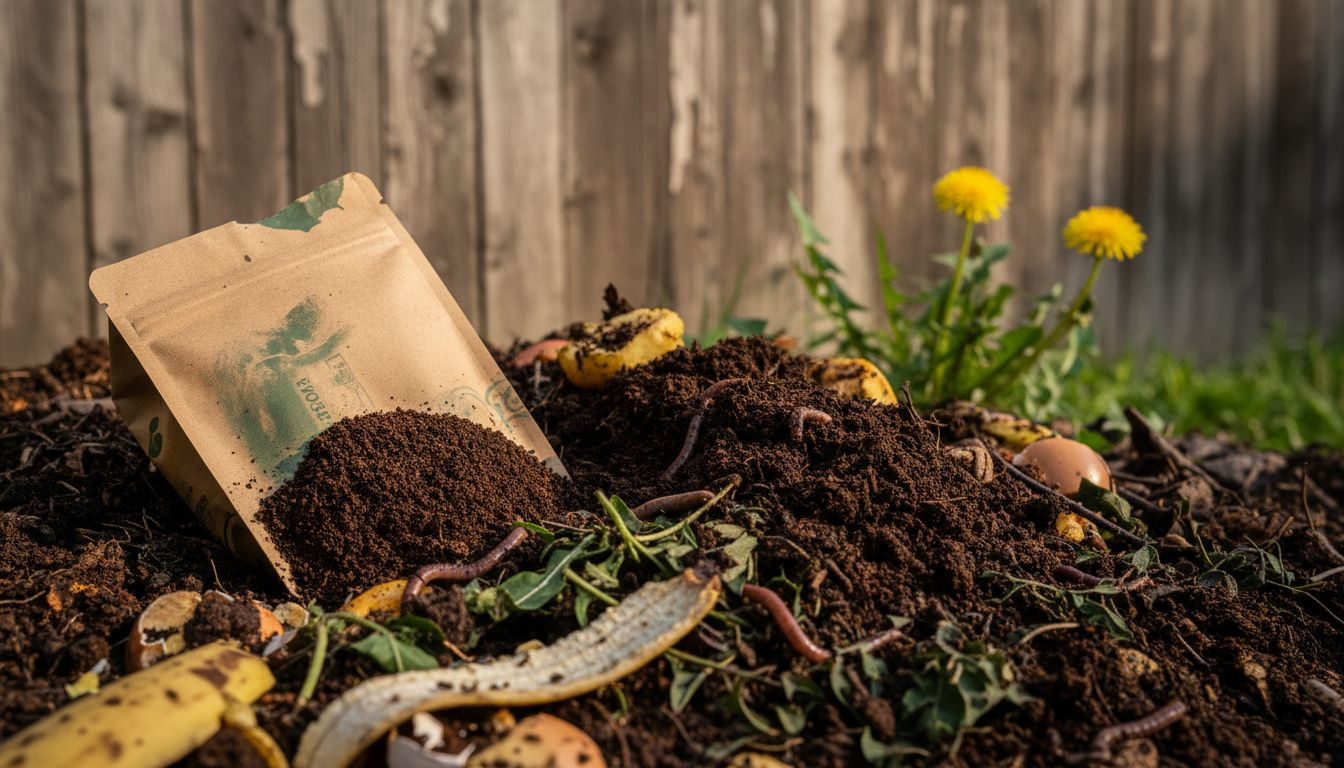
The natural decomposition process involves several critical stages. In industrial composting facilities, polylactic acid (PLA) and other bio-based materials undergo transformative changes under controlled conditions of heat, moisture, and oxygen. Cutting-edge bioplastics developed by researchers can now biodegrade completely in backyard composting environments, offering unprecedented accessibility for sustainable waste management. These materials ultimately break down into fundamental components like water, carbon dioxide, and organic matter.
Key stages of natural packaging decomposition include:
- Initial microbial colonization
- Enzymatic breakdown of molecular structures
- Fragmentation of material
- Complete conversion to organic compounds
- Integration into soil ecosystem
The decomposition timeline varies depending on specific material composition and environmental conditions. Industrial facilities can facilitate complete breakdown within 180 days, while home composting might require slightly longer periods. Advanced bioplastic technologies continue to improve decomposition efficiency, making sustainable packaging increasingly viable.
Pro tip: Monitor your composting environment’s temperature and moisture levels to optimize the natural breakdown process for compostable packaging materials.
Certifications and Global Legal Requirements
Global regulations are rapidly evolving to establish comprehensive standards for compostable packaging, creating a unified approach to environmental sustainability across international markets. These emerging legal frameworks aim to ensure transparent, verifiable environmental claims and promote responsible waste management practices worldwide.
Key certification standards have emerged as critical benchmarks for compostable packaging. The European standard EN 13432 and North American ASTM D6400 certifications provide rigorous guidelines for industrial compostability, requiring detailed testing of material disintegration, biodegradation, and environmental safety. These certifications mandate comprehensive evaluations including:
- Complete material breakdown within specified timeframes
- No negative environmental impact
- Safe integration into organic waste streams
- Minimal toxic residue generation
- Transparent traceability
The regulatory landscape is quickly becoming more complex, with significant developments on the horizon. The European Union’s Packaging and Packaging Waste Regulation (PPWR) will require coffee capsules to be fully compostable by 2028, signaling a major shift toward sustainable packaging solutions. Extended Producer Responsibility (EPR) schemes are emerging globally, compelling manufacturers to take greater accountability for their packaging’s entire lifecycle.
Pro tip: Research the specific certification requirements in your region before selecting or marketing compostable packaging to ensure full legal compliance.
Comparing Compostable vs. Recyclable Packaging
Understanding the nuanced differences between compostable and recyclable packaging is crucial for making environmentally conscious choices. While both approaches aim to reduce waste, they represent distinctly different strategies for managing product materials through their lifecycle.
Compostable packaging represents a regenerative approach, transforming entirely into organic matter that enriches soil ecosystems. These materials break down completely under specific conditions, creating zero waste and returning nutrients directly to the environment. In contrast, recyclable packaging involves reprocessing materials into new products, which requires significant energy and often results in degraded material quality through multiple recycling cycles.
Key comparative characteristics include: Compostable Packaging:
- Full biological decomposition
- Minimal processing energy required
- Returns nutrients to natural systems
- Limited contamination potential
- Supports circular biological processes
Recyclable Packaging:
- Mechanical material reprocessing
- High energy consumption during recycling
- Potential material quality degradation
- Complex sorting and processing requirements
- Depends on robust recycling infrastructure
The primary distinction lies in their end-of-life journey. Compostable materials essentially disappear, while recyclable materials continue existing through repeated transformations. This fundamental difference impacts environmental impact, energy consumption, and waste management strategies.
Pro tip: Evaluate your specific waste management capabilities before selecting packaging, as local composting or recycling infrastructure significantly influences the environmental effectiveness of your choice.
Practical Disposal and Common Pitfalls
Consumer confusion surrounding compostable coffee packaging disposal continues to pose significant challenges in effective waste management, creating complex environmental obstacles that extend beyond simple recycling practices. Many well-intentioned individuals unknowingly compromise the sustainability potential of compostable materials through improper disposal methods.
Disposal challenges emerge from multiple interconnected issues. Insufficient industrial composting infrastructure and inconsistent waste collection systems dramatically reduce the effectiveness of compostable packaging solutions, preventing materials from achieving their intended environmental benefits. Common pitfalls include:
- Mistakenly placing compostable items in standard recycling bins
- Disposing of compostable packaging in general waste streams
- Lacking access to specialized composting facilities
- Misunderstanding complex packaging labeling
- Contaminating potential compost with non-compostable materials
Successful compostable packaging disposal requires strategic understanding and localized infrastructure. Consumers must research their municipal waste management capabilities, verify specific composting requirements, and carefully follow packaging instructions. Regional variations in composting technologies mean that a single universal approach remains impossible, emphasizing the need for targeted local education and waste management strategies.
Pro tip: Contact your local waste management facility to confirm exact composting requirements before disposing of compostable coffee packaging, as guidelines can vary significantly between regions.
Embrace True Sustainability with Compostable Coffee Packaging and EcoVibe Roast
The challenge of reducing global packaging waste is more urgent than ever. This article highlights how compostable coffee packaging can transform waste into nutrient-rich organic matter, supporting circular economy principles and minimizing environmental contamination. Yet many consumers face confusion about proper disposal and the lack of widespread industrial composting facilities. At EcoVibe Roast, we recognize these pain points and offer a sustainable coffee experience that aligns perfectly with the need for responsible sourcing and eco-friendly packaging solutions.
Discover our range of high-quality coffee and single-serve pods that prioritize compostability and environmental stewardship. Every purchase not only supports ethically produced beverages but also contributes to planting mangrove trees and removing ocean-bound plastics. By choosing EcoVibe Roast, you join a conscious community dedicated to reducing waste and promoting a healthier planet.
Ready to savor great coffee while making a positive impact?

Explore our commitment to sustainability and browse our eco-conscious products at EcoVibe Roast. Learn more about how compostable packaging works and why proper disposal matters at EcoVibe Roast’s Sustainable Practices. Take action today and join us in creating a future where every cup makes a difference.
Frequently Asked Questions
What is compostable coffee packaging?
Compostable coffee packaging is made from materials that break down completely in industrial composting facilities, turning into nutrient-rich organic matter instead of contributing to landfill waste.
How does compostable coffee packaging break down?
Compostable packaging undergoes microbial processes that involve stages of microbial colonization, enzymatic breakdown, and fragmentation, ultimately converting the materials into organic compounds like water and carbon dioxide under controlled composting conditions.
What types of materials are used in compostable coffee packaging?
Common materials include Polylactic Acid (PLA) from corn starch, cellulose-based materials from plant fibers, sugarcane bagasse, and bioplastics derived from coffee grounds, all designed to be environmentally sustainable.
What is the difference between industrial compostable and home compostable packaging?
Industrial compostable packaging breaks down quickly in specialized facilities under controlled conditions, while home compostable materials can take longer to decompose and may require specific conditions found in home compost bins.


