

Finding coffee that truly matches your values can feel like a challenge when so much depends on how beans are sourced and traded. Fair Trade Coffee principles give eco-conscious millennials and Gen Z coffee lovers a real opportunity to align their daily ritual with positive change. By choosing Fair Trade, you support ethical standards, environmental sustainability, and transparency in coffee production, connecting your cup to global efforts for worker rights and ecological protection.
Table of Contents
- Defining Fair Trade Coffee Principles
- How Fair Trade Benefits Coffee Farmers
- Environmental Impact of Fair Trade Practices
- Fair Trade Certifications and Verification
- Comparing Fair Trade and Conventional Coffee
Key Takeaways
| Point | Details |
|---|---|
| Fair Trade Principles | Fair Trade Coffee promotes fair compensation, environmental sustainability, community development, labor rights, and democratic governance for producers. |
| Farmer Benefits | Certification leads to financial stability, access to training, and enhanced market access for farmers, improving their livelihoods. |
| Environmental Impact | Fair Trade practices prioritize biodiversity, climate change mitigation, and soil conservation, fostering ecological health alongside agricultural productivity. |
| Certification Importance | Fair Trade certification ensures transparency, accountability, and adherence to ethical standards, benefiting both producers and consumers. |
Defining Fair Trade Coffee Principles
Fair Trade Coffee represents a transformative global movement dedicated to creating ethical, sustainable agricultural practices in coffee production. Comprehensive standards guide global coffee sourcing by establishing principles that protect workers, communities, and environmental ecosystems.
At its core, Fair Trade Coffee embodies several fundamental principles designed to address historical economic inequities in agricultural supply chains:
- Fair Compensation: Ensuring producers receive stable, living wages beyond market commodity prices
- Environmental Sustainability: Promoting ecological farming practices that protect biodiversity
- Community Development: Reinvesting resources into local infrastructure and social programs
- Labor Rights: Prohibiting child labor and guaranteeing safe working conditions
- Democratic Governance: Supporting cooperative decision-making structures among farmers
The social movement underlying Fair Trade extends beyond simple economic transactions. Global ethical standards for coffee producers recognize coffee farming as a complex ecosystem involving human rights, environmental stewardship, and economic empowerment.
These principles create a holistic approach that transforms coffee production from a purely transactional relationship into a collaborative partnership respecting human dignity and ecological balance. By prioritizing transparency, Fair Trade enables conscious consumers to understand the journey behind their morning brew.
Pro tip: When purchasing coffee, look for verified Fair Trade certifications that demonstrate comprehensive commitment to ethical sourcing practices.
How Fair Trade Benefits Coffee Farmers
Fair Trade certification transforms the lives of coffee farmers by creating a more equitable and sustainable economic model. Sustainable income strategies for farmers empower agricultural communities to break cycles of poverty and build long-term economic resilience.
The primary benefits for coffee farmers include:
- Financial Stability: Guaranteed minimum prices that protect against market volatility
- Direct Economic Investment: Community development funds generated from premium pricing
- Skill Development: Access to training programs in agricultural techniques
- Market Access: Direct connections with international buyers
- Democratic Representation: Cooperative structures that amplify farmer voices
Cooperative models play a crucial role in Fair Trade’s approach. Farmer empowerment through ethical trade enables producers to collectively negotiate better terms, share resources, and implement sustainable farming practices that benefit entire communities.
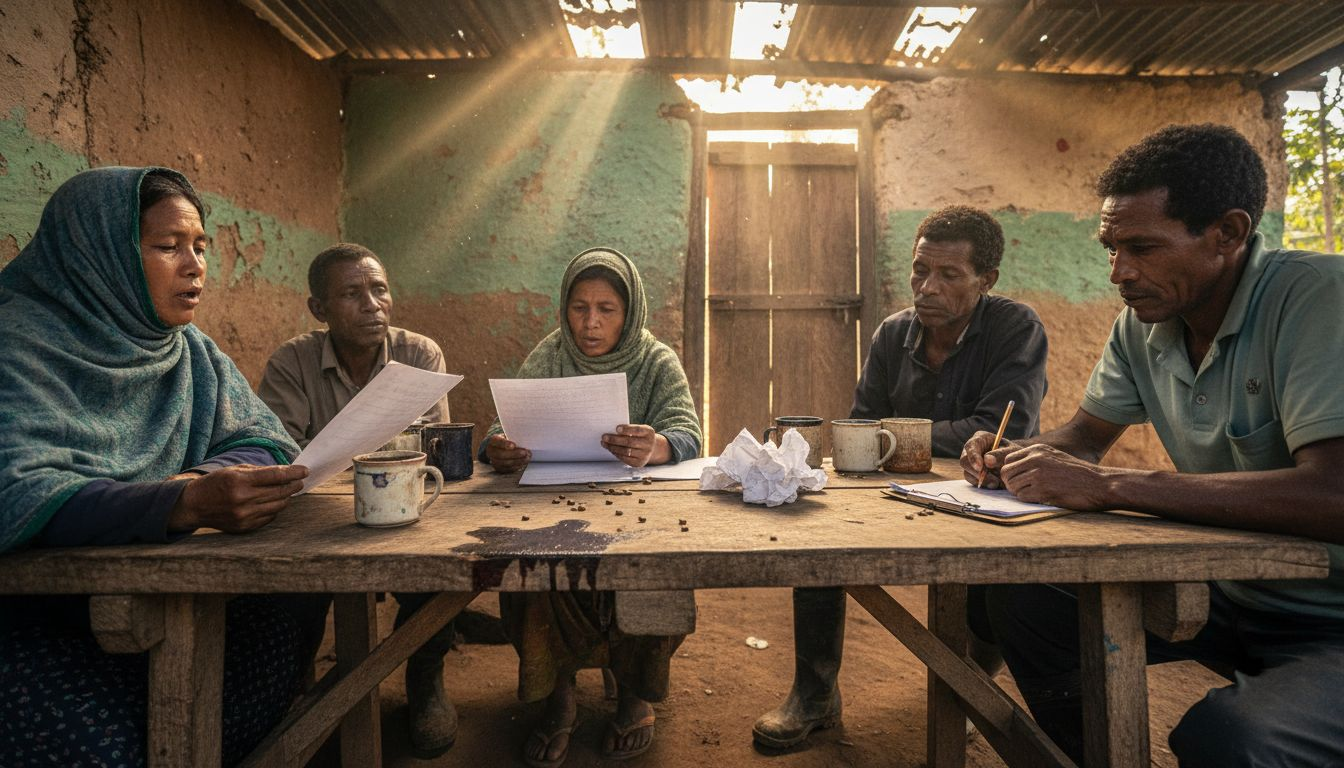
Beyond economic benefits, Fair Trade creates a comprehensive support system that addresses systemic challenges in agricultural production. By prioritizing human dignity, environmental sustainability, and economic justice, these initiatives help farmers transition from subsistence-level survival to generating meaningful, generational economic opportunities.
Here is a summary of how Fair Trade coffee benefits various stakeholder groups:
| Stakeholder Group | Major Benefit | Long-Term Impact |
|---|---|---|
| Small-Scale Farmers | Greater price security | Improved livelihoods and stability |
| Local Communities | Reinvestment in services | Enhanced education and health access |
| Environment | Sustainable cultivation | Biodiversity and soil protection |
| Consumers | Ethical purchasing choices | Support for global sustainability |
Pro tip: Look for Fair Trade certification labels when purchasing coffee to directly support farmer communities and sustainable agricultural practices.
Environmental Impact of Fair Trade Practices
Fair Trade coffee practices represent a critical approach to addressing environmental challenges in agricultural production. Local sustainability governance strategies demonstrate how ethical sourcing can simultaneously protect ecosystems and support farming communities.
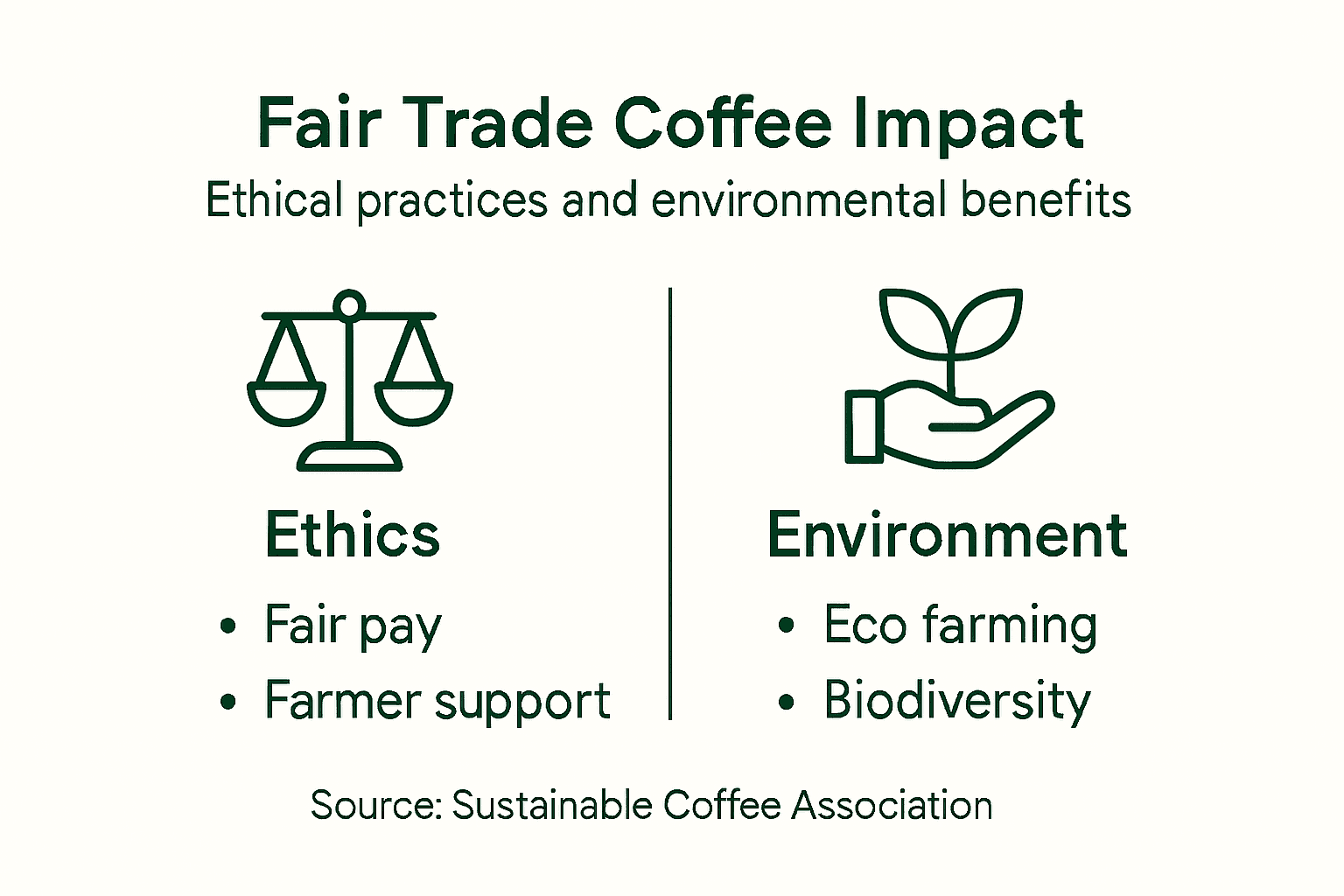
The environmental benefits of Fair Trade coffee production include:
- Biodiversity Protection: Promoting agricultural methods that preserve natural habitats
- Climate Change Mitigation: Reducing carbon emissions through sustainable farming techniques
- Soil Conservation: Implementing practices that prevent erosion and maintain soil health
- Water Resource Management: Developing responsible irrigation and watershed protection strategies
- Reduced Chemical Dependency: Encouraging organic and low-impact agricultural methods
These environmental initiatives go far beyond traditional agricultural practices. By empowering local farmers to become environmental stewards, Fair Trade creates a holistic approach that recognizes the intricate connection between agricultural production and ecological preservation.
Fair Trade coffee practices transform farmers from resource extractors to ecosystem guardians, creating a sustainable model of agricultural production.
Implementing these practices requires a comprehensive understanding of local ecological systems and collaborative approaches that balance economic needs with environmental protection. Farmers receive training and support to develop innovative solutions that protect biodiversity while maintaining productive agricultural landscapes.
Pro tip: Choose coffee brands that provide transparent information about their Fair Trade and environmental certifications to support genuine ecological initiatives.
Fair Trade Certifications and Verification
Fair Trade certification has evolved from a grassroots social movement into a sophisticated verification system that ensures ethical coffee production. Coffee certification evolution strategies demonstrate how rigorous standards transform economic relationships between producers and global markets.
The key components of Fair Trade certification include:
- Economic Transparency: Establishing minimum price guarantees for coffee producers
- Social Accountability: Verifying fair labor practices and worker protection standards
- Environmental Standards: Ensuring sustainable agricultural methods
- Cooperative Governance: Supporting democratic decision-making structures
- Traceability: Documenting the entire coffee production and supply chain
Certification processes are multilayered and involve extensive documentation and independent audits. Each coffee producer must meet comprehensive criteria that extend well beyond traditional quality control measures, focusing on holistic community development and sustainable practices.
Fair Trade certification transforms economic transactions into vehicles of social change, empowering farmers through structured, transparent mechanisms.
The verification process involves regular inspections, community assessments, and ongoing monitoring to ensure continued compliance with established ethical standards. This approach creates a dynamic system that adapts to changing global economic and environmental challenges.
Pro tip: Check certification labels carefully and look for detailed information about the specific Fair Trade standards applied to your coffee.
Comparing Fair Trade and Conventional Coffee
The global coffee market reveals stark differences between Fair Trade and conventional coffee production models. Comparative trading practices in coffee markets expose critical disparities in economic and social sustainability for coffee producers worldwide.
Key distinctions between Fair Trade and conventional coffee include:
- Price Stability: Fair Trade guarantees minimum prices, while conventional markets fluctuate unpredictably
- Worker Protection: Fair Trade prohibits child labor and ensures safe working conditions
- Community Investment: Fair Trade redirects premiums into local development projects
- Environmental Standards: Fair Trade mandates sustainable farming practices
- Transparency: Fair Trade requires comprehensive supply chain documentation
Conventional coffee production often operates within a system that prioritizes corporate profits over human and ecological welfare. Ethical coffee production standards demonstrate how Fair Trade creates a more holistic approach to agricultural economics, addressing systemic inequalities in global trade.
Conventional coffee represents a transactional model, while Fair Trade represents a transformative approach to global agricultural relationships.
The fundamental difference lies in perspective: conventional coffee treats producers as mere suppliers, whereas Fair Trade recognizes them as essential partners in a sustainable global ecosystem. This paradigm shift challenges traditional market dynamics and empowers farming communities.
This comparison highlights key differences between Fair Trade and conventional coffee:
| Factor | Fair Trade Coffee | Conventional Coffee |
|---|---|---|
| Pricing Model | Fixed minimum to protect farmers | Fluctuates with market demand |
| Labor Practices | Strict protections and oversight | Varying standards, often minimal |
| Environmental Approach | Mandated sustainability measures | Not required or loosely enforced |
| Community Investment | Funding returns to local projects | Profits seldom returned locally |
Pro tip: When purchasing coffee, prioritize brands that provide detailed information about their sourcing and worker welfare practices.
Experience the True Impact of Fair Trade Coffee with EcoVibe Roast
The article highlights the crucial role Fair Trade plays in promoting ethical labor, environmental sustainability, and community empowerment in coffee production. Many coffee drinkers struggle to find brands that genuinely align with these values while delivering exceptional quality. At EcoVibe Roast, we understand your desire to support fair compensation, sustainable farming, and meaningful social impact with every cup.
Discover our carefully curated selection of sustainably sourced coffee and tea products designed to honor those Fair Trade principles. Each purchase fuels initiatives like mangrove tree planting and ocean-bound plastic removal, ensuring your choice creates positive environmental change. Explore our Coffee and Tea example products – EcoVibe Roast and find top favorites in our Best Sellers – EcoVibe Roast collection.

Make a conscious choice today that supports farmers, protects ecosystems, and elevates your coffee experience. Visit https://ecoviberoast.com now and join a community of consumers turning ethical values into everyday actions.
Frequently Asked Questions
What are the core principles of Fair Trade coffee?
Fair Trade coffee is built on principles such as fair compensation for farmers, environmental sustainability, community development, labor rights, and democratic governance.
How do Fair Trade practices benefit coffee farmers?
Fair Trade practices provide farmers with financial stability through guaranteed minimum prices, direct market access, community investment, skill development, and cooperative governance.
What environmental impacts are associated with Fair Trade coffee production?
Fair Trade coffee production supports biodiversity protection, climate change mitigation, soil conservation, water resource management, and reduced chemical dependency through sustainable farming practices.
How does Fair Trade certification ensure ethical practices in coffee production?
Fair Trade certification involves economic transparency, social accountability, environmental standards, cooperative governance, and traceability, ensuring that producers adhere to strict ethical criteria throughout the coffee supply chain.


