

Nearly half of American and European coffee consumers now say sustainability drives their choice of brands. This shift matters as ethically-minded millennials and Gen Z worldwide are demanding coffee that supports environmental activism and real social impact. In 2026, sustainable coffee will mean more than just organic labels, with fresh approaches shaping sourcing, farming, and community involvement. Discover the new trends redefining what it means to drink coffee responsibly.
Table of Contents
- Defining Sustainability In Coffee 2026
- Climate Change And Coffee Production
- Responsible Sourcing And Supply Chain Transparency
- Eco-Friendly Packaging And Waste Reduction
- Social Impact And Community Initiatives
- Risks And Challenges In Sustainable Coffee
Key Takeaways
| Point | Details |
|---|---|
| Sustainability as Standard | By 2026, sustainability will be an integral standard in coffee production, focusing on environmental preservation and social equity. |
| Local Approaches to Sustainability | Coffee-growing regions will adopt unique sustainability strategies that reflect their specific ecological and social contexts. |
| Impact of Climate Change | Climate change necessitates the development of resilient coffee varieties and innovative farming practices to ensure sustainability. |
| Transparency in Supply Chains | Consumers will demand increased transparency in sourcing practices, with companies required to demonstrate ethical standards and fair treatment of workers. |
Defining Sustainability in Coffee 2026
Sustainability in coffee production represents a holistic approach to environmental stewardship and social responsibility that transcends traditional supply chain models. By 2026, this concept will evolve from a niche concern to a fundamental industry standard, reshaping how coffee is sourced, processed, and consumed worldwide.
The global coffee landscape is experiencing a profound transformation driven by environmental challenges and shifting consumer expectations. Emerging sustainability initiatives are fundamentally redefining coffee governance by integrating local community needs with global ecological standards. This means moving beyond simple carbon footprint reduction to creating comprehensive strategies that support environmental preservation, fair economic opportunities, and cultural preservation for coffee-producing communities.
Key dimensions of coffee sustainability in 2026 will include multiple interconnected elements: environmental protection, economic fairness, social equity, and transparent supply chains. Producers will increasingly adopt regenerative agricultural practices that go beyond organic certification, focusing on soil health, biodiversity preservation, and carbon sequestration. These practices ensure that each cup of coffee contributes positively to ecosystem restoration rather than environmental degradation.
Moreover, sustainability will become increasingly localized and context-specific. Different coffee-growing regions will develop unique approaches tailored to their specific ecological and social contexts, recognizing that one-size-fits-all solutions are ineffective. This means supporting indigenous farming practices, protecting local biodiversity, and creating economic models that genuinely benefit small-scale farmers.
Here is a summary of key approaches shaping sustainable coffee in 2026:
| Approach | Core Focus | Impact on Producers | Consumer Benefit |
|---|---|---|---|
| Regenerative Agriculture | Soil health & biodiversity | Enhanced crop resilience, ecosystem restoration | Better quality coffee, environmental stewardship |
| Climate-Resilient Breeding | Improved genetic diversity | Reliable yields under climate stress | Maintains flavor profiles, future availability |
| Responsible Sourcing | Fair trade & transparency | Living wages, community development | Informed choices, ethical product |
| Eco-Friendly Packaging | Waste & carbon reduction | New market opportunities | Easier recycling, less landfill waste |
| Social Impact Initiatives | Community welfare | Education and healthcare support | Socially conscious consumption |
Pro tip: When selecting sustainable coffee, look beyond organic labels and investigate brands that provide transparent information about their sourcing practices, farmer compensation, and environmental impact strategies.
Climate Change and Coffee Production
Climate change is rapidly transforming the global coffee production landscape, presenting unprecedented challenges for farmers and the entire coffee industry. As temperatures rise and weather patterns become increasingly unpredictable, coffee producers are facing a critical moment that demands innovative and adaptive strategies to ensure future crop sustainability.
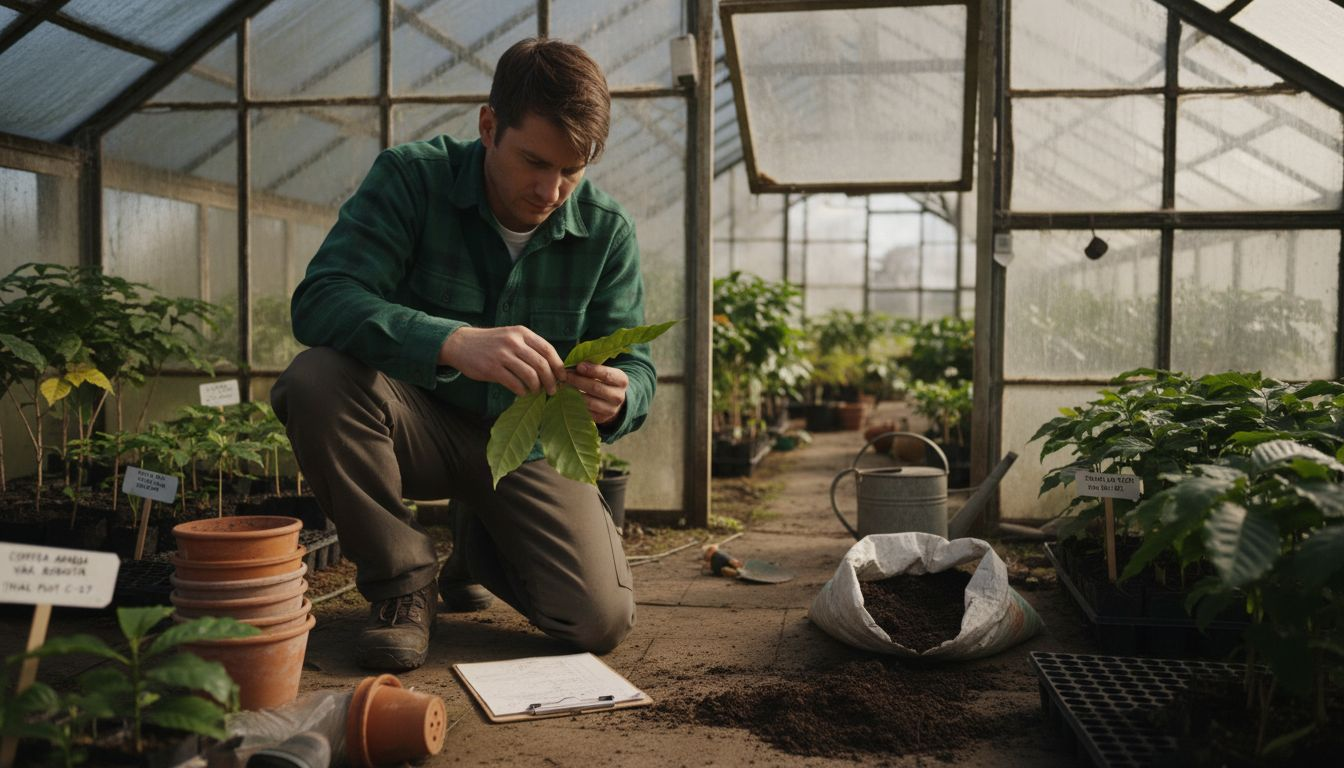
Developing climate-resilient coffee varieties has become a paramount priority for agricultural researchers and coffee breeding programs. These efforts focus on creating plant varieties that can withstand higher temperatures, resist emerging pests and diseases, and maintain productive yields under challenging environmental conditions. The goal is not merely survival, but maintaining the high-quality coffee that consumers worldwide have come to expect.
The agricultural challenges extend far beyond simple plant adaptation. Collaborative breeding programs are now exploring comprehensive approaches that consider the intricate relationship between genetic diversity, environmental stress, and coffee plant performance. Genetic resilience has become a critical factor, with researchers working to develop coffee plants that can thrive in increasingly unstable microclimates while preserving the nuanced flavor profiles that distinguish different coffee-growing regions.
Moreover, climate change is not just a scientific challenge but a socioeconomic crisis for millions of small-scale coffee farmers. As traditional growing regions become less viable, entire agricultural communities face potential displacement and economic uncertainty. This necessitates a holistic approach that combines technological innovation, economic support, and community-centered adaptation strategies to protect both coffee ecosystems and the livelihoods dependent on them.
Pro tip: Consider supporting coffee brands that invest in climate adaptation research and directly support farmers in developing climate-resilient agricultural practices.
Responsible Sourcing and Supply Chain Transparency
Responsible sourcing has evolved from a niche marketing concept to a fundamental requirement in the global coffee industry. Consumers are increasingly demanding complete visibility into how their coffee is produced, processed, and transported, driving unprecedented transparency across international supply chains.
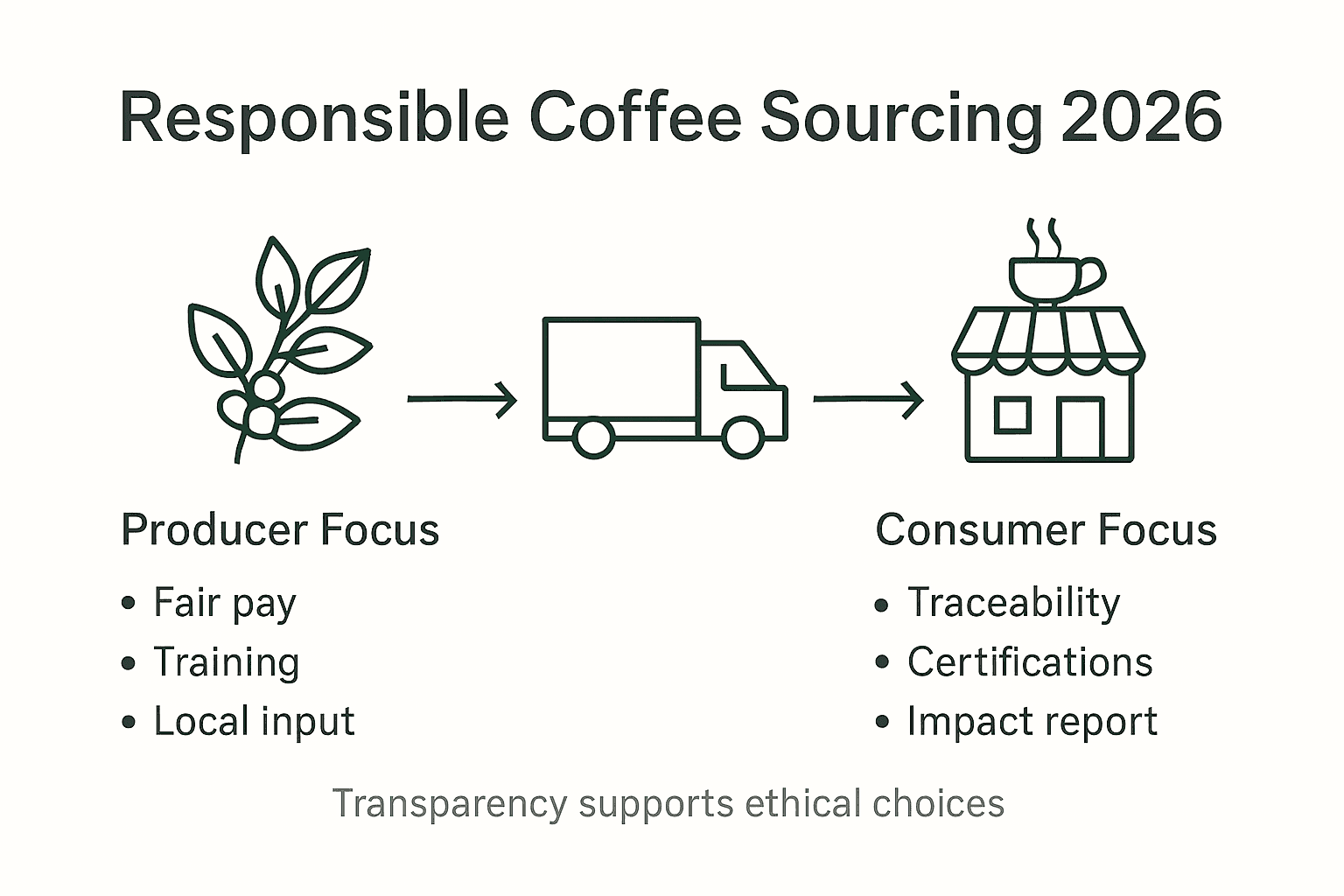
The 2026 Coffee Scorecard project represents a critical breakthrough in evaluating coffee companies’ ethical standards, establishing comprehensive metrics that go beyond traditional sustainability assessments. These new evaluation frameworks examine critical dimensions including worker treatment, environmental impact, traceability, and economic fairness for coffee-producing communities. Supply chain transparency now means providing granular information about each stage of coffee production, from seedling to final packaging.
Modern coffee sourcing strategies are fundamentally reimagining relationships between producers, distributors, and consumers. This transformation involves creating direct, equitable partnerships that prioritize living wages, safe working conditions, and community development. Technological innovations like blockchain tracking and digital farmer certification programs are enabling unprecedented levels of accountability, allowing consumers to trace their coffee’s entire journey and understand its social and environmental footprint.
Moreover, responsible sourcing is becoming a complex ecosystem of interconnected practices that address systemic challenges. This holistic approach recognizes that sustainable coffee production requires simultaneous attention to economic empowerment, environmental conservation, and social justice. By creating transparent, traceable supply chains, coffee companies are not just selling a product but participating in a global movement toward more ethical and sustainable agricultural practices.
Pro tip: When purchasing coffee, look for brands that provide detailed sourcing information, including specific farmer locations, wage standards, and environmental practices.
Eco-Friendly Packaging and Waste Reduction
The coffee industry is undergoing a radical transformation in packaging and waste management, driven by increasing environmental consciousness and technological innovations. Consumers are demanding solutions that go beyond traditional single-use packaging, pushing companies to reimagine their approach to product delivery and environmental responsibility.
The Coffee Science Foundation’s research agenda is pioneering sustainable packaging solutions that address the complex challenges of waste reduction. Biodegradable materials and advanced recycling techniques are emerging as critical strategies, focusing on creating packaging that minimizes environmental impact while maintaining product quality and consumer convenience. These innovations range from compostable coffee bags to packaging made from agricultural waste, transforming what was once considered trash into valuable resources.
Sustainability initiatives across different company sizes are revealing compelling insights into eco-friendly packaging strategies, demonstrating that environmental responsibility is not limited to large corporations. Small and medium-sized coffee producers are developing creative solutions that challenge traditional packaging paradigms. These approaches include using plant-based materials, implementing refillable container systems, and designing packaging that can be easily recycled or composted, thereby reducing landfill waste and carbon emissions.
The future of coffee packaging is increasingly circular, with companies developing closed-loop systems that prioritize material reuse and minimal waste generation. This approach involves not just selecting sustainable materials, but redesigning entire packaging ecosystems to minimize environmental impact. Innovations include packaging that can be returned to manufacturers for recycling, packaging made from coffee production byproducts, and designs that dramatically reduce material consumption while maintaining product protection.
Pro tip: Choose coffee brands that offer transparent packaging recycling information and invest in innovative, low-waste packaging solutions.
Social Impact and Community Initiatives
The coffee industry is experiencing a profound transformation, moving beyond simple economic transactions to become a powerful platform for social change and community empowerment. This shift recognizes that sustainable coffee production is fundamentally about supporting and uplifting the human beings behind every cup.
The 2026 Coffee Scorecard is pioneering a comprehensive approach to measuring social impact, integrating critical indicators like gender empowerment, human rights, and living income standards. These new metrics go far beyond traditional economic measurements, highlighting the complex social ecosystems that support coffee production. By creating transparent frameworks that evaluate companies based on their genuine commitment to community welfare, the initiative is driving meaningful change across global coffee supply chains.
Community initiatives are emerging as transformative strategies that address systemic challenges facing coffee-producing regions. These programs focus on holistic development, including educational opportunities, healthcare access, infrastructure improvements, and economic diversification. By investing in local communities, coffee companies are recognizing that sustainable production is intrinsically linked to the well-being of farmers, their families, and their broader social networks. Innovative approaches include scholarship programs for farmers’ children, healthcare clinics in coffee-growing regions, and training programs that provide alternative income streams during challenging agricultural periods.
Moreover, these social impact initiatives are challenging traditional power structures by centering marginalized voices, particularly those of women and indigenous communities. By creating economic opportunities, providing skills training, and supporting leadership development, coffee companies are helping to dismantle long-standing social barriers. This approach transforms coffee production from a purely economic activity into a catalyst for social mobility and community resilience.
Pro tip: Choose coffee brands that provide transparent reporting on their social impact initiatives and demonstrate a genuine commitment to community development beyond marketing rhetoric.
Risks and Challenges in Sustainable Coffee
Sustainable coffee production faces a complex landscape of interconnected challenges that threaten the long-term viability of global coffee ecosystems. These risks extend far beyond simple agricultural concerns, encompassing environmental, economic, and social dimensions that require nuanced and holistic approaches.
Systematic analysis reveals the intricate governance challenges confronting sustainable coffee production, highlighting critical vulnerabilities across multiple domains. Market volatility emerges as a primary risk, with unpredictable price fluctuations creating significant economic instability for small-scale farmers. Climate change compounds these challenges, introducing unprecedented environmental uncertainties that disrupt traditional growing patterns and threaten entire agricultural communities.
The limitations of existing certification schemes represent another significant challenge in sustainable coffee production. Current frameworks often fail to address the complex, context-specific needs of different coffee-producing regions. This systemic weakness means that many well-intentioned sustainability efforts produce limited or uneven results, creating a gap between theoretical best practices and real-world implementation. Power imbalances within global supply chains further exacerbate these challenges, with smaller producers often lacking the resources and negotiating power to meaningfully participate in sustainability initiatives.
Moreover, sustainable coffee production requires a delicate balance between environmental conservation, economic viability, and social equity. Achieving this balance demands innovative approaches that go beyond traditional agricultural and economic models. This includes developing climate-resilient coffee varieties, creating more equitable economic structures, and designing sustainability strategies that are flexible enough to adapt to local contexts while maintaining global standards of environmental and social responsibility.
The table below highlights primary risks and strategic responses in sustainable coffee:
| Major Risk | Example Impact | Strategic Response |
|---|---|---|
| Market Volatility | Unstable farmer income | Price guarantees, cooperative models |
| Certification Limits | Gaps in local needs | Regional adaptation, new standards |
| Climate Disruption | Yield loss, displacement | Climate-smart varieties, local innovation |
| Power Imbalances | Lack of smallholder voice | Direct partnerships, community leadership |
Pro tip: When evaluating coffee brands, look beyond simple certifications and investigate their comprehensive approach to addressing systemic challenges in coffee production.
Make Your Coffee Choices Truly Sustainable Today
The article highlights the urgent challenges facing coffee sustainability by 2026, from climate change impacts to the need for responsible sourcing and social equity. If you want to support regenerative agriculture, climate-resilient practices, and transparent supply chains while enjoying exceptional coffee, this is your moment to act. EcoVibe Roast not only delivers high-quality coffee but also champions environmental stewardship by planting mangrove trees and removing ocean-bound plastics with every purchase. These efforts address critical issues like market volatility, social impact, and eco-friendly packaging discussed in the article.

Discover an extensive selection of sustainably sourced coffee and tea at EcoVibe Roast where your purchase fuels positive change in coffee-growing communities. Take action now by choosing brands committed to environmental and social responsibility. Browse our offerings and join a community of conscious consumers who care about the planet and the people behind every cup. Explore our collection today at EcoVibe Roast and taste the future of sustainable coffee.
Frequently Asked Questions
What does sustainability in coffee production mean?
Sustainability in coffee production refers to an approach that prioritizes environmental stewardship, social responsibility, and economic fairness, ensuring that coffee production supports ecological health and the livelihoods of farmers and communities.
How will coffee sourcing change by 2026?
By 2026, coffee sourcing is expected to become more transparent and ethical, with an emphasis on responsible sourcing practices that include fair treatment of workers, environmental impact assessment, and traceability of coffee from farm to cup.
What are the main benefits of regenerative agriculture in coffee production?
Regenerative agriculture improves soil health, preserves biodiversity, and enhances crop resilience, leading to higher quality coffee and positive impacts on the environment rather than degradation.
How does climate change affect coffee production?
Climate change presents significant challenges for coffee production by altering growing conditions, increasing pest and disease pressure, and threatening the viability of traditional coffee-growing regions, necessitating adaptive strategies from producers.


