

Most American coffee lovers are surprised to learn that only about 24 percent of global coffee is produced using methods that prioritize sustainability. Choosing truly sustainable coffee is about more than organic labels or trendy packaging. Eco-conscious millennials and Gen Z worldwide want their coffee choices to protect rainforests, support fair wages, and help farming communities thrive. This article clears up common myths and helps you spot real sustainable coffee, so your cup aligns with your environmental values.
Table of Contents
- Defining Sustainable Coffee and Common Myths
- Key Certifications and Ethical Sourcing Practices
- How Sustainable Coffee Supports Farmers and Nature
- Environmental, Social, and Economic Impacts
- How to Identify and Choose Sustainable Coffee
Key Takeaways
| Point | Details |
|---|---|
| Sustainable Coffee Practices | Sustainable coffee goes beyond organic certification, focusing on environmental, social, and economic factors to support farmers and ecosystems. |
| Importance of Certifications | Various certifications, such as Fair Trade and Rainforest Alliance, help ensure ethical production and environmental conservation in the coffee industry. |
| Transparently Sourced Coffee | Consumers should seek brands that provide detailed information about their sourcing and practices, enhancing accountability and supporting sustainability. |
| Holistic Benefits | Sustainable coffee practices yield economic stability for farmers while promoting ecological conservation, aligning agricultural production with environmental health. |
Defining Sustainable Coffee and Common Myths
Sustainable coffee represents a holistic approach to coffee production that goes far beyond simple organic certification. At its core, sustainable coffee involves practices that protect environmental systems, support farmer communities, and create economic viability for agricultural regions producing this beloved beverage.
The concept encompasses multiple critical dimensions. Environmental protection means farming techniques that maintain biodiversity, minimize chemical interventions, and work harmoniously with local ecosystems. Social responsibility ensures fair wages, safe working conditions, and community development for coffee farmers. Economic sustainability focuses on creating pricing models that allow farmers to earn living wages while maintaining long-term agricultural productivity.
Many people misunderstand sustainable coffee, believing it’s just about organic labeling or fair trade certification. However, true sustainability is a complex, multi-layered approach that requires ongoing commitment from producers, distributors, and consumers. It involves tracking carbon footprints, protecting native forest habitats, implementing water conservation strategies, and creating transparent supply chains that empower local farming communities.
Pro tip: When selecting sustainable coffee, look beyond certifications and research the specific sourcing practices of your favorite brands to understand their comprehensive environmental and social commitments.
Key Certifications and Ethical Sourcing Practices
Fair Trade certification represents a critical framework for ensuring ethical coffee production, creating transparent pathways that support farmers and protect their economic interests. These certification programs go beyond simple price guarantees, establishing comprehensive standards that address worker welfare, environmental sustainability, and community development across coffee-producing regions.
Several key certifications play pivotal roles in promoting sustainable coffee practices. Organic certification ensures chemical-free farming methods that protect soil health and ecosystem biodiversity. Rainforest Alliance certification focuses on protecting wildlife habitats and promoting responsible land management. Fair Trade specifically targets economic empowerment, guaranteeing minimum prices for farmers and supporting cooperative business models that distribute economic benefits more equitably.
Global sustainability initiatives are increasingly driving comprehensive ethical sourcing practices across the coffee industry. These approaches include direct trade models that create more transparent relationships between producers and buyers, cooperative support systems that strengthen local agricultural communities, and compliance with emerging international regulations designed to protect environmental and social standards. Modern ethical sourcing goes beyond simple certification, demanding full supply chain transparency and demonstrable commitments to social and ecological responsibility.
Pro tip: When purchasing sustainable coffee, look for multiple certifications and research the specific sourcing practices of brands to understand their comprehensive environmental and social commitments.
Here’s a comparison of prominent coffee certifications and what they prioritize:
| Certification | Main Focus | Impact on Farming | Distinguishing Criteria |
|---|---|---|---|
| Fair Trade | Economic empowerment | Minimum guaranteed prices | Supports farmer cooperatives |
| Organic | Environmental safeguards | No synthetic chemicals | Soil and biodiversity health |
| Rainforest Alliance | Ecosystem protection | Wildlife habitat conservation | Verifies responsible land use |
| Direct Trade | Transparent relationships | Close producer-buyer link | No third-party certifier used |
How Sustainable Coffee Supports Farmers and Nature
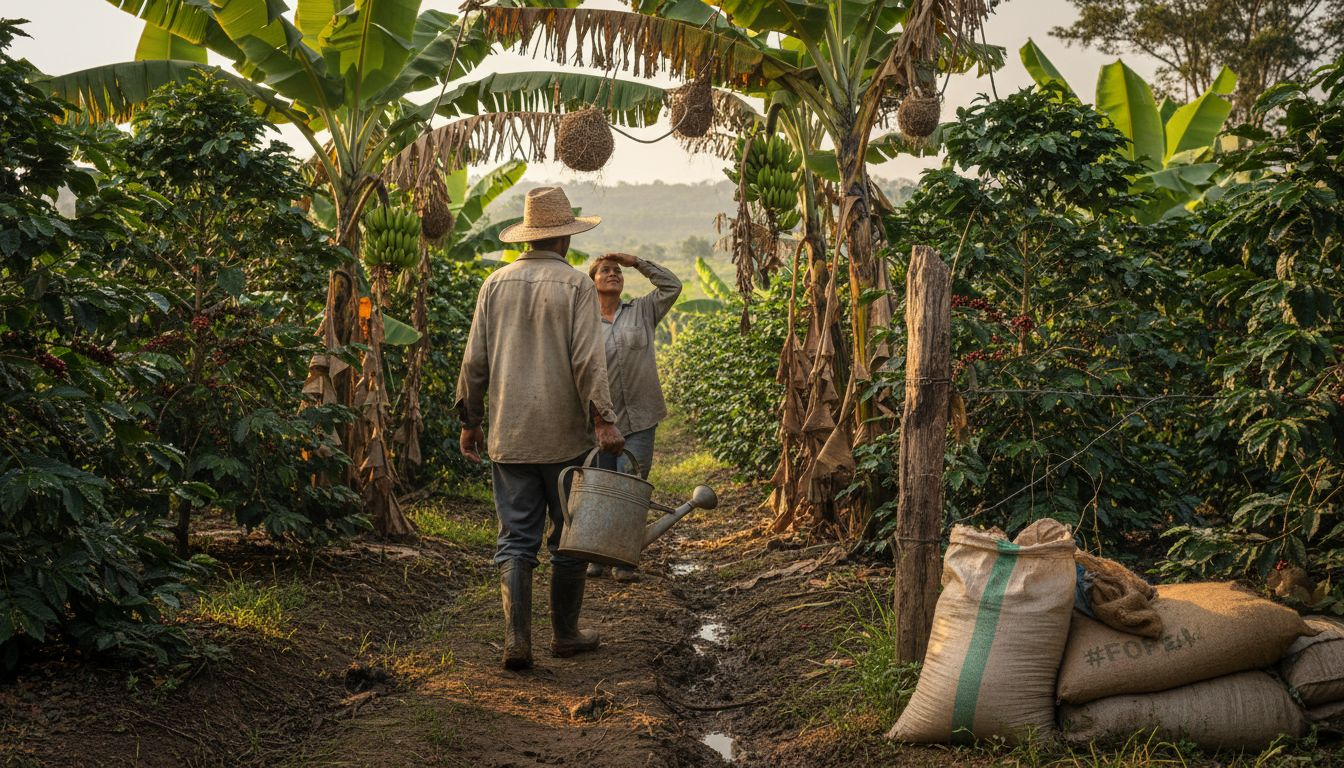
Sustainable coffee practices play a transformative role in supporting farmers and protecting natural ecosystems, creating a holistic approach that addresses economic vulnerability and environmental conservation simultaneously. By implementing innovative agricultural strategies, these practices offer farmers more than just economic stability - they provide a comprehensive pathway to resilience and long-term sustainability.
The economic benefits for farmers are multifaceted. Fair pricing mechanisms ensure farmers receive adequate compensation for their labor, while capacity-building programs help them develop advanced agricultural skills. Climate adaptation strategies enable farmers to develop resilient coffee varieties that can withstand changing environmental conditions, protecting their future income and reducing vulnerability to environmental disruptions. These approaches go beyond traditional agricultural support, creating a comprehensive ecosystem of farmer empowerment.
Environmentally, sustainable coffee farming serves as a critical conservation strategy. Agroforestry techniques promote biodiversity by maintaining complex ecological interactions between coffee plants and surrounding wildlife habitats. These methods help preserve soil health, reduce erosion, and support carbon sequestration, effectively transforming coffee farms into active environmental restoration sites. By integrating ecological preservation with agricultural production, sustainable coffee practices demonstrate how human economic activities can coexist harmoniously with natural systems.
Pro tip: When purchasing coffee, prioritize brands that provide transparent information about their farmer support and environmental conservation practices.
Environmental, Social, and Economic Impacts
Sustainable coffee production represents a complex ecosystem of interconnected environmental, social, and economic challenges that demand holistic solutions, addressing multiple dimensions of global agricultural sustainability simultaneously. These multifaceted approaches recognize that coffee production is not just about growing a crop, but about creating comprehensive systems that support both human communities and natural environments.
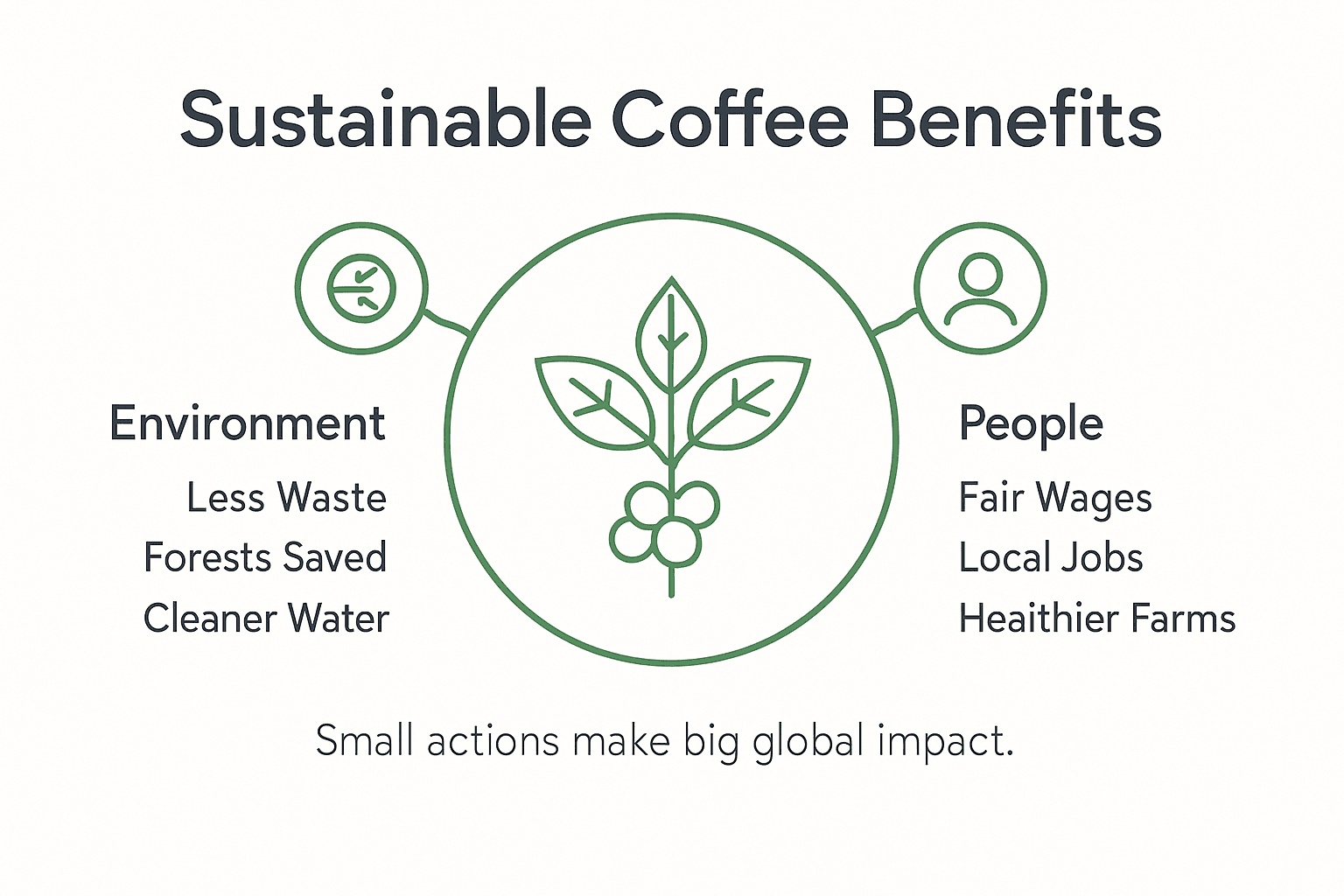
Environmentally, sustainable coffee practices target critical challenges like deforestation, water conservation, and climate change mitigation. Carbon sequestration techniques, agroforestry approaches, and biodiversity preservation become core strategies for protecting ecological systems. International coffee organizations emphasize the urgent need for coordinated policies that balance environmental protection with farmer livelihoods, creating frameworks that simultaneously address ecological degradation and economic vulnerability.
Social and economic impacts are equally transformative. Sustainable coffee models prioritize fair wages, community development programs, and investments in local infrastructure. These approaches go beyond traditional market interactions, creating collaborative ecosystems where farmers become active participants in global supply chains. By providing capacity-building resources, transparent pricing mechanisms, and long-term economic stability, sustainable coffee practices empower agricultural communities to build resilient, self-determined futures.
Pro tip: Research coffee brands that provide detailed impact reports demonstrating their comprehensive environmental, social, and economic sustainability commitments.
This table summarizes the varied impacts of sustainable coffee practices:
| Impact Dimension | Positive Change | Example Outcome |
|---|---|---|
| Environmental | Reduces deforestation | Preserves forest ecosystems |
| Social | Fosters fair working conditions | Improves farmer livelihoods |
| Economic | Provides income stability | Enables community development |
How to Identify and Choose Sustainable Coffee
Identifying sustainable coffee requires understanding a comprehensive set of environmental and social criteria that go beyond simple packaging claims, empowering consumers to make meaningful choices that support global agricultural sustainability. Navigating this landscape demands careful attention to specific indicators that reveal a coffee brand’s genuine commitment to ethical and ecological practices.
Key certification labels serve as critical guideposts for conscious consumers. Fair Trade certification ensures farmers receive equitable compensation, while Rainforest Alliance and organic labels validate environmental preservation practices. Ethical purchasing decisions involve recognizing these certification processes and understanding their rigorous standards for responsible production, which directly impact farmer communities and global ecosystems. Look for multiple certifications on packaging, as each represents a different aspect of sustainability.
Beyond certifications, discerning consumers should investigate brands’ transparency around their sourcing practices. This means seeking detailed information about coffee origins, farming methods, and direct relationships with producing communities. Brands committed to sustainability often provide comprehensive impact reports, supply chain maps, and stories highlighting their partnerships with specific farming cooperatives. These narratives offer deeper insights into a company’s genuine sustainability commitments, moving beyond marketing language to demonstrate tangible social and environmental impacts.
Pro tip: Develop a habit of turning coffee packages around and reading the fine print about certifications, sourcing details, and environmental commitments before making your purchase.
Discover Truly Sustainable Coffee That Makes a Difference
The challenge of finding coffee that genuinely supports environmental health, fair wages, and long-term farming resilience can feel overwhelming. You want more than just organic or fair trade labels. You seek transparency, tangible impact, and a brand that invests in protecting ecosystems while empowering communities. This article explored key terms like fair pricing, agroforestry, and ethical sourcing that define what sustainable coffee really means. Now it is time to turn knowledge into action.
EcoVibe Roast offers a curated selection of coffee and tea products that meet these high standards for sustainability and social responsibility. Our mission goes beyond quality beans to include planting mangrove trees and removing ocean-bound plastics with every purchase. This connection between your daily cup and real environmental stewardship creates a powerful way to support healthier forests, thriving farmers, and cleaner oceans.
Shop now to make an immediate positive impact with your beverage choices.
Explore Sustainable Coffee Options
Learn More About Our Mission
Start Supporting Farming Communities Today

Frequently Asked Questions
What is sustainable coffee?
Sustainable coffee refers to coffee produced using practices that protect the environment, support farmers’ communities, and ensure economic viability for agricultural regions. It encompasses environmental, social, and economic dimensions beyond simple organic certification.
What are key certifications for sustainable coffee?
Important certifications for sustainable coffee include Fair Trade, which promotes economic empowerment; Organic, which ensures chemical-free farming; and Rainforest Alliance, which focuses on protecting wildlife habitats and responsible land management.
How does sustainable coffee benefit farmers?
Sustainable coffee provides benefits such as fair pricing mechanisms, capacity-building programs, and climate adaptation strategies, enabling farmers to earn fair wages while developing skills and resilience against environmental changes.
What should I look for when choosing sustainable coffee?
When choosing sustainable coffee, look for multiple certifications, research the sourcing practices of brands, and pay attention to their transparency regarding environmental and social commitments. This will help ensure that your choice supports true sustainability.
Recommended
- Transform Your Morning Routine: The Eco-Friendly Coffee Showdown – EcoVibe Roast
- EcoVibe Roast: Sustainable, Ethical Coffee for a Planet-Positive Brew
- Five Eco Friendly Coffee Hacks for a Greener Cup Guide – EcoVibe Roast
- How Coffee Is Grown: A Complete Guide for Beginners – EcoVibe Roast
- Roasted Organic Whole Coffee Beans - 1kg - RAWGORILLA – Granavitalis


