

Most American coffee lovers are surprised to learn that over 75 percent of global coffee is produced using methods that harm delicate ecosystems and local communities. As eco-conscious millennials rethink their daily brew, the demand for ethically sourced coffee has surged across North America. This guide reveals how selecting eco-friendly coffee empowers American buyers to enjoy their favorite drink while protecting the planet and uplifting coffee-growing regions.
Table of Contents
- Eco-Friendly Coffee Defined And How It Works
- Types Of Sustainable Coffee Certifications
- Environmental And Social Benefits Explained
- Ethical Sourcing Versus Conventional Coffee
- Consumer Choices And Real-World Impact
Key Takeaways
| Point | Details |
|---|---|
| Eco-Friendly Coffee Practices | Eco-friendly coffee prioritizes sustainability and social responsibility through practices like organic farming and fair compensation for farmers. |
| Certification Importance | Look for certifications like Rainforest Alliance, Fair Trade, and Organic to ensure coffee production complies with environmental and social standards. |
| Consumer Impact | Individual consumer choices can drive significant change in the coffee industry by promoting sustainable and ethical sourcing practices. |
| Ethical vs. Conventional Sourcing | Ethical sourcing emphasizes fair wages and environmental stewardship, contrasting sharply with conventional practices that may exploit farmers and damage ecosystems. |
Eco-Friendly Coffee Defined and How It Works
Eco-friendly coffee represents a holistic approach to coffee production that prioritizes environmental sustainability, ethical practices, and social responsibility. Sustainable coffee varieties are carefully cultivated to minimize ecological impact while supporting coffee-growing communities worldwide. These specialized coffee production methods go far beyond traditional farming, integrating comprehensive strategies that protect both natural ecosystems and human welfare.
At its core, eco-friendly coffee involves multiple interconnected practices designed to reduce environmental harm and promote positive social change. Global coffee supply chain research reveals that these practices typically include organic farming techniques, fair compensation for farmers, biodiversity preservation, and reduced carbon footprint throughout production. Farmers implementing these methods often use shade-grown techniques, natural pest management, and conservation-oriented agricultural approaches that maintain soil health and protect surrounding ecosystems.
The certification process for eco-friendly coffee involves rigorous independent verification from organizations like the Rainforest Alliance and Fair Trade International. These certifications ensure that coffee meets strict environmental and social standards, covering aspects such as water conservation, habitat protection, worker rights, and sustainable land management. Consumers choosing these coffees directly support agricultural practices that prioritize long-term environmental health and social equity in coffee-producing regions.
Pro tip: When purchasing eco-friendly coffee, look for multiple certification labels to ensure comprehensive sustainability standards are being met across environmental and social dimensions.
Types of Sustainable Coffee Certifications
Sustainable coffee certifications represent critical markers of environmental and social responsibility in the coffee industry. Various certification standards have emerged to help consumers identify coffee produced through ethical and eco-conscious practices. These certifications go beyond simple marketing claims, providing comprehensive verification of sustainable production methods that protect ecosystems, support farming communities, and promote responsible agricultural practices.
The most prominent sustainable coffee certifications include Rainforest Alliance, Fair Trade, and Organic designations. Each certification addresses unique aspects of sustainability: Rainforest Alliance focuses on biodiversity conservation and worker welfare, Fair Trade ensures fair compensation and community development, and Organic certification guarantees production without synthetic pesticides or fertilizers. Coffee sustainability guides reveal that these labels help consumers make informed choices that directly impact environmental and social outcomes in coffee-producing regions.
Beyond the primary certifications, several specialized designations offer deeper insights into sustainable coffee production. Bird Friendly certification emphasizes habitat preservation, while Shade-Grown labels indicate coffee cultivated using environmentally friendly agroforestry techniques that protect natural ecosystems. These nuanced certifications demonstrate the coffee industry’s commitment to holistic sustainability, addressing not just economic concerns but also complex environmental and social challenges faced by coffee-growing communities worldwide.
Here’s a summary of leading sustainable coffee certifications and what makes each unique:
| Certification Type | Main Focus | Key Requirements |
|---|---|---|
| Rainforest Alliance | Biodiversity, worker welfare | Forest protection, fair labor |
| Fair Trade | Fair pay, community growth | Minimum price, social premiums |
| Organic | No synthetic chemicals | Only natural pest control |
| Bird Friendly | Bird habitat preservation | Shade-grown, biodiversity rules |
| Shade-Grown | Ecosystem protection | Forest canopy must be maintained |
Pro tip: When shopping for sustainable coffee, compare multiple certification labels to understand the comprehensive environmental and social impact of your coffee purchase.
Environmental and Social Benefits Explained
Sustainable coffee production offers profound environmental and social benefits that extend far beyond the simple act of brewing a morning cup. Research on coffee sustainability reveals complex interconnections between ecological conservation and community development, demonstrating how conscious consumer choices can drive meaningful global change. By supporting sustainable coffee practices, individuals contribute to protecting critical ecosystems, preserving biodiversity, and improving the livelihoods of coffee-producing communities.
Environmentally, sustainable coffee production provides significant ecological advantages. Organic farming techniques reduce carbon emissions, minimize chemical pollution, and promote healthier soil ecosystems. Shade-grown coffee methods, in particular, help preserve forest habitats, protect wildlife corridors, and maintain critical biodiversity. Comprehensive sustainability studies indicate that these practices can dramatically reduce deforestation, mitigate climate change impacts, and create more resilient agricultural landscapes that support both human and natural communities.
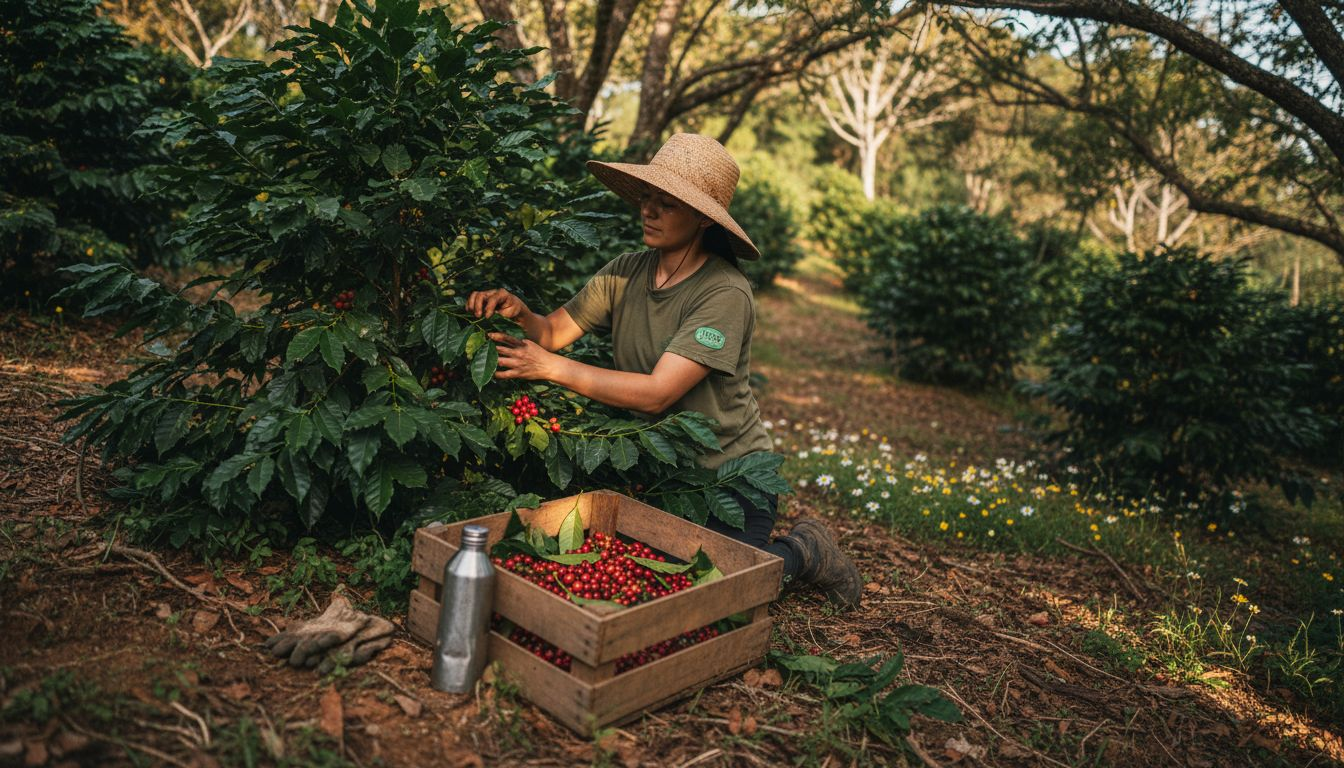
Social benefits are equally transformative, with sustainable coffee initiatives directly improving the lives of farmers and their communities. Fair trade practices ensure living wages, support local education, and provide healthcare access in coffee-producing regions. These approaches empower local farmers, reduce economic vulnerability, and create more equitable global trade systems. By prioritizing human dignity alongside environmental stewardship, sustainable coffee models demonstrate how economic practices can simultaneously support both ecological preservation and social justice.
Pro tip: Look for multiple certification labels when purchasing coffee to ensure comprehensive environmental and social sustainability standards are being met.
Ethical Sourcing Versus Conventional Coffee
The fundamental difference between ethical and conventional coffee sourcing lies in a comprehensive approach to production that prioritizes human and environmental welfare. Ethical sourcing practices represent a holistic model that goes beyond simple commodity trading, focusing on fair compensation, transparent supply chains, and sustainable agricultural methods. While conventional coffee production often prioritizes cost efficiency and maximum yield, ethical sourcing considers the broader impact of coffee production on farming communities and global ecosystems.
Conventional coffee sourcing typically involves minimal transparency, potentially exploitative labor practices, and environmentally destructive farming techniques. These practices frequently rely on chemical pesticides, monoculture farming, and pricing models that leave coffee farmers struggling with poverty. In stark contrast, ethical sourcing ensures fair wages, supports community development, and implements environmentally responsible farming methods. Sustainable coffee production guidelines demonstrate that ethical approaches create comprehensive value chains that benefit workers, local economies, and global environmental conservation efforts.
Key distinctions between ethical and conventional coffee sourcing extend beyond economic transactions. Ethical sourcing embraces principles of social responsibility, environmental stewardship, and long-term sustainability. This approach includes protecting biodiversity, supporting worker rights, investing in community infrastructure, and developing agricultural practices that maintain ecological balance. Conventional coffee sourcing, by comparison, often treats coffee as a mere commodity, disconnected from the human and environmental systems that produce it, resulting in significant social and ecological harm.
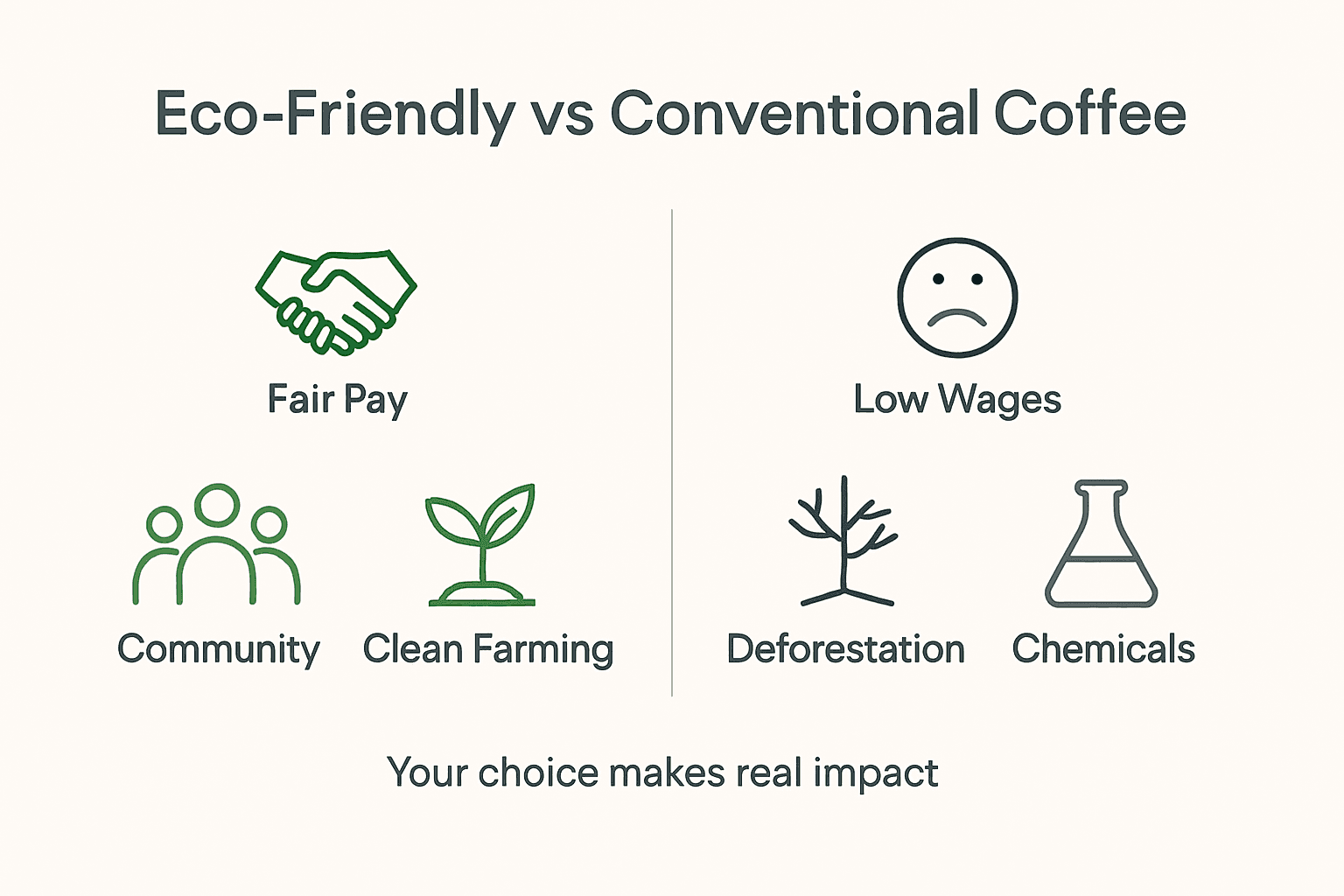
This comparison highlights major differences between ethical and conventional coffee sourcing:
| Aspect | Ethical Sourcing | Conventional Sourcing |
|---|---|---|
| Farmer Pay | Fair, stable income | Often low, unstable prices |
| Environmental Impact | Low, focuses on sustainability | High, can damage ecosystems |
| Supply Chain | Transparent, traceable | Opaque, profit-driven |
| Community Support | Invests in local projects | Little local investment |
Pro tip: Research coffee brands that provide detailed information about their sourcing practices to ensure you’re supporting genuinely ethical and sustainable coffee production.
Consumer Choices and Real-World Impact
Individual consumer decisions have extraordinary potential to drive meaningful environmental and social transformation in the global coffee industry. Sustainable consumer initiatives demonstrate that informed purchasing choices can create ripple effects far beyond a single transaction, fundamentally reshaping production practices and industry standards. When consumers prioritize ethically sourced coffee, they send powerful economic signals that incentivize coffee producers to adopt more responsible and environmentally conscious approaches.
The power of consumer choice extends beyond individual purchasing decisions. Collective consumer behavior can fundamentally reshape entire supply chains, pushing companies to implement more transparent, sustainable practices. By consistently selecting coffee with verifiable ethical certifications, consumers create market demand for environmentally responsible production methods. This approach directly supports farmers’ economic stability, promotes biodiversity conservation, and reduces the overall ecological footprint of coffee production. Each conscientious purchase becomes a vote for a more sustainable global agricultural system.
Moreover, consumer engagement goes beyond mere purchasing. Active participation through education, social media advocacy, and supporting brands with robust sustainability commitments amplifies the impact of individual choices. By sharing knowledge about ethical coffee sourcing, discussing environmental challenges, and promoting transparent supply chains, consumers become crucial agents of systemic change. This collaborative approach transforms consumer choices from passive transactions into active contributions toward global environmental and social sustainability.
Pro tip: Follow coffee brands on social media that transparently share their sustainability practices to stay informed and make more impactful purchasing decisions.
Choose Eco-Friendly Coffee That Makes a Real Difference
The article highlights the challenge many coffee lovers face in finding truly sustainable and ethically sourced coffee that supports both environmental health and farming communities. If you care about reducing your carbon footprint, preserving biodiversity, and ensuring fair pay for farmers, then switching to eco-friendly coffee is the key step forward. Concepts like “shade-grown coffee,” “fair trade,” and “organic farming” are more than buzzwords. They represent how your daily cup can create positive social and environmental impact.

Discover how your coffee choice can contribute to lasting change at EcoVibe Roast, where every purchase supports planting mangrove trees and removing ocean-bound plastics. Explore our wide selection of sustainably sourced coffee beans and single-serve pods crafted to meet the highest ethical standards. Start your journey toward impactful coffee drinking today by visiting our landing page and learn more about how we prioritize responsible sourcing that aligns with the principles discussed in the article. Act now and become part of a community that values quality drinks and environmental stewardship together.
Frequently Asked Questions
What is eco-friendly coffee?
Eco-friendly coffee refers to coffee that is produced using sustainable methods that prioritize environmental sustainability, ethical practices, and social responsibility. This includes techniques that reduce ecological impact and support coffee-growing communities.
Why should I choose eco-friendly coffee over conventional coffee?
Choosing eco-friendly coffee supports sustainable farming practices that reduce environmental harm, such as deforestation and chemical pollution. It also promotes fair compensation for farmers and improved livelihoods, whereas conventional coffee often relies on exploitative practices.
What are the main certifications for sustainable coffee?
The primary certifications for sustainable coffee include Rainforest Alliance, Fair Trade, and Organic. Each certification has different focuses, such as biodiversity preservation, fair wages, and the prohibition of synthetic chemicals in farming.
How does my coffee purchasing choice impact the environment and communities?
Your choice to purchase eco-friendly coffee supports sustainable practices that protect ecosystems and promote social equity. Collectively, these consumer decisions encourage coffee producers to adopt more environmentally responsible methods and improve the livelihoods of farmers.


