

Bold moves start with your morning coffee. Eco-conscious millennials and Gen Z drinkers are turning routine brews into a force for environmental good by choosing sustainably sourced products and minimizing waste. From recognizing certification labels to adopting reusable equipment, every step empowers you to help protect ecosystems in places like Brazil, Vietnam, and Peru. Discover how thoughtful choices in coffee sourcing, brewing, and composting unlock sustainable coffee practices that transform your daily ritual into global impact.
Table of Contents
- Step 1: Select Sustainably Sourced Coffee Products
- Step 2: Set Up Eco-Friendly Brewing Equipment
- Step 3: Measure and Use Water Efficiently
- Step 4: Brew Coffee With Minimal Waste
- Step 5: Verify Quality and Compost Coffee Grounds
Quick Summary
| Key Insight | Explanation |
|---|---|
| 1. Choose sustainably sourced coffee | Select coffee with certification labels and transparent sourcing to support environmental and social responsibility. |
| 2. Use eco-friendly brewing equipment | Opt for manual methods, reusable filters, and energy-efficient tools to reduce waste and energy consumption. |
| 3. Optimize water usage | Measure water precisely and reuse water where possible to minimize waste in your brewing process. |
| 4. Minimize brewing waste | Implement recycling strategies and compost used coffee grounds to foster sustainability in your preparation. |
| 5. Compost coffee grounds | Properly manage spent coffee grounds to create nutrient-rich compost and reduce landfill waste. |
Step 1: Select sustainably sourced coffee products
Making eco-conscious coffee choices starts with selecting sustainably sourced coffee products that support both environmental health and global coffee farming communities. By understanding key sustainability indicators, you can transform your morning brew into a positive global impact.
When selecting sustainable coffee, focus on these critical evaluation criteria:
- Certification labels like Rainforest Alliance, Fairtrade, or organic
- Transparent sourcing information that details farm origin and production practices
- Carbon footprint considerations for transportation and processing
- Fair wage guarantees for coffee farmers
The Global Coffee Platform’s sustainability report highlights the importance of collective action in creating meaningful change within coffee supply chains. This means looking beyond just taste and price to understand the broader ecological and social implications of your coffee purchase.
Choosing sustainable coffee isn’t just about flavor - it’s about supporting global environmental and social responsibility.
Geographic sourcing plays a significant role in sustainability. Countries like Brazil, Vietnam, and Peru have diverse coffee production landscapes, each with unique environmental challenges. Research the specific practices of coffee-producing regions to make more informed choices.
Here’s an overview of how geographic sourcing affects coffee sustainability:
| Country | Environmental Challenges | Sustainable Practices |
|---|---|---|
| Brazil | Deforestation, water use | Shade-grown, certified farms |
| Vietnam | Chemical inputs, soil erosion | Integrated pest management |
| Peru | Biodiversity loss | Organic, Fairtrade networks |
Understanding these regional differences can help inform more sustainable coffee choices.
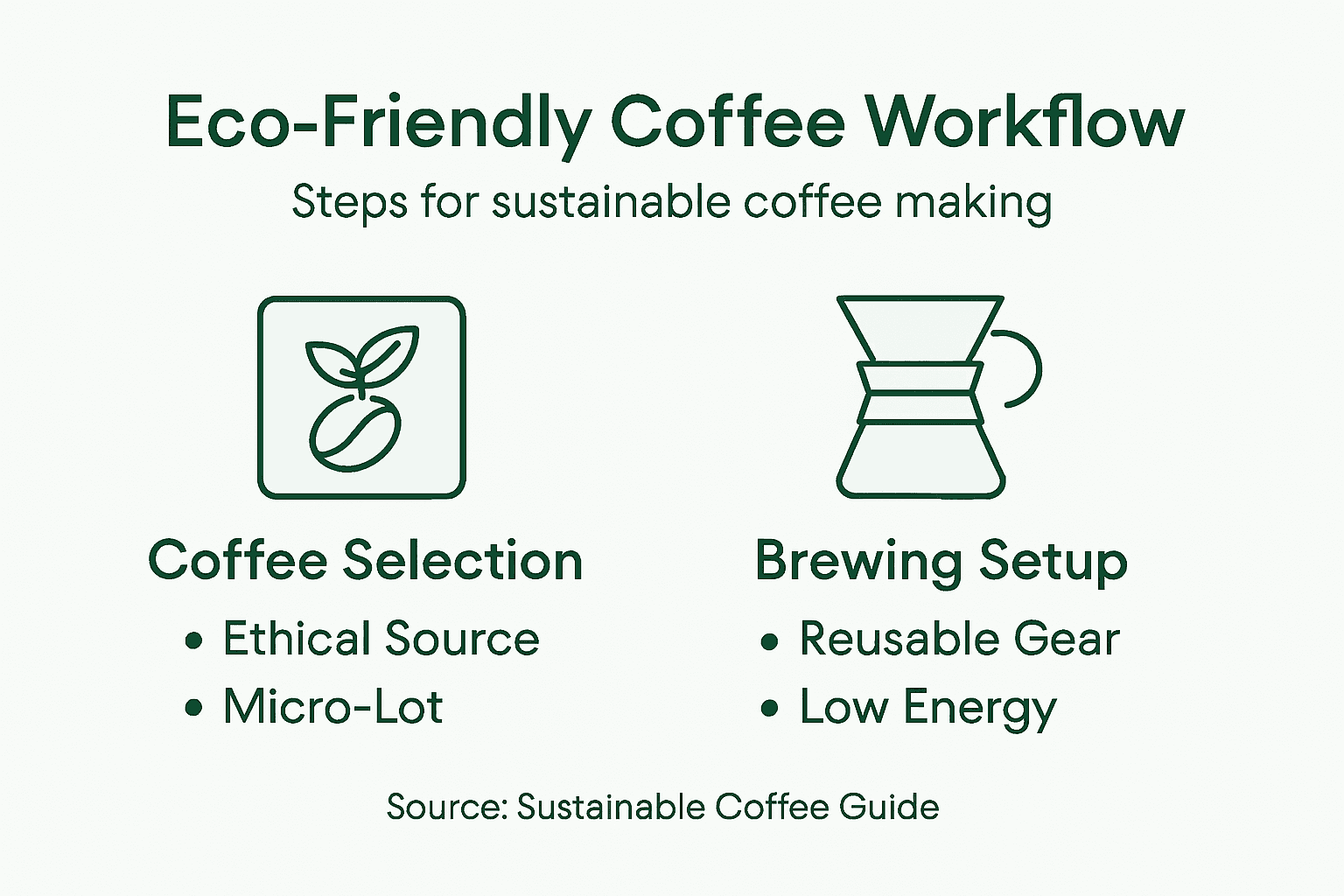
Pro tip: Look for micro-lot or single-origin coffees that provide detailed traceability information about their production process and environmental impact.
Step 2: Set up eco-friendly brewing equipment
Transforming your coffee brewing routine into an environmentally responsible practice starts with selecting sustainable brewing equipment that minimizes waste and reduces energy consumption. By making intentional choices about your coffee-making tools, you can significantly lower your ecological footprint.
When setting up your eco-friendly brewing station, consider these key equipment recommendations:
- Manual brewing methods like French press or pour-over
- Energy-efficient electric kettles with precise temperature controls
- Reusable metal or cloth filters instead of disposable paper filters
- Durable brewing equipment made from recycled or long-lasting materials
Sustainable coffee brewing innovations are increasingly focusing on reducing environmental impact through smarter equipment design. Modern coffee machine manufacturers are developing technologies that consume less energy and incorporate recyclable components.
Choosing the right brewing equipment is your first step toward a more sustainable coffee experience.
Traditional brewing methods like Moka pots offer surprising environmental advantages. Life cycle assessments reveal that these classic brewing tools emit significantly less carbon dioxide compared to single-serve capsule machines, making them an excellent choice for eco-conscious coffee lovers.

This table summarizes the environmental impact of popular brewing methods:
| Brewing Method | Waste Generation | Energy Consumption |
|---|---|---|
| French Press | Minimal, reusable | Low, manual operation |
| Single-Serve Pod | High, non-recyclable | High, electric use |
| Pour-Over | Low, recyclable | Moderate, electric |
| Moka Pot | Very low, durable | Low, stovetop |
Selecting the right method can significantly reduce your coffee waste and energy use.
Pro tip: Invest in multi-purpose brewing equipment that can be used across different coffee preparation methods to reduce overall kitchen gadget consumption.
Step 3: Measure and use water efficiently
Optimizing your coffee brewing process means mastering precise water measurement and conservation techniques that minimize waste and maximize flavor extraction. Water is the primary ingredient in your coffee, so understanding how to use it efficiently can transform both your environmental impact and brewing quality.
Implement these water-conscious brewing strategies:
- Use a digital scale for precise water measurement
- Collect and reuse water from initial brewing stages
- Choose filtered water to improve taste and reduce potential contaminants
- Measure exactly the amount of water needed for each brew
Sustainable water management strategies demonstrate how strategic water use can significantly reduce environmental footprints in coffee production. By adopting mindful water practices, you contribute to broader sustainability efforts.
Small changes in water usage can create substantial environmental impact over time.
Climate resilience techniques emphasize the importance of optimizing water management in coffee preparation. Understanding how to minimize water waste not only supports environmental conservation but also enhances your brewing precision.
Pro tip: Invest in a narrow-spouted kettle for precise water control and consider capturing excess water for plant irrigation.
Step 4: Brew coffee with minimal waste
Brewing coffee sustainably means transforming your entire preparation process to minimize waste and maximize resource efficiency. Your brewing method can significantly impact environmental sustainability, turning each cup into an opportunity for positive ecological action.
Implement these waste-reduction brewing strategies:
- Use reusable brewing filters instead of disposable options
- Measure coffee grounds precisely to avoid excess waste
- Compost used coffee grounds for garden or plant nutrition
- Clean brewing equipment with biodegradable solutions
Circular economy strategies demonstrate how coffee production can close waste loops and contribute to sustainable development. By adopting mindful brewing practices, you transform your daily ritual into an environmentally responsible experience.
Every brewing choice represents an opportunity to reduce waste and support global sustainability.
Sustainable waste reduction practices highlight how individual actions can drive meaningful environmental change. Understanding waste minimization techniques empowers you to make more conscientious coffee preparation decisions.
Pro tip: Experiment with multiple uses for spent coffee grounds, such as natural exfoliation, odor absorption, or plant fertilizer to maximize resource potential.
Step 5: Verify quality and compost coffee grounds
Transforming your used coffee grounds into a valuable resource for sustainable living requires understanding proper quality assessment and composting techniques. By carefully managing your coffee waste, you can create nutrient-rich soil amendments while reducing environmental impact.
Follow these essential steps for coffee ground composting:
- Inspect coffee grounds for mold or unusual discoloration
- Dry used grounds completely before composting
- Mix coffee grounds with other organic materials
- Balance carbon-to-nitrogen ratios in your compost pile
Coffee grounds management techniques demonstrate their exceptional potential as a nutrient-rich organic waste material. Proper handling transforms these seemingly spent grounds into a valuable gardening resource.
Coffee grounds are more than waste - they’re a sustainable gardening solution waiting to be unlocked.
Sustainable composting practices reveal how coffee grounds can significantly improve soil fertility and structure. Understanding the microbial dynamics helps you create high-quality compost that supports plant growth and reduces landfill waste.
Pro tip: Store used coffee grounds in a well-ventilated container to prevent mold growth before adding them to your compost system.
Elevate Your Eco-Conscious Coffee Routine Today
Struggling to make every cup of coffee an environmentally responsible choice? The steps to mastering sustainable coffee making can seem complex but do not worry. By selecting sustainably sourced products and adopting waste-minimizing brewing methods you can make a real difference for the planet and support global communities. Start your journey with premium options from our Coffee and Tea example products – EcoVibe Roast where ethical sourcing meets top-tier quality.

Take the next step toward a greener coffee habit by exploring our carefully curated selection of sustainable coffee and tea. Enjoy the rewarding experience of knowing every purchase helps plant mangrove trees and removes ocean-bound plastics. Discover our Best Sellers – EcoVibe Roast to find your perfect brew and join a community dedicated to environmental stewardship. Begin your responsible coffee adventure now at EcoVibe Roast and turn your daily ritual into a force for positive change.
Frequently Asked Questions
What should I look for when selecting sustainably sourced coffee?
Choosing sustainably sourced coffee involves looking for certification labels like Fairtrade, Rainforest Alliance, or organic. Also, consider the transparency of sourcing information, ensuring that coffee farmers receive fair wages. Aim to prioritize brands that provide details about their farming practices and environmental impact.
How can I set up eco-friendly coffee brewing equipment?
To set up eco-friendly brewing equipment, select manual brewing methods like French press or pour-over instead of single-serve machines. Additionally, invest in durable tools made from recycled materials and use reusable filters to minimize waste.
How can I measure and use water efficiently for brewing coffee?
Use a digital scale to measure the precise amount of water needed for your coffee brewing. This not only enhances flavor extraction but also promotes efficient water use, helping you conserve resources effectively in your daily coffee preparation.
What are ways to brew coffee with minimal waste?
To brew coffee with minimal waste, opt for reusable filters and accurately measure your coffee grounds to prevent excess. Additionally, compost your used coffee grounds to recycle nutrients back into the soil, thus reducing overall waste in your coffee routine.
How do I verify the quality of coffee grounds before composting?
Inspect used coffee grounds for any mold or discoloration to ensure they are suitable for composting. Once confirmed, dry them completely and mix them with other organic materials to create nutrient-rich compost that supports sustainable gardening practices.
What are effective composting techniques for used coffee grounds?
To compost used coffee grounds effectively, ensure they’re thoroughly dried and maintain a balanced carbon-to-nitrogen ratio in your compost pile. Mixing them with other organic waste will enhance microbial activity, contributing to high-quality compost for your plants.
Recommended
- How to Start Eco-Conscious Coffee Habits Easily – EcoVibe Roast
- Eco-Conscious Coffee Brewing Process for Sustainable Enjoyment – EcoVibe Roast
- 7 Actionable Tips for Eco-Conscious Coffee Drinkers – EcoVibe Roast
- 7 Steps to Build Your Sustainable Coffee Checklist – EcoVibe Roast
- Trends in Coffee Machine Technology 2025 Explained - Coffee Sensor


