

Choosing coffee is no longer just about taste for many young, eco-conscious consumers. With every cup, there is an opportunity to make a difference for both people and the planet. When you understand the journey from farm to mug, you tap into the power of conscious coffee drinking—a practice that values health, ethical sourcing, and the impact your choices have on global sustainability.
Table of Contents
- Defining Conscious Coffee Drinking and Misconceptions
- Ethical Sourcing and Sustainable Practices Explained
- Certifications That Indicate Responsible Coffee
- Consumer Choices That Drive Eco Impact
- Common Mistakes and How to Avoid Them
Key Takeaways
| Point | Details |
|---|---|
| Conscious Coffee Drinking | This practice involves understanding the ethical and ecological impact of coffee, encouraging informed choices beyond taste and caffeine. |
| Ethical Sourcing | Choosing coffee with certifications like Fair Trade and Rainforest Alliance ensures fair compensation for farmers and sustainable practices. |
| Consumer Influence | Purchasing behaviors can drive sustainable practices in the coffee industry, emphasizing the importance of conscious consumerism. |
| Common Pitfalls | Avoid mistakes such as impulse buying and overlooking packaging waste, which can undermine sustainability efforts in coffee consumption. |
Defining Conscious Coffee Drinking and Misconceptions
Conscious coffee drinking transcends simply consuming a morning beverage - it represents a holistic approach to understanding coffee’s broader environmental and social impact. At its core, this practice involves making deliberate, informed choices about the coffee we consume, recognizing that each cup carries complex ethical and ecological implications.
Traditionally, coffee consumption has been viewed through narrow lenses of taste and caffeine content. However, mindful coffee consumption challenges these limited perspectives by emphasizing broader considerations:
- Origin Awareness: Understanding where coffee beans are sourced
- Ethical Production: Ensuring fair wages for farmers
- Environmental Impact: Evaluating sustainable farming practices
- Health Considerations: Examining moderate consumption patterns
Common misconceptions often prevent people from adopting a more conscious approach. Many assume that ethical coffee is significantly more expensive or less accessible, when in reality, responsible choices can be both affordable and impactful. Conscious coffee drinking isn’t about perfection, but about making progressively better decisions that support global sustainability.
The journey toward becoming a conscious coffee drinker involves continuous learning and intentional choices. By understanding coffee’s complex global ecosystem, consumers can transform their daily ritual into a meaningful act of environmental and social responsibility.
Pro tip: Start by researching the origin of your coffee and choosing brands that prioritize transparency and ethical sourcing.
Ethical Sourcing and Sustainable Practices Explained
Ethical sourcing in coffee represents a comprehensive approach to responsible consumption that goes far beyond simply selecting a beverage. Sustainable coffee production involves intricate systems that protect both environmental ecosystems and human communities involved in coffee cultivation.
Key components of ethical sourcing include:
- Fair Compensation: Ensuring living wages for coffee farmers
- Environmental Protection: Minimizing ecological disruption
- Community Development: Supporting local infrastructure and education
- Transparency: Providing clear information about coffee’s origin and production
The challenges of sustainable coffee sourcing are significant. Coffee-growing regions often face complex economic and environmental pressures that require nuanced, multifaceted solutions. Responsible sourcing means addressing interconnected issues like biodiversity preservation, water conservation, and economic empowerment for farming communities.
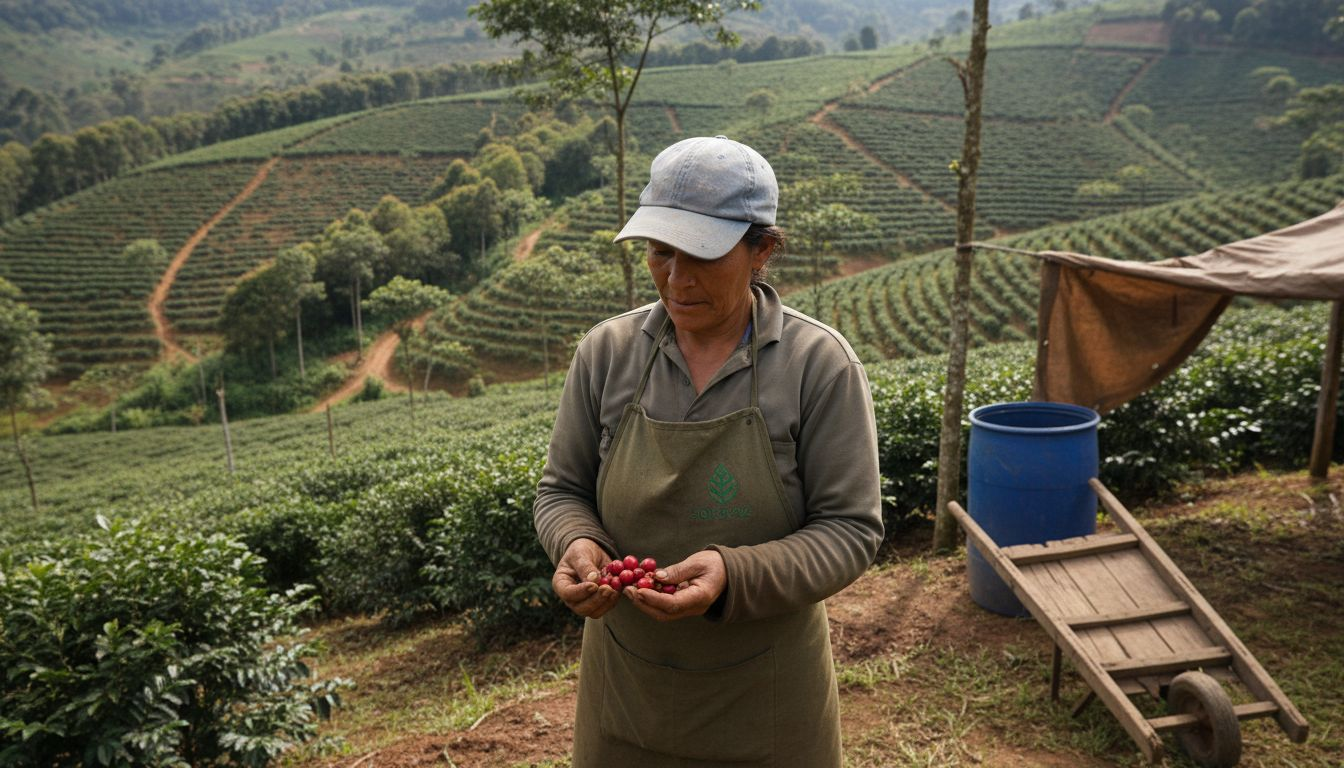
Beyond environmental considerations, responsible sourcing practices must prioritize human dignity. This involves creating supply chains that provide safe working conditions, fair compensation, and opportunities for skill development and community growth.
Pro tip: Look for third-party certifications like Fair Trade or Rainforest Alliance when selecting coffee to ensure ethical production standards.
Certifications That Indicate Responsible Coffee
Navigating the world of coffee certifications can feel overwhelming, but understanding these labels is crucial for conscious consumers seeking responsible coffee choices. These third-party certifications serve as critical indicators of a coffee’s ethical and environmental standards, helping buyers make informed purchasing decisions.
Key certifications to look for include:
- Fair Trade: Ensures fair wages and safe working conditions for farmers
- Rainforest Alliance: Focuses on environmental sustainability and wildlife conservation
- Organic: Guarantees coffee is grown without synthetic pesticides or fertilizers
- Bird Friendly: Protects migratory bird habitats through sustainable farming practices
- UTZ Certified: Promotes sustainable farming and better opportunities for farmers
Certification complexity goes beyond simple labels. Each certification represents a comprehensive approach to addressing different aspects of coffee production, from environmental protection to social justice. These standards create accountability in an industry historically plagued by exploitative practices.
While no single certification is perfect, they collectively represent significant progress toward more transparent and responsible coffee production. Consumers who understand these certifications can use their purchasing power to support more sustainable and ethical agricultural practices.
Here’s a summary of how different coffee certifications address ethical and environmental concerns:
| Certification | Ethical Focus | Environmental Impact | Consumer Benefit |
|---|---|---|---|
| Fair Trade | Fair wages and safe conditions | Supports sustainable farming | Trust in social justice |
| Rainforest Alliance | Farmer well-being and community support | Preserves forests, wildlife | Confident eco purchase |
| Organic | Health and farmer safety | Avoids synthetic chemicals | Healthier product choice |
| Bird Friendly | Farmer training and fair pricing | Protects migratory bird habitats | Biodiversity conservation |
| UTZ Certified | Skills and better income for farmers | Promotes efficient resource use | Informed sustainable buy |
Pro tip: Cross-reference multiple certifications when selecting coffee to ensure the most comprehensive approach to ethical sourcing.
Consumer Choices That Drive Eco Impact
Consumer purchasing behavior represents a powerful mechanism for driving environmental and social change in the coffee industry. Every cup of coffee purchased represents a vote for the kind of agricultural and economic practices consumers want to support.
Key ways consumers can drive positive eco impact include:
- Mindful Purchasing: Choosing brands with transparent sustainability practices
- Price Sensitivity: Willingness to pay slightly more for environmentally responsible products
- Research Engagement: Learning about coffee production methods and their global implications
- Community Support: Prioritizing brands that invest in farmer welfare and local development
- Demand Signaling: Creating market pressure for more sustainable production techniques
Conscious consumption transforms individual choices into collective economic power. By consistently selecting coffee that meets higher environmental and ethical standards, consumers send a clear message to producers about the importance of sustainable practices.
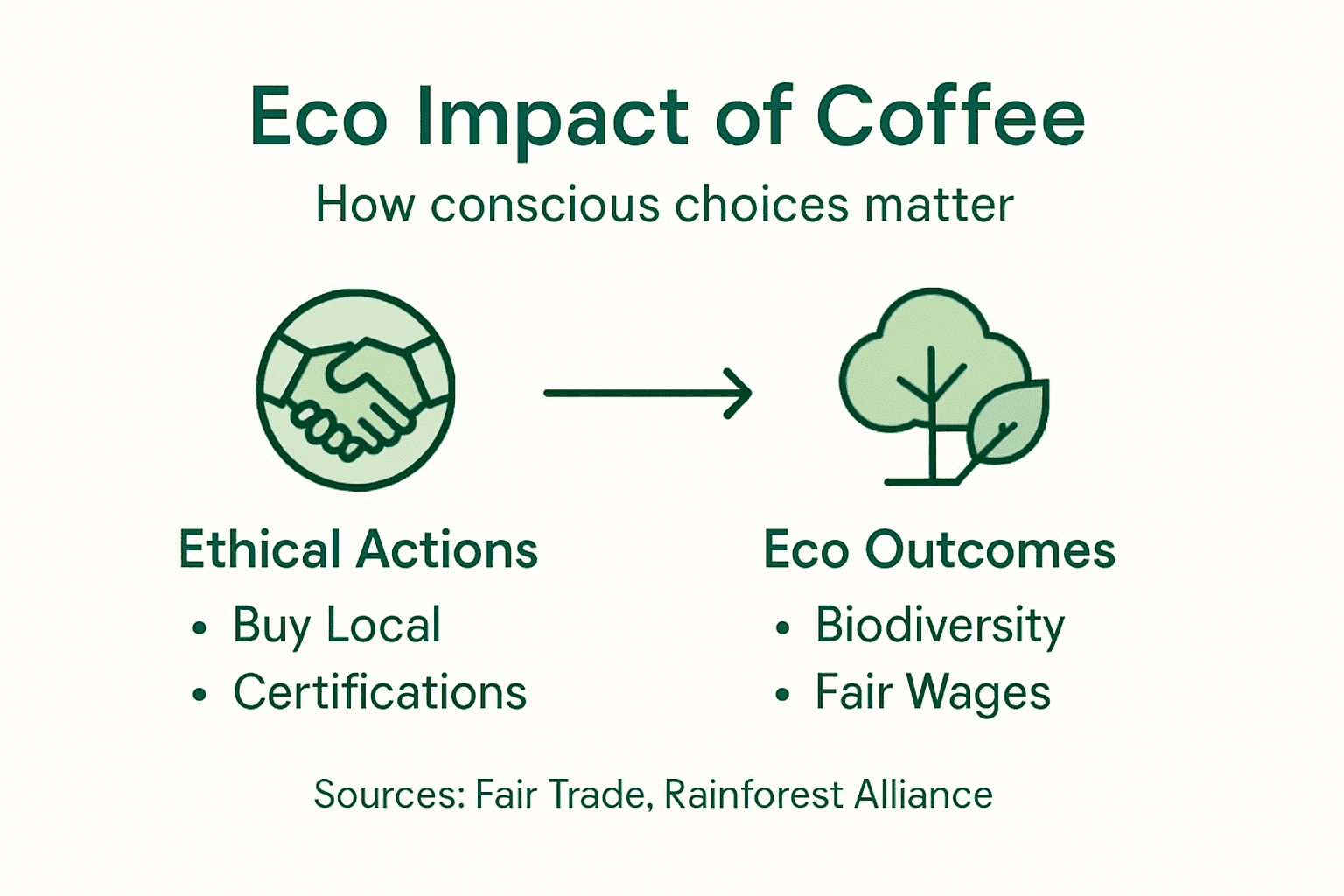
The ripple effect of these choices extends beyond individual transactions. When enough consumers prioritize eco-friendly and socially responsible coffee, entire supply chains can be fundamentally reshaped, creating meaningful systemic change in global agricultural practices.
The following table compares consumer actions and their potential impact on coffee sustainability:
| Action | Impact on Producers | Environmental Benefit | Community Effect |
|---|---|---|---|
| Choosing certified brands | Encourages fair pay | Promotes sustainable farms | Supports local economies |
| Paying premium prices | Strengthens supply chain | Funds eco initiatives | Enables infrastructure growth |
| Engaging in research | Drives transparency | Helps reduce harmful practices | Increases social awareness |
| Supporting local brands | Boosts farmer welfare | Lower transportation footprint | Fosters community development |
Pro tip: Track your coffee purchases and gradually increase the percentage of sustainably sourced beans in your routine to maximize your positive impact.
Common Mistakes and How to Avoid Them
Conscious coffee drinkers often encounter subtle pitfalls that can compromise their sustainable and ethical intentions. Common brewing mistakes not only affect taste but can also inadvertently undermine environmental and social responsibility efforts in coffee consumption.
Key mistakes to avoid include:
- Impulse Purchasing: Buying without researching brand sustainability
- Ignoring Waste: Overlooking packaging and single-use accessory environmental impact
- Inconsistent Brewing: Using incorrect equipment or techniques that waste resources
- Neglecting Equipment: Failing to maintain brewing tools efficiently
- Bulk Over Quality: Prioritizing quantity over sustainable, ethically sourced coffee
Sustainable coffee consumption requires mindful attention to both large and small details. Understanding that each brewing decision carries broader implications helps consumers make more intentional choices that align with their ecological values.
Redesigning coffee consumption habits involves continuous learning and adaptation. By staying informed about production practices, waste reduction strategies, and ethical sourcing, consumers can transform potential mistakes into opportunities for meaningful environmental engagement.
Pro tip: Create a personal coffee sustainability checklist to track and gradually improve your ecological coffee consumption practices.
Make Every Cup Count with EcoVibe Roast
If you are committed to conscious coffee drinking and want to ensure your choices truly support ethical sourcing and environmental sustainability, EcoVibe Roast is your trusted partner. The challenge for many conscious coffee drinkers lies in finding products that align with mindful consumption goals such as fair compensation for farmers, reducing environmental impact, and supporting transparent production methods. At EcoVibe Roast, you can effortlessly find premium Coffee and Tea example products – EcoVibe Roast that prioritize these values, turning your daily ritual into a powerful statement for global sustainability.

Explore our carefully selected Best Sellers – EcoVibe Roast to discover sustainably sourced coffees and teas that contribute to community development and environmental stewardship. Every purchase helps plant mangrove trees and remove ocean-bound plastics, amplifying your positive environmental impact. Join a community of conscious consumers making a difference. Visit EcoVibe Roast now and take the next step toward transforming your coffee habits into acts of real ecological and social responsibility.
Frequently Asked Questions
What is conscious coffee drinking?
Conscious coffee drinking is a holistic approach to consuming coffee that emphasizes understanding the environmental and social impacts associated with coffee production. It involves making informed choices about the origin, ethical production practices, and sustainability of coffee.
How can I identify ethically sourced coffee?
Look for third-party certifications such as Fair Trade, Rainforest Alliance, Organic, Bird Friendly, and UTZ Certified. These labels indicate that the coffee adheres to specific ethical and environmental standards, ensuring fair treatment of farmers and sustainable farming practices.
What are some common mistakes to avoid when aiming for sustainable coffee consumption?
Common mistakes include impulse purchasing without researching brand sustainability, ignoring packaging waste, neglecting equipment maintenance, and prioritizing quantity over quality. To avoid these pitfalls, focus on informed decisions and maintain a sustainable coffee checklist.
How does consumer behavior influence the coffee industry?
Consumer purchasing behavior drives environmental and social change in the coffee industry. By choosing brands with transparent sustainability practices and supporting ethical sourcing, consumers create market pressure that encourages sustainable practices throughout the supply chain.
Recommended
- Why Choose Ethical Coffee: Impact on Daily Life – EcoVibe Roast
- Why Support Eco-Friendly Coffee: Positive Impact Unveiled – EcoVibe Roast
- Why Eco-Conscious Coffee Matters for Our Planet – EcoVibe Roast
- How to Start Eco-Conscious Coffee Habits Easily – EcoVibe Roast
- Trends in Coffee Machine Technology 2025 Explained - Coffee Sensor


