

More than 70 percent of American coffee drinkers under thirty five actively seek out brands that protect both people and the planet. As awareness of climate change grows, your choice of coffee beans becomes a real act of environmental impact. This guide uncovers the essential steps for finding coffee that is ethically sourced, environmentally responsible, and supports the well-being of farming communities around the world.
Table of Contents
- Step 1: Identify Trusted Sustainable Coffee Certifications
- Step 2: Research Origins And Select Ethical Suppliers
- Step 3: Compare Eco-Friendly Packaging Options
- Step 4: Evaluate The Company’s Environmental Initiatives
- Step 5: Verify Impact Before Making Your Purchase
Quick Summary
| Key Insight | Explanation |
|---|---|
| 1. Identify Trusted Certifications | Look for Rainforest Alliance, Organic, and Fair Trade certifications to ensure sustainable coffee sourcing and ethical practices. |
| 2. Research Coffee Origins | Investigate supplier practices to connect with brands that prioritize environmental sustainability and fair treatment of farmers. |
| 3. Evaluate Sustainable Packaging | Choose coffee packaged in biodegradable or recyclable materials to minimize environmental impact while preserving freshness. |
| 4. Assess Company Initiatives | Verify company commitments to sustainability through transparency reports detailing their environmental strategies and social impact. |
| 5. Verify Impact Before Purchase | Investigate the actual sustainability of coffee brands by examining metrics related to economic, social, and environmental contributions. |
Step 1: Identify trusted sustainable coffee certifications
When selecting planet friendly coffee beans, understanding sustainable certifications is your roadmap to making an environmentally responsible choice. These certifications help you quickly identify beans that support ecological practices and worker welfare.
Three primary certifications stand out in the sustainable coffee world: Rainforest Alliance, Organic, and Fair Trade. Rainforest Alliance certification focuses on environmental protection and social responsibility, ensuring coffee farms maintain biodiversity and provide good working conditions. Organic certification guarantees beans are grown without synthetic chemicals, protecting both ecosystems and farmer health. Fair Trade certification emphasizes economic justice, ensuring farmers receive fair wages and work in supportive community conditions.
Look for these certification logos directly on coffee packaging or brand websites. Each mark represents a different aspect of sustainability: environmental protection, chemical free farming, or economic equity. Some brands might carry multiple certifications, which is an excellent indicator of comprehensive sustainable practices.
Pro tip: When shopping online or in stores, take a moment to research the specific requirements behind each certification to understand their unique environmental and social impact.
Here’s how major coffee certifications address different sustainability aspects:
| Certification | Environmental Focus | Social Impact | Economic Benefits |
|---|---|---|---|
| Rainforest Alliance | Biodiversity protection | Good working conditions | Incentives for sustainable farming |
| Organic | No synthetic chemicals | Safer conditions for farmers | Premium prices for organic beans |
| Fair Trade | Encourages eco-friendly methods | Supports community development | Guarantees minimum farmer income |
Step 2: Research origins and select ethical suppliers
Understanding the journey of your coffee beans from farm to cup helps you make more responsible purchasing decisions. Your goal is to connect with suppliers who prioritize both environmental sustainability and worker welfare.
Start by investigating coffee origins and sourcing practices. Each coffee growing region has unique characteristics that impact sustainability. Look for suppliers who transparently share details about their farming communities, including wage structures, environmental practices, and community development initiatives. Some key questions to ask include: Do farmers receive fair compensation? Are sustainable agricultural methods being used? How does the supplier support local ecosystems?

When evaluating potential suppliers, prioritize those who demonstrate a comprehensive approach to ethical sourcing. This means going beyond simple certifications and examining the full scope of their social and environmental commitments. Check their websites, annual sustainability reports, and third party assessments to get a complete picture of their impact.
Pro tip: Create a spreadsheet to track and compare different coffee suppliers, noting their sustainability practices, origin details, and ethical commitments to help you make a well informed selection.
Step 3: Compare eco-friendly packaging options
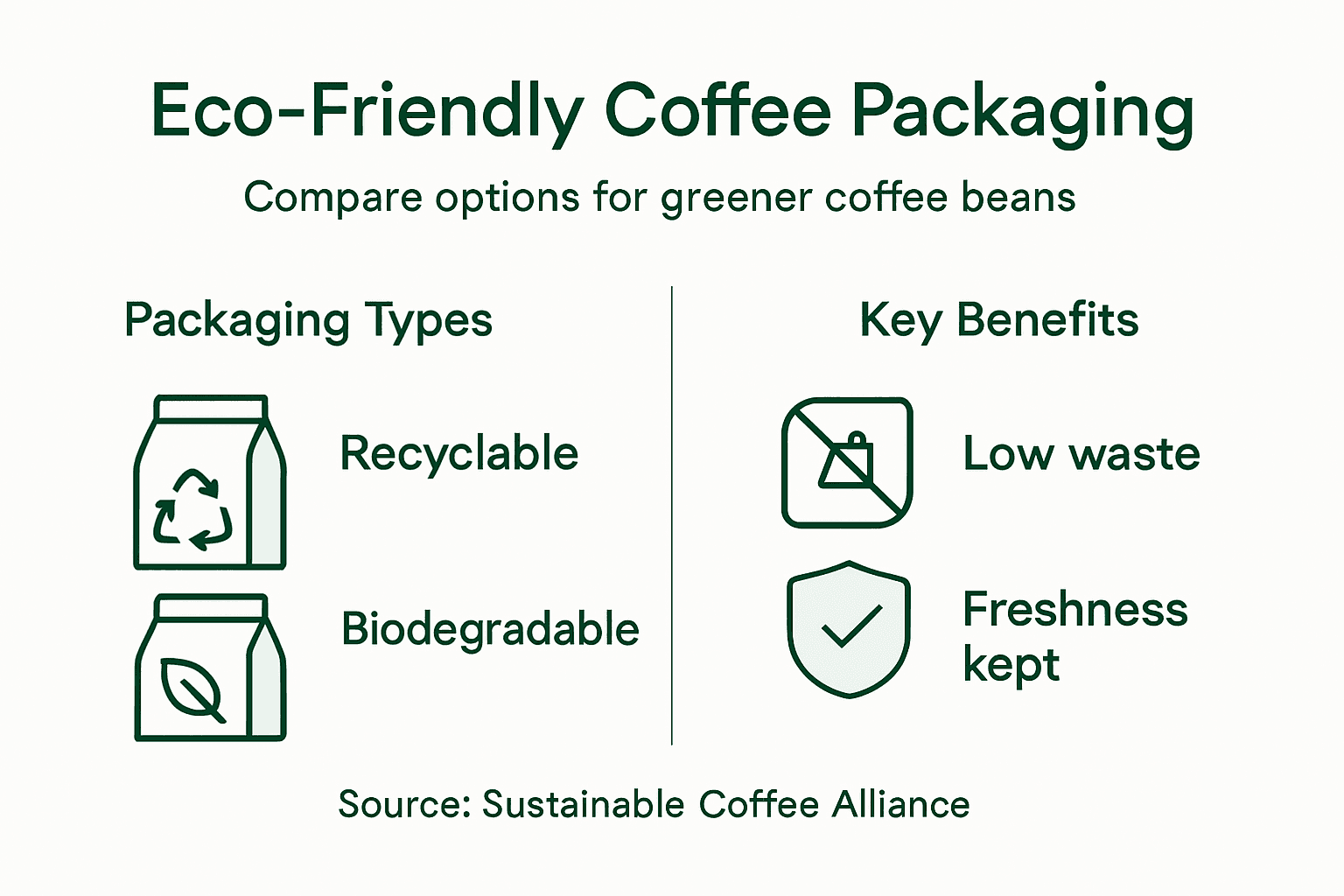
Reducing packaging waste is a critical step in choosing planet-friendly coffee beans. Your mission is to understand and evaluate sustainable packaging alternatives that minimize environmental impact while preserving coffee quality.
Coffee packaging innovations are transforming how we think about sustainable materials. Look for packaging that balances multiple sustainability factors including material circularity, carbon footprint, and end-of-life design. The most advanced options now include biodegradable films created from coffee by-products like husks and spent grounds, which dramatically reduce waste and create a circular economy approach to packaging.
When comparing packaging options, consider several key criteria. Recyclable mono-material structures offer better recycling potential, while post-consumer recycled materials reduce reliance on virgin plastics. Be cautious about compostable bags, as they often require industrial composting facilities that might not be available in your local area. Ideal packaging should maintain coffee freshness for 12 to 18 months while minimizing environmental impact.
Pro tip: Prioritize coffee brands that provide clear information about their packaging sustainability and offer transparent details about material sourcing and recyclability.
Compare these common coffee packaging options for sustainability and performance:
| Packaging Type | Environmental Advantage | Limitation | Coffee Freshness |
|---|---|---|---|
| Biodegradable film | Utilizes coffee by-products | Industrial composting required | Good (12-18 months) |
| Recyclable mono-material | Easily processed in recycling | Limited local recycling access | High |
| Post-consumer recycled | Lowers virgin plastic use | May compromise durability | Moderate to high |
Step 4: Evaluate the company’s environmental initiatives
Going beyond coffee beans means understanding how a company truly impacts our planet. Your goal is to dig deeper into their environmental commitments and verify their sustainability claims beyond surface level marketing.
Company sustainability strategies vary significantly across the coffee industry. Look for comprehensive environmental initiatives that demonstrate a holistic approach to sustainability. This means examining their entire value chain practices including carbon emissions, water usage, waste reduction, and community support programs. Pay special attention to companies that provide transparent annual sustainability reports, detailing specific metrics and progress toward environmental goals.
When assessing a company’s environmental credentials, consider multiple dimensions. Check if they invest in regenerative agriculture, support local farming communities, reduce plastic waste, and implement renewable energy in their production processes. Look for specific, measurable commitments rather than vague environmental promises. Credible companies will often share detailed impact reports, third party certifications, and ongoing sustainability projects that demonstrate their genuine commitment to environmental stewardship.
Pro tip: Use online sustainability databases and corporate social responsibility reports to cross reference and validate the environmental claims made by coffee brands.
Step 5: Verify impact before making your purchase
Choosing planet-friendly coffee means going beyond good intentions and understanding the real world consequences of your purchase. Your mission is to become a conscious consumer who investigates the actual sustainability impact of coffee brands.
Sustainability assessment requires deep investigation into economic, social, and environmental dimensions. Third-party certifications are helpful, but they do not tell the entire story. Look beyond basic labels to understand how coffee brands genuinely support farming communities, protect ecosystems, and create meaningful change. Examine their transparency reports, community engagement programs, and specific measurable outcomes rather than accepting broad marketing claims.
Pay attention to key indicators that demonstrate authentic sustainability. These include direct farmer compensation, investment in local infrastructure, biodiversity preservation efforts, carbon reduction strategies, and community development initiatives. Credible brands will provide detailed documentation showing their impact, including specific metrics about water conservation, worker welfare, and environmental restoration. Remember that true sustainability goes far beyond a simple certification stamp and requires comprehensive, multi-dimensional commitment.
Pro tip: Create a checklist of sustainability criteria and score each coffee brand you consider, focusing on concrete evidence and quantifiable impact measurements.
Discover Truly Planet-Friendly Coffee Choices at EcoVibe Roast
Choosing coffee that aligns with your values can feel overwhelming when faced with certifications, ethical sourcing, and sustainable packaging. The challenge is clear: how do you find premium coffee beans that genuinely honor the environment and farming communities meanwhile supporting meaningful environmental initiatives? You want transparency, proven impact, and quality in every cup.
At EcoVibe Roast, we understand these goals deeply. Our carefully curated selection highlights sustainably sourced coffee and tea products that meet rigorous standards in environmental protection and social responsibility. With each purchase, you support initiatives like mangrove tree planting and ocean-bound plastic removal, helping you create a measurable positive impact beyond the cup. Dive into our planet-friendly coffee collection to explore beans with trusted certifications and packaging innovations designed to reduce waste.

Start your journey as a conscious coffee drinker today by choosing EcoVibe Roast. Discover exceptional flavor combined with genuine sustainability efforts that make a difference for farming communities and ecosystems alike. Visit EcoVibe Roast now and enjoy coffee that tastes good and feels right.
Frequently Asked Questions
How can I identify trusted sustainable coffee certifications?
To identify trusted sustainable coffee certifications, look for labels such as Rainforest Alliance, Organic, and Fair Trade on coffee packaging. These certifications focus on environmental protection, chemical-free farming, and fair wages for farmers. Research the requirements behind each certification to understand their specific impact before making a purchase.
What should I consider when researching coffee origins and suppliers?
When researching coffee origins and suppliers, prioritize those that transparently share their farming practices and worker compensation structures. Look for suppliers who utilize sustainable agricultural methods and support local ecosystems. Ask key questions about farmer wages and community initiatives to ensure you are choosing ethical suppliers.
What eco-friendly packaging options should I look for in coffee?
Look for coffee packaging that is biodegradable, recyclable, or made from post-consumer recycled materials. These options minimize environmental impact while maintaining coffee freshness for 12 to 18 months. Evaluate the details provided by brands about their packaging sustainability to make an informed choice.
How can I evaluate a company’s environmental initiatives?
To evaluate a company’s environmental initiatives, examine their value chain practices, such as carbon emissions and waste reduction efforts. Look for transparent annual sustainability reports that detail their environmental goals and progress. Focus on specific commitments to regenerative agriculture and community support to gauge their overall environmental impact.
What steps can I take to verify the sustainability impact of coffee brands?
To verify the sustainability impact of coffee brands, review their transparency reports, community engagement programs, and measurable outcomes. Create a checklist of sustainability criteria and assess each brand based on concrete evidence, such as farmer compensation and biodiversity efforts. Look for detailed documentation that highlights their genuine commitment to sustainability.
Recommended
- Five Eco Friendly Coffee Hacks for a Greener Cup Guide – EcoVibe Roast
- Transform Your Morning Routine: The Eco-Friendly Coffee Showdown – EcoVibe Roast
- EcoVibe Roast: Sustainable, Ethical Coffee for a Planet-Positive Brew
- News – EcoVibe Roast
- Does Coffee Contain Gluten: Complete Guide – naturessoulshop


