

Most American coffee drinkers are surprised to learn that over 60 percent of global coffee production relies on smallholder farms facing environmental challenges. Choosing sustainable coffee isn’t just about taste, it’s about shaping a fairer and greener future for farming communities worldwide. This guide uncovers actionable steps to help you find ethical sources, support reputable eco brands, and track real impact on both the planet and local livelihoods.
Table of Contents
- Step 1: Research Ethical Coffee Sources Online
- Step 2: Evaluate Farm Sustainability Certifications
- Step 3: Purchase Coffee From Reputable Eco Brands
- Step 4: Participate In Community And Environmental Initiatives
- Step 5: Verify The Impact Of Your Support
Quick Summary
| Key Point | Explanation |
|---|---|
| 1. Research ethical coffee sources | Use online platforms to find credible sustainable coffee sourcing efforts and verify their claims about social and environmental practices. |
| 2. Evaluate sustainability certifications | Examine coffee certifications like Fair Trade and Rainforest Alliance, focusing on their impact on worker welfare and ecological standards. |
| 3. Choose coffee from reputable brands | Purchase from eco-friendly brands that prioritize organic practices and provide transparency about their sourcing and impact metrics. |
| 4. Engage in community initiatives | Participate in coffee improvement programs and connect with networks to support sustainable agricultural practices directly. |
| 5. Verify your support’s impact | Review reports and engage with organizations to track the effectiveness of your contributions to sustainable coffee farming communities. |
Step 1: Research ethical coffee sources online
Researching ethical coffee sources online is your first crucial step toward supporting sustainable coffee farms and making planet positive beverage choices. By leveraging digital resources and understanding complex supply chains, you can make informed decisions that directly impact coffee farming communities.
Start your research by exploring specialized platforms that track sustainable coffee sourcing efforts. These databases provide comprehensive insights into transparency and traceability within global coffee supply networks. Look for organizations that publish detailed reports about farmer welfare, environmental practices, and economic sustainability. Credible sources like the Global Coffee Platform offer annual reports highlighting collaborative initiatives that support smallholder farmers and promote responsible purchasing practices.
As you investigate potential coffee sources, pay attention to certifications like Fair Trade, Rainforest Alliance, and Organic. These labels indicate rigorous standards for environmental stewardship and worker protection. Check company websites for detailed information about their sourcing practices, farmer partnerships, and sustainability commitments. Cross reference multiple sources to verify the authenticity of their claims and understand the actual impact of their programs.
Pro Tip: Create a spreadsheet to track different coffee brands sustainable sourcing practices, allowing you to compare their environmental and social impact quickly and make more informed purchasing decisions.
Step 2: Evaluate farm sustainability certifications
Understanding and evaluating sustainability certifications is crucial for conscientious coffee consumers who want to support ethical farming practices. This step will help you navigate the complex world of coffee certifications and make informed purchasing decisions that genuinely support farmer communities.

Start by examining sustainability certification schemes that go beyond basic environmental standards. Look for certifications like Rainforest Alliance and UTZ, which now operate under a unified certification system addressing comprehensive agricultural practices. These programs evaluate multiple dimensions including worker welfare, environmental protection, farm management, and community development. Assess their specific criteria such as minimum price guarantees, worker safety standards, biodiversity preservation, and community investment initiatives.
Carefully compare different certification programs by reviewing their detailed documentation, annual reports, and third party assessments. Pay special attention to how these certifications directly impact local farming communities and measure their actual economic and environmental outcomes. Verify the certification’s transparency by checking whether they provide specific data about farmer income improvements, ecological conservation efforts, and long term sustainability metrics.
Pro Tip: Create a comparative chart ranking different coffee certifications based on their social impact, environmental standards, and farmer empowerment metrics to make more strategic purchasing decisions.
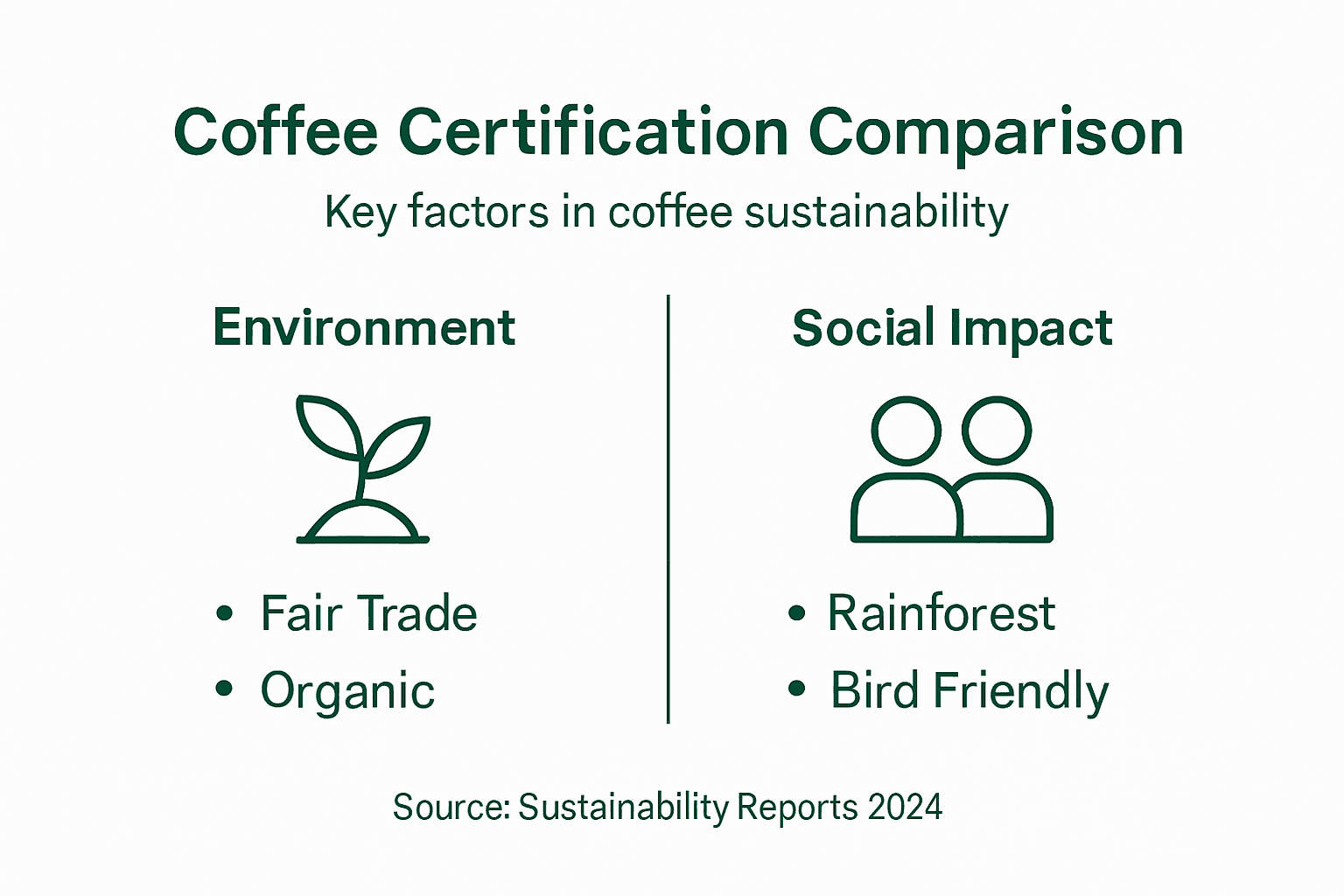
Here’s a quick comparison of major coffee sustainability certifications and their primary focus areas:
| Certification | Environmental Focus | Social Focus | Economic Focus |
|---|---|---|---|
| Fair Trade | Soil and water protection | Worker rights and safety | Minimum price guarantees |
| Rainforest Alliance | Biodiversity preservation | Farm community development | Improved market access |
| USDA Organic | No synthetic chemicals | Healthier working conditions | Premium market pricing |
| Bird Friendly | Wildlife habitat protection | Farm community awareness | Niche market promotion |
| UTZ (now merged) | Sustainable farming methods | Inclusive worker training | Productivity improvement |
Step 3: Purchase coffee from reputable eco brands
Purchasing coffee from reputable eco brands is a powerful way to directly support sustainable farming practices and make a positive environmental impact. This step will guide you through identifying and selecting coffee brands that prioritize ecological responsibility and farmer welfare.
Start by looking for coffees with organic certification standards that guarantee environmentally responsible production methods. These certifications ensure the coffee is produced without synthetic chemicals, using sustainable agricultural practices that protect both ecosystem health and farmer communities. Beyond organic labels, seek out additional credentials like Bird Friendly certification, which demonstrates a commitment to protecting wildlife habitats and promoting biodiversity in coffee growing regions.
Research brands that transparently share their sourcing practices, farm partnerships, and sustainability metrics. Look for companies that provide detailed information about their supply chains, including specific data about farmer compensation, environmental conservation efforts, and community development initiatives. Check for third party audits, sustainability reports, and direct farmer relationships that demonstrate a genuine commitment to ethical coffee production.
Pro Tip: Download sustainability scorecards from reputable environmental organizations to compare coffee brands and make more informed purchasing decisions that align with your ecological values.
Step 4: Participate in community and environmental initiatives
Participating in community and environmental initiatives transforms your coffee consumption from a personal choice to a powerful act of global support. By engaging directly with coffee sustainability efforts, you can help create meaningful change that benefits farmers, ecosystems, and global coffee production.
Explore coffee improvement programs that support smallholder farmers and climate resilience. These initiatives often seek volunteers, donors, and advocates who can help develop sustainable agricultural practices, support seed system improvements, and strengthen local coffee farming communities. Look for opportunities with organizations like World Coffee Research, university agricultural programs, and international development agencies that work directly with coffee producing regions.
Connect with local and global coffee sustainability networks to amplify your impact. Attend webinars, participate in fundraising events, share educational resources on social media, and support crowdfunding campaigns that directly benefit coffee farming communities. Consider joining membership programs or making recurring donations to organizations developing climate resilient coffee varieties, supporting farmer education, and implementing sustainable agricultural technologies.
Pro Tip: Create a dedicated email folder to track your coffee sustainability engagement, storing newsletters, impact reports, and communication from organizations you support to maintain your long term commitment.
Step 5: Verify the impact of your support
Verifying the impact of your support transforms your coffee sustainability efforts from a passive contribution to an active, informed engagement. This step empowers you to understand exactly how your choices create meaningful change for coffee farming communities and global ecosystems.
Review coffee certification data reports that provide comprehensive insights into the tangible outcomes of sustainable coffee initiatives. These reports offer concrete metrics about environmental conservation, farmer income improvements, and community development programs. Look for specific data points such as acres of protected biodiversity, percentage increases in farmer wages, and quantifiable reductions in carbon emissions resulting from sustainable farming practices.
Engage directly with the organizations you support by requesting impact statements, attending virtual community meetings, and following their progress reports. Seek out transparent communication channels that provide detailed breakdowns of how donations and consumer support translate into real world improvements. Track the long term developments in regions where sustainable coffee initiatives are implemented, paying attention to changes in agricultural practices, community infrastructure, and ecological health.
The following table summarizes practical ways to verify the true impact of your sustainable coffee choices:
| Verification Method | What to Look For | Example Resource |
|---|---|---|
| Certification data reports | Farmer income, environmental gains | Rainforest Alliance Data Report |
| Impact statements | Specific community improvements | Company annual sustainability report |
| Third-party audits | Independent assessments | NGO audit publications |
| Direct engagement | Transparent updates, feedback | Organization webinars, Q&A |
Pro Tip: Create a digital impact tracking journal to document and visualize the positive changes resulting from your sustainable coffee support, helping you stay motivated and connected to the broader mission.
Make Every Coffee Choice Count for Farmers and the Planet
Supporting sustainable coffee farms requires thoughtful choices grounded in transparency, ethical certifications, and a genuine commitment to environmental stewardship. If you want to empower smallholder farmers, ensure fair wages, and protect delicate ecosystems like mangroves and wildlife habitats, your purchasing decisions must align with these goals. Key challenges highlighted include navigating certifications, verifying genuine impact, and finding brands that prioritize planet positive practices.
At EcoVibe Roast, we make it simple to take direct action by offering a curated selection of sustainably sourced coffees and teas that reflect these exact values. Every product you choose contributes to planting mangrove trees and removing ocean-bound plastics, amplifying your impact far beyond your cup. We provide transparent information about our sourcing, eco certifications, and community initiatives to help you shop confidently and responsibly.

Start supporting ethical coffee farming today by exploring our collection of carefully vetted coffee beans, single-serve pods, and herbal teas at EcoVibe Roast. Take the next step in making your daily brew a powerful statement of environmental and social commitment. Visit EcoVibe Roast now and join a community of conscious consumers fostering sustainable living with every sip.
Frequently Asked Questions
How can I start researching ethical coffee sources?
Research ethical coffee sources by exploring specialized platforms and databases that track sustainable coffee sourcing efforts. Prioritize organizations that provide insights into transparency and farmers’ welfare, and compile your findings in a spreadsheet for easy comparison.
What should I look for in coffee sustainability certifications?
When evaluating coffee sustainability certifications, focus on programs that assess environmental protection, farmer welfare, and community development. Compare the specific criteria and transparency of each certification to understand their impact on local farming communities.
How do I identify reputable eco-friendly coffee brands?
To identify reputable eco-friendly coffee brands, look for those with credible certifications such as organic or Bird Friendly. Research their sourcing practices and check if they share data about farmer compensation and environmental initiatives.
What community initiatives can I participate in to support coffee sustainability?
You can participate in coffee sustainability initiatives by volunteering for programs that support smallholder farmers and promote sustainable agricultural practices. Look for local or global networks that welcome engagement through fundraising events and educational outreach.
How can I verify the impact of my support for sustainable coffee farms?
Verify the impact of your support by reviewing certification data reports that provide metrics on farmer income and environmental gains. Engage directly with organizations to request impact statements and stay updated about the outcomes of your contributions.


