

Choosing carbon neutral coffee is more than a trend for American millennials—it is a powerful way to support environmental progress with every cup. Over 40% of North American coffee drinkers now seek products that combine premium quality and low carbon footprints. Sustainable choices matter because each purchase directly impacts climate restoration efforts and supports eco-friendly farming. This guide reveals exactly how carbon neutral coffee standards empower you to transform your coffee routine into a meaningful part of your sustainable lifestyle.
Table of Contents
- Defining Carbon Neutral Coffee Standards
- Lifecycle and Production Emissions Explained
- Certification and Verification Processes
- Eco-Friendly Farming and Offset Strategies
- Comparing Carbon Neutral and Organic Coffee
- Risks, Costs, and Benefits for Consumers
Key Takeaways
| Point | Details |
|---|---|
| Holistic Carbon Neutral Standards | Carbon neutral coffee production requires comprehensive emission measurements and strategies that encompass the entire production process, moving beyond simple offsetting. |
| Lifecycle Emissions Understanding | Nearly 50% of coffee’s total emissions occur during farming and post-harvest; understanding these sources is vital for effective reduction strategies. |
| Importance of Certification | Third-party certifications ensure transparency and accountability in carbon neutrality claims, validating producers’ sustainability efforts. |
| Consumer Considerations | Buyers must weigh the price premium of carbon neutral coffee against its environmental benefits, emphasizing the need for transparency in sustainability claims. |
Defining Carbon Neutral Coffee Standards
Carbon neutral coffee represents a transformative approach in sustainable beverage production, where coffee producers systematically measure, reduce, and offset their total greenhouse gas emissions throughout the entire production process. Comprehensive sustainability frameworks emphasize that true carbon neutrality extends far beyond simple carbon offsetting, requiring holistic strategies that address ecological impact at every stage.
The emerging global standards for carbon neutral coffee involve multiple critical dimensions. Producers must conduct precise carbon footprint calculations that encompass every phase of coffee production, including cultivation, processing, transportation, and packaging. Whole value chain approaches have become essential, meaning coffee companies can no longer focus solely on farm-level emissions but must evaluate their complete operational carbon output.
Key standards for carbon neutral coffee typically include:
- Comprehensive greenhouse gas emissions measurement
- Implementing renewable energy in production facilities
- Utilizing sustainable agricultural practices
- Investing in verified carbon offset projects
- Transparent reporting of carbon reduction strategies
Pro tip: When selecting carbon neutral coffee, look for third-party certifications that provide detailed documentation of a company’s carbon reduction and offsetting strategies.
Lifecycle and Production Emissions Explained
Coffee production generates complex carbon emissions across multiple stages, with critical uncertainties in emissions calculations challenging accurate carbon accounting. The journey from coffee bean to cup involves intricate environmental interactions that contribute significantly to the beverage’s overall carbon footprint.
The coffee production lifecycle encompasses several key emission-generating phases. Green coffee carbon footprint assessments reveal that nearly 50% of total emissions occur during farming and post-harvest stages. These critical stages include energy-intensive processes such as fertilizer application, land management, crop cultivation, and initial processing techniques that dramatically impact the environmental profile.
Key emission sources in coffee production include:
- Agricultural chemical usage
- Machinery and equipment energy consumption
- Transportation and distribution networks
- Processing facility electricity requirements
- Waste management and byproduct handling
Understanding these emission sources allows producers and consumers to identify potential reduction strategies and support more sustainable coffee production practices. By mapping each stage’s carbon output, coffee companies can develop targeted interventions to minimize their environmental impact.
Pro tip: Request transparent carbon lifecycle reports from coffee producers to understand the true environmental impact of your favorite brew.
Certification and Verification Processes
Carbon neutral coffee certification represents a complex ecosystem of rigorous standards and independent verification mechanisms designed to ensure environmental integrity and transparent sustainability claims. Voluntary certification schemes play a critical role in validating the comprehensive environmental performance of coffee producers, examining everything from farming practices to carbon offset strategies.
The verification process typically involves multiple layers of assessment. Independent certification systems utilize third-party audits, digital traceability tools, and comprehensive compliance mechanisms to validate carbon neutrality claims. These frameworks require producers to demonstrate measurable carbon reduction strategies, transparent emissions calculations, and verifiable offset investments that go beyond simple greenwashing tactics.
Key components of carbon neutral coffee certification include:
- Comprehensive greenhouse gas emissions inventory
- Detailed carbon footprint measurement methodologies
- Verification of sustainable agricultural practices
- Independent third-party auditing
- Transparent reporting and documentation
- Continuous improvement requirements
Certification bodies evaluate producers across multiple dimensions, ensuring that carbon neutral claims represent genuine environmental commitments rather than marketing strategies. This multilayered approach helps consumers confidently support coffee brands genuinely dedicated to ecological sustainability.
Pro tip: Look for certifications that provide detailed, publicly accessible carbon accounting reports to validate a coffee brand’s sustainability claims.
Eco-Friendly Farming and Offset Strategies
Coffee farmers are increasingly adopting innovative strategies to reduce carbon emissions and create sustainable agricultural ecosystems. Regenerative agricultural practices have emerged as a powerful approach to transforming traditional coffee farming into a carbon-negative enterprise, focusing on holistic environmental management and ecosystem restoration.
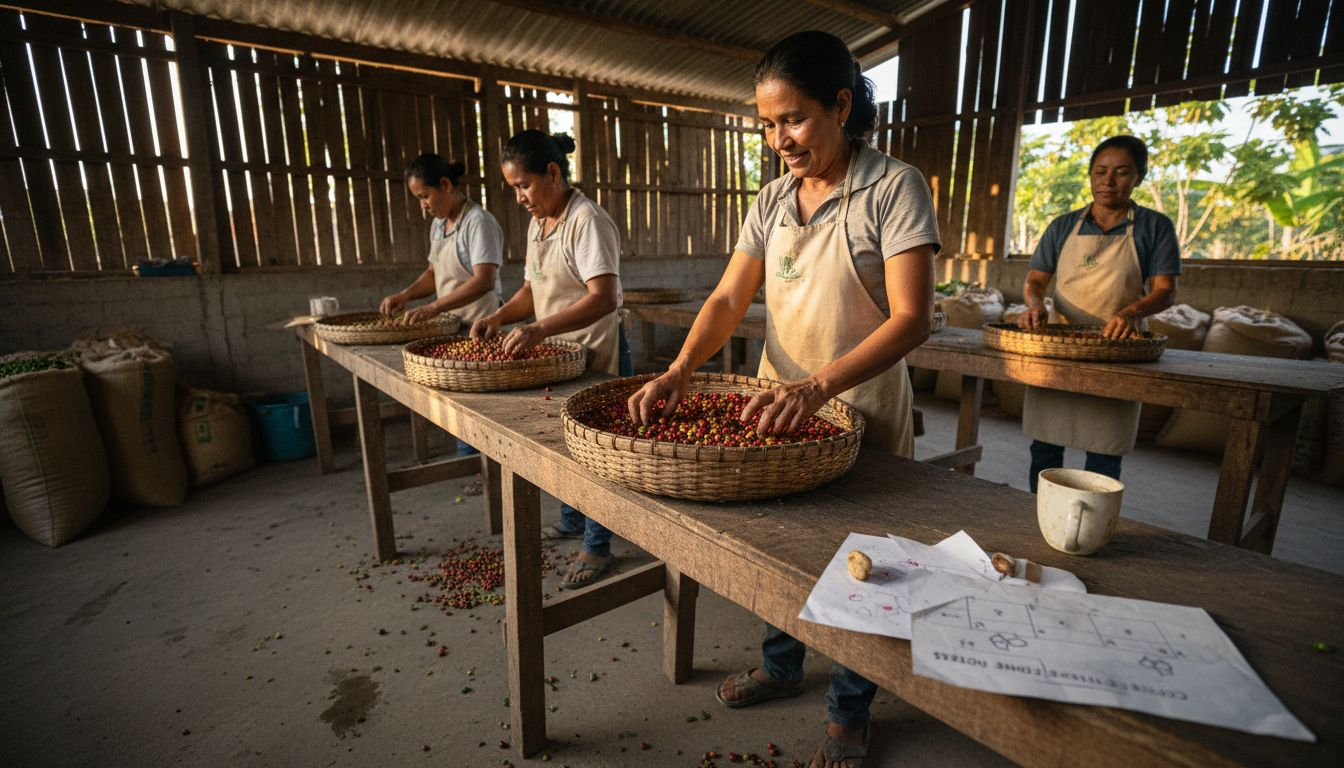
Agroforestry represents a critical strategy in carbon neutrality efforts. Carbon payment strategies demonstrate how integrating trees with coffee crops can simultaneously sequester carbon, enhance biodiversity, and provide additional income streams for farmers. These multi-layered agricultural systems create complex ecological networks that capture significantly more carbon than traditional monoculture farming approaches.
Key eco-friendly farming strategies include:
- Implementing soil conservation techniques
- Integrating native tree species
- Reducing chemical fertilizer usage
- Developing water-efficient irrigation systems
- Promoting biodiversity through mixed cropping
- Creating natural pest management approaches
By reimagining coffee production as an ecological restoration process, farmers can transform agricultural landscapes from carbon sources to carbon sinks, creating measurable environmental benefits while maintaining productive agricultural systems.
Pro tip: Ask coffee producers about their specific regenerative farming practices to understand the true environmental impact of your coffee purchase.
Comparing Carbon Neutral and Organic Coffee
Carbon neutral and organic coffee represent two distinct yet complementary approaches to sustainable beverage production. Life cycle assessments reveal significant environmental differences between conventional, organic, and carbon neutral coffee production methods, highlighting the nuanced strategies each approach employs to reduce ecological impact.
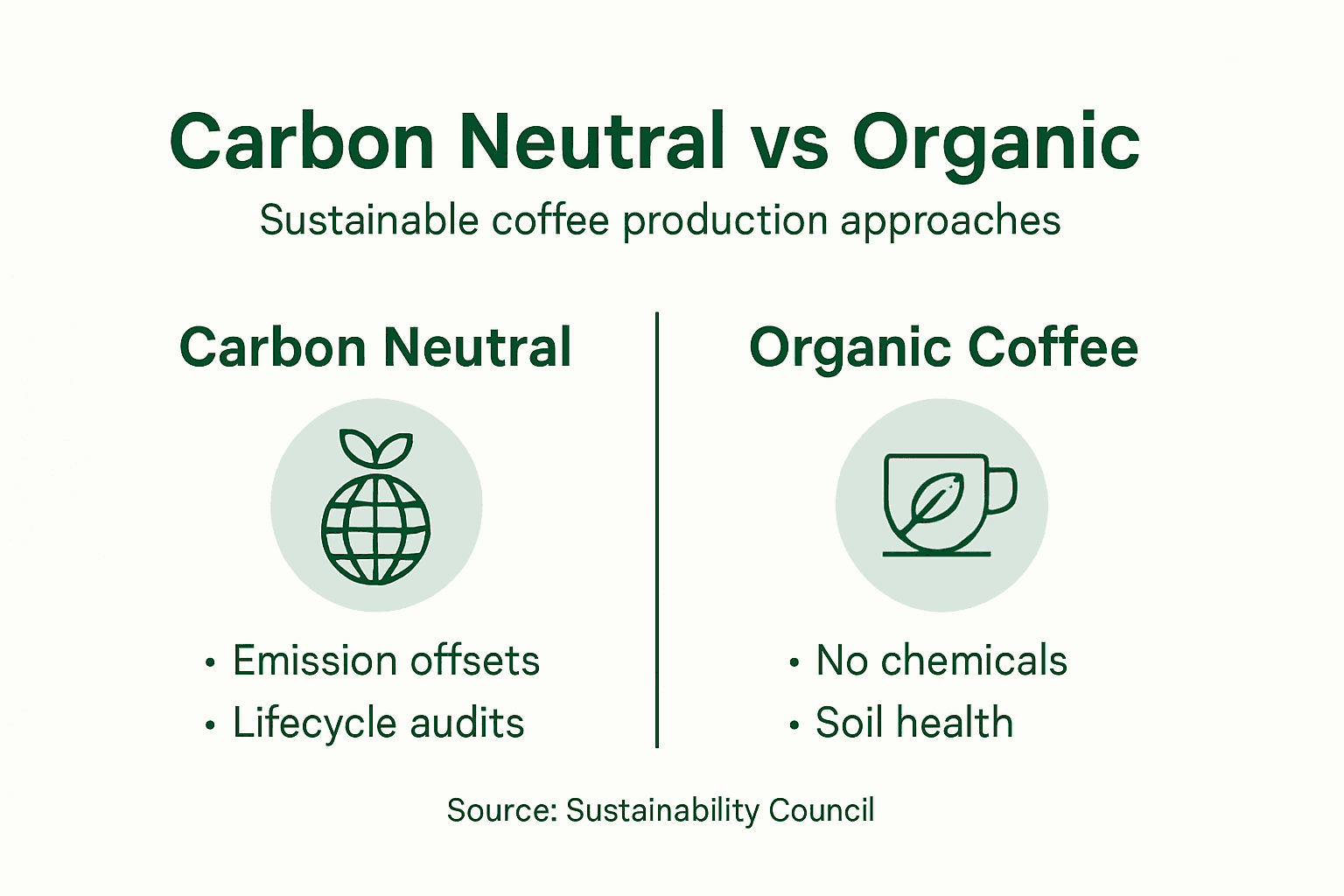
Certification frameworks distinguish key sustainability approaches by focusing on different environmental priorities. Organic coffee certification emphasizes eliminating synthetic chemicals and promoting biodiversity, while carbon neutral certification concentrates on measuring, reducing, and offsetting total greenhouse gas emissions throughout the entire production process.
Key distinctions between carbon neutral and organic coffee include:
- Emission measurement and offsetting
- Chemical usage restrictions
- Biodiversity preservation strategies
- Ecosystem management approaches
- Supply chain transparency requirements
- Carbon footprint calculation methods
Both approaches contribute to environmental sustainability, with organic methods typically reducing direct ecological harm and carbon neutral strategies addressing broader climate impact through comprehensive emissions management. Consumers seeking the most environmentally responsible coffee can look for certifications that incorporate elements from both frameworks.
Here’s a concise comparison of carbon neutral and organic coffee certifications:
| Aspect | Carbon Neutral Coffee | Organic Coffee | Combined Certification |
|---|---|---|---|
| Main Focus | Emissions reduction & offset | Eliminating synthetic chemicals | Broader sustainability goals |
| Supply Chain Scope | Entire value chain | Mainly farm & processing stages | From farm to final product |
| Biodiversity Impact | Indirect via offsets | Direct via cultivation methods | Direct and offset benefits |
| Reporting Requirement | Mandatory carbon accounting | Soil & chemical use audits | Detailed sustainability reports |
Pro tip: When purchasing coffee, prioritize brands that demonstrate comprehensive sustainability strategies combining both organic practices and carbon neutrality.
Risks, Costs, and Benefits for Consumers
Consumer purchasing decisions in carbon neutral coffee involve navigating complex trade-offs between environmental impact, pricing, and ethical considerations. The sustainable coffee marketplace presents consumers with nuanced choices that extend beyond traditional purchasing parameters, requiring careful evaluation of both economic and ecological factors.
Sustainable coffee purchasing dynamics reveal significant challenges and opportunities for environmentally conscious consumers. Premium pricing represents the most immediate financial consideration, with carbon neutral coffee typically costing 15-35% more than conventional options. However, these additional expenses directly support critical environmental restoration and emissions reduction initiatives.
Key consumer considerations include:
- Price premium vs. environmental impact
- Verification of sustainability claims
- Potential greenwashing risks
- Long-term environmental investment
- Support for sustainable agricultural practices
- Contribution to global climate mitigation efforts
Transparency becomes crucial in helping consumers make informed decisions. Detailed carbon accounting, third-party certifications, and clear communication about specific environmental investments can help build trust and justify the additional cost of carbon neutral coffee products.
Below is a summary of consumer considerations when choosing carbon neutral coffee:
| Consideration | Description | Impact on Decision |
|---|---|---|
| Price Premium | Typically 15-35% higher cost | May limit access or choices |
| Trustworthiness | Third-party certifications increase credibility | Builds consumer confidence |
| Environmental Benefits | Supports climate mitigation efforts | Attracts eco-conscious buyers |
| Transparency | Availability of reports and data | Enables informed purchasing |
Pro tip: Request detailed sustainability reports from coffee brands to understand exactly how your purchasing decisions contribute to meaningful environmental change.
Experience True Carbon Neutral Coffee with EcoVibe Roast
The challenge of navigating carbon neutral coffee standards and verifying genuine sustainability claims can feel overwhelming. You want to enjoy your coffee knowing it supports measurable emissions reduction, eco-friendly farming practices, and transparent carbon accounting. At EcoVibe Roast, we understand that authentic environmental impact involves more than labels. We deliver sustainably sourced coffee that embraces the full lifecycle approach to carbon neutrality, helping you make purchasing decisions aligned with your climate values.

Discover diverse coffee beans, single-serve pods, and herbal teas that not only taste exceptional but also contribute to planting mangrove trees and removing ocean-bound plastics with each purchase. Start supporting a community committed to ecological restoration and carbon footprint transparency today. Visit EcoVibe Roast to explore our curated selection and join a movement where every cup drives real change. Don’t wait to make your coffee routine a powerful act of sustainability.
Frequently Asked Questions
What is carbon neutral coffee?
Carbon neutral coffee is produced using a systematic approach that involves measuring, reducing, and offsetting greenhouse gas emissions throughout the entire coffee production process, ensuring minimal impact on the environment.
How do coffee producers achieve carbon neutrality?
Producers achieve carbon neutrality by calculating their carbon footprint, implementing renewable energy, utilizing sustainable agricultural practices, investing in verified carbon offset projects, and reporting their carbon reduction strategies transparently.
What are the key differences between carbon neutral coffee and organic coffee?
Carbon neutral coffee focuses on emissions reduction and offsetting across the entire value chain, while organic coffee emphasizes the elimination of synthetic chemicals and promoting biodiversity. Both contribute to sustainability but from different perspectives.
How can consumers verify the sustainability claims of carbon neutral coffee?
Consumers can verify sustainability claims by looking for third-party certifications, transparent carbon accounting reports, and detailed documentation that outlines a producer’s carbon reduction strategies and sustainable practices.


