

More than 500 billion coffee cups are thrown away every year, with many ending up in landfills despite growing eco-friendly efforts from American brands. For millennials and Gen Z who care deeply about sustainability, how your coffee is packaged matters as much as what is inside the cup. This practical guide breaks down what truly makes packaging eco-friendly, giving you the knowledge to choose products that match your environmental values.
Table of Contents
- What Makes Packaging Eco-Friendly?
- Types and Materials of Eco-Friendly Packaging
- How Eco-Friendly Packaging Is Produced
- Environmental Impact of Packaging Choices
- Common Myths and Misconceptions
Key Takeaways
| Point | Details |
|---|---|
| Eco-Friendly Packaging Is Essential | It represents innovative design aimed at minimizing environmental impact through sustainable materials and methods. |
| Lifecycle Considerations Are Crucial | Packaging must be evaluated through its entire lifecycle, from production to disposal, to effectively reduce ecological footprints. |
| Material Selection Matters | Choosing renewable or recycled materials can significantly enhance the sustainability of packaging solutions. |
| Beware of Greenwashing | Always scrutinize marketing claims and seek transparent evidence of sustainability to make informed choices. |
What Makes Packaging Eco-Friendly?
Eco-friendly packaging represents a revolutionary approach to product containment that minimizes environmental impact. At its core, sustainable packaging involves designing materials and production methods that reduce waste, conserve resources, and support broader ecological goals. Through strategic packaging innovations, companies can dramatically transform their environmental footprint.
The fundamental characteristics of eco-friendly packaging include several key elements. First, materials must be sourced responsibly and have minimal environmental consequences during production. This means prioritizing renewable resources like bamboo, recycled paper products, or plant-based plastics that decompose more readily than traditional petroleum-based alternatives. Second, packaging design should emphasize material efficiency - using the least amount of material possible while maintaining product protection. Third, end-of-life considerations are critical: truly sustainable packaging can be easily recycled, composted, or naturally biodegraded without creating long-term waste.
Implementing eco-friendly packaging requires a holistic approach that goes beyond simple material selection. Manufacturers must consider the entire lifecycle of packaging, from raw material extraction through production, transportation, usage, and eventual disposal. Innovative strategies like reducing plastic waste can include techniques such as laser etching instead of paper labels, developing edible coatings, creating refillable containers, and designing packaging that serves multiple purposes after its initial use. The goal is creating a circular economy where packaging materials continuously cycle through production and reuse without generating unnecessary waste.
Pro tip: When evaluating packaging sustainability, look beyond recycling symbols and assess the entire environmental impact from production through disposal.
Types and Materials of Eco-Friendly Packaging
Eco-friendly packaging encompasses a diverse range of innovative materials designed to minimize environmental impact while protecting products effectively. Understanding the sustainable packaging categories helps consumers and businesses make more responsible choices. These materials are typically classified into three primary types: primary packaging (direct product contact), secondary packaging (grouped product containment), and tertiary packaging (shipping and transportation protection).
The most promising eco-friendly packaging materials include several groundbreaking options. Biodegradable materials like plant-based plastics derived from corn, sugarcane, or mushroom roots offer renewable alternatives to traditional petroleum-based packaging. Recycled materials such as post-consumer paper, cardboard, and recycled plastics reduce waste and conserve natural resources. Other innovative solutions include packaging made from agricultural waste, seaweed-based films, and compostable materials that break down completely without leaving harmful residues. Some cutting-edge developments even include packaging made from agricultural byproducts like coffee grounds or wheat straw, transforming waste into valuable packaging resources.

Selecting the right eco-friendly packaging requires careful consideration of multiple factors beyond just material composition. Manufacturers must evaluate the entire lifecycle, including production energy, transportation impact, and end-of-life disposal capabilities. Sustainable packaging should not only be recyclable or compostable but also require minimal resources during production. This holistic approach means considering factors like water usage, carbon emissions, and the potential for multiple reuse cycles. Advanced technologies are also emerging that allow for packaging with reduced material thickness, integrated QR codes for recycling information, and designs that serve multiple purposes after their initial use.
Here’s a side-by-side comparison of common eco-friendly packaging materials and their ecological strengths:
| Material Type | Resource Origin | Environmental Benefit | Typical Use Examples |
|---|---|---|---|
| Plant-based plastics | Corn, sugarcane, wheat | Renewable, biodegradable | Food containers, wraps |
| Recycled paper | Post-consumer paper | Conserves trees, reduces landfill | Boxes, bags, cartons |
| Mushroom root (mycelium) | Agricultural waste | Compostable, low energy | Insulation, protective inserts |
| Seaweed-based films | Aquatic plants | Rapid growth, ocean-friendly | Snack packaging, wraps |
| Agricultural byproducts | Coffee grounds, straw | Upcycles waste, compostable | Disposable trays, pads |
Pro tip: Always check local recycling guidelines, as eco-friendly packaging effectiveness depends significantly on proper disposal infrastructure in your specific area.
How Eco-Friendly Packaging is Produced
The production of eco-friendly packaging represents a sophisticated intersection of scientific innovation and environmental consciousness. Circular economy principles guide modern manufacturing processes, transforming how packaging materials are conceived, created, and ultimately recycled. This approach moves far beyond traditional linear production models, focusing instead on creating materials that can be continuously reused or safely returned to natural systems.
Modern eco-friendly packaging production involves complex scientific techniques that integrate advanced materials science with sustainable design principles. Biopolymer composites are at the forefront of this revolution, combining natural polysaccharides with biodegradable polymers and nanoscale materials to create high-performance packaging solutions. Manufacturers now use innovative processes that significantly reduce fossil fuel dependencies, such as extracting packaging materials from agricultural waste, mushroom roots, seaweed, and other renewable resources. These techniques not only minimize environmental impact but also create packaging with remarkable strength, flexibility, and biodegradability.
The manufacturing process for eco-friendly packaging demands meticulous attention to multiple sustainability criteria. Producers must carefully evaluate each stage of production, from raw material sourcing to final product creation, ensuring minimal carbon footprint and maximum resource efficiency. Advanced technologies now enable precise control over material composition, allowing for packaging that can be composted, recycled, or even consumed safely. Some cutting-edge approaches include developing packaging with embedded seeds that can grow into plants after disposal, or creating materials that break down completely without leaving harmful microplastics.
Pro tip: Request transparency from packaging manufacturers about their production processes and material sourcing to ensure genuine sustainability.
Environmental Impact of Packaging Choices
Packaging decisions have far-reaching consequences that extend well beyond simple product protection. Global pollution challenges reveal the profound environmental burden created by consumer and industrial packaging choices. Every package represents a complex ecosystem interaction, with materials like plastics potentially persisting in natural environments for hundreds of years and causing widespread ecological disruption.
The environmental impact of packaging can be evaluated through multiple critical dimensions. Carbon footprint represents one key measurement, tracking greenhouse gas emissions generated during material production, transportation, and disposal. Single-use plastics emerge as particularly problematic, consuming significant fossil fuel resources and generating massive waste streams that contaminate oceans, soil, and waterways. Alternative packaging solutions like biodegradable materials, recycled content, and reusable packaging systems offer transformative approaches to reducing these negative environmental consequences. By selecting packaging that can be reused, composted, or efficiently recycled, consumers and businesses can dramatically minimize their ecological footprint.
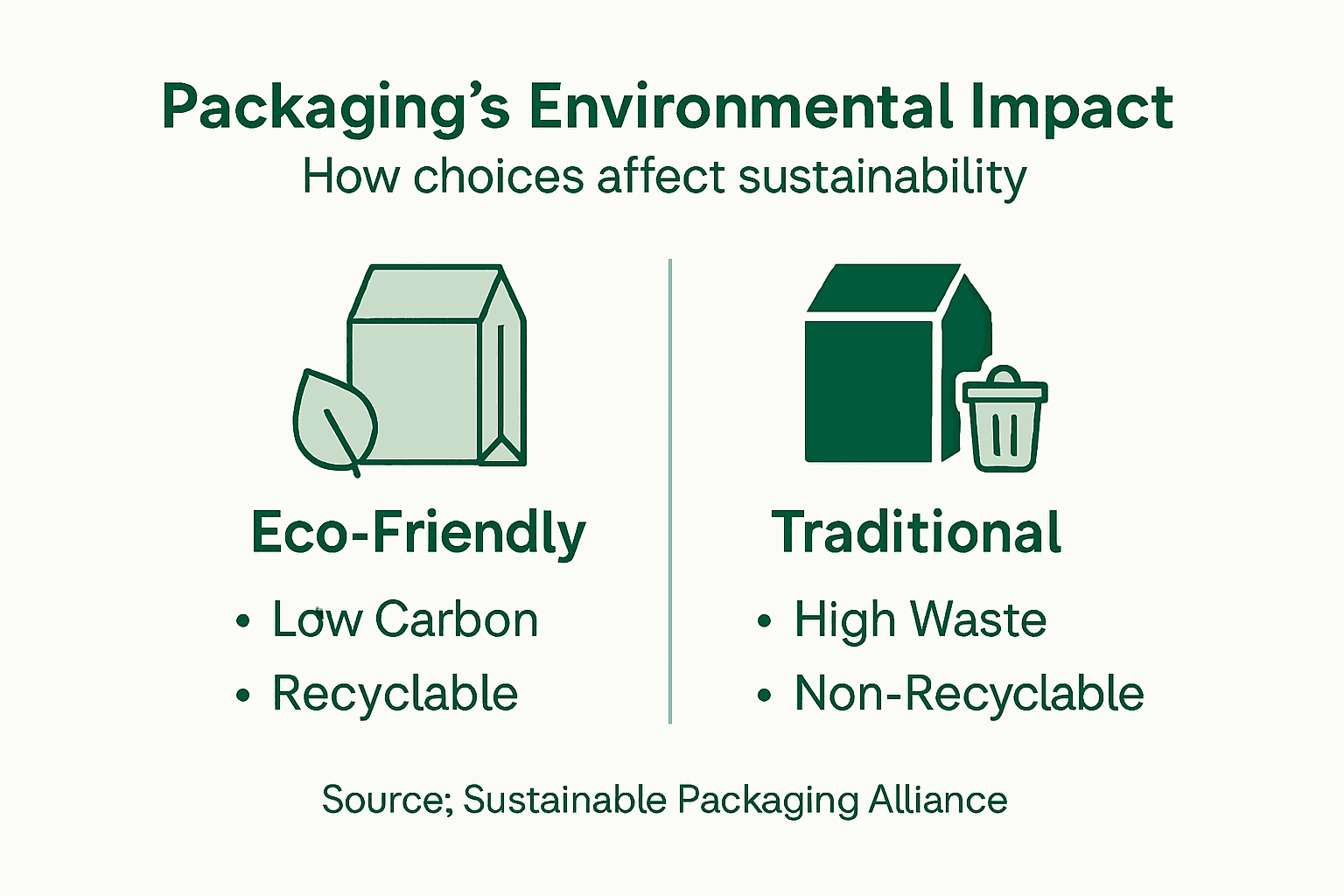
Understanding packaging’s environmental impact requires a holistic perspective that considers the entire lifecycle of materials. This means evaluating not just disposal outcomes, but also examining resource extraction, manufacturing processes, transportation energy, and potential for material regeneration. Innovative packaging strategies now focus on circular economy principles, designing products that can be continuously repurposed or safely returned to natural systems. Some cutting-edge approaches include developing packaging with embedded seeds that can grow into plants, creating materials from agricultural waste, and implementing sophisticated recycling technologies that transform packaging waste into new productive resources.
This table summarizes how different packaging choices impact the environment across their lifecycle:
| Packaging Choice | Positive Outcome | Potential Negative Outcome | End-of-Life Options |
|---|---|---|---|
| Single-use plastics | Lightweight, protects goods | Fossil fuel use, microplastics | Landfill or incineration |
| Biodegradable materials | Reduced pollution | Can require special conditions | Industrial composting |
| Reusable containers | Minimizes waste, durable | Resource-intensive if not reused | Repurposing, recycling |
| Recycled content | Lowers resource extraction | Energy needed for processing | Recycling, composting |
Pro tip: Always check product packaging for recycling symbols and local recycling guidelines to ensure proper disposal and maximum environmental responsibility.
Common Myths and Misconceptions
Sustainable packaging has become a complex landscape riddled with widespread misunderstandings that can mislead consumers and businesses alike. Packaging sustainability myths often emerge from oversimplified narratives about environmental responsibility. Many people believe that packaging is inherently harmful, when in reality, the ecological impact depends on nuanced factors like material composition, production methods, and end-of-life management.
Greenwashing represents one of the most significant challenges in understanding eco-friendly packaging. Companies frequently use vague marketing terms like ‘green’ or ‘eco-friendly’ without providing substantive evidence of their environmental claims. Sustainable packaging definitions require comprehensive lifecycle assessments that go far beyond surface-level marketing language. Common misconceptions include believing that all biodegradable materials are automatically sustainable, or that minimal packaging always equates to environmental responsibility. In reality, packaging effectiveness involves balancing material efficiency, protective capabilities, and overall environmental impact.
Consumers often misunderstand the complexities of recycling and waste management. Many incorrectly assume that all packaging waste gets recycled, when recycling rates remain surprisingly low. Bio-based materials are not automatically eco-friendly, as their production can sometimes generate more environmental harm than traditional packaging. The most responsible approach involves critically examining packaging from multiple perspectives: material sourcing, manufacturing energy, transportation costs, product protection, and potential for reuse or responsible disposal. Understanding these nuanced factors helps consumers make more informed choices that genuinely support environmental sustainability.
Pro tip: Always research beyond marketing claims and look for transparent, verifiable information about a product’s packaging sustainability.
Embrace Sustainable Living Through Thoughtful Packaging and Premium Beverages
The challenge of choosing eco-friendly packaging extends beyond materials to the overall environmental impact. You want products that align with your values of reducing plastic waste, supporting circular economy practices, and minimizing carbon footprints. At EcoVibe Roast, we understand the importance of responsible sourcing and sustainable packaging in your daily choices. Our selection of Coffee and Tea example products uses packaging designed to protect quality while promoting environmental stewardship.

Experience the perfect harmony of taste and conscience with our Best Sellers carefully curated for both flavor and eco-conscious packaging. Every purchase at EcoVibe Roast supports initiatives to plant mangrove trees and remove ocean-bound plastics, amplifying your positive environmental impact. Explore how choosing sustainable packaging paired with ethically produced coffee and tea can transform your consumption habits. Make the switch today and become part of a community dedicated to real environmental change.
Frequently Asked Questions
What makes packaging eco-friendly?
Eco-friendly packaging minimizes environmental impact through responsible material sourcing, efficient design, and end-of-life considerations. It utilizes renewable resources and emphasizes recyclability, compostability, or biodegradability.
What are some common materials used in eco-friendly packaging?
Common materials include biodegradable plastics made from plant sources, recycled paper and cardboard, mycelium (mushroom roots), seaweed-based films, and materials derived from agricultural waste. These options reduce waste and conserve resources.
How does eco-friendly packaging impact the environment?
Eco-friendly packaging reduces carbon footprints and pollution by using sustainable materials and minimizing plastic waste. It promotes a circular economy by encouraging reuse and proper disposal methods to limit environmental degradation.
What are some misconceptions about eco-friendly packaging?
Many misconceptions include the belief that all biodegradable materials are sustainable or that minimal packaging is always better. It’s important to evaluate the entire lifecycle of packaging materials and their production impact to make informed decisions.


