

The surge in daily coffee consumption has reached its highest point in twenty years, fueled by specialty coffee and single-cup brewers according to the National Coffee Association. For eco-conscious millennials and Gen Z, this trend makes it urgent to rethink how single-use coffee pods impact global sustainability. If you want practical strategies to cut waste, save resources, and align your coffee routine with your environmental values, this guide delivers actionable steps backed by industry research.
Table of Contents
- Step 1: Assess Your Current Coffee Pod Usage
- Step 2: Switch To Biodegradable Or Reusable Pods
- Step 3: Properly Dispose Of Used Pods And Compost Grounds
- Step 4: Track Your Waste Reduction Progress
- Step 5: Share Results And Inspire Others
Quick Summary
| Key Point | Explanation |
|---|---|
| 1. Track Your Coffee Pod Usage | Monitor daily, weekly, and monthly pod consumption to identify waste reduction opportunities and save money. |
| 2. Choose Sustainable Coffee Pods | Switch to biodegradable or reusable pods to significantly reduce environmental waste during coffee preparation. |
| 3. Properly Dispose of Used Pods | Follow guidelines for recycling and composting used pods and coffee grounds to minimize landfill impact. |
| 4. Monitor Waste Reduction Progress | Systematically track your waste reduction efforts to evaluate improvements in your sustainable coffee practices. |
| 5. Share Your Achievements | Inspire others by sharing your sustainability progress on social media or within local community groups. |
Step 1: Assess your current coffee pod usage
Coffee pod consumption has surged dramatically in recent years. Daily coffee consumption is at a 20-year high, driven by convenience and specialty brewing methods. Understanding your personal coffee pod usage is the critical first step toward reducing environmental waste.
To accurately assess your coffee pod consumption, track these key metrics:
- Number of coffee pods used per day
- Weekly and monthly total pod consumption
- Types of pods you currently use
- Average cost per pod
- Waste generated from your current brewing habits
Consider using a simple tracking method like a dedicated notebook or digital spreadsheet to monitor your usage patterns. This documentation will help you identify opportunities for waste reduction and potentially save money.
Tracking your coffee pod consumption is the foundation of creating a more sustainable brewing strategy.
Pro tip: Create a simple tracking system that makes monitoring your coffee pod usage effortless and automatic.
Step 2: Switch to biodegradable or reusable pods
Reducing coffee pod waste starts with exploring sustainable alternatives that can dramatically cut your environmental footprint. Reusable Nespresso pods offer a sustainable solution by allowing multiple uses without constant disposal, transforming your brewing habits from single-use to eco-friendly.
When transitioning to more sustainable coffee pods, consider these options:
- Stainless steel reusable pods
- Biodegradable compostable pods
- Refillable plastic pods with multiple use cycles
- Pods made from plant-based materials
Your selection should balance three key factors: environmental impact, compatibility with your existing coffee machine, and ease of use. Consumer research indicates that successful adoption depends on convenience and education, so choose a solution that integrates smoothly into your current routine.

Here’s how popular sustainable coffee pod alternatives compare:
| Pod Type | Material | Reusability | Environmental Impact |
|---|---|---|---|
| Stainless Steel Reusable | Stainless steel | Up to 1000 uses | Dramatically reduces waste |
| Biodegradable Compostable | Plant-based polymers | Single-use, home composting | Breaks down in compost piles |
| Refillable Plastic | BPA-free plastic | 20-50 refill cycles | Less landfill waste |
| Plant-Based Disposable | Corn starch, cellulose | Single-use compostable | Low footprint if composted |
Switching to reusable pods can significantly reduce your personal waste generation and support more sustainable coffee consumption.
Pro tip: Invest in a few different reusable pod types to experiment and find the most convenient option for your specific coffee machine.
Step 3: Properly dispose of used pods and compost grounds
Transforming your coffee waste into an eco-friendly process requires understanding how to responsibly manage used coffee pods and spent grounds. Spent coffee grounds are rich in nitrogen and can become a valuable resource when disposed of correctly.
Follow these essential steps for sustainable coffee pod disposal:
- Empty all coffee grounds from the pod
- Separate pod components (plastic, aluminum, or compostable materials)
- Rinse pods to remove residue
- Check local recycling guidelines for specific pod materials
- Collect coffee grounds for composting
When composting coffee grounds, mix them with brown materials like dry leaves or shredded paper to create a balanced nutrient profile. Environmental management encourages diverting coffee grounds from landfills to support more sustainable waste practices.
Proper disposal of coffee pods and grounds can significantly reduce your environmental footprint and contribute to a circular waste management approach.
Pro tip: Create a dedicated bin for coffee ground collection and keep a small compost container near your brewing station to make disposal more convenient.
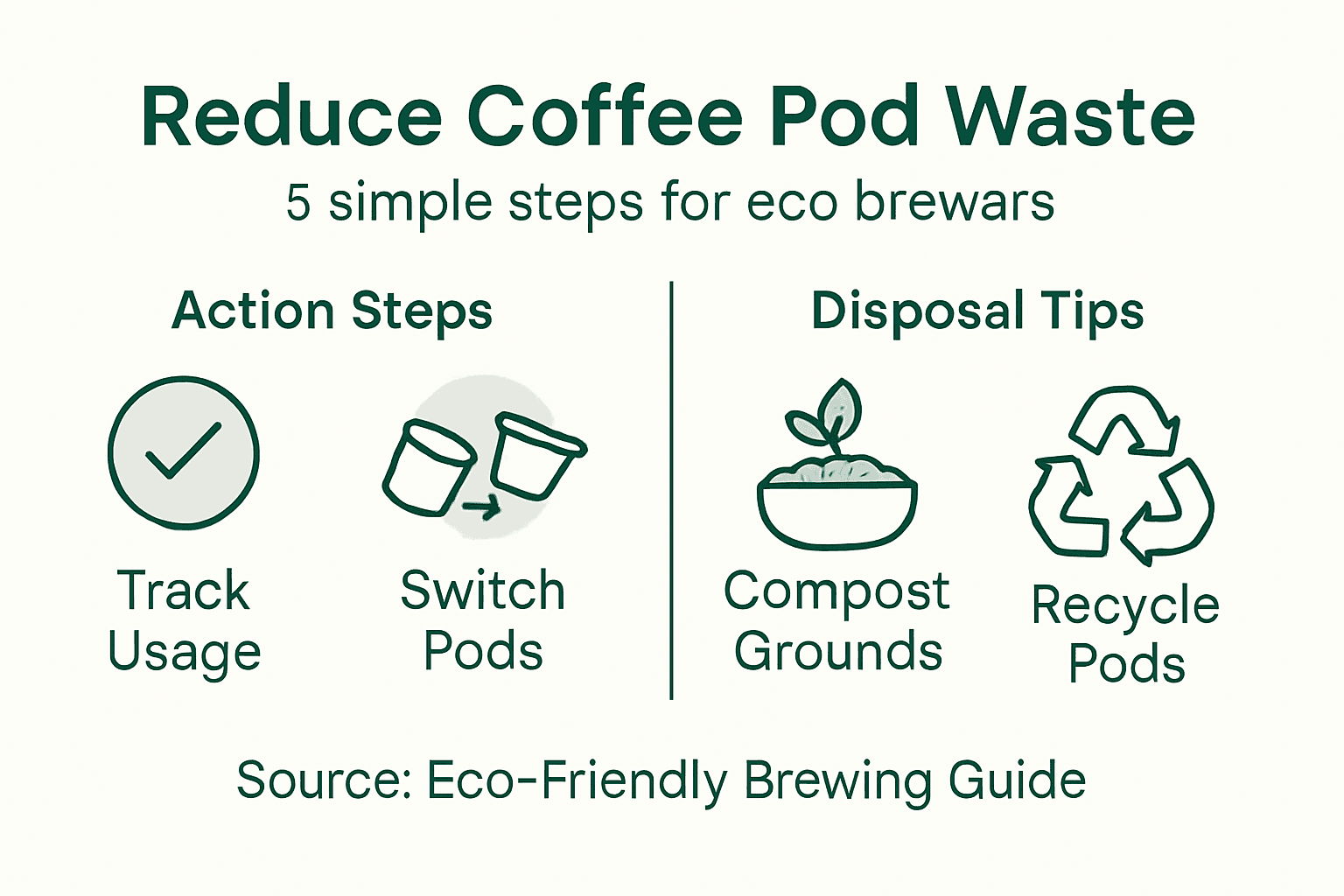
Step 4: Track your waste reduction progress
Transforming your coffee consumption habits requires systematic monitoring of your environmental impact. Circular economy tracking methodologies provide powerful tools for understanding and improving your sustainability efforts.
Implement these strategies to effectively measure your coffee pod waste reduction:
- Count total pods used per week before and after changes
- Weigh coffee grounds diverted from landfill
- Calculate percentage of pods recycled or composted
- Document monthly waste reduction achievements
- Compare current consumption with initial baseline
The United Nations Environment Programme offers systematic waste measurement frameworks that can help you set meaningful sustainability goals. By tracking your progress, you transform abstract environmental intentions into concrete, measurable actions.
Summary of effective coffee pod waste reduction tracking strategies:
| Method | Description | Motivation |
|---|---|---|
| Weekly Pod Counting | Record pods used weekly | Monitor progress |
| Compost Weight Logs | Measure grounds diverted from landfill | Boost eco awareness |
| Recycling Rate | Calculate percentage pods recycled | Set improvement targets |
| Achievement Journals | Document monthly reductions | Celebrate milestones |
Consistent tracking transforms individual actions into meaningful environmental impact, one coffee pod at a time.
Pro tip: Create a dedicated digital or physical tracking journal to log your waste reduction journey and celebrate your sustainability milestones.
Step 5: Share results and inspire others
Your sustainable coffee journey becomes truly powerful when you transform personal achievements into collective inspiration. Circular economy platforms encourage knowledge sharing to amplify individual environmental impacts.
Spread the word about your waste reduction efforts through these engaging methods:
- Post monthly progress on social media
- Create infographics showing your waste reduction
- Share personal stories with friends and family
- Write blog posts or community forum updates
- Participate in local sustainability groups
Sustainable Coffee Challenge networks demonstrate how collective action can drive meaningful environmental change. By openly communicating your progress, you motivate others to reconsider their own coffee consumption habits and embrace more eco-friendly practices.
Every shared sustainability story has the potential to create a ripple effect of positive environmental action.
Pro tip: Take compelling before-and-after photos of your waste reduction to visually communicate your impact and inspire others.
Discover Sustainable Coffee Solutions Tailored to Your Waste Reduction Goals
If you are committed to reducing waste from coffee pods and embracing eco-friendly brewing, EcoVibe Roast offers thoughtfully sourced products that align with your goals. The challenges of tracking pod consumption and switching to biodegradable or reusable options find a perfect match in our curated Coffee and Tea example products collection. We emphasize responsible sourcing and environmental stewardship, supporting your journey toward less waste and more impact.

Explore our Best Sellers – EcoVibe Roast for popular sustainable choices that make it easy to swap out single-use pods. Every purchase contributes to planting mangrove trees and removing ocean-bound plastics, so you build a greener world with every cup. Visit EcoVibe Roast now and start your eco-friendly brewing transformation today.
Frequently Asked Questions
How can I assess my current coffee pod usage to reduce waste?
Track the number of coffee pods you use daily by maintaining a simple record. Include details on weekly and monthly totals, types of pods, and the waste generated to identify opportunities for reduction. Start this tracking within 1 week to create a baseline.
What are the best sustainable alternatives to traditional coffee pods?
Consider switching to biodegradable or reusable coffee pods to cut down on waste. Options include stainless steel reusable pods or compostable pods made from plant-based materials. Try using one new eco-friendly pod type and observe your waste reduction over the next month.
How should I dispose of used coffee pods and grounds responsibly?
To dispose of used coffee pods sustainably, empty the grounds, rinse the pods, and check local recycling guidelines. Set up a composting system for your coffee grounds by mixing them with brown materials like dried leaves. Start this process today to begin reducing waste immediately.
What metrics should I track to measure my coffee waste reduction progress?
Measure your coffee waste reduction by counting total pods used weekly, weighing the coffee grounds diverted from landfills, and documenting your recycling rate. Aim to track these metrics monthly to see significant improvements in your waste management.
How can I inspire others to reduce waste with their coffee habits?
Share your progress on social media, create infographics, or write about your sustainability journey to motivate others. Engage with your community and encourage discussions about eco-friendly brewing practices. Start sharing your story within the next few weeks to have a positive impact.


