

Sorting through countless brewing guides can be daunting when you care about flavor and the future of the planet at once. Coffee lovers from Tokyo to Toronto are embracing sustainably sourced coffee beans and modern equipment that reflect their values while minimizing waste. This guide shares practical steps to help you choose beans, gear, and methods that support local farmers, protect the environment, and keep every cup both satisfying and guilt free.
Table of Contents
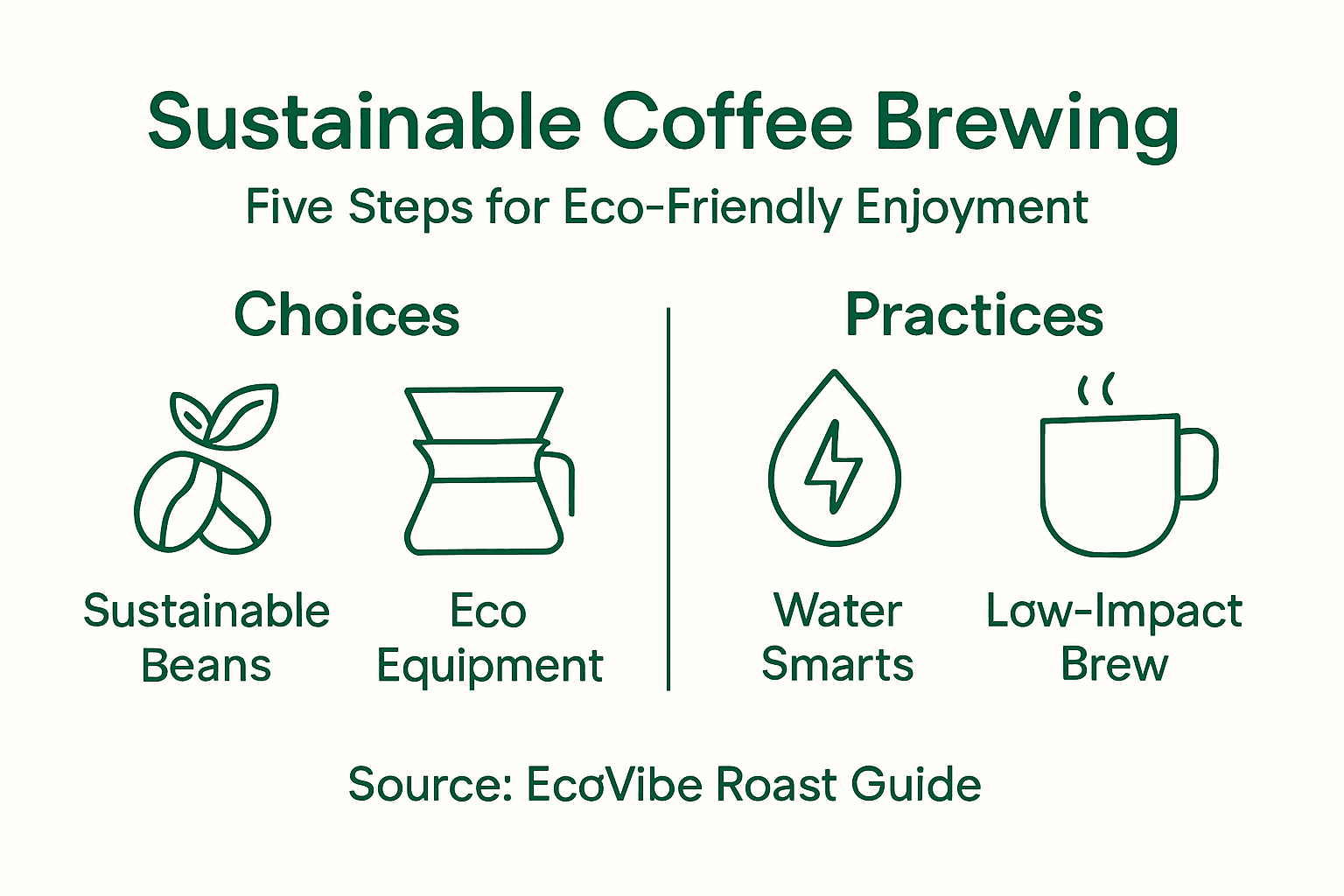
- Step 1: Select Sustainably Sourced Coffee Beans
- Step 2: Choose Eco-Friendly Brewing Equipment
- Step 3: Measure and Prepare Water Responsibly
- Step 4: Brew Coffee Using Low-Impact Methods
- Step 5: Dispose of Grounds and Clean Up Sustainably
Quick Summary
| Key Insight | Explanation |
|---|---|
| 1. Choose sustainable coffee beans | Look for certifications like Fair Trade or Organic to support ethical farming and environmental preservation. |
| 2. Use eco-friendly brewing equipment | Select brewing tools made of recyclable materials with low energy consumption to minimize your ecological footprint. |
| 3. Measure water precisely | Use a digital scale to achieve accurate coffee-to-water ratios, enhancing flavor while reducing waste. |
| 4. Opt for low-impact brewing methods | Manual brewing techniques like French press or pour over reduce energy use and waste production significantly. |
| 5. Dispose of grounds responsibly | Compost used coffee grounds or recycle them creatively instead of throwing them in the trash, transforming waste into resources. |
Step 1: Select sustainably sourced coffee beans
Choosing sustainable coffee beans sets the foundation for an eco conscious brewing experience that supports both global farmers and environmental preservation. When selecting your beans, understanding the impact of your purchase is crucial.
Begin by looking for certifications that validate sustainable practices. Sustainable coffee initiatives demonstrate a comprehensive approach to coffee production that goes beyond economic outcomes and includes critical environmental and social dimensions. Search for labels like Fair Trade, Rainforest Alliance, or Organic, which indicate responsible farming practices that support local communities and protect biodiversity.
Consider the origin and growing conditions of your coffee beans. Shade grown coffee from regions practicing regenerative agriculture represents an excellent choice for environmentally conscious consumers. These methods help maintain ecosystem balance, support wildlife habitats, and reduce carbon emissions associated with coffee production.
Pro tip: When purchasing coffee beans, ask your local roaster or check online descriptions for detailed information about the bean’s sourcing and sustainability practices.
Here’s a quick comparison of sustainable coffee certifications and what they represent:
| Certification | Focus Areas | Consumer Impact |
|---|---|---|
| Fair Trade | Social equity, fair labor, pricing | Supports farmers, improves wages |
| Rainforest Alliance | Biodiversity, environmental health | Protects habitats, ensures traceability |
| Organic | No synthetic chemicals, soil health | Reduces toxins, promotes purity |
Step 2: Choose eco-friendly brewing equipment
Selecting environmentally responsible coffee brewing equipment is a critical step in reducing your morning coffee’s ecological footprint. Understanding the sustainability impact of your chosen brewing method can significantly influence your overall environmental contribution.

Comparative environmental assessments reveal that brewing system design dramatically affects sustainability. Traditional drip coffee makers often have lower environmental impacts compared to single serve pod machines. Look for equipment manufactured with recycled materials, energy efficient designs, and durable construction that minimizes waste and extends product lifespan.
Prioritize brewing equipment featuring minimal electricity consumption and made from sustainable materials like recyclable plastics, bamboo, or stainless steel. Consider manual brewing methods like French press or pour over systems that require no electricity and produce less waste. When evaluating electric brewers, check for energy star ratings and automatic shutoff features that reduce standby power consumption.
Pro tip: Invest in a high quality brewing device with replaceable parts to extend its usable life and reduce overall environmental impact.
Step 3: Measure and prepare water responsibly
Measuring water precisely and thoughtfully is crucial for creating an environmentally conscious and delicious coffee brewing experience. Your water preparation approach directly impacts both flavor quality and resource conservation.
Coffee brewing science emphasizes the importance of precise measurement using digital scales instead of traditional volume based methods. The Specialty Coffee Association recommends a golden ratio between 1:16 and 1:18 coffee to water by weight. This approach not only ensures optimal flavor extraction but also minimizes unnecessary water waste during preparation.
Pay careful attention to water quality and temperature. Use filtered water at the ideal brewing temperature around 195 to 205 degrees Fahrenheit to maximize flavor while avoiding excessive energy consumption. Consider collecting and reusing water from initial rinses for plants or other household purposes to further reduce waste. When possible, use a kettle with temperature control to prevent overheating and unnecessary energy expenditure.
Pro tip: Invest in a digital scale with a tare function to achieve precise measurements and reduce coffee and water waste during brewing.
Step 4: Brew coffee using low-impact methods
Choosing a brewing method that minimizes environmental impact is your pathway to enjoying delicious coffee while supporting planetary health. Your brewing technique can significantly reduce energy consumption and waste production.
Comparative coffee brewing research reveals that manual brewing devices like French press and AeroPress offer substantial sustainability advantages. These methods require less energy and generate minimal waste compared to electric espresso machines or single serve pod systems. Cold brew techniques also stand out as particularly eco friendly options that optimize resource usage and minimize overall environmental footprint.
Prioritize brewing approaches that conserve energy and reduce waste. Manual pour over methods allow precise temperature control and eliminate electricity requirements. Consider using reusable filters made from cloth or stainless steel to further decrease disposable waste. When brewing, focus on small batch preparation to prevent coffee waste and optimize resource consumption. Experiment with techniques that require minimal equipment and maximize flavor extraction while keeping environmental impact low.
Pro tip: Rotate between manual brewing methods to discover which technique provides the best balance between flavor quality and ecological responsibility.
Below is a summary of eco-friendly coffee brewing methods and their environmental impacts:
| Brewing Method | Energy Use | Waste Produced | Notable Sustainability Benefit |
|---|---|---|---|
| French Press | None (manual) | Reusable metal filter | No single-use waste |
| Pour Over | Minimal (manual) | Reusable/cloth filter | Precise control, low waste |
| Single-Serve Pod | High (electric) | Non-recyclable pods | Convenient but wasteful |
| Drip Coffee Maker | Moderate (electric) | Paper filter waste | Lower impact if used in bulk batches |
| Cold Brew | None (manual) | Grounds only | No heating required, very low waste |
Step 5: Dispose of grounds and clean up sustainably
Responsible disposal of coffee grounds represents a critical opportunity to transform waste into valuable resources and minimize environmental impact. Your post brewing cleanup strategy can significantly contribute to sustainable living practices.
Spent coffee grounds research reveals multiple innovative pathways for repurposing used coffee grounds beyond traditional landfill disposal. Instead of discarding grounds in trash bins, consider composting them as nutrient rich organic material for gardening or using them as natural fertilizers. These grounds can also serve as excellent additions to garden soil or potted plants due to their high nitrogen content and ability to improve soil structure.
Explore creative alternatives for recycling coffee grounds. Use them as natural deodorizers in refrigerators or garbage areas, create eco friendly body scrubs, or incorporate them into craft projects. For gardeners, coffee grounds can deter garden pests and provide essential nutrients to plants. When cleaning brewing equipment, opt for biodegradable cleaning solutions and minimize water usage by using efficient rinsing techniques.
Pro tip: Store used coffee grounds in a small container in your kitchen and add them directly to your compost bin or garden soil weekly to maximize their environmental value.
Brew Sustainability Into Every Cup With EcoVibe Roast
Are you ready to embrace the full eco-conscious coffee brewing process described in this article? At EcoVibe Roast, we understand your desire for sustainably sourced coffee beans, eco-friendly brewing, and responsible waste disposal. We help you turn those goals into everyday reality with our thoughtfully curated collection of premium, ethically produced products that support environmental stewardship and community well-being.
Explore our Coffee and Tea example products featuring Fair Trade and Organic certified selections that align perfectly with your commitment to sustainable sourcing. Whether you prefer single-serve pods for convenience or whole beans for manual brewing, every purchase helps us plant mangrove trees and remove ocean-bound plastics, amplifying your positive impact beyond the cup.

Take the next step in your sustainable coffee journey by visiting our Best Sellers collection and start brewing with purpose today. Visit EcoVibe Roast to join a community of conscious consumers making a real difference with every cup.
Frequently Asked Questions
What makes coffee beans sustainable?
Sustainable coffee beans are sourced using environmentally responsible and socially equitable farming practices. Look for certifications like Fair Trade, Rainforest Alliance, or Organic to ensure your coffee supports local farmers and biodiversity.
How can I make coffee brewing more eco-friendly?
To brew coffee more sustainably, consider using manual brewing methods like French press or pour over that do not require electricity. Opt for reusable filters to minimize waste and prioritize small batch preparation to avoid excess coffee waste.
What should I do with used coffee grounds?
Instead of throwing away used coffee grounds, compost them as they provide valuable nutrients to your garden. You can also repurpose them as natural deodorizers or use them in DIY beauty scrubs.
How do I measure water for brewing coffee responsibly?
For precise and responsible measuring, use a digital scale instead of volume-based methods to follow the recommended coffee-to-water ratio of 1:16 to 1:18. This ensures optimal flavor extraction and minimizes unnecessary water waste.
What type of brewing equipment is the most eco-friendly?
Manual brewing equipment, such as pour over or French press, is generally the most eco-friendly choice as it uses minimal energy and produces less waste. Choose options made from sustainable materials and consider investing in high-quality devices that are designed to last longer.
How can I clean my coffee brewing equipment sustainably?
Use biodegradable cleaning solutions and practice efficient rinsing techniques to minimize water usage when cleaning your coffee equipment. This helps reduce your overall ecological footprint while keeping your brewing tools in good condition.


