

TL;DR:
- Natural coffee flavoring enhances beans with herbs, spices, and syrups layered without masking the coffee’s character. Choosing complementary ingredients like cinnamon, cardamom, or vanilla raises the flavor complexity, especially when added during brewing or in homemade syrups. Proper preparation, such as drying coated beans and using small quantities of extracts, ensures subtle and nuanced results.
Natural coffee flavoring methods involve using herbs, spices, extracts, and homemade syrups to enrich your coffee without artificial additives. The goal is not to mask your coffee’s character but to layer complementary aromas on top of it. Spices like cardamom and cinnamon, pure vanilla extract, and infused simple syrups are the most effective tools for this. Ecoviberoast’s approach to quality sourcing makes this even more rewarding: when you start with a great bean, every natural flavor you add has something worth building on.
What are the most popular natural coffee flavoring ingredients?
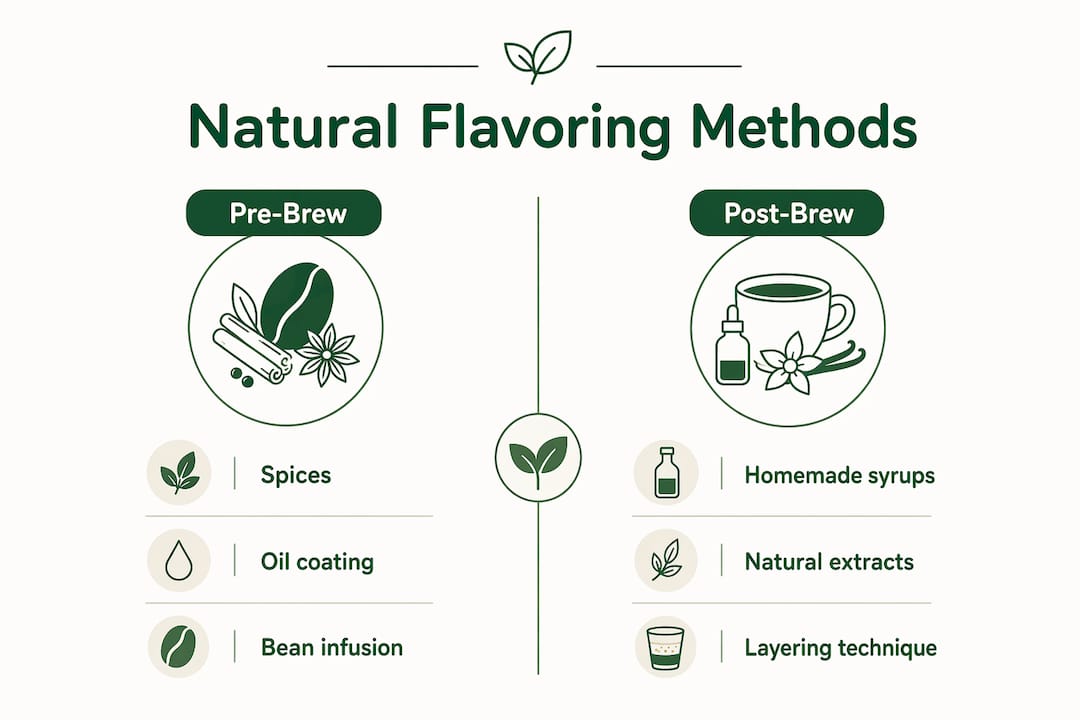
Natural flavoring ingredients for coffee work by complementing the volatile aromatic compounds already present in a well-roasted bean. The Maillard reaction, which occurs during roasting, produces hundreds of flavor compounds. Spices and extracts that share similar aromatic families integrate with those compounds rather than fighting them.
The most effective natural coffee enhancers include:
- Cinnamon: Adds warm, sweet depth without sugar. Ceylon cinnamon is milder and more complex than Cassia cinnamon.
- Cardamom: A staple in Middle Eastern coffee traditions. Its floral, citrusy notes lift the brightness of light and medium roasts.
- Nutmeg: Use sparingly. A small pinch adds a nutty, slightly sweet warmth that pairs well with dark roasts.
- Turmeric: Earthy and slightly bitter. Works best combined with black pepper and a fat source like coconut milk to activate its flavor compounds.
- Ginger: Adds a clean, spicy bite. Dried ginger powder blends more evenly than fresh grated ginger in grounds.
- Lavender: Floral and aromatic. Best used in syrups rather than directly in grounds, where it can turn soapy if overdone.
- Vanilla bean: Scraping a fresh vanilla pod into grounds or syrup delivers a depth that bottled extract cannot fully replicate.
The key principle here is layering, not replacing. Elegant flavor layering enriches drink complexity without erasing the coffee’s origin character. A Kenyan single-origin with bright acidity will respond differently to cardamom than a smooth Brazilian blend will. Pay attention to how your chosen spice interacts with your specific bean.
How can you naturally flavor coffee grounds or beans before brewing?
Flavoring coffee grounds or whole beans before brewing is one of the most direct coffee flavoring techniques available. It allows the spice or oil to interact with the coffee during extraction, producing a more integrated result than adding flavoring after brewing.
- Choose your flavoring agent. Ground spices work best for grounds. Food-safe oils like coconut oil or almond oil work well for whole beans.
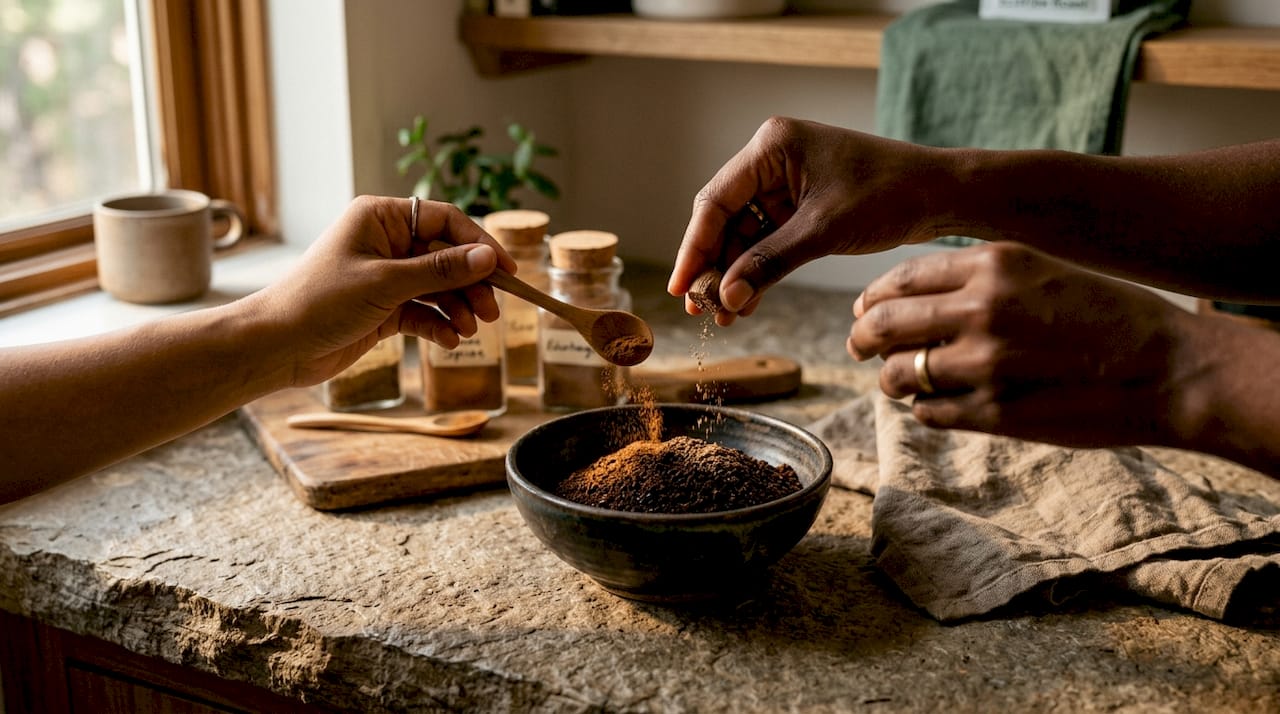
- Apply the flavoring. For grounds, mix 1/4 teaspoon of ground spice per 2 tablespoons of coffee. For beans, toss whole beans with a tiny amount of oil (no more than 1/4 teaspoon per 4 ounces of beans), then coat with ground spice.
- Dry completely before grinding. Coated beans must dry fully before you run them through a grinder. Residual moisture or excess oil clogs burr grinders and causes uneven extraction.
- Grind and brew as normal. Use your standard grind setting. The spice will pass through the filter and contribute flavor during extraction.
- Taste and adjust. Start with less than you think you need. You can always add more next time.
One mistake home brewers make is using too much spice, which produces a flavor that feels artificial and one-dimensional rather than nuanced. Start at half the recommended quantity and work up from there.
Pro Tip: Match your spice to your roast level. Light roasts pair well with floral and citrusy spices like cardamom. Dark roasts handle warmer, heavier spices like cinnamon and nutmeg without being overwhelmed.
How to make homemade natural coffee syrups
Homemade coffee syrups are the most flexible of all natural coffee flavoring methods. You can customize them endlessly, store them for up to two weeks, and add them to hot or iced coffee with precise control over sweetness and flavor intensity.
The standard simple syrup uses equal parts sugar and water, simmered for 5–10 minutes with your chosen flavoring. That ratio gives you a pourable, stable syrup that dissolves instantly in hot or cold coffee.
- Combine 1 cup sugar and 1 cup water in a small saucepan over medium heat.
- Stir until the sugar dissolves, then add your flavoring agent. Options include cinnamon sticks, split vanilla beans, fresh ginger slices, lavender buds, or citrus peels.
- Simmer for 5–10 minutes. Temperature control during infusion matters: keep the heat low enough to avoid boiling, which can make delicate ingredients like lavender or citrus peel turn bitter.
- Remove from heat and steep for 20–30 minutes with the lid on to deepen the flavor.
- Strain through a fine mesh strainer into a clean glass jar or bottle.
- Refrigerate immediately. The syrup keeps for up to 14 days.
You can also swap refined sugar for natural sweeteners like honey or maple syrup. Honey-based syrups have a shorter shelf life (around 7 days) but add their own floral or caramel notes to the mix.
| Sweetener base | Flavor profile | Best paired with |
|---|---|---|
| White sugar | Neutral, clean | Vanilla, lavender, citrus |
| Honey | Floral, slightly caramel | Ginger, cinnamon, cardamom |
| Maple syrup | Rich, earthy | Nutmeg, dark roast, clove |
| Brown sugar | Molasses, warm | Cinnamon, vanilla, nutmeg |
Add 1–2 tablespoons of syrup per 8-ounce cup of coffee. For iced coffee, add the syrup before the ice so it blends evenly. You can also explore flavored coffee advantages that go beyond taste, including how natural ingredients support a more mindful coffee ritual.
What are the best practices for using natural extracts in coffee?
Natural extract coffee flavoring is the fastest method and the easiest to control. Pure extracts like vanilla, almond, peppermint, or cardamom deliver concentrated flavor in a single drop.
Key practices for getting extracts right:
- Add extracts to hot coffee, not cold. Adding extracts to hot coffee releases their aromatic compounds more fully. The heat opens up the flavor in a way that cold liquid cannot.
- Use 1/8 to 1/4 teaspoon per cup. Pure, high-quality extracts require far less than diluted store-bought versions. Starting at 1/8 teaspoon prevents overpowering the cup.
- For cold brew, add extracts to the concentrate before diluting with water or milk. This ensures even distribution throughout the final drink.
- Choose pure extracts over imitation versions. Imitation extracts use synthetic compounds that produce a flat, one-note flavor. Pure extracts integrate with coffee’s natural complexity.
- Layer extracts with spices for depth. A drop of vanilla extract combined with a pinch of cinnamon in the grounds creates a more interesting result than either ingredient alone.
Pro Tip: Pure vanilla extract and a small pinch of cardamom in the same cup is one of the most underrated combinations in home coffee flavoring. The vanilla rounds out bitterness while the cardamom adds a floral lift.
Pure natural extracts are a worthwhile investment. Higher quality means less quantity needed and better integration with your coffee’s existing flavor profile.
How to troubleshoot common natural flavoring problems
Most flavoring problems come down to quantity and preparation. Recognizing the signs early saves you from wasting good coffee.
- Flavor tastes artificial or one-dimensional: You have used too much flavoring. Home methods produce nuanced aromas when used in small quantities. Cut your amount in half and rebuild from there.
- Grinder is clogging or producing uneven grounds: Your flavored beans were not fully dry before grinding. Spread coated beans on a baking sheet and let them air dry for at least one hour before grinding.
- Syrup has gone cloudy or smells off: Discard it. Homemade syrups without preservatives spoil within 14 days, and honey-based versions can turn faster. Always store in a sealed glass jar in the refrigerator.
- Flavor disappears after adding milk: Dairy and plant milks coat the palate and mute subtle flavors. Increase your flavoring slightly or add it directly to the milk before combining.
- Spice flavor is uneven cup to cup: Your spice was not mixed evenly into the grounds. Stir thoroughly before each brew.
“Natural coffee flavoring should enhance the existing coffee flavor rather than cover it. Elegant layering enriches drink complexity without erasing the origin character of the bean.”
Incremental changes are the most reliable path to a consistently great cup. Adjust one variable at a time, taste carefully, and keep notes on what works.
Key Takeaways
Natural coffee flavoring works best when you treat each ingredient as a complement to your coffee’s existing profile, not a replacement for it.
| Point | Details |
|---|---|
| Layer, don’t mask | Add spices and extracts in small amounts to build complexity without hiding the coffee’s character. |
| Dry beans before grinding | Coated beans must be fully dry to prevent grinder clogging and uneven extraction. |
| Syrup shelf life is 14 days | Store homemade syrups in sealed glass jars in the refrigerator and discard after two weeks. |
| Use 1/8 to 1/4 teaspoon of extract | Pure extracts are potent; starting small prevents overpowering the cup. |
| Match spice to roast level | Light roasts suit floral spices like cardamom; dark roasts handle warmer spices like cinnamon and nutmeg. |
Why subtlety is the real skill in coffee flavoring
I have spent years experimenting with natural flavoring at home, and the single biggest shift in my results came when I stopped thinking about flavoring as something I added to coffee and started thinking about it as something I added with coffee. That distinction sounds small. It changes everything.
The home brewers I see struggle most are the ones chasing a flavor they tasted in a coffee shop or a packaged product. Those flavors are often built with artificial compounds designed to be loud and immediately recognizable. Natural ingredients do not work that way. Cardamom in your grounds will not hit you over the head. It will make your cup feel more interesting without you being able to name exactly why.
My honest advice: resist the pull of supermarket flavored coffee blends. Artificial flavored blends are less subtle and more one-dimensional than what you can make at home with a good bean and a few quality ingredients. The gap between the two is wider than most people expect until they try it themselves.
Start with one ingredient, one method, and one bean. Get to know how they interact before you add anything else. The art of home brewing rewards patience more than it rewards ambition. Your best cup is usually the one where you can still taste the coffee.
— LaSaundra
Ecoviberoast’s coffee collection for your flavoring experiments
Good flavoring starts with a great base. Ecoviberoast sources its coffee with sustainability and quality at the center, which means every bean you flavor has a rich, clean profile worth building on.

Ecoviberoast’s single-serve coffee pods give you consistent, portion-controlled brewing, which makes them ideal for testing new flavoring combinations without wasting a full batch of grounds. When you want to step outside coffee entirely, Ecoviberoast’s hibiscus berry tea and jasmine tea offer natural flavor profiles that pair beautifully with the same spices and syrups you use in your coffee routine. Every purchase also supports Ecoviberoast’s commitment to planting mangrove trees and reducing ocean-bound plastics. That is a cup that does good in more ways than one.
FAQ
What spices work best for natural coffee flavoring?
Cardamom, cinnamon, nutmeg, and ginger are the most effective spices for natural coffee flavoring. Each complements the Maillard reaction compounds in roasted coffee without masking the bean’s origin character.
How long do homemade coffee syrups last?
Homemade coffee syrups last up to 14 days when stored in a sealed glass jar in the refrigerator. Honey-based syrups may spoil faster and should be used within 7 days.
How much vanilla extract should I add to coffee?
Use 1/8 to 1/4 teaspoon of pure vanilla extract per 8-ounce cup. Pure extracts are more potent than diluted store-bought versions, so starting at the lower end prevents overpowering the cup.
Can I flavor coffee beans at home without a special kit?
Yes. Toss whole beans with a small amount of food-safe oil and ground spice, then let them dry completely before grinding. No special equipment is needed beyond a bowl and a baking sheet.
Why does my flavored coffee taste artificial?
Artificial-tasting results almost always come from using too much flavoring. Cut your quantity in half, brew again, and adjust upward gradually until you find the right balance for your palate.


