

TL;DR:
- Choosing certified, shade-grown coffee beans establishes a sustainable foundation for flavored coffee. Upgrading to reusable brewing tools and composting grounds significantly reduces waste and environmental impact. Incorporating energy-efficient brewing practices and natural flavorings further enhances your eco-friendly coffee routine.
Flavored coffee has come a long way from basic hazelnut and vanilla offerings, and today’s shelves are packed with everything from lavender cardamom blends to smoky bourbon-infused roasts. That explosion of options is exciting, but it also makes choosing sustainably a lot trickier than it used to be. Between misleading labels, confusing certifications, and single-use packaging lurking behind beautiful branding, it’s easy to feel lost before your first sip. The good news? A few well-chosen strategies covering beans, tools, brewing habits, and flavoring ingredients can transform your daily cup into something that genuinely cares for the planet, one rich, aromatic brew at a time.
Table of Contents
- Choose sustainable coffee beans as your flavored base
- Upgrade your brewing tools to minimize waste
- Brew efficiently: Save energy and water every cup
- Smart flavoring: Make or buy better for the planet
- Comparison: Sustainable tips at a glance
- The uncomfortable truth: Overlooked barriers (and how you can do better)
- Ready to put these sustainability tips into practice?
- Frequently asked questions
Key Takeaways
| Point | Details |
|---|---|
| Certifications matter | Choosing beans with credible certifications is the single most effective first step toward sustainable flavored coffee. |
| Reuse and compost | Switching to reusable brewing tools and composting grounds drastically reduces waste. |
| Brew efficiently | Careful energy and water use multiplies the impact of your eco-friendly choices. |
| Flavor naturally | Natural and low-packaging flavoring options cut unnecessary additives and single-use plastic. |
| No single silver bullet | Combining these strategies delivers the strongest sustainability results for flavored coffee lovers. |
Choose sustainable coffee beans as your flavored base
Now that we’ve set the stage, let’s start with the foundation: the beans themselves. Before any vanilla extract or cinnamon swirl enters the picture, the environmental story of your cup is largely written by how and where those beans were grown. Certified coffee beans ensure environmental and social sustainability, but not every certification addresses every concern, which is why pairing them matters.
Here’s a quick breakdown of the most meaningful coffee certifications overview to keep on your radar:
| Certification | Primary focus | Key benefit |
|---|---|---|
| Fair Trade | Farmer wages and cooperative support | Ensures fair pay and community investment |
| USDA Organic | Agrochemical use | Reduces synthetic pesticide and fertilizer use |
| Rainforest Alliance | Ecosystem and biodiversity | Promotes habitat conservation and farm management |
| Bird Friendly (Smithsonian) | Shade-grown habitat | Protects migratory bird corridors in coffee farms |
| ROC (Regenerative Organic) | Soil health and worker welfare | Goes beyond organic to rebuild soil ecosystems |
No single certification covers everything. Fair Trade doesn’t guarantee shade-grown practices. Organic doesn’t guarantee fair wages. That’s why combining certifications, such as Fair Trade plus Organic, gives you a much broader safety net for both people and the planet. Look at certifications and sustainability as building blocks rather than a finish line.
When choosing beans specifically for flavored coffee, seek out those grown with minimal agrochemicals and under a shade canopy. Shade-grown farms support biodiversity and create naturally complex flavors that pair beautifully with infusions. The flavored coffee sustainability impact is much lower when the base bean comes from a responsibly managed farm to begin with.
Pro Tip: Specialty-grade and Bird Friendly certified beans deliver the most habitat protection and tend to have a naturally layered flavor profile, which means the added flavoring you apply can shine without overwhelming a poor-quality base.
Upgrade your brewing tools to minimize waste
Once you have sustainable beans, your next lever is the brewing setup. The tools you brew with can quietly generate an enormous amount of waste, even when your intentions are completely green. Reusable tools reduce billions of pieces of plastic waste, and switching to them is one of the most impactful changes a home brewer can make.
Here’s a side-by-side look at disposable versus reusable options:
| Tool | Type | Environmental impact | Cost over time |
|---|---|---|---|
| Single-use plastic pods | Disposable | Very high plastic waste | Very high |
| Bleached paper filters | Disposable | Moderate landfill impact | Moderate |
| Reusable K-Cup basket | Reusable | Near zero plastic waste | Very low |
| Stainless steel filter | Reusable | Minimal, lasts years | Very low |
| Cloth/cotton filter | Reusable | Biodegradable, low impact | Low |
| French press | Reusable | No filter waste at all | Very low |
The differences are striking. A stainless steel or cloth filter used daily for three years replaces hundreds of disposable alternatives. A French press produces zero filter waste and is nearly indestructible.
Beyond the filter itself, think about what happens to your spent grounds after brewing. Flavored coffee grounds can absolutely be composted, and doing so composting coffee grounds adds nitrogen-rich nutrients back to your garden soil while keeping organic material out of the landfill. Even cinnamon-infused or vanilla-flavored grounds break down well in a home compost bin.
A few easy tool upgrades to prioritize:
- Reusable K-Cup baskets work with most pod machines and eliminate plastic waste from each brew cycle.
- Metal mesh filters are dishwasher safe, last for years, and don’t require a shopping run every few weeks.
- French press or pour-over setups give you complete control over extraction while producing zero disposable waste.
- A small compost bin near your brew station makes it effortless to toss grounds instead of trashing them.
Pro Tip: Stainless steel filters do more than cut waste. Because they don’t trap the natural oils that paper filters absorb, they produce a richer, more robust cup that lets the full complexity of flavored and unflavored beans come through.
Brew efficiently: Save energy and water every cup
Tool selection is just one part; how you brew is just as pivotal for overall sustainability. Even the greenest beans can generate unnecessary environmental impact if you’re running a drip machine for ten minutes to brew a single mug or boiling a full kettle to extract three ounces.
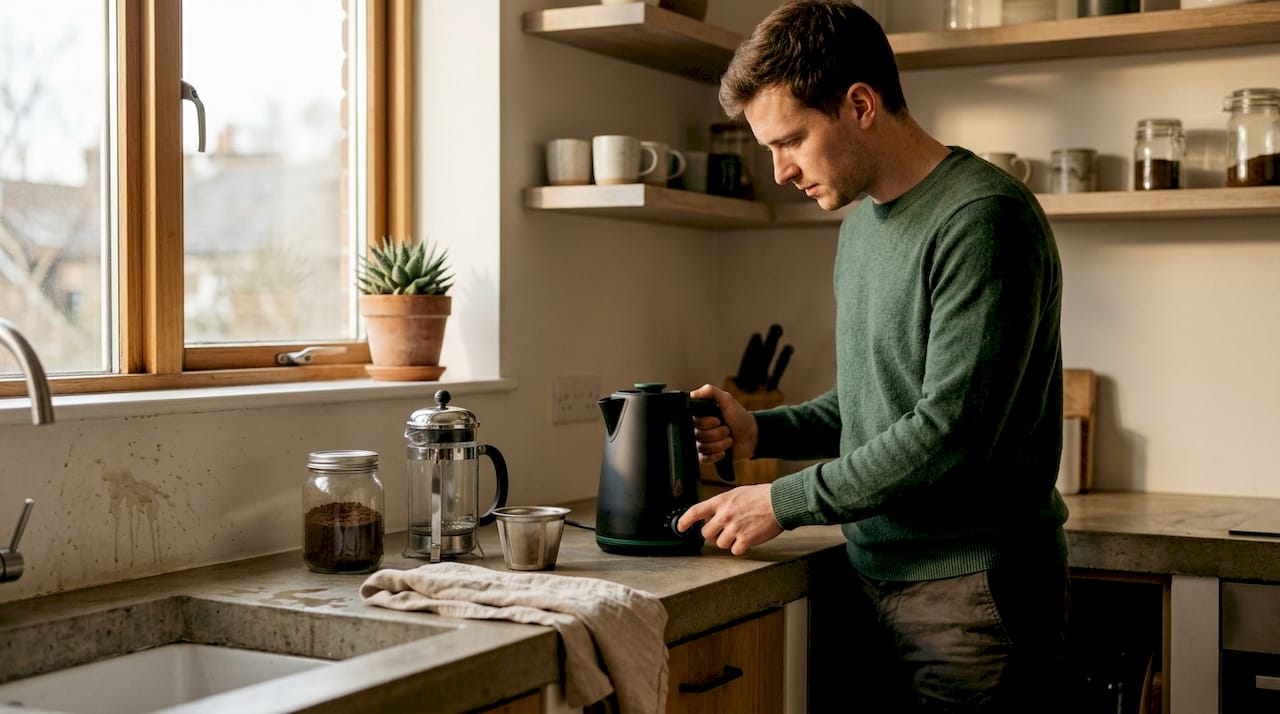
Single-dose grinding prevents waste and is one of the simplest habit shifts you can adopt. Grinding only what you need for each brew preserves freshness and avoids the fate of stale grounds tossed straight into the bin. Heat-recovery machines and modern espresso equipment with auto shut-off features also dramatically reduce energy consumption over years of daily use.
Follow these four steps to brew as efficiently as possible:
- Measure your water first. Pour only the amount you’ll actually drink into your kettle or reservoir. A general guide is roughly 1 tablespoon of ground coffee per 6 ounces of water. Heating excess water wastes both energy and money.
- Grind single doses. Use a burr grinder and grind only immediately before brewing. This keeps flavored beans aromatic and eliminates waste from pre-ground coffee going stale in the bag.
- Choose machines with energy-saving features. Look for brewers with automatic shut-off, sleep modes, or heat-recovery technology. These features can cut appliance energy consumption by a meaningful margin over a year.
- Use filtered tap water instead of bottled. A simple countertop or pitcher filter removes chlorine and minerals that affect taste without generating plastic bottle waste. It’s better for flavor and far better for the planet.
“Making your daily brew more sustainable isn’t about perfection. It’s about consistently choosing better habits across the full cycle: from what you buy to how you brew to what you do with the leftovers.”
Refer to our eco-conscious brewing process guide for a deeper look at how each variable in your routine, from grind size to brew temperature, plays into the bigger sustainability picture.
Smart flavoring: Make or buy better for the planet
After brewing, your flavor choices further refine your coffee’s overall sustainability profile. This is actually one of the most overlooked areas of the sustainable coffee conversation. People spend hours researching certified beans and reusable filters but then add a flavoring syrup wrapped in plastic, made with artificial ingredients sourced from who knows where.
Sustainable flavoring practices further reduce flavored coffee’s footprint by shifting focus toward natural, low-impact ingredients. The great news is that homemade flavor infusions are not only more eco-friendly but also genuinely more delicious.
Here are the best sustainable flavoring practices to build into your routine:
- Cinnamon sticks steeped in hot coffee add a warm, spiced depth that pre-ground cinnamon rarely delivers. You can reuse a good cinnamon stick two or three times before composting it.
- Vanilla beans added to a small jar of sugar create a homemade flavored sweetener that lasts for weeks and uses zero plastic packaging.
- Citrus peel from an organic orange or lemon, rested in the grounds before brewing, creates bright, fruity notes that are surprisingly subtle and complex.
- Cardamom pods added whole to a French press give Middle Eastern-style aromatic richness with no additives, no waste, and no mystery ingredients.
When you do buy syrups or flavor concentrates, look for brands that use organic, single-origin, or fair-sourced ingredients and package in glass rather than plastic. Buying in bulk reduces packaging waste dramatically. Read labels carefully and skip anything containing unsustainable palm oil or vague “natural flavors” that don’t disclose origin. Seek out brands that offer compostable or refillable packaging for a genuinely lower-footprint flavor addition tied to sustainability and flavored infusions.
Comparison: Sustainable tips at a glance
Let’s unify everything covered into a single, actionable overview so you can prioritize your actions. Not every change requires the same effort or investment, and knowing which steps deliver the most impact helps you build a sustainable coffee habit that actually sticks.
| Sustainable practice | Impact level | Cost change | Ease of adoption |
|---|---|---|---|
| Certified beans (Fair Trade + Organic) | Very high | Slight increase | Easy |
| Reusable brewing tools (steel filter, French press) | High | One-time investment | Easy |
| Single-dose grinding | Moderate to high | No change | Very easy |
| Composting grounds | Moderate | No change | Very easy |
| Homemade flavor infusions | Moderate | Slight decrease | Easy |
| Filtered tap water instead of bottled | Moderate | Decrease | Easy |
| Energy-efficient brewing machine | Moderate | One-time investment | Easy |
| Organic/glass-packaged syrups | Moderate | Similar or slight increase | Easy |
Certifications cover economic, environmental, and social aspects of coffee production, making certified beans the highest-impact starting point. Combine that with reusable tools, and you’ve addressed the two biggest contributors to flavored coffee’s environmental footprint.
Key takeaways from the table above:
- Start with certified beans and reusable tools because they deliver the highest combined impact.
- Composting and single-dose grinding require no additional spending and are immediate wins.
- Homemade infusions are a genuinely better alternative to mass-produced flavored syrups in plastic bottles.
Statistic callout: Switching from single-use plastic pods to reusable alternatives can prevent billions of plastic pieces from entering landfills every year, a staggering shift that starts with one small decision in your kitchen.
The uncomfortable truth: Overlooked barriers (and how you can do better)
Beyond practical tips, it’s worth grappling with what the sustainability conversation often misses. And honestly? It’s a bit uncomfortable, because some of the habits we feel best about aren’t always the most impactful.
Take certifications as one example. Fair Trade does not guarantee shade-grown or organic practices and works best when paired with complementary labels. That’s not a reason to dismiss certifications; they genuinely matter and drive real accountability. But it is a reason to look deeper than a single badge on a bag and to understand what each label actually covers versus what it leaves out. Check out real impacts of certifications for a no-fluff breakdown of what each one actually delivers.
Then there are compostable pods. They sound like the perfect solution, right? A convenient pod that breaks down after use. The reality is that most “compostable” pods require industrial composting facilities to actually break down, and most consumers don’t have access to those. If a compostable pod ends up in a standard landfill, it degrades much like conventional plastic. The organic vs Fair Trade beans conversation has a parallel here: the label matters less than the full-system behavior behind it.
What we’d encourage is this: embrace incremental, real change over performative sustainability. Buying a single product with a good label and calling it done is far less impactful than adjusting four or five daily habits across your whole brewing ritual. Ask your roaster direct questions. Where were these beans grown? Who was paid what? How was the crop managed? Roasters who care will be glad to answer. Those who can’t are telling you something important.
The goal isn’t perfection. It’s honest, steady progress combined with the willingness to keep learning and to hold both yourself and the brands you support to a slightly higher standard every season.
Ready to put these sustainability tips into practice?
With the knowledge in hand, taking the next sustainable step is simple. We’ve built EcoVibe Roast around exactly the principles covered in this article: certified sourcing, transparent practices, and products designed to make your eco-conscious coffee routine as easy and enjoyable as possible.

Whether you’re looking for a convenient daily option or stocking up for the month, our Single Serve Collection features pods that fit right into your sustainable brewing setup. Our 60 Pack Single Serve Pods are perfect for households that want to minimize individual packaging, while the 12 Pack Single Serve Pods is a great way to sample flavors before committing. Every purchase also plants mangrove trees and helps remove ocean-bound plastics, so your morning ritual quietly becomes something much bigger than a single cup.
Frequently asked questions
What are the best sustainable certifications to look for in flavored coffee?
Fair Trade, Organic, Rainforest Alliance, Bird Friendly, and ROC are the most impactful certifications to seek out, and certified beans ensure sustainability across environmental and social dimensions. Pairing two or more certifications gives you the broadest protection for farms, workers, and ecosystems.
Does using a reusable coffee filter really make a difference?
Absolutely. Reusable tools reduce plastic waste by billions of pieces collectively, and a single stainless steel filter can serve you reliably for years before needing replacement. The cumulative impact of that one swap is genuinely significant.
How can I make my homemade flavorings more sustainable?
Use whole natural ingredients like cinnamon sticks, vanilla beans, and citrus peels, and buy organic syrups in bulk or glass containers when you need a ready-made option. Sustainable flavoring practices like avoiding synthetic additives and palm oil-based ingredients reduce your flavored coffee’s environmental footprint meaningfully.
Should I prioritize certified beans or reusable tools for greater impact?
Start with certified beans for sustainability as your first move, since the environmental story of your coffee begins at the farm. Once you’ve made that switch, adding reusable tools creates a compounding effect that touches nearly every stage of your daily brew ritual.
Recommended
- Flavored Coffee Sustainability – How It Impacts Our World – EcoVibe Roast
- Eco-Conscious Coffee Brewing Process for Sustainable Enjoyment – EcoVibe Roast
- Green initiatives for coffee lovers: make every sip count – EcoVibe Roast
- Tips for Conscious Coffee: Cut 20x Waste & Boost Enjoyment – EcoVibe Roast


