

TL;DR:
- Sustainable coffee choices depend on understanding key certifications like Rainforest Alliance, Fair Trade, Bird Friendly, and USDA Organic.
- Green initiatives such as regenerative agriculture and shade-grown farming significantly benefit ecosystems and climate health.
- Small, consistent actions like buying certified coffee, composting grounds, and using reusable gear support a greener coffee culture.
Every cup of coffee you brew carries a story that stretches from a farm on a misty hillside all the way to your kitchen, and choosing one that genuinely helps the planet can feel overwhelming. Between rainforest logos, “eco-friendly” buzzwords, and stacks of certifications that all sound equally virtuous, it’s easy to wonder if any of it actually makes a difference. The good news? It does. But only when you know what to look for. This guide cuts through the noise, explains the green initiatives that truly move the needle, and gives you a practical toolkit to make every aromatic cup a small act of environmental love.
Table of Contents
- How to spot truly sustainable coffee: Certifications and criteria
- Top green initiatives: What actually moves the needle
- Quick comparison: Which initiatives give the biggest impact?
- Everyday green actions for coffee lovers
- Why small steps matter more than perfection in coffee sustainability
- Explore more sustainable choices with EcoVibe Roast
- Frequently asked questions
Key Takeaways
| Point | Details |
|---|---|
| Certifications matter | Look for credible labels like Rainforest Alliance and Fair Trade when choosing coffee. |
| Regenerative leads impact | Regenerative agriculture delivers sustainable gains for land, farmers, and climate. |
| Actions add up | Composting, buying local, and reusing gear amplify your positive eco impact. |
| No perfect solution | Progress is about consistent better choices, not perfection with every cup. |
How to spot truly sustainable coffee: Certifications and criteria
Not every green label on a coffee bag is created equal, and learning to read them is your first real power move as an eco-conscious consumer. You don’t need to memorize every certification, but understanding the most common ones helps you shop with confidence rather than guesswork.
The four labels you’ll see most often are Rainforest Alliance, Fair Trade, Bird Friendly, and USDA Organic. Each one targets a different slice of the sustainability pie. You can read a fuller breakdown of what each seal covers in this guide to coffee certifications for conscious consumers.
Here’s a quick look at what each one focuses on:
| Certification | Primary focus | Covers social standards? | Covers environmental standards? |
|---|---|---|---|
| Rainforest Alliance | Ecosystem and farm management | Yes | Yes |
| Fair Trade | Farmer income and community | Yes | Partially |
| Bird Friendly (Smithsonian) | Shade cover and biodiversity | No | Yes |
| USDA Organic | No synthetic chemicals | No | Partially |
The Rainforest Alliance has taken things a step further by launching a Regenerative Agriculture Certification for coffee that focuses on soil health, biodiversity, climate resilience, and water and social requirements, making it one of the most holistic standards available today.
Fair Trade is another household name worth understanding deeply. Fair Trade certification ensures farmers receive a minimum price floor and a community development premium called the Fairtrade Premium, protecting growers from the brutal swings of global commodity markets. However, research shows that retailers and roasters can capture a significant portion of that premium before it reaches farmers, so while the intent is strong, the outcome isn’t always perfect.
A few things to keep in mind when scanning labels:
- Bird Friendly certification requires a dense shade canopy, which naturally supports far more biodiversity than sun-grown farms
- Organic certification alone doesn’t guarantee fair wages or ecosystem restoration
- Regenerative agriculture goes one step beyond sustainability by actively rebuilding what has been lost, not just preventing further damage
- No single certification covers everything, so pairing two complementary labels (like Fair Trade and Bird Friendly) gives you broader assurance
Pro Tip: Look for roasters who display multiple certifications or voluntarily share sourcing details on their website. Transparency is often a stronger signal of genuine commitment than any single logo.
Keeping up with what’s changing in the industry is just as valuable as knowing current certifications. The sustainability trends in coffee space is evolving fast, and brands leading the way are often updating their sourcing practices ahead of formal certification requirements.
Top green initiatives: What actually moves the needle
With a framework for identifying what matters, let’s dig into the specific green initiatives making a difference. Some of these happen at the farm level, some along the supply chain, and some right in your own kitchen. All of them matter.
Regenerative farming is arguably the most exciting development in sustainable coffee right now. Unlike conventional or even organic farming, regenerative practices focus on restoring soil health, increasing biodiversity, and sequestering carbon rather than simply reducing harm. The numbers are striking: regenerative practices in coffee can increase yields by up to 20%, improve soil moisture retention by 25%, enhance microbial activity by 15%, and store between 39 and 55 metric tons of carbon per hectare. That’s a warm hug for both you and Mother Earth wrapped into a single farming method. Dig deeper into what this means for landscapes and livelihoods at regenerative agriculture impact.
“Shade-grown coffee isn’t just a romanticized image of misty farms. It’s an active ecological strategy that supports functioning bird habitats, keeps soil intact, and reduces the need for chemical inputs across the board.”
Shade-grown and Bird Friendly coffees are another category worth your attention. Shade-grown coffee preserves biodiversity by hosting 50% more bird species than sun-grown alternatives, prevents erosion, and sequesters additional carbon, while sun-grown production has historically driven deforestation, higher pesticide use, and soil degradation. Choosing shade-grown varieties is one of the most direct ways to support living ecosystems through your coffee habit. Learn more about what this means at the farm level through biodiversity in coffee farming.
Here’s a practical look at which initiatives tend to have the most impact across key categories:
- Soil health: Regenerative agriculture wins by a wide margin
- Bird and wildlife habitat: Bird Friendly and shade-grown coffees lead here
- Farmer income: Fair Trade and direct trade models are strongest
- Carbon capture: Regenerative farming and shade-grown both contribute meaningfully
- Chemical reduction: Organic and Bird Friendly certifications drive this
Pro Tip: If you see the Smithsonian Bird Friendly label, know that it’s one of the most stringent environmental certifications in the coffee world. It requires both organic certification and a specific minimum shade canopy, so it genuinely delivers on both fronts.
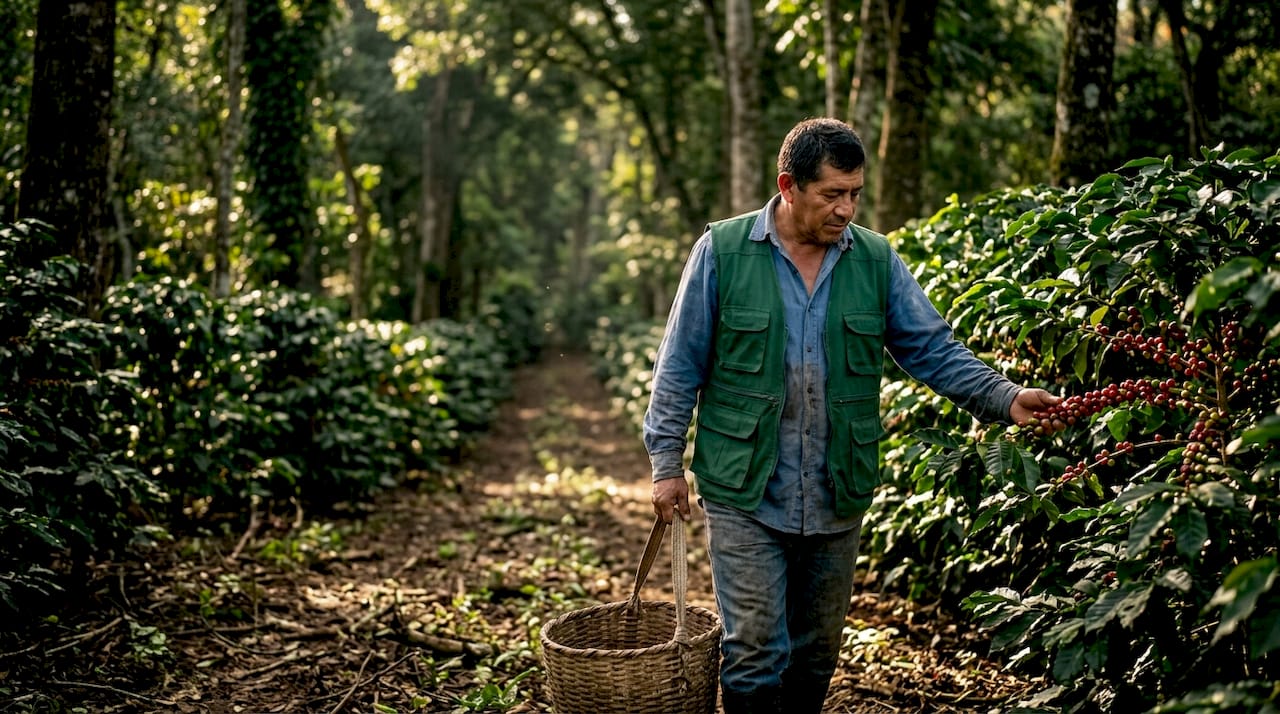
Barriers to adopting these practices do exist. Transitioning to regenerative or shade-grown systems requires upfront investment from farmers, and consumer demand plays a real role in making that investment financially viable. Every time you choose a certified or ethically sourced bag, you’re helping tip that scale. You can explore real-world ethical sourcing examples to see how brands are navigating these challenges in practice.
Quick comparison: Which initiatives give the biggest impact?
To simplify your next purchase, here’s how the key options stack up side by side.
| Initiative | Environmental impact | Social/economic impact | Consumer accessibility |
|---|---|---|---|
| Regenerative farming | Very high | High | Growing availability |
| Shade-grown / Bird Friendly | High | Moderate | Moderate |
| Fair Trade | Moderate | High | Wide availability |
| USDA Organic | Moderate | Low to moderate | Wide availability |
| Direct trade | Variable | High | Limited but growing |
The economic case for regenerative coffee is especially compelling. A recent investment analysis found that scaling regenerative coffee practices could boost smallholder farmer incomes by 62%, increase exports by 30%, and cut greenhouse gas emissions by 3.5 million tons of CO2 equivalent per year for 3 million farmers. Those figures aren’t abstractions. They represent real families, real land, and a real shot at a better future.
Fair Trade’s story is more nuanced. Research on Fairtrade outcomes shows positive effects on farmer incomes in 90% of the 60 studies reviewed, along with stronger price stability, but the same research found that roasters and retailers in markets like Sweden captured between 61% and 70% of the Fairtrade premium before it reached farmers. That doesn’t mean Fair Trade isn’t worth choosing. It absolutely is. But it does mean that pairing it with direct trade or regenerative sourcing creates a more complete picture of responsible sourcing.
The honest truth is that no single initiative does everything. The most powerful approach combines certifications strategically, supports transparent brands, and pairs purchasing decisions with everyday green habits. Think of it less like finding the one perfect label and more like building a mosaic of small, meaningful choices.
Everyday green actions for coffee lovers
With the big picture in mind, here’s what you can do right now to support a greener coffee culture. These aren’t complicated or expensive actions. Most of them take a few extra seconds and cost nothing.
-
Buy from certified or transparent roasters. Seek out brands that display Fair Trade, Rainforest Alliance, Bird Friendly, or Organic seals, or that openly share sourcing information on their website. Transparency is a feature, not a bonus.
-
Compost your coffee grounds. Used coffee grounds are rich in nitrogen and make excellent compost material for gardens. Keeping them out of the landfill is an easy, free habit that adds up fast. Get started with this guide on how to compost coffee grounds for a greener lifestyle.
-
Switch to reusable gear. A reusable travel mug, a washable cloth filter, or a refillable coffee pod cuts packaging waste significantly over time. Small swaps like these are a genuinely effective way to reduce coffee waste.
-
Support brands reducing shipping emissions. Some brands go out of their way to shrink their transport footprint. Café William, for example, uses sailboat transport to cut emissions and sources Fairtrade organic coffee from multiple countries. That kind of commitment shows what’s possible when a brand decides to act beyond the cup.
-
Buy local when you can. Locally roasted coffee often has a shorter supply chain, which can mean fresher beans and fewer emissions from shipping. Explore the environmental case for local sourcing for coffee and how it stacks up against global options.
Pro Tip: Don’t underestimate the power of asking questions. When you email a roaster or leave a comment asking about their sourcing practices, you send a clear signal that these things matter to their customers. Brands listen, especially when the asks are consistent.
The cumulative impact of small actions is real. If every eco-conscious coffee drinker in the U.S. made just two or three of these changes, the collective shift in demand and waste reduction would be enormous. You don’t need to overhaul your routine overnight. Start with one change this week and build from there.
Why small steps matter more than perfection in coffee sustainability
Here’s an opinion you won’t find in most sustainability guides: chasing the perfect green choice is often the enemy of making any green choice at all.
We’ve all felt it. You stand in the grocery aisle looking at three different coffee bags, each with its own certification and story, trying to calculate which one does the most good. It’s exhausting. And it can lead to decision fatigue that ends with choosing nothing different at all.
The reality is that coffee sustainability is a spectrum, not a binary. A bag with a Fair Trade label and no other certification is still better than a bag with no consideration of sourcing at all. A regenerative farm that’s still working toward full certification is still healing soil today. Progress is the point, not perfection.
It’s also worth noting, as research confirms, that certifications don’t guarantee full impact every time. Premiums get diluted. Regenerative practices can take years to show full results and require upfront investment that many smallholders struggle to afford. These are real barriers, and no single cup of coffee solves them.
What you can do is support brands that value transparency, reward incremental improvements, and communicate honestly about where they are in their journey. Understanding direct trade coffee is a great example of this mindset in action. Direct trade often means deeper farmer relationships and more honest conversations about quality and sourcing, even when formal certification isn’t present.
The best green initiative is often the one you can actually sustain, whether that’s buying one certified bag per month, composting your grounds, or simply staying curious and informed. Collective, consistent action from many imperfect consumers genuinely does make a dent. Trust the process and keep showing up.
Explore more sustainable choices with EcoVibe Roast
If you’re ready to turn your next coffee break into meaningful change, start here. At EcoVibe Roast, we’ve built our entire collection around the values you’ve been reading about: responsible sourcing, transparent practices, and products that do good beyond your mug.

From Fair Trade organic blends to eco-conscious options in our sustainable single-serve collection, every product we offer is chosen with both quality and impact in mind. With each purchase, we plant mangrove trees and help remove ocean-bound plastics, because we believe your coffee habit should feel as good for the planet as it tastes. Browse our single-serve coffee pods and take your next step toward a greener, richer coffee ritual today.
Frequently asked questions
What does ‘regenerative agriculture’ mean in coffee?
Regenerative agriculture actively restores soil health, boosts biodiversity, and sequesters carbon, going far beyond conventional or organic farming. Studies show it can increase coffee yields by up to 20% while improving soil moisture and microbial activity.
Does Fair Trade coffee make a difference for farmers?
Yes, Fair Trade certification meaningfully supports farmer income stability and funds community development projects through the Fairtrade Premium. However, distribution of that premium can vary, with roasters and retailers sometimes capturing a large share before it reaches farmers.
How does shade-grown coffee support the environment?
Shade-grown coffee creates a habitat that supports 50% more bird species than sun-grown coffee, prevents soil erosion, sequesters carbon, and reduces the need for chemical pesticides significantly.
What are simple everyday actions for eco-conscious coffee drinkers?
Buy certified or directly traded coffee, compost your grounds to keep them out of landfills, and swap disposable cups for a reusable mug. Even one of these changes, done consistently, adds up to a real positive impact over time.


