

TL;DR:
- Choosing loose leaf tea over bags reduces plastic waste and allows multiple steepings.
- Sustainable certifications like Fairtrade, Rainforest Alliance, and Organic ensure responsible sourcing.
- Reusing and composting tea leaves maximizes flavor and minimizes environmental impact.
Every tea lover knows that moment: you’re standing in the kitchen, kettle in hand, genuinely wanting to do right by the planet but unsure where to start. Which tea is truly sustainable? Does the type of strainer matter? What about the water you use? Eco-friendly tea preparation isn’t just about the tea itself — it’s about every choice from leaf to cup. This guide gives you a practical, step-by-step approach built on expert insights and research-backed practices, so you can brew with confidence, enjoy every aromatic sip, and feel genuinely proud of the difference you’re making.
Table of Contents
- What you need for eco-friendly tea: Sustainable materials and picking the right tea
- How to prepare eco-friendly tea: Step-by-step brewing instructions
- Troubleshooting and common mistakes in eco-friendly tea preparation
- How to verify your eco-friendly impact: Expected results and sustainable habits
- The overlooked power of small changes in your daily tea ritual
- Discover sustainable teas and essentials at EcoVibe Roast
- Frequently asked questions
Key Takeaways
| Point | Details |
|---|---|
| Choose loose leaf tea | Loose leaf tea minimizes waste and microplastics compared to conventional tea bags. |
| Use ethical certifications | Look for Fairtrade, Organic, or Rainforest Alliance labels to support responsible sourcing. |
| Brew precisely and re-steep | Measure tea accurately and re-steep to maximize flavor and minimize waste. |
| Compost and reuse | Compost spent leaves and avoid single-use accessories for a greener tea habit. |
What you need for eco-friendly tea: Sustainable materials and picking the right tea
Now that you’re motivated to brew in a more earth-friendly way, let’s start by gathering the essentials. The good news? You don’t need to overhaul your entire kitchen. A few smart swaps go a long way.
Choose loose leaf tea first
Your single most impactful choice is swapping conventional tea bags for loose leaf tea. Standard tea bags are often made with plastic-based materials, and many release microplastics directly into your cup. Loose leaf over bags reduces microplastics and packaging waste, and whole leaves allow multiple steeps that dusty bag contents simply can’t match. That’s better for your health and your carbon footprint.
Learning about eco-conscious tea selection can help you identify the most responsibly grown varieties available, from lush green teas to rich herbal blends. And the flavor payoff is real. Whole leaves unfurl beautifully in hot water, releasing complex, layered tastes that a crushed-up tea bag just can’t replicate.
Decode your certifications
Not all “sustainable” labels carry the same weight. Here’s a quick breakdown of what the three major certifications actually mean, because shopping smart starts with knowing what you’re reading:
| Certification | What it guarantees | What it doesn’t cover |
|---|---|---|
| Fairtrade | Minimum price to farmers, community funds | Environmental standards vary |
| Rainforest Alliance | Biodiversity protection, farm ecosystems | Does not guarantee fair wages |
| Organic | No synthetic pesticides or chemicals | Fair labor standards not required |
As a helpful guide to ethical tea certifications explains, sustainable certifications vary widely: Fairtrade guarantees prices, Rainforest Alliance emphasizes biodiversity, and Organic bans chemicals but not always fair labor. Ideally, you’ll look for teas that carry more than one of these labels. A tea that is both Fairtrade and Organic? That’s a genuinely strong choice.
Understanding the plastic-free tea benefits for both your body and the environment can make it easier to commit to these choices long term.
Eco-friendly teaware to gather
Beyond the tea itself, your brewing tools matter. Here’s a quick checklist of what to look for:
- Stainless steel or glass infuser: Reusable, durable, and easy to clean. Avoid single-use paper filters when possible.
- Ceramic or glass teapot: Long-lasting and free from plastic leaching.
- Bamboo or stainless steel spoon: A small swap that eliminates plastic stirring sticks.
- Glass or ceramic mug: Far better than disposable cups, and they keep your tea warmer longer.
- Compostable storage bags or tins: For storing loose leaf tea at home without plastic wrap.
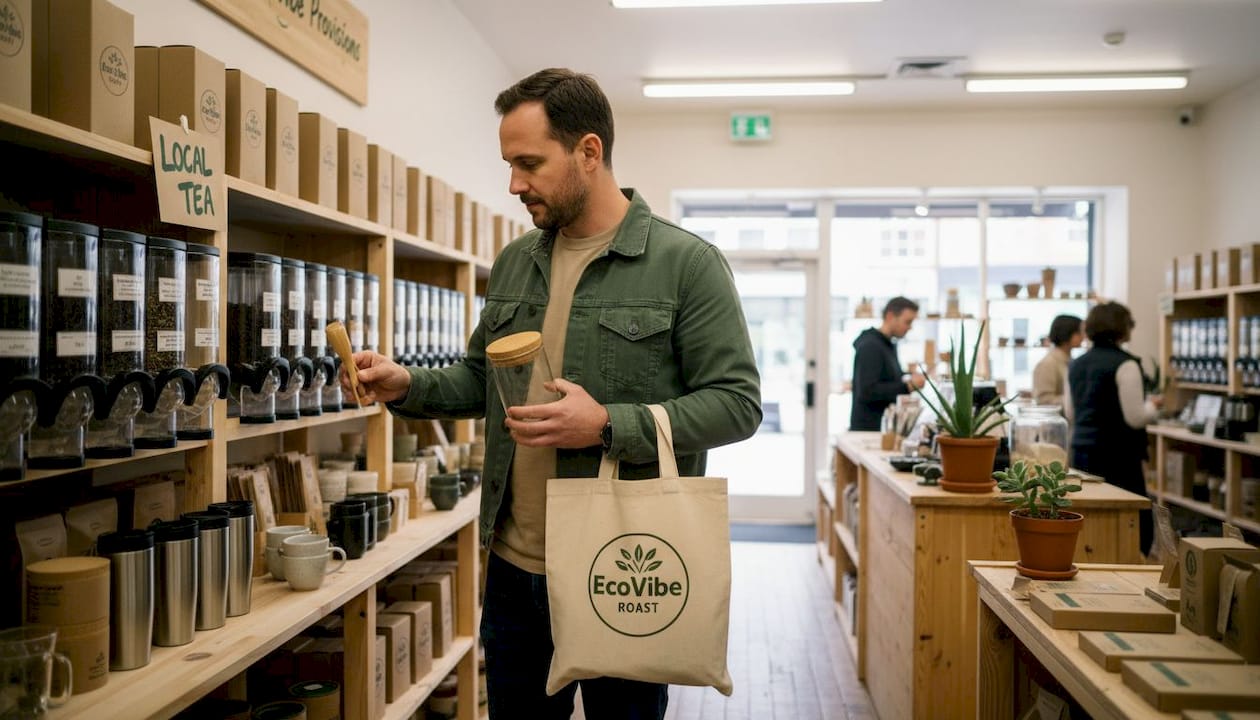
Pro Tip: Prioritize local zero-waste shops, bulk food stores, or farmers markets when sourcing your supplies. Buying in bulk reduces packaging dramatically and often saves you money at the same time.
How to prepare eco-friendly tea: Step-by-step brewing instructions
With your ingredients ready, let’s break down the actual tea brewing process for the best and greenest cup you’ve ever made. Precision matters here — both for flavor and for minimizing waste.
Step-by-step brewing guide
-
Filter your water. Tap water often contains chlorine and other minerals that affect taste and require more steeping time (which wastes energy). A simple activated charcoal filter or a reusable water filter pitcher is a sustainable, cost-effective fix.
-
Measure your tea. Use a kitchen scale for accuracy. Orthodox whole-leaf teas re-steep better than CTC (Crush, Tear, Curl) teas found in bags. Aim for 2 to 3 grams of loose leaf per 250 ml of water. Eyeballing with a teaspoon works fine once you get a feel for it.
-
Heat water to the right temperature. This is where most people accidentally ruin an otherwise great tea. Use the sustainable tea brewing steps as a reference, and always match temperature to tea type.
-
Place your infuser in the cup or teapot. Add your measured leaves, pour water slowly over them, and put a lid or small saucer on top to retain heat during steeping.
-
Steep for the recommended time. Don’t wander off and forget! Over-steeping is the number one cause of bitter tea and, ironically, it encourages people to toss the leaves after just one use.
-
Remove the infuser promptly. Once steeping time is done, remove immediately and set leaves aside for a second steep.
-
Re-steep when ready. Simply repeat with fresh hot water. The second steep often tastes even smoother and more nuanced.
Brewing temperature and time reference
| Tea type | Water temperature | First steep time | Re-steep possible? |
|---|---|---|---|
| Green tea | 75°C / 167°F | 2 to 3 minutes | Yes, 2 to 3 times |
| Black tea | 95°C / 203°F | 3 to 5 minutes | Yes, 1 to 2 times |
| White tea | 80°C / 176°F | 4 to 5 minutes | Yes, 2 to 3 times |
| Herbal/tisane | 95°C / 203°F | 5 to 7 minutes | Sometimes, varies |
| Oolong | 85°C / 185°F | 3 to 4 minutes | Yes, 3 to 5 times |
Use this as your go-to reference until the temperatures become second nature. A basic kitchen thermometer or a variable-temperature kettle makes precision easy, and variable kettles only heat water to the exact temperature you need — saving energy every single time.
Pro Tip: Avoid over-brewing to prevent bitterness. Start checking your tea at the minimum recommended steep time, especially with green and white teas. Bitter tea often gets thrown away, which defeats the sustainability goal entirely.
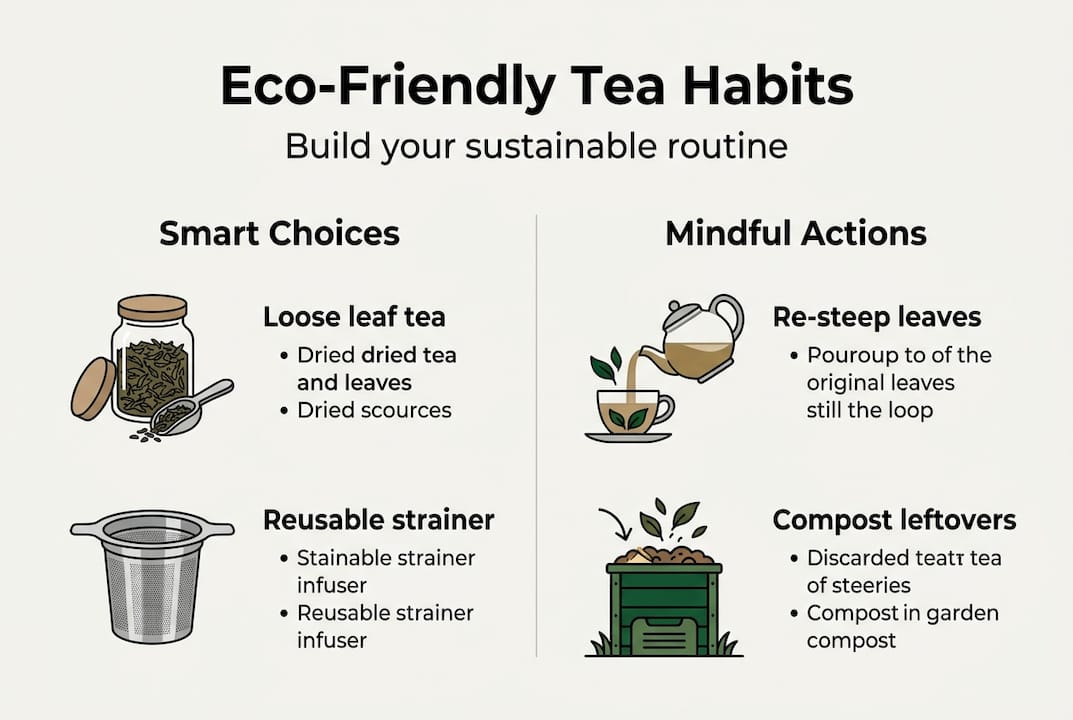
Use your eco-friendly tea checklist to tick off each habit as you build your routine. Small checkboxes are surprisingly motivating!
Troubleshooting and common mistakes in eco-friendly tea preparation
Even when following the steps, it’s easy to make small mistakes that impact taste or sustainability. Here’s how to spot and solve them before they become habits.
Common pitfalls and how to fix them
-
Using conventional tea bags “just this once.” It adds up fast. Even one plastic tea bag per day means roughly 365 microplastic-releasing steeps per year. Keep a stash of loose leaf and your reusable infuser visible on the counter so convenience stays on your side.
-
Tossing leaves after one steep. This is the most wasteful habit in tea preparation. Whole leaves allow multiple steeps unlike the dust found in standard bags. High-quality oolong and white teas can often go four or five rounds before the flavor fades. You’re essentially throwing money and resources away if you stop at one.
-
Using plastic tools around hot water. Plastic spoons, single-use strainers, and disposable filters can leach chemicals into your cup when exposed to heat. Swap them out for stainless steel or natural materials.
-
Forgetting to compost used leaves. Spent tea leaves are nitrogen-rich and make excellent compost. Keep a small compost bin in your kitchen and scoop the leaves straight in after each session. Your garden will love you for it.
-
Buying “natural” teas without checking the supply chain. The word “natural” on packaging has no regulated meaning in most countries. Always look for recognized certifications rather than marketing language.
-
Brewing weak tea and blaming the leaf. Weak tea is almost always a water temperature or steep time issue, not a quality issue. Revisit your temperature guide and try again before assuming the tea is bad.
“Reusing whole-leaf teas maximizes both flavor and minimizes waste — it’s one of the simplest ways to make your tea habit genuinely sustainable.”
For deeper guidance on getting the most out of your leaves, explore tea flavor and sustainability tips to refine your approach with every cup. And if you’re curious about the broader wellness side of the practice, the eco-friendly tea benefits for your health and the planet are genuinely encouraging.
How to verify your eco-friendly impact: Expected results and sustainable habits
After brewing and enjoying your tea, let’s make sure your new habits are really supporting a greener planet. This is where the “feel good” part becomes measurable and real.
Check your certifications against reality
You’ve already learned that certifications vary significantly in what they actually guarantee. Make it a habit to flip every new tea package over and read the fine print. Does it carry a Fairtrade seal? Rainforest Alliance? Both? The more overlap, the stronger the ethical foundation of that product. And if you don’t see any recognized certification, that’s a signal to research the brand more before committing.
Short-term and long-term rewards
In the short term, you’ll notice the rewards almost immediately: richer, more complex flavors, less packaging cluttering your kitchen, and the satisfying feeling of making choices that align with your values. Long-term, the impact compounds beautifully. Less plastic waste entering landfills and oceans, better soil health from composted tea leaves, and financial support flowing to ethical farming communities around the world.
Signs your routine is truly sustainable
How do you know you’ve really arrived? Look for these markers in your daily ritual:
- You reach for your reusable infuser every single time without thinking about it.
- Your used tea leaves go straight to the compost, never the trash.
- You check certification labels before adding a new tea to your cart.
- You re-steep at least once before considering the leaves spent.
- Your teaware is plastic-free, from kettle filter to mug.
- You buy in bulk or from zero-waste stores to reduce packaging.
- You choose brands that actively contribute to environmental causes.
Comparison of sustainable versus conventional routines:
| Habit | Conventional approach | Eco-friendly approach |
|---|---|---|
| Tea format | Single-use tea bags | Loose leaf with reusable infuser |
| Certification | No label or “natural” claim | Fairtrade, Organic, or Rainforest Alliance |
| Water heating | Full kettle every time | Only heat what you need |
| Used leaves | Tossed in trash | Composted at home |
| Teaware | Plastic tools | Stainless steel or ceramic |
Share your sustainable brewing journey with friends! The ripple effect of one eco-conscious tea drinker inspiring even two more people in their circle is genuinely powerful. Explore more eco-friendly tea ritual ideas to keep your practice fresh and inspiring.
The overlooked power of small changes in your daily tea ritual
Here’s a perspective that most sustainability guides completely miss: they focus almost entirely on what you buy, not on what you do every day. And that’s where the real, lasting impact lives.
Think about it. Buying an ethically sourced tea once is a great start. But re-steeping it twice every morning, composting the leaves every afternoon, and choosing your reusable infuser every single day? That’s a habit loop that compounds over years. The environmental math is significant when you multiply one eco-conscious action by 365 days and then again by the number of people you inspire.
We’ve seen this pattern again and again. The people who make the deepest environmental impact aren’t the ones who make one dramatic gesture, like buying the most expensive certified tea on the shelf. They’re the ones who gently reshape their daily rituals, one small step at a time. A little less packaging this week. A compost bin added next week. A second steep attempted the week after that.
There’s also something genuinely joyful about this approach. Big sustainability overhauls can feel overwhelming, even guilt-inducing when life gets in the way. But a small, consistent ritual? That feels good. It’s a warm hug for both you and Mother Earth, repeated daily.
Pro Tip: Start a simple tally or journal of your new sustainable tea habits. Note how many times you re-steeped your leaves this week, or how much packaging you avoided by buying in bulk. Seeing that progress on paper (or in an app) is a powerful motivator that keeps the momentum going.
The circular economy in tea is a beautiful concept: leaves grown sustainably, brewed thoughtfully, re-steeped fully, and composted back into the earth. You participate in that circle every morning. Don’t underestimate what that means.
Discover sustainable teas and essentials at EcoVibe Roast
Ready to take actionable steps with thoughtfully sourced teas and accessories? You’ve now got the knowledge, and we’ve got the products to match.

At EcoVibe Roast, every purchase supports something bigger: mangrove trees planted, ocean-bound plastics removed, and farming communities given fair wages. Explore our full range of organic and sustainable teas to find your perfect loose leaf match, from vibrant greens to rich herbal blends. If you’re looking for a beautiful place to start, our English Breakfast loose leaf is a community favorite for good reason. You can also browse our curated eco-friendly tea essentials to find reusable infusers, sustainable teaware, and sampler sets that make the whole ritual even more enjoyable.
Frequently asked questions
Is loose leaf tea really better for the environment than tea bags?
Yes, loose leaf reduces microplastics and packaging waste compared to conventional tea bags, and whole leaves can be re-steeped multiple times for extra value.
How do I know if my tea is ethically sourced?
Check for Fairtrade, Rainforest Alliance, or Organic certifications, but note that certifications vary significantly in scope: Fairtrade guarantees farmer prices, Rainforest Alliance focuses on biodiversity, and Organic covers chemical use but not always labor standards.
Can I compost my used tea leaves?
Yes, used loose leaf tea leaves are fully compostable and add valuable nitrogen to home compost piles, making them a garden-friendly end to their life cycle.
Is it okay to re-steep loose leaf tea for better sustainability?
Absolutely, most high-quality loose leaf teas re-steep beautifully two to five times depending on the variety, reducing waste and stretching your investment further with every cup.


