

TL;DR:
- Switching to reusable tools and organic teas reduces waste and supports sustainability.
- Creating a mindful tea space enhances the ritual’s eco and personal benefits.
- Practicing slow, intentional brewing encourages presence and environmental awareness.
There is something deeply comforting about wrapping your hands around a warm mug of tea. But here is a thought that might surprise you: the average tea drinker tosses hundreds of single-use tea bags every year, many of which contain microplastics and non-compostable materials. That daily ritual you love could be leaving a bigger footprint than you realize. The good news? Transforming your tea habit into a grounding, eco-friendly practice is easier than you think. This guide walks you through every step, from gathering sustainable tools to steeping with intention, so your cup becomes a warm hug for both you and Mother Earth.
Table of Contents
- Gathering your eco-friendly tea tools and ingredients
- Creating a mindful, sustainable tea space
- Step-by-step eco-friendly tea ritual process
- Common mistakes and troubleshooting your tea ritual
- Why a mindful tea ritual is more than just sustainability
- Take your eco-friendly tea ritual further
- Frequently asked questions
Key Takeaways
| Point | Details |
|---|---|
| Mindful preparation matters | Setting your intention and space is as important as the tea itself for an eco-friendly ritual. |
| Choose sustainable tools | Opting for reusable infusers and mugs reduces waste and reinforces the eco aspect of your practice. |
| Compost and reuse | Composting spent leaves and reusing utensils are easy, impactful steps for sustainability. |
| Ritual deepens eco-benefits | Combining mindfulness with sustainability in tea rituals provides personal calm and positive environmental impact. |
Gathering your eco-friendly tea tools and ingredients
Having set our intention, let’s get hands-on by assembling the right eco-friendly tools and ingredients. The foundation of any sustainable tea ritual starts with what you bring to the table, literally.
Your basic toolkit does not need to be fancy or expensive. A stainless steel or bamboo loose leaf infuser, a reusable ceramic or glass mug, a small compost bin for spent leaves, and a simple electric kettle are all you need to get started. These items replace the disposable, plastic-heavy alternatives that quietly pile up in landfills. Making eco-conscious tea choices from the very beginning sets the tone for everything that follows.
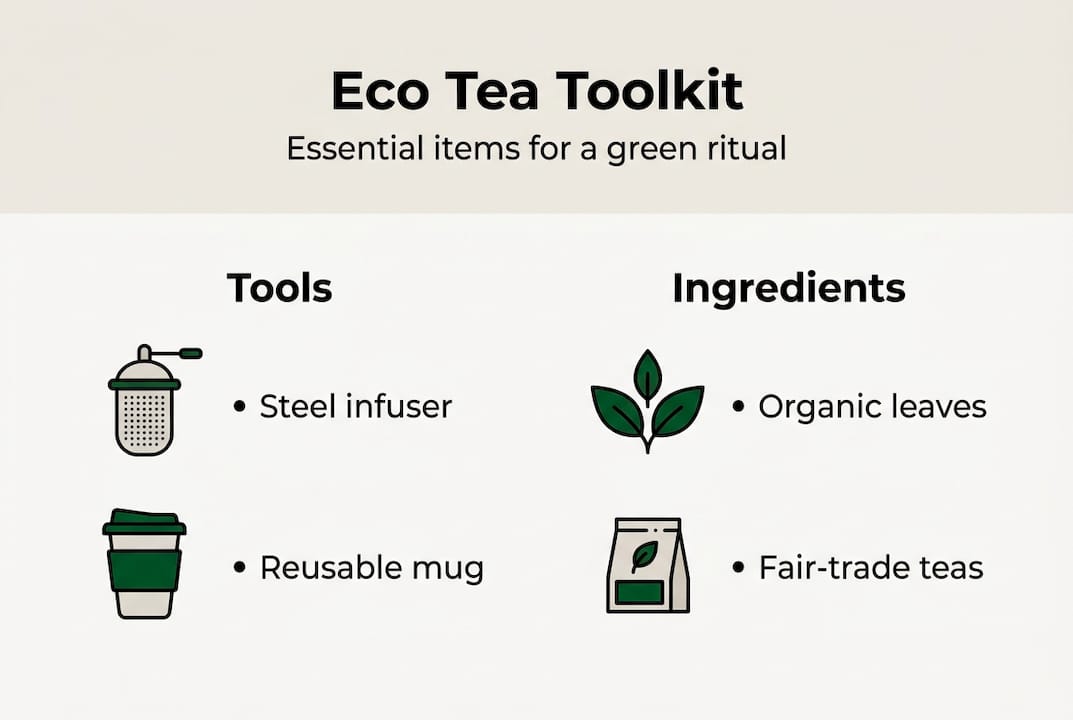
When it comes to ingredients, look for organic and fair-trade certified teas. Organic farming avoids synthetic pesticides that harm soil biodiversity, while fair-trade certification ensures growers receive fair wages and work in safe conditions. Seasonal teas, meaning those harvested and consumed closer to their natural growing cycle, also tend to have a lower carbon footprint because they require less energy-intensive preservation. Exploring sustainable tea products can help you find options that align with your values without sacrificing flavor.
Here is a quick comparison to see how conventional tools stack up against eco-friendly alternatives:
| Tool | Conventional option | Eco-friendly alternative |
|---|---|---|
| Tea infuser | Disposable tea bags | Stainless steel or bamboo infuser |
| Mug | Single-use paper cup | Reusable ceramic or glass mug |
| Packaging | Plastic-wrapped boxes | Compostable or bulk packaging |
| Waste disposal | Trash bin | Compost bin for spent leaves |
| Sweetener | Individual sugar packets | Bulk organic honey or sugar |
The shift is simple but powerful. Each swap reduces waste and deepens your connection to the ritual.
It is also worth drawing inspiration from tradition. Japanese tea ceremony sustainability shows us that chanoyu emphasizes seasonal harmony, reuse of utensils, and a deep connection with nature. These principles are not just poetic. They are practical guides for building a ritual that respects the earth.
Pro Tip: Choose loose leaf tea whenever possible. It almost always comes with less packaging than individually wrapped tea bags, and the flavor is richer and more aromatic too.
Creating a mindful, sustainable tea space
Now that you are equipped, let’s set the stage for a ritual that nurtures both you and the planet. Your environment shapes your experience more than you might expect.

Start by decluttering your tea corner. A clean, calm space signals to your brain that this is a moment of intentional pause. Use natural light whenever possible instead of switching on overhead lights. Adding a small potted plant nearby not only purifies the air but also brings a gentle reminder of the natural world you are working to protect.
Here are some steps to prepare your sustainable tea space:
- Clear the surface of any clutter or unnecessary items
- Place your reusable tools within easy reach so the ritual flows naturally
- Add a natural element like a small plant, a stone, or a piece of driftwood
- Use natural light or a warm, low-energy lamp to set a calming mood
- Keep your compost bin nearby so waste management feels effortless
- Set an intention before you begin, even just a single word like “calm” or “gratitude”
Intention-setting is not just a wellness trend. It is a practice rooted in ancient tea traditions and backed by modern mindfulness research. Following mindful tea preparation principles, you can prepare your space, breathe deeply, and express gratitude as core parts of the ritual itself.
“Mindfulness is not something you add to your tea ritual. It is the ritual. When you slow down enough to notice the steam rising, the color of the brew, and the warmth in your hands, you are already practicing presence and eco-awareness at the same time.”
This eco-friendly brewing guide can also help you connect the physical setup of your space with the actual brewing process, making the whole experience feel seamless and satisfying.
Step-by-step eco-friendly tea ritual process
With your tools ready and environment set, it is time to experience your full eco-friendly tea ritual. Let’s walk through it together.
- Rinse your infuser and mug with hot water to warm them up and remove any residue. This small act of cleaning mirrors the ritual cleansing found in traditional ceremonies and signals the start of your intentional practice.
- Measure your loose leaf tea using a reusable spoon or scoop. A general guide is one teaspoon per cup, though you can adjust based on your preferred strength.
- Heat your water mindfully. Different teas thrive at different temperatures. Green teas prefer around 175°F, while black teas do best at a full 212°F. Using a kettle with temperature control avoids wasting energy by overheating.
- Steep with attention. Place your infuser in the mug, pour the water slowly, and observe steeping, savor slowly as the color blooms into the water. Watch it. Breathe it in.
- Enjoy without distraction. Put your phone down. Hold the mug with both hands. Sip slowly and notice the flavor, the warmth, and the quiet.
- Clean up sustainably. Remove the infuser, empty the spent leaves into your compost bin, and rinse your tools with minimal water.
Here is a helpful reference table to keep your ritual on track:
| Step | Eco-action | Mindfulness tip |
|---|---|---|
| Rinse tools | Use minimal water | Notice the warmth in your hands |
| Measure tea | Use a reusable scoop | Appreciate the aroma of dry leaves |
| Heat water | Set exact temperature | Listen to the kettle’s quiet hum |
| Steep | Watch the brew develop | Breathe slowly, stay present |
| Enjoy | Sit without screens | Savor each sip with gratitude |
| Clean up | Compost spent leaves | Reflect on the ritual’s calm |
For a deeper look at each stage, the step-by-step sustainable brewing guide offers even more detail on water usage, steeping times, and waste-free cleanup.
Pro Tip: Spent tea leaves are fantastic for composting. They add nitrogen to your compost pile and break down quickly, giving you a zero-waste finish to every ritual.
Common mistakes and troubleshooting your tea ritual
After experiencing the process, let’s ensure your eco-friendly tea ritual stays rewarding and hassle-free. Even the most well-intentioned rituals can hit a few bumps.
Here are the most common mistakes to watch out for:
- Reaching for single-use items when your reusable tools are not clean or within reach
- Overheating water and wasting energy, or using too much water and pouring the excess down the drain
- Ignoring packaging when buying tea, and accidentally choosing brands that use excessive plastic or non-recyclable materials
- Rushing the ritual and skipping the mindful elements that make it restorative
- Forgetting to compost spent leaves, which means missing an easy zero-waste win
If your tea tastes bitter or weak, the fix is usually simple. Bitter tea often means the water was too hot or the leaves steeped too long. Weak tea usually means too little leaf or not enough steeping time. Adjust one variable at a time and you will find your sweet spot quickly.
If you find the ritual feels like a chore rather than a pleasure, that is a sign to slow down even more. Following the guidance to savor slowly and express gratitude helps reframe each step as a gift rather than a task. The mindful elements are not optional extras. They are what make the whole experience worth repeating.
Use this eco tea checklist to keep yourself on track, especially when you are just getting started and building the habit.
Pro Tip: Practice patience with yourself. Building any new ritual takes time. Minimize distractions, especially your phone, and let the process unfold at its own pace. The more present you are, the more rewarding it becomes.
Why a mindful tea ritual is more than just sustainability
Stepping back, let’s reflect on the impact of this ritual beyond just its eco benefits. There is a perspective shift worth considering here.
Sustainability is often framed as sacrifice, as giving things up or doing without. But that framing misses something important. When you slow down to brew a cup of tea with care and intention, you are not restricting yourself. You are enriching your day. The ritual becomes a moment of genuine presence in a world that constantly pulls your attention elsewhere.
Drawing from Japanese tradition, chanoyu emphasizes harmony with nature and the reuse of utensils not as limitations but as sources of personal enrichment and gratitude. That philosophy translates directly to your morning or evening tea moment. When you choose a beautiful ceramic mug over a paper cup, you are not just reducing waste. You are choosing an experience that feels better.
We believe the small act of a mindful, sustainable tea ritual has a ripple effect. When you practice presence and intentionality here, it tends to spill over into other daily habits, how you shop, how you eat, how you move through your day. Explore flavor and mindfulness together and you will see what we mean.
Take your eco-friendly tea ritual further
Ready to deepen your ritual and make every cup count toward a greener earth?

At EcoVibe Roast, we source teas that are as good for the planet as they are for your palate. Our organic Hibiscus Berry Tea is a vibrant, antioxidant-rich blend that pairs beautifully with a mindful morning ritual. If you love something warming and earthy, our Apple Cider Rooibos Tea is a cozy, caffeine-free option that feels like autumn in a cup. Every purchase supports our EcoVibe Roast environmental initiatives, including planting mangrove trees and removing ocean-bound plastics. Your ritual can do more than refresh you. It can help restore the planet.
Frequently asked questions
Why is loose leaf tea better for the environment than tea bags?
Loose leaf tea reduces single-use waste and typically comes with far less packaging than individually wrapped tea bags, many of which contain non-compostable plastic mesh or heat-sealed materials.
How can I make my tea ritual more mindful and eco-friendly?
Prepare your space, use reusable tools, express gratitude during ritual, and compost your spent leaves to create a sustainable and intentional experience from start to finish.
What are the best eco-friendly teas to use in my ritual?
Look for certified organic and fair-trade teas that come in compostable or minimal packaging, as these choices support both environmental health and ethical farming practices.
Can composting tea leaves and packaging make a difference?
Absolutely. Composting diverts organic waste from landfills, enriches your soil with nutrients, and closes the loop on your ritual so nothing goes to waste.


