

TL;DR:
- Organic tea avoids synthetic pesticides and fertilizers, supporting soil health and biodiversity.
- Choosing organic tea reduces chemical runoff and promotes long-term environmental sustainability.
- Certified organic tea often results in lower pesticide residues and ethical sourcing practices.
Not all teas are created equal, and if you care about what goes into your cup and what happens to the planet because of it, that distinction matters enormously. Conventional tea farming relies heavily on synthetic pesticides and fertilizers, leaving behind hidden environmental costs that most consumers never see on the label. Organic tea, by contrast, offers a genuinely different story, one rooted in soil health, biodiversity, ethical labor, and long-term land stewardship. This article walks you through the real evidence, the honest nuances, and the practical steps you can take to choose organic tea with confidence and purpose.
Table of Contents
- What makes tea ‘organic’?
- Environmental impact: How organic tea supports a healthier planet
- Personal health and safety: What the science really says
- Ethical production and responsible sourcing
- How to choose high-quality organic tea
- Our unique perspective: What most organic tea guides won’t tell you
- Ready to experience high-quality organic tea?
- Frequently asked questions
Key Takeaways
| Point | Details |
|---|---|
| Protects the planet | Organic tea is farmed with methods that preserve soil, water, and biodiversity compared to conventional practices. |
| Safer, ethical sourcing | Choosing organic tea lowers exposure to synthetic chemicals and supports responsible labor and fair supply chains. |
| Actions matter | Selecting certified organic teas enables you to foster positive change for both environmental and human wellbeing. |
| Be a smart buyer | Check for reputable certifications and avoid unverified green claims to ensure your purchase supports genuine organic practices. |
What makes tea ‘organic’?
Now that we’ve challenged the idea that all tea is the same, let’s break down what ‘organic’ truly means and how certified teas differ from the rest.
At its core, organic tea certification requires that farmers avoid synthetic pesticides, herbicides, and chemical fertilizers throughout the entire growing process. Instead, they rely on approved natural alternatives like compost, green manures, and biological pest controls. Certification bodies such as USDA Organic, the EU Organic label, and others conduct regular inspections and audits to verify compliance, meaning the label on your tea box carries real accountability behind it.
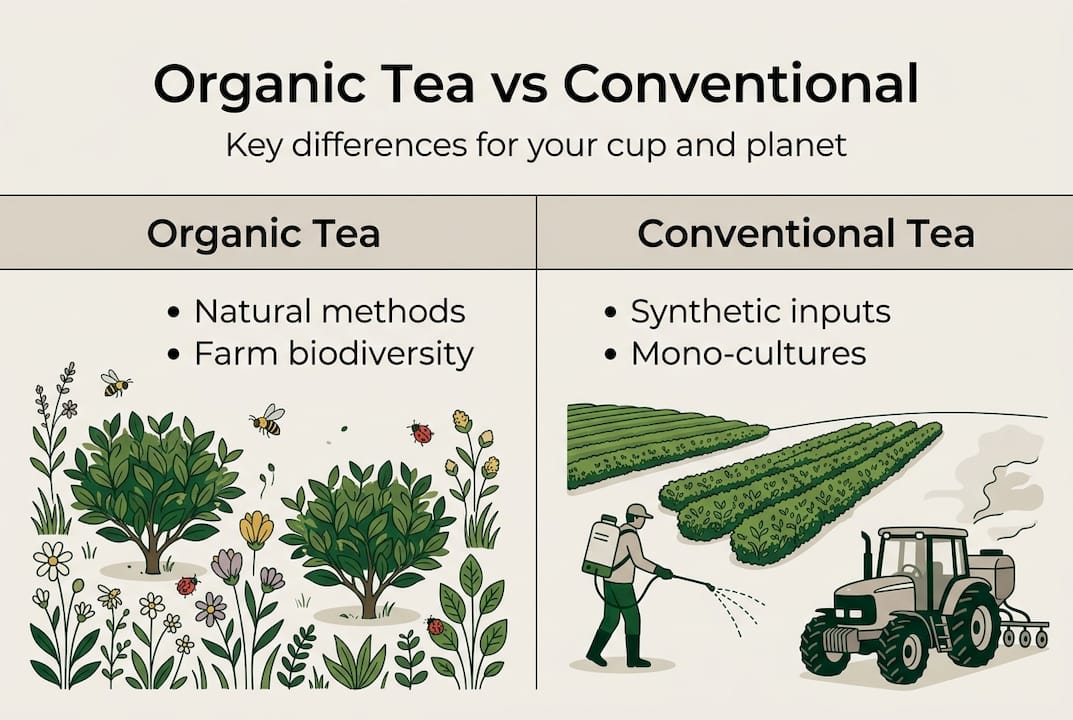
Here’s a quick comparison of what separates organic from conventional tea production:
| Feature | Organic tea | Conventional tea |
|---|---|---|
| Pest control | Natural, approved methods | Synthetic pesticides |
| Soil management | Compost, crop rotation | Chemical fertilizers |
| Biodiversity | Actively supported | Often reduced |
| Traceability | Usually high | Variable |
| Certification | Required and audited | Not required |
Organic farming protects soil health, reduces chemical runoff into water sources, preserves biodiversity, and maintains long-term land productivity compared to conventional methods. That’s not just a marketing claim; it’s a measurable, documented difference in how the land is treated season after season.
Key things to look for when shopping:
- Recognized certification symbols on the packaging (USDA Organic, Rainforest Alliance, etc.)
- Clear origin information so you can trace where the tea was grown
- Transparent supply chain details from brands committed to ethical tea sourcing steps
Not every tea labeled ‘natural’ or ‘pure’ is certified organic. Always check for the actual certification mark. And if you want a deeper look at what ethical sourcing really involves, this ethical tea sourcing guide is a great place to start.
Environmental impact: How organic tea supports a healthier planet
With organic standards clarified, it’s time to see the impact: How does choosing organic tea improve the planet you care about?
One of the most compelling reasons to go organic is what stays out of the ecosystem. Conventional tea farms apply synthetic chemicals that run off into rivers, streams, and groundwater, harming aquatic life and reducing water quality for surrounding communities. Organic farms eliminate that risk by design, using practices that keep soil nutrients cycling naturally and waterways cleaner.
Biodiversity is another big win. Organic tea farms tend to support a richer variety of insects, birds, and soil organisms because they don’t use broad-spectrum pesticides that wipe out beneficial species. Pollinators like bees thrive in these environments, which matters far beyond the tea farm itself.
“Long-term organic fertilizer application in tea plantations increases yield by 6.4 to 8.5%, improves soil quality index through higher organic matter and nutrients, and enhances tea quality via better soil microbial diversity.”
That’s a remarkable finding. Organic methods don’t just protect the environment; they actually make farms more productive and resilient over time. This connects directly to sustainable agriculture and tea practices that support both growers and the planet.
Pro Tip: If you want to go deeper on the planet-positive effects of your tea habit, explore the full breakdown of eco-friendly tea benefits to see how each cup can contribute to a healthier ecosystem.
For a broader view of how sustainable wellness choices ripple outward into community and environmental health, the connection is clear: small, consistent choices add up to meaningful change.
| Environmental factor | Organic farming | Conventional farming |
|---|---|---|
| Water quality | Protected | At risk from runoff |
| Soil health | Improved over time | Degraded by chemicals |
| Pollinator support | Strong | Weakened |
| Long-term productivity | Increasing | Often declining |
Personal health and safety: What the science really says
Caring for the earth is vital, but your own health matters too. So what’s true and what’s hype about organic tea and your wellbeing?
Let’s be honest: the health story around organic tea is more nuanced than most marketing suggests. Conventional teas often contain pesticide residues below MRLs (maximum residue limits) with negligible risk for the general population. However, cumulative exposure from pesticide mixtures raises legitimate concerns, especially for people who drink multiple cups daily.
Here’s what the science actually tells us:
- Organic is not zero-residue. Organic certification permits some approved natural substances, including copper sulfate, so trace residues can still appear.
- Wild-harvested teas often test cleaner than both organic and conventional options because they grow far from agricultural chemical use.
- Antioxidant differences between organic and conventional teas are modest and inconsistent across studies. Don’t choose organic solely for antioxidant gains.
- Cumulative exposure reduction is the real health argument. Drinking organic tea daily means consistently lower synthetic chemical input into your body over months and years.
The science-backed antioxidant benefits of tea are real regardless of whether it’s organic or conventional. The organic advantage lies elsewhere: in reducing your long-term exposure to synthetic inputs and supporting the benefits of eco-friendly teas for both you and the farming communities growing them.
Pro Tip: If minimizing pesticide exposure is your top priority, look for teas that combine organic certification with wild-harvested or shade-grown sourcing. These options tend to have the lowest overall chemical footprint. Check out the full breakdown of ethical tea benefits to understand how sourcing decisions shape both health and impact.
Ethical production and responsible sourcing
But choosing organic tea isn’t only about your health or the environment; it’s also a stand for ethical business practices worth supporting.

Organic certification and ethical sourcing often travel together, and for good reason. Farms that invest in organic practices tend to also invest in their workers. Fair wages, safe working conditions, and community development programs are more common among certified organic producers than in conventional supply chains where cost-cutting is the norm.
Here’s how ethical sourcing and organic production intersect in practice:
- Traceability: Organic-certified farms must document their inputs and practices, which naturally creates more transparent supply chains that consumers and retailers can verify.
- Fair labor standards: Many organic certifiers work alongside fair trade organizations, meaning workers are more likely to receive fair wages and safe conditions.
- Smallholder support: Organic certification programs often prioritize small family farms, helping them access premium markets and build economic resilience.
- Community investment: Brands sourcing from certified organic farms frequently fund local infrastructure, education, and health programs as part of their supply chain commitments.
“While health benefits like higher antioxidants are reported, evidence is mixed; primary value lies in reduced synthetic chemical exposure and ethical sourcing for high-quality, sustainable options.”
This is the honest expert consensus. The ethical and environmental case for organic tea is far stronger and more consistent than the health marketing often implies. When you buy organic, you’re casting a vote for tea sourcing transparency and signaling to the industry that responsible sourcing for tea is what conscious consumers expect.
How to choose high-quality organic tea
Finally, with the value of organic tea clearly established, here’s how you can make empowered choices as a shopper.
The organic tea market has grown fast, and unfortunately, greenwashing has grown with it. Some brands use words like ‘natural,’ ‘pure,’ or ‘eco-friendly’ without any certified backing. Knowing how to read a label and spot the real thing protects both your wallet and your values.
Organic farming protects soil health, reduces chemical runoff into water sources, preserves biodiversity, and maintains long-term land productivity. That’s the standard worth paying for, and here’s how to make sure you’re actually getting it:
- Look for recognized certification marks like USDA Organic, EU Organic, or equivalent national standards. These require third-party audits.
- Check for supply chain transparency. Brands that share farm names, regions, and sourcing stories are far more trustworthy than those with vague origin claims.
- Avoid ‘organic-inspired’ language with no certification to back it up. This is a classic greenwashing tactic.
- Support brands with trackable environmental impact. Some companies go further by funding reforestation, ocean cleanup, or community programs with every purchase.
- Choose blends that combine organic and ethical certifications for the maximum benefit to people, land, and ecosystems.
Pro Tip: Use the sustainable tea checklist before your next purchase to quickly evaluate whether a brand meets your standards. And if you want a full walkthrough of choosing sustainable tea from leaf to label, that guide covers every step in plain language.
Shopping organic tea doesn’t have to be complicated. Once you know what to look for, it becomes second nature, and every cup feels a little more like a warm hug for both you and Mother Earth.
Our unique perspective: What most organic tea guides won’t tell you
You’ve learned the facts, and now here’s what we believe sets organic tea apart and why your choice truly matters.
Most articles focus heavily on the health angle because it sells. But here’s the truth we’ve come to understand deeply: the health perks of organic tea are a bonus, not the headline. The real win is system-level change. When enough consumers consistently choose certified organic tea, it shifts demand signals across global supply chains, pushing more farms toward sustainable practices and rewarding the growers who are already doing the right thing.
Your daily cup is not a small act. It’s a recurring signal to an industry that your values matter.
That said, not all ‘organic’ teas live up to the promise. Certification varies by country, and some labels carry more weight than others. We encourage you to dig into why ethical tea matters and seek out brands that offer genuine transparency, not just a green logo. The teas worth drinking are the ones where you can trace the story from soil to cup.
Ready to experience high-quality organic tea?
If you’re ready to act on what you’ve learned, EcoVibe Roast offers the perfect next step for planet-conscious, high-quality tea.
At EcoVibe Roast, every tea we offer is sourced with full transparency and a genuine commitment to environmental stewardship. Our Hibiscus Berry Tea is a vibrant, aromatic blend that brings together bold flavor and responsible sourcing in every sip.

Every purchase you make with us contributes directly to planting mangrove trees and removing ocean-bound plastics, so your tea ritual becomes part of something much bigger. Explore our environmental impact page to see exactly where your support goes. Choosing organic has never felt this good or done this much good.
Frequently asked questions
Does organic tea taste better than regular tea?
Taste differences are subtle, but many drinkers notice a fresher, cleaner flavor in organic tea, which is linked to better soil microbial diversity from long-term organic fertilizer use. Better soil health often translates to more nuanced, vibrant flavor profiles in the final cup.
Is organic tea completely pesticide-free?
No, organic tea is not guaranteed to be zero-residue. Organic allows some approved substances like copper sulfate, so trace residues can still occur even in certified products.
How does organic tea support the environment?
Organic tea farming protects soil health, reduces chemical runoff into water sources, and preserves biodiversity, making it a measurably better choice for long-term land and ecosystem health.
Does organic tea have more antioxidants?
Not consistently. Evidence is mixed on whether organic tea delivers more antioxidants than conventional tea, so this shouldn’t be the primary reason to choose organic.
Recommended
- Unlock 5 benefits of eco-friendly teas for health & planet – EcoVibe Roast
- Why choose ethical tea? Benefits, impact, and guidance – EcoVibe Roast
- Why Choose Eco-Friendly Tea for a Greener Planet – EcoVibe Roast
- Step-by-step ethical tea sourcing: sustainable choices guide – EcoVibe Roast
- Why Sustainable Supplements Matter for Wellness


