

Buying tea labeled organic may seem like a sure step toward sustainability, yet true eco-friendly tea goes much deeper. Eco-conscious choices now demand a close look at every stage in the supply chain, from cultivation to community impact. Sustainable tea production blends responsible farming with fair labor practices and circular waste management, creating a beverage that supports the planet and local livelihoods. Discover what actually sets genuinely sustainable tea apart and how your purchase can drive positive change for global ecosystems.
Table of Contents
- Eco-Friendly Tea Defined And Common Myths
- Sustainable Sourcing And Environmental Impact
- Key Differences From Conventional Tea Production
- Social Responsibility And Community Support
- Practical Benefits And Common Pitfalls
Key Takeaways
| Point | Details |
|---|---|
| Sustainable Practices Matter | Eco-friendly tea production incorporates holistic strategies beyond organic labeling, focusing on environmental, social, and economic sustainability across the entire supply chain. |
| Comprehensive Sustainability | True sustainability requires addressing carbon emissions, ethical labor, water conservation, and community empowerment to enhance both product quality and social responsibility. |
| Consumer Awareness | Consumers should investigate brands’ comprehensive sustainability measures instead of relying solely on marketing claims or certifications. |
| Community Impact | Ethical tea practices promote global social transformation through fair wages, safe working conditions, and local community support, benefiting rural economies significantly. |
Eco-Friendly Tea Defined and Common Myths
Eco-friendly tea is far more complex than simply purchasing an organic label. Sustainable tea production involves a holistic approach that considers environmental, social, and economic impacts across the entire value chain. Sustainability challenges in tea production extend well beyond traditional organic certification.
The core principles of eco-friendly tea encompass multiple critical dimensions:
- Minimizing greenhouse gas emissions during cultivation
- Supporting fair wages and sustainable rural livelihoods
- Implementing responsible waste management practices
- Protecting local biodiversity and ecosystem health
- Reducing water and energy consumption
Contrary to popular misconceptions, eco-friendly tea isn’t just about the final product - it’s about transforming the entire agricultural ecosystem. Bioactive substances in sustainable tea are directly influenced by farming practices, demonstrating that environmental stewardship impacts product quality at a molecular level.
Many consumers mistakenly believe that simply buying tea labeled “organic” automatically means it’s environmentally responsible. However, true sustainability requires comprehensive strategies that address:
- Carbon footprint reduction
- Ethical labor practices
- Regenerative agricultural techniques
- Water conservation
- Community empowerment
These interconnected elements create a comprehensive approach to eco-friendly tea production that goes far beyond simple organic certification.
Pro tip: When selecting eco-friendly tea, look beyond marketing claims and investigate the brand’s comprehensive sustainability practices and transparent sourcing documentation.
Sustainable Sourcing and Environmental Impact
Sustainable tea sourcing represents a comprehensive approach to transforming agricultural practices and environmental stewardship. Tea production traditionally generates significant waste and environmental challenges, but innovative strategies are changing this narrative. Sustainable tea waste utilization demonstrates how circular economic models can dramatically reduce ecological footprints.
Key environmental considerations in sustainable tea sourcing include:
- Minimizing carbon emissions during cultivation
- Reducing water consumption in tea processing
- Implementing regenerative agricultural techniques
- Converting tea production waste into valuable biomaterials
- Supporting local ecosystems and biodiversity
The transformation of tea waste into value-added products represents a critical breakthrough in sustainable agriculture. Innovative microbial technologies and eco-friendly processing methods are enabling tea producers to convert what was once considered waste into useful resources, creating a more circular and regenerative economic model.
Environmental impact goes far beyond simple production metrics. Sustainable sourcing practices directly influence:
- Soil health and regeneration
- Local community economic resilience
- Biodiversity preservation
- Greenhouse gas reduction
- Water resource management
By prioritizing holistic environmental strategies, tea producers can create significant positive change across multiple ecological and social dimensions.

Pro tip: Research tea brands that transparently document their entire sustainability journey, from farm to final product, to ensure genuine environmental commitment.
Key Differences From Conventional Tea Production
Organic tea cultivation represents a radical departure from conventional farming practices that have dominated the agricultural landscape for decades. Organic tea production challenges reveal fundamental differences in environmental impact and agricultural approach that go far beyond simple chemical usage.
Key distinctions between conventional and sustainable tea production include:
- Elimination of synthetic pesticides and fertilizers
- Focus on soil microecology and ecosystem health
- Preservation of local biodiversity
- Regenerative agricultural techniques
- Enhanced water conservation strategies
- Reduced carbon footprint and pollution
Conventional tea plantations typically rely on chemical interventions that compromise long-term environmental sustainability. In contrast, sustainable tea farming prioritizes natural ecological balance, working with rather than against natural agricultural systems. These methods not only protect the immediate environment but also support broader ecosystem resilience.
The comprehensive differences between conventional and sustainable tea production extend across multiple critical dimensions:
- Chemical input strategies
- Soil health management
- Water resource protection
- Biodiversity preservation
- Carbon emission reduction
- Community economic impact
By rejecting the destructive practices of conventional agriculture, sustainable tea producers are creating a more holistic approach to food production that benefits both human and environmental health.
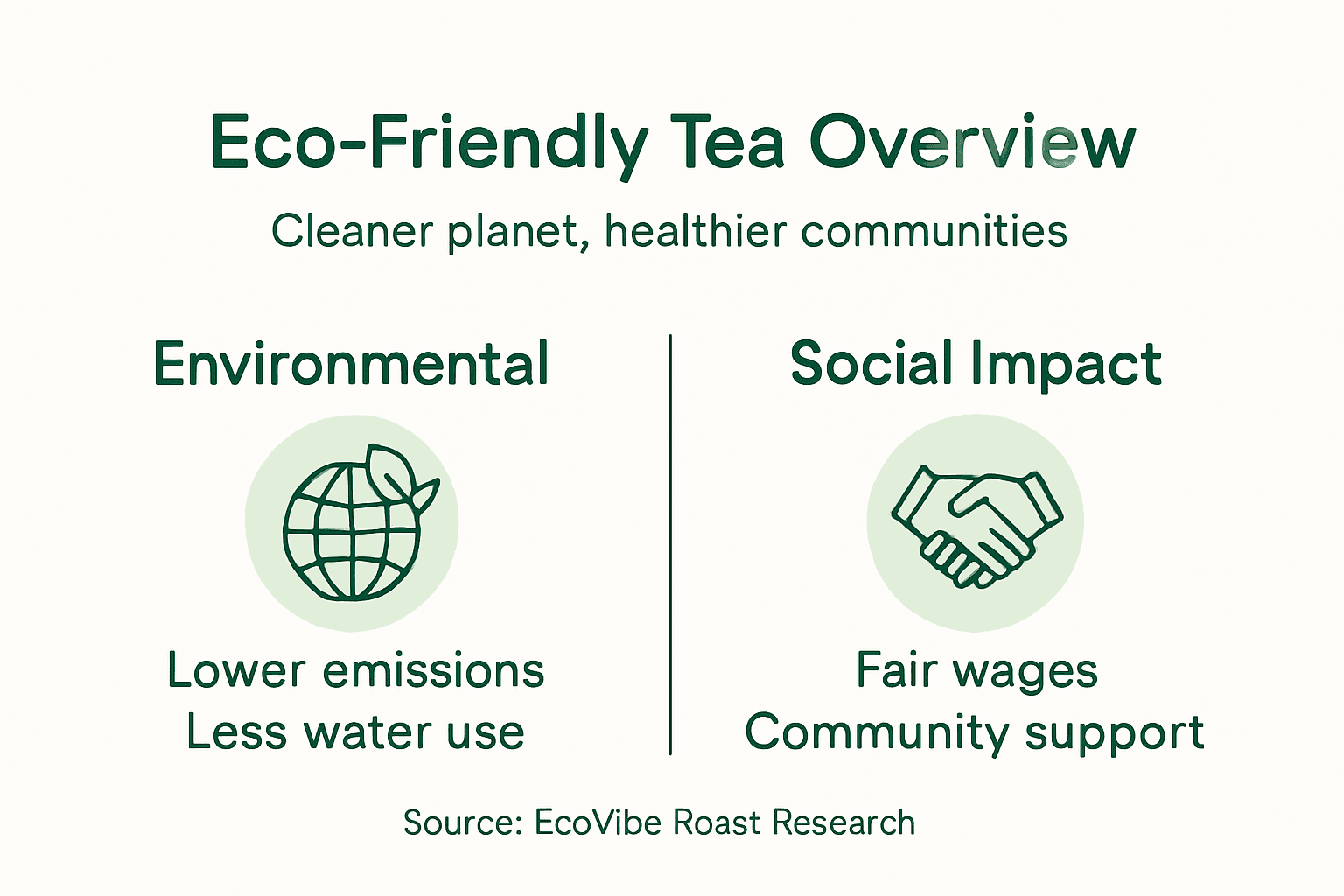
To clarify the major differences between conventional and sustainable tea production, see the comparison below:
| Aspect | Conventional Tea Production | Sustainable Tea Production |
|---|---|---|
| Use of Chemicals | Frequent synthetic pesticide use | Emphasis on natural pest management |
| Impact on Biodiversity | Often reduces ecosystem variety | Actively preserves local species |
| Water Usage | High, often inefficient | Optimized for conservation |
| Labor Practices | Variable, sometimes exploitative | Focus on fair wages and conditions |
| Waste Management | Often disregarded, lots of waste | Innovative valorization and recycling |
| Community Involvement | Limited, profit-centered | Strong focus on local empowerment |
Pro tip: Look for tea brands that provide detailed documentation about their farming practices, showing transparency in their sustainable agriculture methods.
Social Responsibility and Community Support
Fair trade tea practices go beyond simply purchasing a beverage - they represent a powerful mechanism for global social transformation. Ethical tea brand evaluation reveals how conscious consumer choices directly impact workers’ lives in tea-producing regions worldwide.
Key aspects of social responsibility in tea production include:
- Ensuring fair and living wages for agricultural workers
- Providing safe working conditions
- Supporting local community infrastructure development
- Promoting gender equality in agricultural leadership
- Creating economic opportunities in rural farming regions
- Establishing transparent supply chain practices
Sustainable tea production creates a holistic approach to community development that addresses systemic economic challenges. By prioritizing human dignity alongside environmental stewardship, ethical tea brands transform traditional agricultural models, empowering workers and supporting entire regional economies.
The social impact of responsible tea production extends across multiple critical dimensions:
- Economic empowerment for rural communities
- Enhanced educational opportunities
- Healthcare access and support
- Gender equity and workplace inclusion
- Skills training and professional development
- Long-term community sustainability
These integrated approaches demonstrate that choosing eco-friendly tea represents far more than an individual consumption decision - it’s a commitment to global social justice and economic equity.
Pro tip: When purchasing tea, look for certifications like Fair Trade or Rainforest Alliance that verify genuine social responsibility practices.
Practical Benefits and Common Pitfalls
Sustainable tea production represents a complex ecosystem of environmental and economic opportunities. Sustainable tea waste utilization reveals significant potential for transforming traditional agricultural practices through innovative approaches.
Practical benefits of eco-friendly tea production include:
- Generating renewable energy from tea waste
- Creating high-quality biofertilizers
- Reducing overall agricultural waste
- Developing new economic opportunities
- Improving soil health and fertility
- Minimizing environmental contamination
While the potential for sustainable tea production is immense, several critical challenges must be navigated. Advanced waste management technologies require significant investment, and maintaining consistent product quality demands continuous technological innovation and strategic planning.
Key considerations for successful eco-friendly tea implementation involve:
- Technological infrastructure development
- Consistent quality control mechanisms
- Economic feasibility assessment
- Research and development investment
- Worker training and skill development
- Market adaptation strategies
Successful sustainable tea production requires a holistic approach that balances environmental goals with economic practicality, recognizing that innovation is an ongoing process of continuous improvement.
Here’s a summary of real-world benefits sustainable tea provides to producers, consumers, and the environment:
| Stakeholder | Main Benefit | Example Impact |
|---|---|---|
| Producers | Long-term soil health | Higher yields, lower input costs |
| Consumers | Better product quality | More nutrients, fewer contaminants |
| Environment | Lower carbon footprint | Fewer emissions and habitat loss |
| Communities | Improved livelihoods | Job creation and social welfare gains |
Pro tip: Research and understand the specific sustainability practices of tea brands before making purchasing decisions to ensure genuine environmental commitment.
Choose Eco-Friendly Tea for Real Impact on Our Planet
The challenge of finding truly sustainable tea goes beyond just organic labels. As the article explains, eco-friendly tea requires a full commitment to environmental stewardship, fair labor, and regenerative farming that preserves biodiversity and reduces carbon footprints. For conscious consumers seeking to turn everyday choices into powerful actions, understanding these deeper values is essential.
At EcoVibe Roast, we align with this vision by offering carefully selected teas that meet rigorous sustainability and social responsibility standards. Our Coffee and Tea example products showcase options sourced with transparent supply chains and practices that support communities and protect ecosystems. Every purchase helps plant mangrove trees and remove ocean-bound plastics, creating direct environmental benefits you can feel proud of.

Start your journey toward greener living by exploring our Best Sellers and experience how delicious sustainable tea can be. Visit EcoVibe Roast today to make an informed, impactful choice and support a greener planet now.
Frequently Asked Questions
What is eco-friendly tea and how is it different from regular tea?
Eco-friendly tea involves sustainable tea production practices that minimize environmental impact, support fair wages, and promote biodiversity. Unlike regular tea, which may rely on synthetic chemicals and exploitative labor practices, eco-friendly tea prioritizes holistic agricultural methods.
How does sustainable sourcing benefit the environment?
Sustainable sourcing in tea production minimizes carbon emissions, conserves water, supports local ecosystems, and transforms waste into valuable resources. These practices contribute to regenerating soil health and preserving biodiversity, ultimately reducing the tea industry’s ecological footprint.
What role does social responsibility play in eco-friendly tea production?
Social responsibility in eco-friendly tea production includes ensuring fair wages, safe working conditions, and community support initiatives. These practices empower workers, promote gender equality, and contribute to the overall economic well-being of tea-producing communities.
How can I ensure the tea I purchase is truly eco-friendly?
To ensure you’re buying eco-friendly tea, look beyond organic labels. Research the brand’s sustainability practices, including their sourcing documentation, waste management strategies, and community support efforts, to verify their commitment to true environmental and social responsibility.
Recommended
- Eco-Friendly Packaging: Impact on Sustainable Living – EcoVibe Roast
- 7 Actionable Tips for Eco-Conscious Coffee Drinkers – EcoVibe Roast
- How to Choose Planet-Friendly Coffee Beans Easily – EcoVibe Roast
- Why Support Eco-Friendly Coffee: Positive Impact Unveiled – EcoVibe Roast
- 10 Essential Tips on What Are Environmentally Friendly Materials – The Ocean Straw


