

Standing at your favorite café, you notice the labels promising ethical sourcing, fair wages, and community impact. As coffee lovers, eco-conscious millennials and Gen Z are driving demand for meaningful choices that go beyond flavor. Social impact coffee is more than a trend, connecting your everyday cup to positive change for farmers, families, and the environment. Discover how deliberate, sustainable practices along the supply chain enable you to support fair wages, community growth, and environmental stewardship every time you choose a brew.
Table of Contents
- Defining Social Impact Coffee and Its Purpose
- Types of Social Impact Initiatives in Coffee
- Responsible Sourcing and Production Standards
- Environmental Benefits And Community Support
- Choosing Social Impact Coffee: Costs And Pitfalls
Key Takeaways
| Point | Details |
|---|---|
| Social Impact Coffee | Focuses on creating positive economic, environmental, and social outcomes throughout the coffee supply chain by ensuring fair wages and sustainable practices. |
| Types of Initiatives | Fair Trade Certification, Living Income Programs, and Climate-Smart Agriculture are key initiatives that support farmers and promote sustainability. |
| Responsible Sourcing | Involves transparent supply chains and fair wages, addressing complex challenges while creating meaningful impacts for producers and communities. |
| Consumer Awareness | Consumers should verify impact reports and the credibility of certifications to ensure their purchases truly benefit coffee-producing communities. |
Defining Social Impact Coffee and Its Purpose
Social impact coffee represents a transformative approach to coffee production and consumption that goes far beyond simply brewing a delicious beverage. This innovative concept focuses on creating positive economic, environmental, and social outcomes throughout the entire coffee supply chain.
At its core, social impact coffee addresses critical challenges faced by coffee farmers and communities through deliberate, sustainable practices. Addressing human dimensions in coffee systems involves understanding and improving socioeconomic conditions at every stage of production.
Key characteristics of social impact coffee include:
- Ensuring fair wages for coffee farmers
- Supporting local community development initiatives
- Promoting environmentally sustainable agricultural practices
- Creating transparent supply chains that prioritize worker welfare
- Investing in education and healthcare for coffee-producing regions
The purpose of social impact coffee extends beyond ethical sourcing. It represents a holistic approach to creating meaningful change by connecting conscious consumers with marginalized agricultural communities. By choosing social impact coffee, individuals can directly contribute to improving living standards, economic opportunities, and sustainable development in coffee-growing regions.
Pro tip: When purchasing coffee, look for certifications and brands that provide detailed information about their social and environmental impact programs.
Types of Social Impact Initiatives in Coffee
Social impact initiatives in coffee represent strategic approaches designed to address systemic challenges within the global coffee industry. These comprehensive programs aim to create meaningful transformations that support farmers, communities, and sustainable agricultural practices.
Sustainable coffee purchasing efforts have dramatically expanded in recent years, reflecting a growing commitment to responsible sourcing and community empowerment. Comprehensive initiatives now encompass multiple dimensions of social and economic development.
Key types of social impact initiatives include:
- Fair Trade Certification: Ensures minimum price guarantees and premium payments for coffee farmers
- Living Income Programs: Provides direct financial support to help farmers achieve economic stability
- Climate-Smart Agriculture: Supports sustainable farming techniques that reduce environmental impact
- Cooperative Development: Strengthens local farmer networks and collective bargaining capabilities
- Traceability Efforts: Creates transparent supply chains that validate ethical sourcing practices
Sustainable coffee initiatives are not just philanthropic gestures, but strategic investments in the long-term resilience of global coffee production.
These initiatives go beyond traditional charity models by creating systemic solutions that address root causes of economic inequality. By implementing targeted programs, coffee companies and organizations can help transform entire agricultural communities, providing pathways for economic advancement and sustainable development.
Pro tip: Research coffee brands that provide detailed impact reports and transparent information about their social and environmental initiatives before making purchasing decisions.
Here’s a comparison of common social impact coffee certifications and what they focus on:
| Certification Type | Main Focus | Typical Verification | Key Benefit for Producers |
|---|---|---|---|
| Fair Trade | Minimum price, fair wages | Third-party audit | Income security |
| Organic | Chemical-free farming | Farm inspection | Healthier soils and crops |
| Rainforest Alliance | Biodiversity, ecosystems | Regular surveillance | Preserves local environment |
| Direct Trade | Relationship transparency | Brand disclosure | Negotiated, higher direct pay |
Responsible Sourcing and Production Standards
Responsible sourcing in coffee production represents a critical approach to addressing complex economic, social, and environmental challenges within the global coffee industry. This comprehensive framework goes beyond simple transactions, focusing on creating meaningful impact for farmers, workers, and entire agricultural communities.
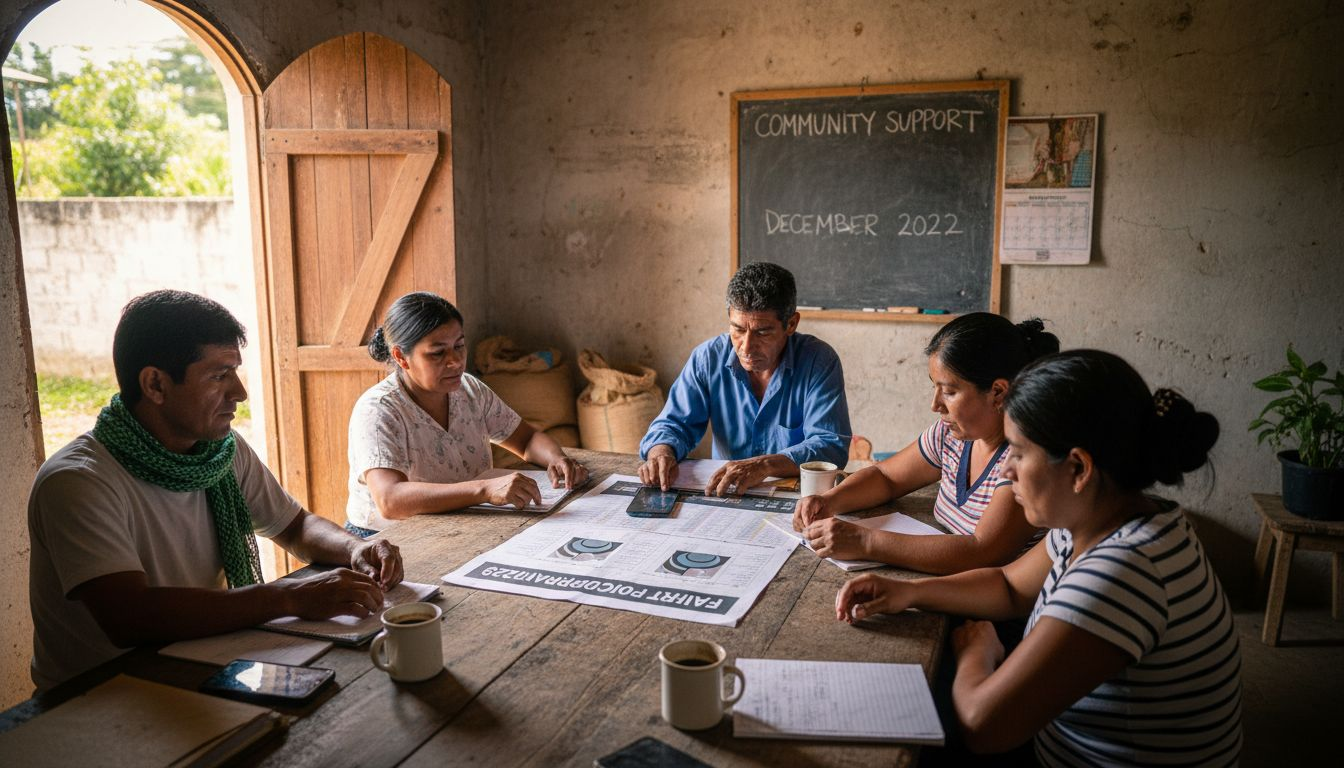
Global coffee sustainability standards are continuously evolving to address the multifaceted challenges facing coffee producers. These standards encompass three fundamental pillars: economic prosperity, social well-being, and environmental stewardship.
Key components of responsible sourcing include:
- Transparent Supply Chains: Ensuring complete visibility from farm to consumer
- Fair Wage Guarantees: Providing living wages that support farmer livelihoods
- Worker Rights Protection: Implementing robust policies against exploitation
- Environmental Sustainability: Promoting practices that protect ecosystems
- Community Development: Investing in local infrastructure and education
Responsible sourcing is not a charity, but a strategic investment in the future of global coffee production.
The challenges are significant. Coffee sourcing challenges include persistent issues like price volatility, limited access to resources, and the complex transition to sustainable agricultural practices. Despite these obstacles, many producers remain committed to implementing more ethical and environmentally conscious farming methods.
Pro tip: Look for coffee brands that provide detailed traceability information and transparently share their sourcing standards and impact reports.
To better understand the impact, here is a summary of challenges and solutions in responsible coffee sourcing:
| Main Challenge | Impact on Producers | Sustainable Solution |
|---|---|---|
| Price Volatility | Income instability | Stable contracts, price premiums |
| Resource Access | Limited growth opportunities | Microfinancing, co-ops |
| Labor Exploitation | Poor working conditions | Worker protections, certifications |
| Environmental Degradation | Reduced yields, soil loss | Regenerative agriculture, reforestation |
Environmental Benefits And Community Support
Social impact coffee represents a powerful mechanism for creating systemic environmental and social transformation across global coffee-producing regions. This approach goes beyond traditional business models, focusing on holistic development that benefits both ecosystems and local communities.

Coffee supports global farming families by providing sustainable livelihood strategies that simultaneously address environmental challenges. Approximately 12.5 million farming families worldwide depend on coffee production, making these initiatives critically important for economic stability and ecological preservation.
Key environmental and community benefits include:
- Biodiversity Conservation: Protecting native plant and animal species
- Soil Health Improvement: Implementing regenerative agricultural practices
- Carbon Sequestration: Reducing greenhouse gas emissions through sustainable farming
- Local Economic Empowerment: Creating stable income opportunities
- Community Infrastructure Development: Investing in education and healthcare
Sustainable coffee production is not just about growing beans, but about cultivating resilient ecosystems and thriving communities.
Climate change impacts coffee cultivation dramatically, threatening suitable growing areas and challenging traditional agricultural practices. Sustainable approaches help farmers adapt by developing resilient farming techniques that protect both environmental resources and community livelihoods.
Pro tip: Choose coffee brands that transparently demonstrate their environmental and community support initiatives, verifying their impact through detailed reporting.
Choosing Social Impact Coffee: Costs And Pitfalls
Choosing social impact coffee requires careful consideration of both ethical intentions and practical realities. Consumers must navigate a complex landscape where well-intentioned purchases may not always translate into meaningful support for coffee-producing communities.
Sustainability investments often involve higher costs that can create short-term financial challenges for consumers. These price premiums reflect critical investments in fair wages, improved working conditions, and sustainable agricultural practices.
Key considerations when selecting social impact coffee include:
- Transparency: Verify detailed impact reporting from brands
- Price Point: Understand the relationship between cost and actual community benefit
- Certification Validity: Research the credibility of ethical sourcing claims
- Long-Term Impact: Look beyond marketing language to genuine community development
- Supply Chain Accountability: Investigate how profits are distributed
Not all social impact coffee is created equal - informed choices matter more than good intentions.
Ethical sourcing claims can mask problematic practices where companies create an illusion of social responsibility without substantive economic benefits for producers. Some brands use marketing strategies that disconnect their branding from actual farmer experiences.
Pro tip: Request detailed impact reports from coffee brands and look for transparent documentation of how their sourcing directly benefits farming communities.
Brew Social Impact With Every Cup You Enjoy
The challenges highlighted in the article around fair wages, sustainable farming, and community development call for more than good intentions. At EcoVibe Roast, we understand that choosing coffee is a powerful way to drive real change. Our selection focuses on responsibly sourced coffee and tea that supports transparent supply chains, fair wages, and environmental stewardship—all essential goals in creating social impact coffee.

Discover our carefully curated Best Sellers – EcoVibe Roast collection where quality meets purpose. Every purchase contributes not only to elevating the livelihoods of farming communities but also to planting mangrove trees and removing ocean-bound plastics. Take action today by exploring our full range of Coffee and Tea example products – EcoVibe Roast and be part of a conscious consumer movement that turns your daily ritual into a force for positive change. Start your journey toward impact at EcoVibe Roast now.
Frequently Asked Questions
What is social impact coffee?
Social impact coffee is a transformative approach to coffee production that focuses on creating positive economic, environmental, and social outcomes for coffee farmers and their communities.
How does social impact coffee benefit farmers?
Social impact coffee ensures fair wages, supports local development initiatives, and promotes sustainable agricultural practices, thereby improving the socioeconomic conditions of coffee-producing communities.
What are the main types of social impact initiatives in coffee?
Key initiatives include Fair Trade certification, living income programs, climate-smart agriculture, cooperative development, and traceability efforts that aim to empower coffee farmers and enhance their livelihood.
Why is transparency important in coffee sourcing?
Transparency in coffee sourcing ensures visibility from farm to consumer, guarantees fair wages, and protects worker rights, all of which contribute to a more ethical and sustainable coffee supply chain.
Recommended
- Role of Social Impact in Coffee – Why It Matters – EcoVibe Roast
- How to Start Eco-Conscious Coffee Habits Easily – EcoVibe Roast
- Why Choose Ethical Coffee: Impact on Daily Life – EcoVibe Roast
- How to Support Sustainable Coffee Farms Step-by-Step – EcoVibe Roast
- Social Impacts of Plastic Pollution: Complete Guide – The Ocean Straw
- Understanding Eco Friendly Packaging Solutions for Businesses – Spaceman


