

Choosing coffee that matches your environmental values should feel rewarding, not complicated. For many eco-conscious Millennials and Gen Z consumers, finding smarter ways to enjoy each cup connects daily habits to a broader movement for sustainability and ethical sourcing. This guide provides actionable steps for assessing your drinking patterns, selecting sustainably sourced products, and making eco-friendly choices that contribute to positive global impact.
Table of Contents
- Step 1: Assess Your Current Coffee Habits
- Step 2: Select Responsibly Sourced Coffee Products
- Step 3: Switch To Eco-Friendly Brewing Methods
- Step 4: Reduce Coffee Waste Daily
- Step 5: Verify Your Positive Impact
Quick Summary
| Main Insight | Detailed Explanation |
|---|---|
| 1. Track your coffee habits | Keep a journal to record your daily coffee consumption, including cups, timing, type, and brewing method for personalization. |
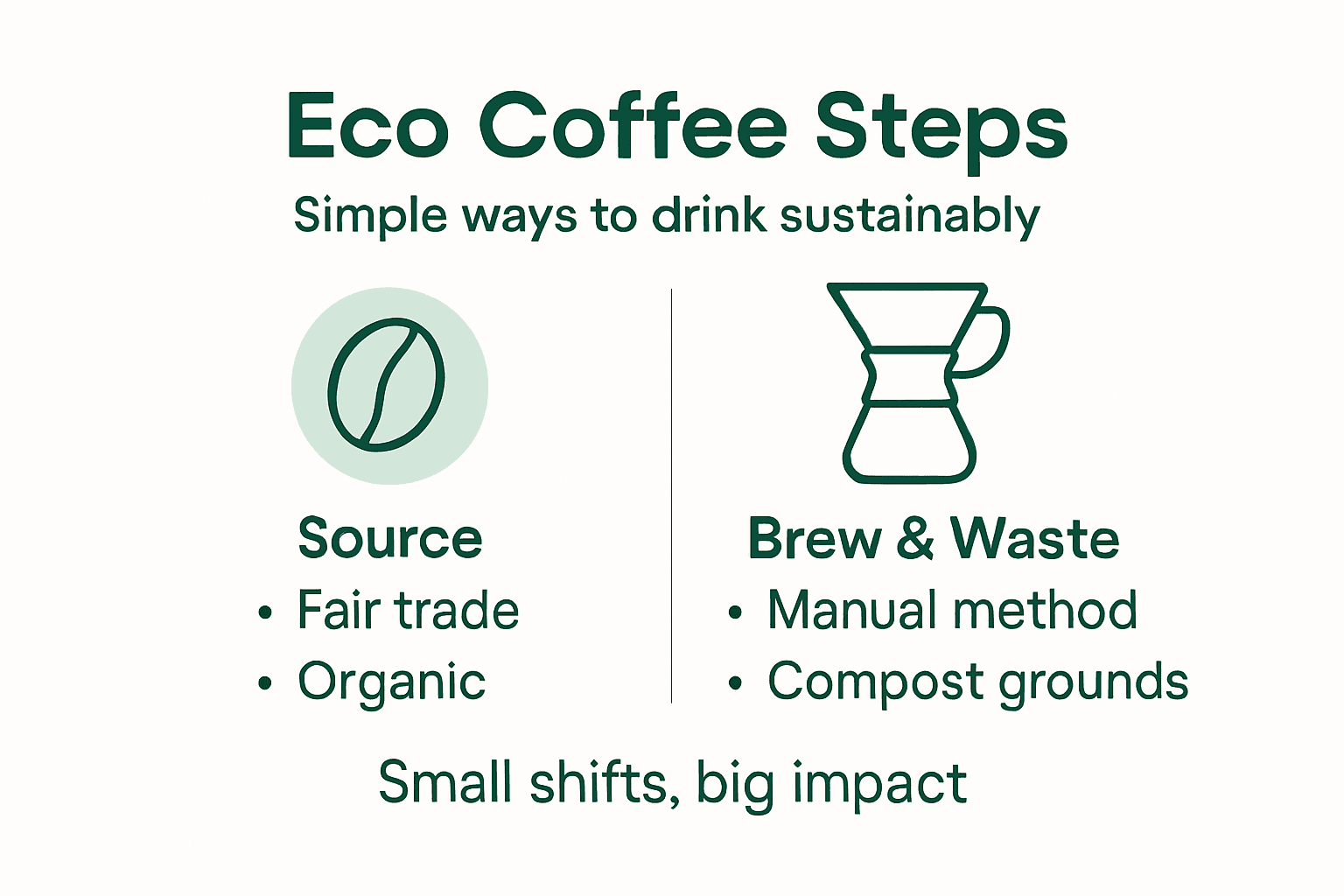
| 2. Choose responsibly sourced coffee | Prioritize coffee with Fair Trade, organic, and direct trade certifications to support ethical farming and sustainability. |
| 3. Use eco-friendly brewing methods | Switch to manual methods and reusable equipment to reduce energy usage and waste during coffee preparation. |
| 4. Reduce coffee waste daily | Compost coffee grounds and choose minimal packaging to implement sustainable practices and minimize waste effectively. |
| 5. Verify your impact | Monitor your sustainability efforts by tracking carbon footprint, waste reduction, and sourcing certification to quantify your contribution. |
Step 1: Assess your current coffee habits
Understanding your existing coffee consumption patterns is the first crucial step toward building more eco-conscious habits. By taking a thoughtful look at how, when, and what kind of coffee you currently drink, you’ll create a personalized roadmap for more sustainable choices.
To effectively assess your coffee habits, start by tracking your daily consumption using these strategic approaches:
- Record the number of cups you drink each day
- Note the time of day you typically consume coffee
- Identify the type of coffee you regularly purchase (whole beans, ground, pods, instant)
- Observe your brewing method (drip machine, French press, espresso, single-serve)
Daily coffee intake research indicates significant variations in consumption patterns across different demographics, making personal tracking essential. Pay special attention to your coffee timing, as health experts recommend consuming coffee before noon for optimal benefits.
Consider keeping a simple coffee journal for one week, documenting your habits without judgment. This approach allows you to gather objective data about your current coffee consumption, revealing opportunities for more sustainable choices.
Your current habits are not a problem to solve, but a starting point for positive change.
Pro tip: Use a smartphone app or a small notebook to track your coffee habits discreetly and accurately.
Step 2: Select responsibly sourced coffee products
Choosing responsibly sourced coffee is more than a purchasing decision - it’s a powerful way to support global sustainability and ethical farming practices. Your coffee selection can create meaningful impact by prioritizing products that respect both environmental ecosystems and human communities.
When selecting responsible coffee products, focus on these key certification and sourcing criteria:
- Look for Fair Trade Certified™ labels
- Seek out organic coffee options
- Prioritize shade-grown coffee varieties
- Check for direct trade relationships
- Investigate carbon-neutral coffee brands
Ethical coffee sourcing practices reveal significant differences among coffee brands in their environmental and social commitments. By understanding these nuances, you can make informed choices that align with your values.
Many coffee producers now offer transparency about their sourcing methods, allowing consumers to trace coffee origins and understand the ecological and social impact of their purchase. Fair Trade Certified™ coffee provides a reliable indicator of responsible production, ensuring farmers receive fair wages and communities benefit directly from coffee sales.
Small choices in coffee purchasing can create substantial positive change worldwide.
Pro tip: Research coffee brands online and look for detailed sustainability reports before making your final selection.
Step 3: Switch to eco-friendly brewing methods
Transforming your coffee brewing routine into an environmentally conscious practice can significantly reduce your ecological footprint. By selecting energy-efficient and waste-minimizing brewing techniques, you’ll make a meaningful impact on global sustainability efforts.
Consider these eco-friendly brewing strategies:
- Invest in a manual pour-over coffee maker
- Choose energy-efficient electric kettles
- Use reusable cloth or metal filters
- Opt for single-origin, shade-grown coffee beans
- Minimize single-use plastic accessories
Sustainable coffee brewing practices demonstrate how traditional methods can conserve energy and support biodiversity. The International Coffee Organization recommends reducing water and energy consumption during brewing, which can dramatically lower your environmental impact.

Traditional brewing methods like French press or pour-over not only produce exceptional coffee but also eliminate the need for disposable filters and excessive electricity. By consciously selecting equipment and techniques that minimize waste, you transform your daily coffee ritual into an act of environmental stewardship.
Here’s a comparison of popular coffee brewing methods and their sustainability features:
| Brewing Method | Energy Usage | Waste Generated | Reusability |
|---|---|---|---|
| Manual Pour-Over | Low (manual heat) | Minimal (no pods) | High |
| French Press | Low (no filters) | Grounds only | High |
| Single-Serve Pod | High (electric) | Plastic/aluminum pods | Low |
| Drip Machine | Moderate (electric) | Paper filter waste | Medium |
Small changes in brewing can create significant environmental benefits.
Pro tip: Experiment with different manual brewing techniques to find an eco-friendly method that matches your taste preferences and lifestyle.
Step 4: Reduce coffee waste daily
Minimizing coffee waste isn’t just an environmental goal - it’s a practical approach to making your daily coffee ritual more sustainable and responsible. By implementing strategic waste reduction techniques, you can significantly decrease your ecological footprint while enjoying your favorite beverage.
Here are powerful strategies to reduce coffee waste effectively:
- Compost used coffee grounds
- Choose reusable brewing equipment
- Purchase minimal packaging coffee
- Use refillable containers
- Practice precise portion brewing
Waste reduction strategies from environmental experts highlight multiple approaches to minimizing coffee-related waste. The UN Environment Programme emphasizes circular economy principles that transform waste management from a linear to a more sustainable, regenerative model.
Coffee grounds offer remarkable potential beyond single use. They can be composted in garden beds, used as natural fertilizers, or even repurposed for household cleaning and odor absorption. By viewing coffee waste as a resource rather than trash, you unlock creative solutions that benefit both your home and the environment.
Every coffee ground saved is a step toward global sustainability.
Pro tip: Keep a small compost bin near your coffee station to make ground recycling effortless and immediate.
Step 5: Verify your positive impact
Tracking and understanding the real-world effects of your eco-conscious coffee habits transforms individual actions into meaningful environmental progress. By systematically measuring your sustainability efforts, you create tangible evidence of your commitment to positive change.
Evaluate your environmental impact through these strategic verification methods:
- Track carbon footprint reduction
- Monitor waste minimization
- Check for sustainable sourcing certifications
- Review annual environmental contributions
- Document personal sustainability milestones
Sustainable coffee initiatives provide comprehensive frameworks for understanding your ecological contributions. The Sustainable Coffee Challenge offers tools that help consumers quantify their positive environmental interventions across social and ecological dimensions.
Consider creating a simple tracking system that captures your eco-friendly coffee choices. This might include logging the origin of your coffee, recording waste reduction metrics, or documenting the environmental certifications of the brands you support. Such documentation transforms abstract intentions into concrete, measurable actions.
The table below summarizes how to measure your sustainable coffee progress:
| Measurement Type | What to Track | Example Tool |
|---|---|---|
| Carbon Footprint | Reduced emissions | Online carbon calculators |
| Waste Reduction | Repurposed grounds/filters | Home compost log |
| Sourcing Transparency | Brand certifications | Purchase tracker notebook |
| Environmental Milestones | Sustainable goals reached | Personal sustainability app |
Small, consistent actions create significant collective impact.
Pro tip: Use a dedicated sustainability journal or digital app to consistently log and celebrate your eco-coffee achievements.
Start Your Eco-Conscious Coffee Journey with Confidence
Building sustainable coffee habits can feel overwhelming but does not have to be. If you are ready to reduce waste, choose responsibly sourced beans, and switch to eco-friendly brewing, EcoVibe Roast offers the perfect solutions to help you make an immediate positive impact. Our curated selection of Coffee and Tea example products includes only ethically sourced options that align with the values of fair trade, organic farming, and environmental stewardship showcased in your eco-conscious coffee habits guide.

Join a community of mindful coffee lovers who not only savor premium beverages but also support planting mangrove trees and removing ocean-bound plastics with every purchase. Explore our Best Sellers to find popular blends and brewing essentials that minimize waste and maximize flavor. Take charge of your coffee routine today at EcoVibe Roast and transform every cup into a meaningful contribution toward a healthier planet.
Frequently Asked Questions
How can I assess my current coffee habits to start eco-conscious choices?
To assess your current coffee habits, track the number of cups you drink daily, the types of coffee you purchase, and your brewing methods. Keep a coffee journal for one week to gather objective data and identify areas for improvement in sustainability.
What should I look for when selecting responsibly sourced coffee products?
When choosing coffee products, look for certifications such as Fair Trade Certified™, organic labels, and shade-grown varieties. Prioritize brands that have direct trade relationships to ensure ethical sourcing that supports both the environment and coffee farmers.
What are eco-friendly brewing methods I can adopt?
Consider switching to manual brewing methods like pour-over or French press, as these consume less energy and produce minimal waste. Invest in reusable filters or brewing equipment to further reduce your environmental footprint.
How can I reduce coffee-related waste in my daily routine?
To reduce waste, compost used coffee grounds and use refillable containers instead of single-use packaging. Implement precise portion brewing to avoid over-preparing coffee and ensure that every drop is enjoyed.
What are some effective ways to verify my positive impact with eco-conscious coffee habits?
Track metrics like your carbon footprint reduction and waste minimization to measure your impact. Create a simple tracking system or journal to document your eco-friendly coffee choices and celebrate your sustainability milestones.
How long should I track my coffee habits to see improvements?
Track your coffee habits for a minimum of one week to get a clear picture of your consumption and waste patterns. Reviewing your notes after this period can help you identify trends and areas to improve sustainability within 30 days.
Recommended
- 7 Actionable Tips for Eco-Conscious Coffee Drinkers – EcoVibe Roast
- Eco-Conscious Coffee Brewing Process for Sustainable Enjoyment – EcoVibe Roast
- 7 Steps to Build Your Sustainable Coffee Checklist – EcoVibe Roast
- Why Eco-Conscious Coffee Matters for Our Planet – EcoVibe Roast
- Hospitality Sustainability Trends: Why Canadian Restaurants and Daycares Should Care - Probe IT
- Kawy – Caffo
- Aeropress | | Ziarna Kawy Magnificent Coffee


