

TL;DR:
- Ethical tea certifications promote fair wages, community benefits, and environmental sustainability.
- Certifications like Fairtrade and ETP improve farmers’ incomes, worker safety, and gender equity.
- Consumer awareness and transparency are crucial for ensuring authentic ethical practices in tea sourcing.
Every cup of tea you brew connects you to a global chain of farmers, pickers, and communities spanning continents. Yet most tea drinkers never pause to consider who picked those leaves, under what conditions, or whether the land was treated with care. The truth is, conventional tea supply chains often hide uncomfortable realities: low wages, unsafe working conditions, and farming practices that strip soil and biodiversity. Ethical tea supports fair wages, safe working conditions, and community development for the people who grow and harvest it. This guide walks you through the real benefits, how certifications work, their limits, and how you can make choices that feel as good as that first warm sip.
Table of Contents
- How ethical tea supports people and communities
- Sustainable farming: Environmental benefits of ethical tea
- How do certifications work—and what are their limits?
- Making ethical tea work for you: Practical buying guide
- Our take: The real impact—and next steps for ethical tea lovers
- Sip ethically—discover tea that makes a difference
- Frequently asked questions
Key Takeaways
| Point | Details |
|---|---|
| Ethical tea changes lives | Choosing certified tea supports fair wages and safer workplaces for thousands of farmers. |
| Better for the planet | Sustainable tea farming reduces chemical use and helps preserve biodiversity in tea-growing regions. |
| Understand the labels | Certifications like Fairtrade, Rainforest Alliance, and ETP each offer different strengths and limitations. |
| Actionable buyer steps | You can make a difference by checking labels, researching brand commitments, and supporting companies with real impact. |
How ethical tea supports people and communities
Now that you understand the stakes, let’s look at how ethical sourcing directly benefits the people behind your cup. The social impact of ethical tea is tangible, measurable, and genuinely life-changing for millions of workers and smallholder farmers worldwide.
Certifications like Fairtrade and the Ethical Tea Partnership (ETP) are the backbone of the ethical tea movement. Fairtrade sets a minimum price floor, meaning farmers receive a guaranteed baseline payment even when global tea prices drop. On top of that, a Fairtrade Premium is paid directly to worker communities, funding schools, healthcare, and clean water projects. Fairtrade delivers higher incomes and stable prices through this minimum price and premium structure, reducing the financial vulnerability that plagues many farming families.
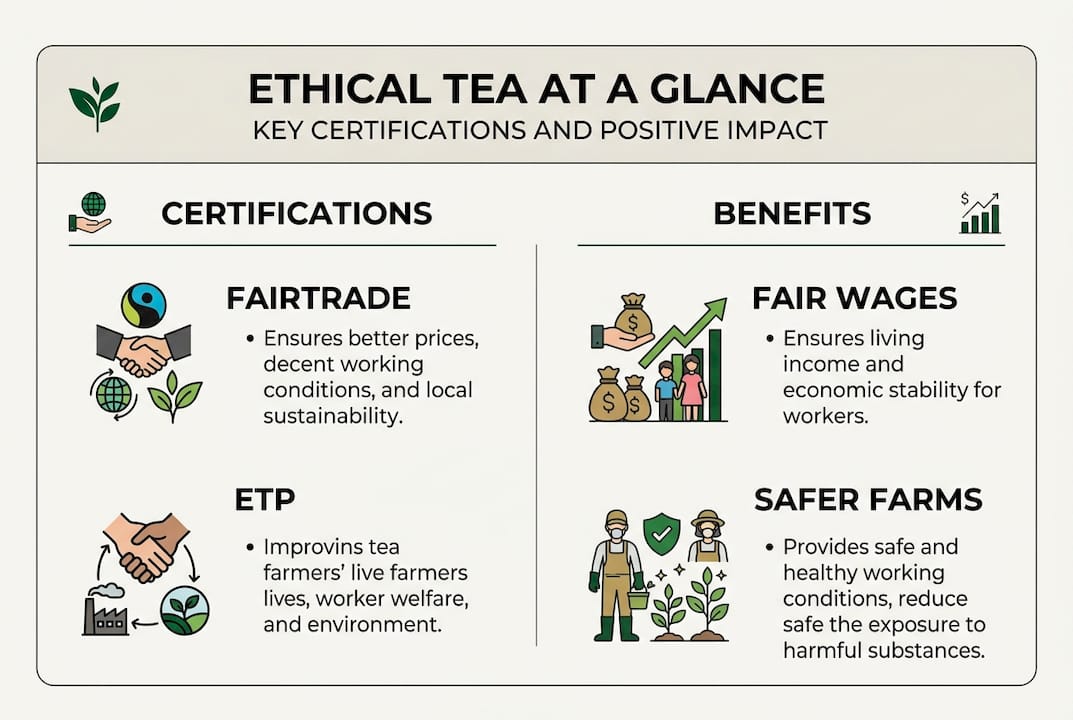
The ETP takes a slightly different approach, focusing on practical programs that improve worker welfare on the ground. In 2024, the ETP reached over 359,000 people through its initiatives, covering health, safety training, and gender equity programs. That’s a remarkable reach for a single organization.
Here’s a quick look at how key certifications compare on social impact:
| Certification | Minimum price | Community premium | Worker programs |
|---|---|---|---|
| Fairtrade | Yes | Yes | Limited direct delivery |
| ETP | No | No | Yes, direct programs |
| Rainforest Alliance | No | Partial | Environmental focus |
Women and marginalized groups see some of the strongest gains from ethical sourcing. Many ETP and Fairtrade programs specifically target gender equity, offering training, leadership opportunities, and protections against harassment. This matters because women make up the majority of tea pickers in regions like Kenya, Sri Lanka, and Assam, yet historically hold the least power in the supply chain.
Some key social benefits of ethical tea sourcing include:
- Stable, above-market incomes for smallholder farmers
- Access to healthcare and education through community premiums
- Safer working conditions and reduced exposure to harmful chemicals
- Targeted programs for women and vulnerable workers
“When you choose ethically certified tea, you’re not just buying a beverage. You’re voting for a system that values every hand that touched those leaves.”
Sustainable farming: Environmental benefits of ethical tea
Beyond people, the way tea is grown has a powerful effect on the planet. Conventional tea farming often relies on heavy pesticide use, monoculture planting (growing only one crop across large areas), and practices that erode soil over time. Ethical farming flips this script.
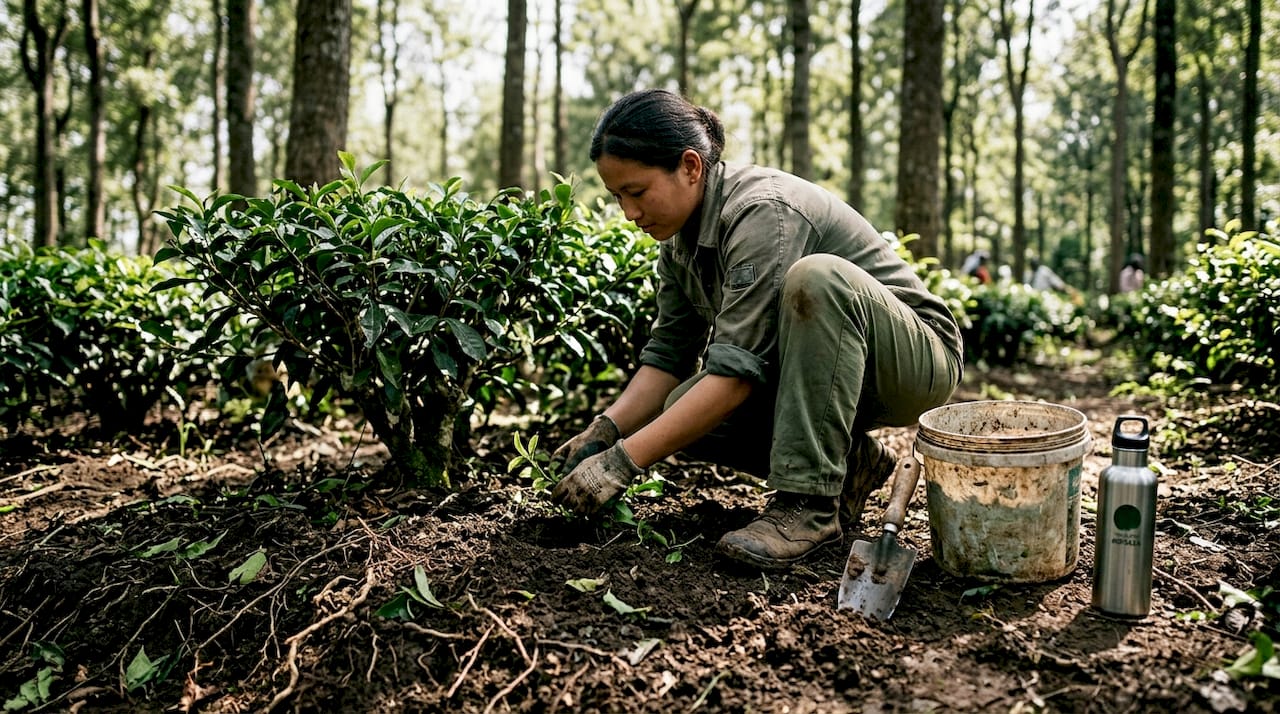
Sustainable tea farming includes agroforestry, organic practices, and reduced chemical use. Agroforestry means tea bushes are grown alongside trees and other plants, creating a layered ecosystem that supports birds, insects, and soil health. It’s a bit like giving the land a long, restorative breath.
Here’s how Rainforest Alliance and Fairtrade environmental standards compare:
| Standard | Chemical reduction | Biodiversity focus | Soil health | Waste recycling |
|---|---|---|---|---|
| Rainforest Alliance | Strong | Strong | Moderate | Yes |
| Fairtrade | Moderate | Moderate | Strong | Partial |
| Organic (general) | Very strong | Moderate | Strong | Varies |
Rainforest Alliance certification is particularly rigorous on environmental criteria. Farms must protect natural habitats, manage water use responsibly, and reduce synthetic pesticide and fertilizer inputs. Certified farms collectively support sustainable agriculture in tea across nearly 1 million smallholders globally, helping preserve biodiversity hotspots that overlap with major tea-growing regions.
Key environmental practices on ethical tea farms include:
- Organic pest control using natural predators and companion planting
- Shade-grown cultivation that protects bird habitats and reduces soil erosion
- Water conservation through efficient irrigation and riparian buffer zones
- Waste composting to return nutrients to the soil naturally
The eco-friendly tea benefits extend beyond the farm, too. Reduced chemical runoff means cleaner rivers and safer drinking water for nearby communities. Healthier soils store more carbon, contributing modestly but meaningfully to climate resilience.
Pro Tip: When shopping, look for teas with both Rainforest Alliance and organic certifications together. That combination signals the strongest environmental commitment from a brand.
How do certifications work—and what are their limits?
Understanding environmental benefits leads us to question how the certifications behind ethical tea actually deliver on their promises. The answer is more nuanced than a simple logo on a box suggests.
Certifications use audits, set minimum prices, and deliver varying premiums depending on the scheme. Fairtrade, for example, conducts third-party audits of farms and cooperatives to verify compliance with its standards. Rainforest Alliance uses a points-based system where farms must meet a threshold score rather than pass every single criterion. ETP focuses on capacity-building programs rather than strict certification.
Here’s how the main certification mechanics break down:
- Fairtrade: Sets a minimum price floor plus a community premium. Audits are third-party and rigorous. Best evidence base for poverty reduction.
- Rainforest Alliance: Uses a flexible scoring system. Strong on environmental standards. Less consistent on social outcomes.
- ETP: Not a consumer-facing label. Works directly with brands and farms on practical programs. Strong on worker welfare delivery.
- Organic (USDA or EU): Focuses purely on chemical use. No social standards included.
But certifications are not perfect. Limitations include mass balance, partial premium delivery, and retailer markup. Mass balance is a practice where certified and non-certified tea can be mixed in the supply chain, as long as the total volume of certified tea purchased matches what’s sold as certified. This means the tea in your cup may not literally come from a certified farm, even if the label says so.
Another concern: retailers sometimes absorb the premium consumers pay for certified tea rather than passing it down the supply chain. This means the farmer may see little to none of the extra price you paid at checkout.
Pro Tip: Check if a brand publishes an annual impact or sourcing report. Brands that share specific data on farmer payments and community projects are far more trustworthy than those that simply display a logo.
For deeper guidance on choosing sustainable tea and understanding what transparency in tea sourcing actually looks like, it’s worth going beyond the label and asking brands direct questions about their supply chains.
Key stat: Fairtrade’s 2025 evidence mapping found meaningful improvements in farmer income stability in certified cooperatives compared to non-certified peers, though results vary significantly by region and crop type.
Making ethical tea work for you: Practical buying guide
Armed with a clear view of the certification landscape, it’s time to put knowledge into action for your next tea purchase. Choosing ethical tea doesn’t have to be complicated, and it definitely doesn’t mean sacrificing flavor or your budget.
Here are the steps to follow:
- Learn the credible certifications. Fairtrade, Rainforest Alliance, and ETP-affiliated brands are your most reliable starting points. Organic certification adds environmental value but doesn’t cover social standards on its own.
- Research brand transparency. Does the brand publish sourcing information? Do they name their farms or cooperatives? Consumers can look for certifications and supply chain transparency as key signals of genuine commitment.
- Look beyond the price tag. A slightly higher price often reflects fair wages and better farming practices. Think of it as the true cost of a responsibly made product.
- Use a checklist. The sustainable tea checklist approach helps you evaluate brands systematically rather than relying on gut feeling alone.
- Explore direct trade options. Some smaller brands source directly from farms, cutting out middlemen and ensuring more of your money reaches the grower.
When decoding labels, watch for these meaningful signals:
- A named country or region of origin (not just “blended teas”)
- Specific certification logos with verifiable license numbers
- Impact reports or farm partnership pages on the brand’s website
- B Corp certification, which covers broader social and environmental accountability
For practical eco-conscious tea selection, local specialty tea shops are often a goldmine. Staff there tend to know their suppliers personally and can answer sourcing questions on the spot. Online, look for brands that go out of their way to share farmer stories and specific impact data rather than vague sustainability claims.
Balancing price, quality, and principle is absolutely doable. Many Fairtrade and Rainforest Alliance teas are available at mainstream grocery stores at modest premiums. And when you explore eco tea products for sustainability, you’ll find that quality and ethics often go hand in hand because farmers who are paid fairly and farm sustainably tend to produce better leaf.
Our take: The real impact—and next steps for ethical tea lovers
Here’s something worth sitting with: certifications are a starting point, not a destination. We’ve seen brands lean heavily on a single logo while their actual sourcing practices remain murky. A Fairtrade sticker is meaningful, but it doesn’t tell the whole story of what happens between the tea garden and your kettle.
What really moves the needle is consumer pressure combined with brand accountability. When you ask a company where their tea comes from, how much farmers were paid, and what specific programs they fund, you’re doing something powerful. You’re signaling that vague sustainability claims aren’t enough.
Direct trade relationships, where brands build long-term partnerships with specific farms, often deliver more consistent impact than certification alone. Tea supply chain transparency is the real frontier, and the brands pushing hardest on it deserve your loyalty and your purchases.
Incremental progress matters enormously. Every cup brewed from an ethically sourced tea builds demand for better practices across the industry. Your choices, multiplied across millions of conscious consumers, create the market signal that drives real change. Think of each cup as both a comfort and a catalyst.
Sip ethically—discover tea that makes a difference
Ready to put your values into practice? At EcoVibe Roast, we’ve done the sourcing work so you can sip with confidence. Our teas are selected with ethical standards and environmental care at the forefront, and every purchase supports our commitment to planting mangrove trees and removing ocean-bound plastics.

Explore aromatic options like our Hibiscus Berry Tea and the delicate, floral Jasmine Tea, both sourced with transparency and care. Want to learn more about the bigger picture? Visit our environmental commitment page to see exactly how your purchase creates ripple effects far beyond your mug. Good tea should feel like a warm hug for both you and Mother Earth.
Frequently asked questions
How do I know if a tea is truly ethical?
Look for third-party certifications like Fairtrade and Rainforest Alliance, and check if the brand publishes transparent sourcing and impact reports. Companies that name specific farms or cooperatives are a strong sign of genuine accountability.
Does ethical tea really cost more?
Ethical tea usually carries a small premium that reflects fair wages and improved practices. The difference is often modest, and it represents the real cost of a responsibly produced product.
Which certification is best for social impact?
Fairtrade has the strongest evidence base for poverty reduction and income stability, though ETP excels at direct worker welfare programs and Rainforest Alliance leads on environmental standards.
Is Rainforest Alliance-certified tea environmentally friendly?
Rainforest Alliance sets meaningful environmental standards including reduced chemical use and biodiversity protection, but the actual impact varies by farm since the certification uses a flexible scoring system rather than pass-or-fail criteria.
Recommended
- What is ethical tea sourcing: a 2026 guide – EcoVibe Roast
- How to choose sustainable tea for ethical enjoyment – EcoVibe Roast
- How to choose eco tea products for sustainable benefits – EcoVibe Roast
- Unlock 5 benefits of eco-friendly teas for health & planet – EcoVibe Roast
- Sustainable Coffee Wholesale | Eco Friendly Supplier | Devon Somerse


