

Choosing a gift should feel good, but the gap between wanting to support ethical practices and knowing which products actually deliver that impact leaves many buyers stuck. You want your beverage gifts to reflect values like fair labor and environmental care, yet certifications and marketing claims create confusion rather than clarity. Responsibly sourced coffee and tea gifts offer measurable social and environmental benefits when you know what to look for. This guide cuts through the noise to show you exactly why these gifts matter, how certifications validate claims, what premiums actually support, and how to avoid greenwashing while making purchases that align with your values.
Table of Contents
- Key takeaways
- Understanding responsible sourcing: social and environmental benefits
- Certifications and traceability: what validates ethical gifts?
- Consumer behavior and pricing: the value of responsible gifts
- Challenges and nuances: certification limits and greenwashing risks
- Shop responsibly sourced beverage gifts with EcoVibe Roast
- Frequently asked questions about responsibly sourced gifts
Key Takeaways
| Point | Details |
|---|---|
| Social and environmental benefits | Responsibly sourced beverage gifts deliver measurable improvements to farmers and ecosystems through fair wages, safe working conditions, biodiversity protection, soil health, and reduced emissions. |
| Certifications enable traceability | Independent audits verify standards and connect purchases to specific farming communities, providing transparency for consumers. |
| Premiums fund communities | Fairtrade premiums fund schools, clean water projects, and other local development. |
| Greenwashing risks exist | Certifications help but buyers should recognize limitations and verify claims beyond marketing. |
| Research brands with certs | Combine certification checks with brand practices to choose truly responsible options. |
Understanding responsible sourcing: social and environmental benefits
Responsibly sourced beverage gifts deliver tangible improvements to the lives of farmers and the health of ecosystems. Fair labor practices form the foundation of ethical sourcing, ensuring workers receive living wages that cover basic needs rather than poverty-level compensation. These standards also mandate safe working conditions, prohibit child and forced labor, and guarantee workers’ rights to organize and bargain collectively. When you choose responsible sourcing coffee and tea, you fund supply chains that treat people with dignity.
Environmental sustainability represents the second pillar of responsible sourcing. Certified farms implement practices that protect biodiversity, maintain soil health through organic matter and reduced chemical inputs, and minimize carbon footprints via shade-grown cultivation and efficient water use. These methods contrast sharply with industrial monoculture approaches that deplete land and destroy habitats. The benefits of ethically sourced gifts extend beyond immediate transactions to long-term ecosystem preservation.
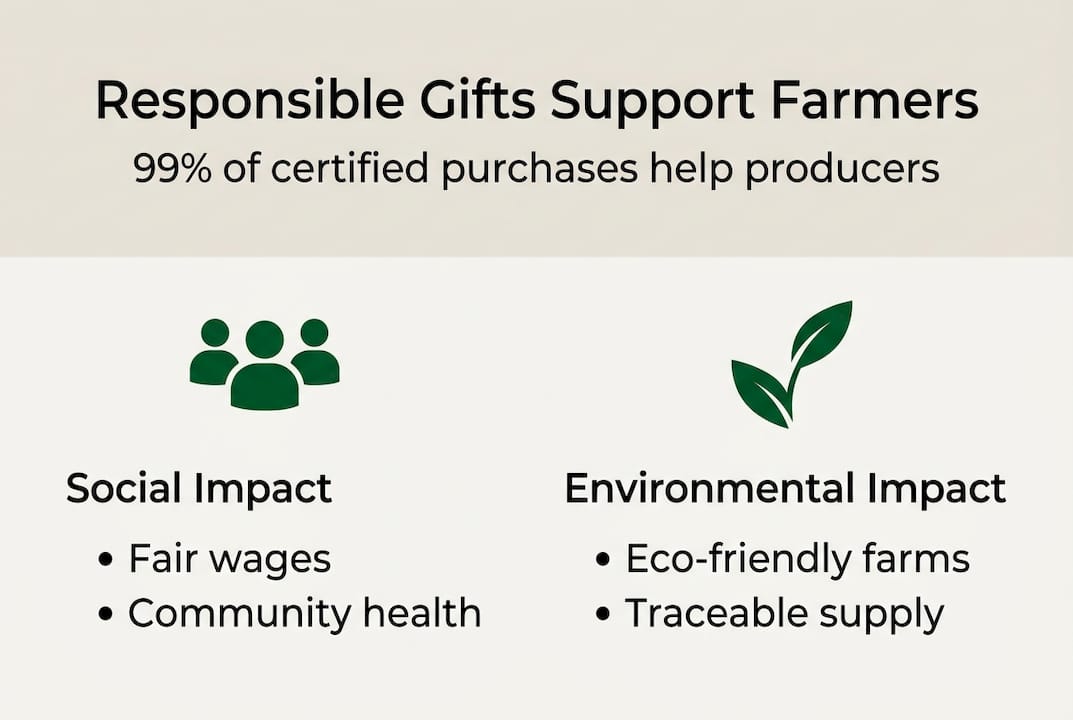
Certifications enable supply chain transparency that would otherwise remain invisible to consumers. Independent audits verify that farms meet social, environmental, and economic standards before products earn certification seals. This traceability connects your purchase to specific farming communities and practices. Remarkably, 99% of Rainforest Alliance certified farms are smallholders, meaning your gift directly supports family operations rather than corporate plantations.
Key social and environmental impacts:
- Living wages enable farmers to invest in education, healthcare, and community infrastructure
- Safe working conditions reduce injury rates and protect long-term worker health
- Biodiversity conservation maintains pollinator populations and natural pest control
- Soil health practices ensure farm productivity for future generations
- Carbon sequestration through shade trees offsets emissions from production and transport
Responsible sourcing empowers smallholder farmers who lack bargaining power in conventional supply chains. Fairtrade premiums fund community projects like schools and clean water systems. Rainforest Alliance training improves agricultural techniques and business management skills. These investments create ripple effects that strengthen entire regions economically and socially.
“Ethical sourcing transforms gifts into tools for systemic change. Every purchase signals market demand for practices that value people and planet over pure profit maximization.”
The cumulative effect of responsible purchasing decisions reshapes industry incentives. As more consumers choose certified products, retailers and roasters shift procurement toward ethical suppliers. This market pressure encourages even non-certified producers to adopt better practices to remain competitive. Your gift becomes part of a larger movement driving agricultural transformation.
Certifications and traceability: what validates ethical gifts?
Certifications provide the verification mechanisms that separate genuine ethical claims from empty marketing. Fairtrade and Rainforest Alliance represent the two most recognized standards for coffee and tea, each with distinct approaches and strengths. Both require end-to-end supply chain traceability and annual independent audits to maintain certification status. Understanding how these systems work helps you evaluate which products deliver real impact.
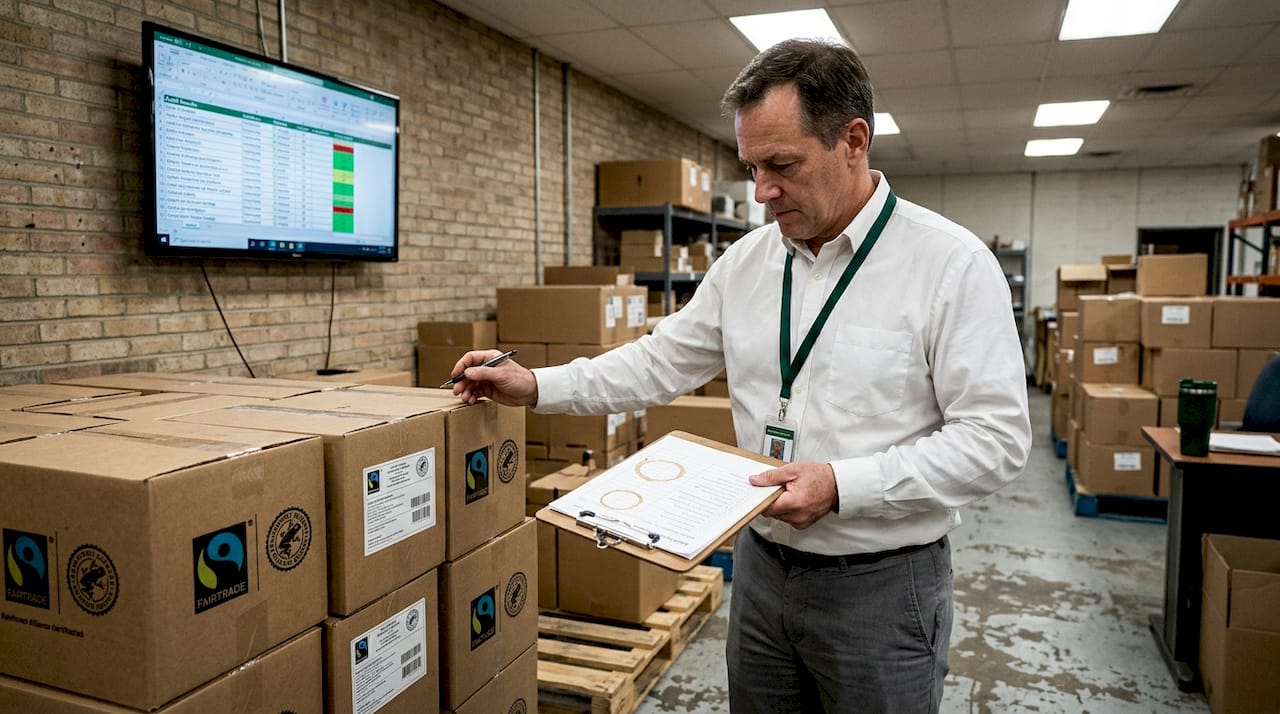
Fairtrade focuses heavily on economic justice, guaranteeing minimum prices that cover production costs even when market prices crash. Producers also receive premiums for community development projects chosen democratically by workers and farmers. The system emphasizes cooperative ownership structures that give smallholders collective bargaining power. Rainforest Alliance takes a broader environmental approach, setting rigorous standards for ecosystem protection, water conservation, and wildlife habitat preservation alongside social criteria.
Certification comparison:
| Certification | Primary focus | Key requirements | Audit frequency |
|---|---|---|---|
| Fairtrade | Economic justice and minimum prices | Cooperative structures, price floors, community premiums | Annual independent audits |
| Rainforest Alliance | Environmental sustainability | Biodiversity protection, reduced chemical use, worker welfare | Annual third-party verification |
| Organic | Chemical-free cultivation | No synthetic pesticides or fertilizers, soil health | Annual certification inspections |
Traceability systems track products from farm to package, creating accountability at every supply chain stage. Certified cooperatives maintain records of which farmers contributed to each lot. Processing facilities document handling and storage conditions. Roasters and retailers verify certification status before labeling products. This documentation trail enables consumers to trace their purchase back to origin communities.
Independent audits provide the enforcement mechanism that makes certifications meaningful. Third-party inspectors visit farms unannounced to verify compliance with standards. They interview workers privately to assess actual conditions versus documented policies. Farms that fail audits lose certification until they correct violations. However, certification effectiveness faces critiques regarding audit thoroughness and follow-up enforcement.
Some certifications have faced allegations of labor exploitation despite audit processes. Audit costs create barriers for the smallest producers who might benefit most from certification. Standards sometimes set bars too low to drive transformative change. These limitations mean certifications work best as baseline indicators rather than absolute guarantees. Research into coffee certifications impact reveals both achievements and ongoing challenges.
Certification strengths and limitations:
- Provide standardized criteria that simplify consumer decision-making
- Create market access for smallholders who meet requirements
- Drive industry-wide improvements through competitive pressure
- May exclude poorest farmers unable to afford certification costs
- Audit quality varies based on inspector training and resources
- Standards evolve slowly compared to emerging sustainability science
Pro Tip: Use certifications as your starting point for identifying responsible gifts, then research specific brands for transparency reports, direct trade relationships, and third-party impact assessments that provide deeper verification.
Consumer behavior and pricing: the value of responsible gifts
Market data reveals strong consumer willingness to pay premiums for ethically sourced products when values align with purchasing decisions. Research shows consumers demonstrate a 16.4% price increase willingness per welfare score point for ethical products like Fairtrade coffee. This premium directly funds the higher costs of responsible production, including living wages, environmental protections, and certification fees. Understanding pricing helps you recognize where your money goes.
Responsibly sourced beverage gifts typically cost 10-30% more than conventional alternatives. A standard bag of certified coffee might retail for $14-18 compared to $10-12 for non-certified options. Tea premiums follow similar patterns. These price differences reflect real cost structures, not arbitrary markups. Fairtrade minimum prices guarantee farmers receive enough to cover production expenses and basic living costs, while conventional commodity markets often pay below break-even rates.
Pricing breakdown for ethical coffee:
| Product type | Conventional price | Certified price | Premium percentage |
|---|---|---|---|
| Whole bean coffee (12 oz) | $10-12 | $14-18 | 17-50% |
| Single-serve pods (60 count) | $28-32 | $35-42 | 25-31% |
| Loose leaf tea (4 oz) | $8-10 | $12-15 | 50% |
Behavioral factors influence whether consumers translate ethical intentions into actual purchases. The intention-behavior gap describes situations where people express support for responsible sourcing but choose cheaper conventional products at checkout. Information barriers contribute to this gap when buyers lack confidence distinguishing genuine ethical products from greenwashed alternatives. Willful ignorance also plays a role, as some consumers avoid learning about supply chain issues to maintain purchasing comfort.
Overcoming these obstacles requires deliberate steps from awareness to informed action. Studies on ethical product demand identify key decision-making stages:
- Recognize that conventional production often involves exploitative labor and environmental damage
- Research which certifications and brands demonstrate genuine commitment to ethical practices
- Calculate your budget flexibility to accommodate responsible sourcing premiums
- Identify retailers and online platforms offering certified beverage options
- Make initial purchases to experience product quality and reinforce value alignment
- Build responsible sourcing into regular gift-giving habits through repeat purchases
Value perception shifts when consumers understand premium pricing as investment rather than expense. The same amount spent on a certified coffee gift funds community development projects, protects rainforest habitat, and ensures dignified working conditions. Conventional products at lower prices externalize these costs onto vulnerable farmers and ecosystems. Framing highlights how choosing responsible coffee beans delivers benefits beyond the beverage itself.
Pro Tip: Calculate the actual per-cup cost difference between certified and conventional coffee to see that premiums often amount to just 15-25 cents per serving, making ethical choices more accessible than percentage markups suggest.
Gift-giving contexts particularly favor ethical purchasing because recipients appreciate both product quality and values alignment. A responsibly sourced coffee gift communicates thoughtfulness about global impact alongside personal taste. This dual value proposition justifies premiums more easily than everyday personal consumption purchases.
Challenges and nuances: certification limits and greenwashing risks
Certification systems face legitimate criticisms that buyers should understand to make truly informed decisions. Audit processes sometimes miss violations or lack resources for thorough enforcement. Certifications can exclude small farms due to costs and have faced allegations regarding labor exploitation despite audits. Annual certification fees range from hundreds to thousands of dollars, creating barriers for the most marginalized producers who might benefit most from ethical market access.
Gaps between certification standards and actual living wages persist in some certified supply chains. A farm might meet minimum wage requirements for its region while those wages still fall short of covering basic family needs. Environmental standards similarly vary in stringency, with some certifications setting relatively modest bars for chemical reduction or habitat protection. These limitations mean certification alone doesn’t guarantee transformative impact.
Greenwashing represents a significant risk as brands exploit consumer interest in sustainability without substantive changes to sourcing practices. Marketing teams craft compelling sustainability narratives around minor initiatives while core supply chains remain conventional. Vague claims like “ethically sourced” or “responsibly grown” without specific certification or transparency backing should raise skepticism. Some companies create proprietary sustainability programs that lack independent verification.
Red flags indicating potential greenwashing:
- Sustainability claims without naming specific certifications or standards
- Beautiful imagery of farmers and nature without supply chain documentation
- Vague language like “committed to” or “working toward” ethical practices
- Lack of transparency reports or third-party impact assessments
- Sustainability messaging that appeared suddenly without operational changes
- Focus on minor initiatives like recyclable packaging while ignoring sourcing
Willful ignorance affects both consumers and companies. Some buyers prefer not to learn about supply chain issues because knowledge creates moral obligation to change purchasing behavior. This psychological defense mechanism allows continued consumption of cheaper conventional products without guilt. Information framing also matters, as negative messaging about exploitation can trigger avoidance while positive framing around impact encourages engagement.
Companies sometimes structure information to minimize transparency about challenging aspects of their supply chains. Sustainability reports might highlight successes while burying or omitting failures. Selective disclosure creates misleading impressions of overall performance. Truly responsible brands publish comprehensive data including areas needing improvement and concrete plans for addressing gaps.
Navigating these complexities requires combining certification verification with deeper brand research. Look for companies publishing detailed transparency reports with farm-level sourcing data. Seek brands maintaining direct trade relationships that bypass exploitative middlemen. Check for third-party impact assessments beyond basic certification. Understanding responsible sourcing means recognizing both certification value and limitations.
Consumer advocacy organizations provide helpful resources for evaluating brand ethics. Ethical Consumer and similar groups publish detailed company ratings based on supply chain practices, environmental policies, and social impact. These assessments often reveal nuances that certification seals alone don’t capture. Cross-referencing multiple information sources builds confidence in purchasing decisions.
The most reliable approach combines certified products with transparent brands demonstrating genuine commitment beyond minimum standards. Companies that exceed certification requirements, publish comprehensive sustainability data, and invest in long-term farmer partnerships offer the strongest assurance of authentic impact. Your research time translates directly into more effective ethical gift-giving.
Shop responsibly sourced beverage gifts with EcoVibe Roast
Putting ethical sourcing principles into practice becomes simple when you shop with brands committed to transparency and impact. EcoVibe Roast curates a selection of certified coffee and tea products that meet rigorous social and environmental standards while delivering exceptional taste. Every purchase supports fair labor practices and funds environmental initiatives including mangrove planting and ocean plastic removal.

Our single-serve options make ethical gifting convenient without compromising sustainability. The 60 pack single serve coffee pods combine certified beans with eco-friendly packaging, perfect for busy gift recipients who value both convenience and conscience. For tea lovers, our Hibiscus Berry Tea offers vibrant flavor from responsibly sourced ingredients that support farming communities.
Featured ethical gift options:
- 60 pack single serve coffee pods with certified beans and sustainable packaging
- Hibiscus Berry Tea sourced from farms meeting environmental and social standards
- Single Serve Collection featuring diverse flavor profiles from ethical origins
Browse our complete single serve coffee collection to find gifts matching any taste preference while maintaining ethical standards. Each product page details sourcing practices and certifications so you can gift with confidence. Pro Tip: Pairing premium taste with transparent ethical impact makes EcoVibe Roast gifts memorable for recipients who appreciate both quality and values alignment.
Frequently asked questions about responsibly sourced gifts
What does ‘responsibly sourced’ mean for beverage gifts?
Responsibly sourced beverages come from farms meeting verified social and environmental standards including fair wages, safe working conditions, and sustainable cultivation practices. Certifications like Fairtrade and Rainforest Alliance provide third-party verification of these claims through annual audits and supply chain traceability.
How can I tell if a coffee or tea is truly ethically sourced?
Look for recognized certification seals like Fairtrade, Rainforest Alliance, or USDA Organic on packaging. Research the brand’s transparency reports and sourcing practices beyond basic certification. Companies publishing detailed farm-level data and maintaining direct trade relationships offer stronger ethical assurance than those relying solely on certification seals.
Are responsibly sourced gifts always more expensive?
Ethical beverages typically cost 10-30% more than conventional options, reflecting the real costs of fair wages and sustainable practices. However, per-serving price differences often amount to just 15-25 cents, making premiums more accessible than percentage markups suggest. The investment funds tangible improvements to farmer livelihoods and environmental protection.
What should I look for besides certifications?
Examine brand transparency through published sustainability reports, direct trade relationships, and third-party impact assessments. Check whether companies exceed minimum certification standards and invest in long-term farmer partnerships. Eco-conscious tea tips include researching processing methods and packaging sustainability alongside sourcing practices.
Can buying these gifts really make a difference?
Yes, responsible purchasing creates measurable impact by funding fair wages, community development projects, and environmental conservation while signaling market demand for ethical practices. Collective consumer choices drive industry-wide improvements as retailers and producers respond to demand for certified products. Your gift participates in systemic change beyond individual transactions.
Recommended
- Understand responsible sourcing for eco-conscious consumers – EcoVibe Roast
- How to Support Sustainable Coffee Farms Step-by-Step – EcoVibe Roast
- 7 Essentials for a Sustainable Coffee Gift Checklist – EcoVibe Roast
- Why support responsible sourcing for coffee and tea – EcoVibe Roast
- Sustainable Coffee Wholesale | Eco Friendly Supplier | Devon Somerse


