

You might assume a certification label guarantees your coffee or tea was ethically and sustainably produced, but the reality is far more nuanced. While certifications provide important frameworks, they don’t tell the whole story about environmental impact, labor conditions, or supply chain transparency. Understanding what responsible sourcing truly means empowers you to make choices that genuinely support farmers, ecosystems, and communities while enjoying exceptional beverages.
Table of Contents
- The Environmental Impact Of Coffee And Tea Sourcing
- Ethical Production And Fair Labor In Responsible Sourcing
- Understanding Certification Schemes And Traceability
- How Consumers Power Change Through Responsible Sourcing Choices
- Explore Responsibly Sourced Coffee And Tea With Ecovibe Roast
Key takeaways
| Point | Details |
|---|---|
| Environmental benefits | Responsible sourcing reduces habitat destruction, pesticide use, and carbon emissions through sustainable farming practices. |
| Ethical labor standards | Fair wages, safe conditions, and community support are central to responsible production, though certification alone doesn’t guarantee compliance. |
| Transparency matters | Digital traceability and third-party audits provide more reliable verification than certifications alone. |
| Consumer influence | Your purchasing decisions directly shape market demand for sustainable and ethical products. |
| Premium investment | Responsibly sourced products often cost more, reflecting true environmental and social costs of production. |
The environmental impact of coffee and tea sourcing
The way your morning beverage reaches your cup carries significant environmental consequences. Cultivation contributed over 90% of environmental impact in specialty coffee production across most impact categories. This means the farming stage matters far more than processing, packaging, or transportation.
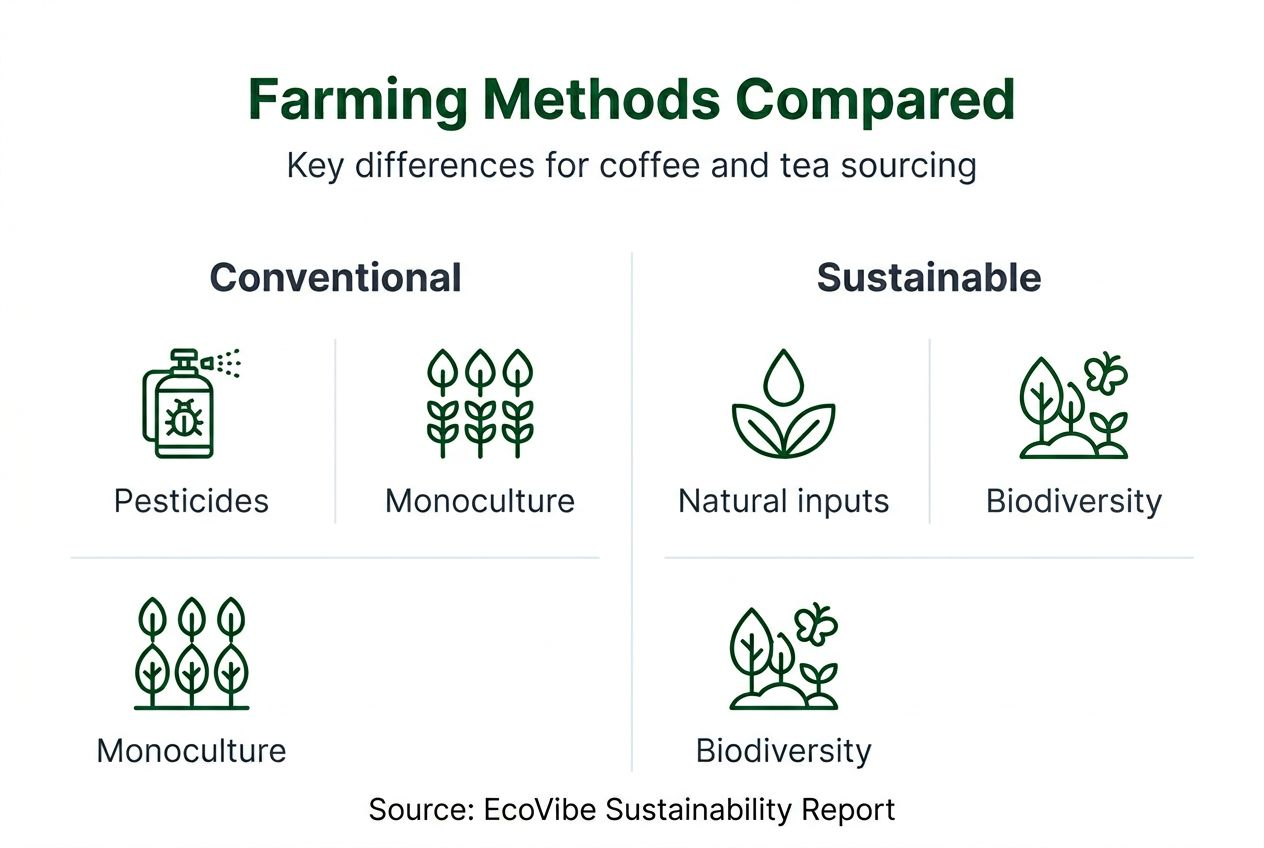
Sustainable cultivation methods dramatically reduce this footprint. Organic farming reduces pesticide use by up to 98%, protecting soil health, water quality, and farmworker safety. Meanwhile, agroforestry systems increase biodiversity by 40% while reducing soil erosion by 60% compared to monoculture plantations.
The production methods you choose make measurable differences:
- Shade-grown coffee preserves forest canopy and provides habitat for migratory birds
- Dry processing methods use 90% less water than wet processing
- Regenerative agriculture sequesters carbon while rebuilding degraded soils
- Unmechanized harvesting reduces fossil fuel consumption and soil compaction
| Practice | Conventional Farming | Sustainable Farming |
|---|---|---|
| Pesticide use | High synthetic inputs | 98% reduction with organic methods |
| Biodiversity | Low monoculture | 40% increase with agroforestry |
| Soil erosion | Moderate to high | 60% reduction |
| Carbon impact | Net emissions | Potential carbon sequestration |
| Water use | Heavy for wet processing | 90% less with dry methods |
Pro Tip: Seek out coffee and tea from farms practicing regenerative agriculture. These operations go beyond sustainability by actively restoring ecosystems, building soil carbon, and enhancing biodiversity with every harvest cycle.
Understanding these environmental factors helps explain why sustainable coffee commands attention from eco-conscious consumers. The farming choices made thousands of miles away directly impact climate, water resources, and wildlife populations.
Ethical production and fair labor in responsible sourcing
Responsible sourcing extends beyond environmental concerns to address human dignity and economic justice. Ethical production ensures fair wages, eliminates child labor, and maintains safe working conditions throughout the supply chain.
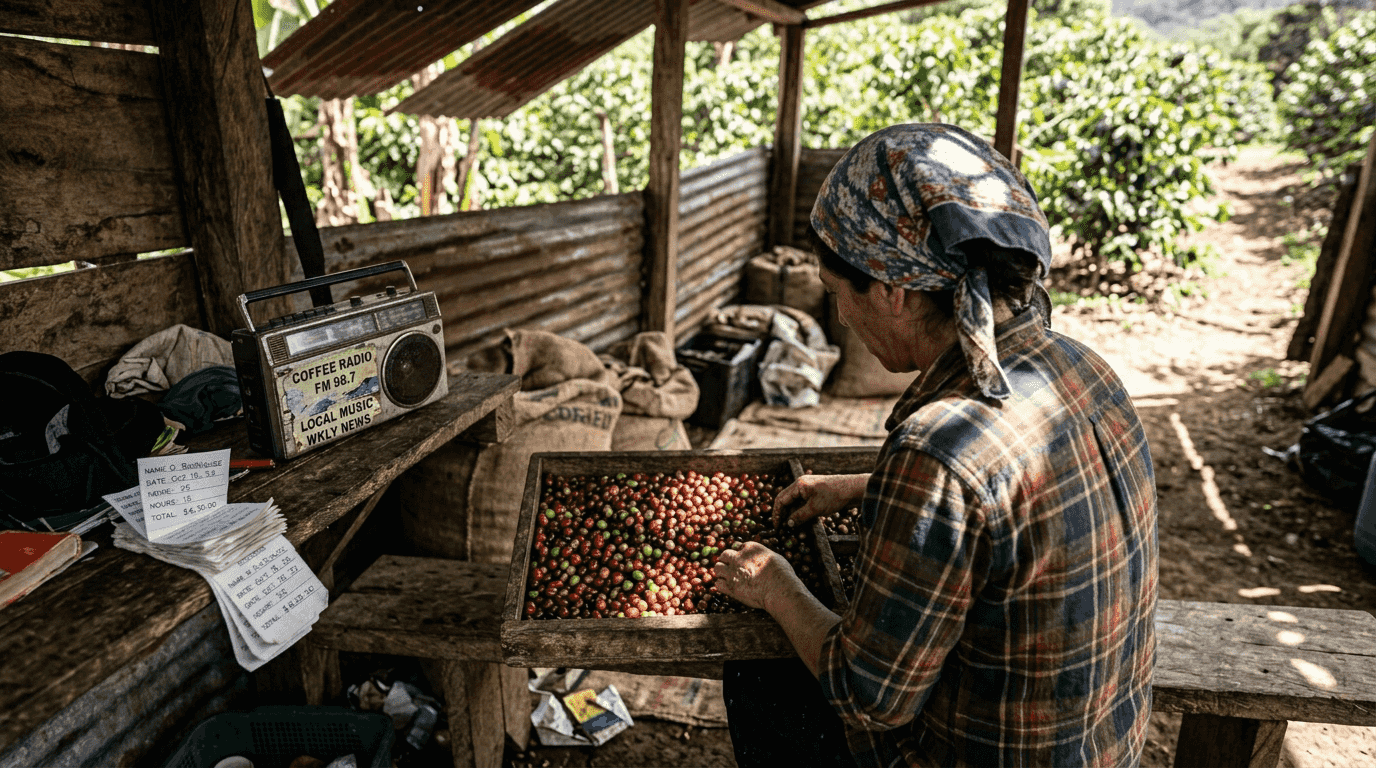
Fairtrade certification guarantees minimum prices and community premiums that improve farmer livelihoods. These standards provide essential safety nets when market prices drop below production costs. Community premiums fund schools, healthcare facilities, and infrastructure improvements in farming regions.
Yet certification has limitations. Brazilian farms retained certification in 2022 despite documented unsafe labor conditions. Audits occur periodically, creating gaps where abuses can persist undetected between inspections.
When evaluating ethical sourcing claims, look for these practices:
- Direct trade relationships that pay above fair trade minimums
- Transparent wage disclosure showing living wage compliance
- Worker safety programs with independent verification
- Gender equity initiatives and women’s leadership development
- Community investment beyond certification requirements
- Long-term purchasing commitments that enable farm planning
Pro Tip: Don’t rely solely on certification badges. Research brands that publish detailed sustainability reports, maintain long-term supplier relationships, and invite third-party audits beyond certification requirements. Transparency signals genuine commitment to ethical coffee production.
The human dimension of your beverage choice matters as much as environmental impact. Supporting truly ethical sourcing means farmworkers can afford nutritious food, send children to school, and build secure futures.
Understanding certification schemes and traceability
Navigating the landscape of sustainability certifications requires understanding what each label verifies and where gaps exist. Major programs include Fairtrade, Rainforest Alliance, USDA Organic, and UTZ, each with distinct standards and verification processes.
Certification programs provide frameworks for verifying responsible practices but rely on periodic audits rather than continuous monitoring. This creates opportunities for standards to slip between inspection cycles.
| Certification | Primary Focus | Key Benefits | Limitations |
|---|---|---|---|
| Fairtrade | Fair wages, community development | Guaranteed minimum prices, social premiums | Limited environmental standards, audit gaps |
| Rainforest Alliance | Environmental conservation, biodiversity | Habitat protection, climate adaptation | Less emphasis on wage floors |
| USDA Organic | Chemical-free farming | No synthetic pesticides or GMOs | Doesn’t address labor or fair pricing |
| UTZ | Traceability, efficiency | Supply chain transparency | Weaker labor protections than Fairtrade |
Emerging technologies address certification limitations through real-time verification. Digital technologies like blockchain and AI enhance transparency by tracking products from farm to cup with immutable records.
Traceability benefits include:
- Instant verification of origin claims without waiting for audit cycles
- Detection of supply chain fraud or mislabeling
- Real-time monitoring of environmental and social metrics
- Consumer access to detailed farm and processing information
- Faster response to quality or ethical concerns
Blockchain creates permanent records showing exactly where beans were grown, when they were harvested, and how they moved through processing and distribution. This level of detail makes false claims nearly impossible and builds consumer confidence.
Choosing responsible coffee beans means looking beyond labels to understand verification systems. The most reliable brands combine certifications with additional transparency measures and digital traceability.
How consumers power change through responsible sourcing choices
Your purchasing decisions send powerful market signals that reshape industry practices. When you choose responsibly sourced products, you increase demand for sustainable and ethical production, encouraging more producers to adopt these practices.
73% of consumers are willing to pay more for products from sustainable brands. This willingness translates into market pressure that drives meaningful change across supply chains.
You can amplify your impact through these actions:
- Research brand sustainability commitments beyond marketing claims
- Prioritize products with multiple certifications plus traceability
- Support companies publishing detailed sustainability reports
- Ask retailers about sourcing practices and supplier relationships
- Share information about responsible brands with your network
- Provide feedback to companies about sustainability priorities
Major producers are responding to consumer demand with substantial initiatives. Nestlé’s Nescafé Plan 2030 targets regenerative agriculture with measurable greenhouse gas reductions across its supply chain. Similarly, Lumbini Tea Valley partnered with sustainability organizations to implement regenerative practices and carbon insetting with social inclusivity.
When consumers consistently choose products aligned with their values, they create economic incentives that make responsible sourcing the competitive advantage rather than a niche market. Every purchase is a vote for the kind of agriculture and labor practices you want to see flourish.
Pro Tip: Seek brands that maintain long-term partnerships with specific farms or cooperatives. These relationships enable continuous improvement and mutual investment in sustainable practices, going far beyond transactional purchasing.
The regenerative agriculture impact you support through mindful purchasing extends to climate mitigation, biodiversity restoration, and thriving farming communities. Your choices today shape the coffee and tea landscapes of tomorrow.
Explore responsibly sourced coffee and tea with EcoVibe Roast
Applying your knowledge about responsible sourcing becomes effortless when you choose products from transparent, mission-driven brands. EcoVibe Roast offers sustainably sourced coffee and tea products backed by verified environmental and social commitments.

Every purchase supports initiatives that plant mangrove trees and remove ocean-bound plastics, creating measurable positive impact beyond your cup. Whether you’re exploring our Hibiscus Berry Tea or savoring our Earl Grey, you’re choosing products from suppliers who prioritize farmer welfare and ecosystem health. Visit our environmental impact page to see the tangible results of our collective efforts toward a more sustainable beverage industry.
FAQ
What does responsible sourcing mean in coffee and tea?
Responsible sourcing means purchasing coffee and tea produced with sustainable farming practices, fair labor conditions, and verified supply chain transparency. It ensures minimal environmental harm through reduced pesticide use and habitat protection while supporting farmers’ livelihoods with fair wages and safe working conditions.
How can I identify responsibly sourced coffee and tea?
Look for certifications like Fairtrade, Rainforest Alliance, and organic labels as starting points, but dig deeper into brand practices. Traceability through digital tools, transparent sustainability reporting, and third-party audits provide stronger assurance than certification badges alone.
Are responsibly sourced coffees and teas more expensive?
Yes, sustainably sourced products often cost more due to improved farming practices, fair wages, and certification expenses. 73% of consumers view this premium as an investment in environmental protection and social well-being rather than simply a higher price.
What role does technology play in responsible sourcing?
Digital technologies improve transparency by tracking products from farm to consumer with blockchain, IoT sensors, and AI analysis. These tools provide real-time, verifiable supply chain information that goes beyond periodic certification audits, making fraud detection easier and building consumer trust.
How can I support responsible sourcing as a consumer?
Buy from certified and transparent brands that publish detailed sustainability reports and maintain long-term supplier relationships. Advocate for better industry standards by providing feedback to retailers and sharing information about responsible brands within your community to amplify market demand for ethical products.


