

Choosing an eco-friendly coffee brand can slash your beverage’s carbon footprint by up to half, a powerful environmental benefit often overlooked. Yet confusion persists about whether these brands deliver real impact or merely greenwash. This guide cuts through the noise, helping you understand and evaluate eco-friendly coffee and tea brands so your purchases genuinely support the planet and farming communities.
Table of Contents
- Introduction To Eco-Friendly Brands In Coffee And Tea
- Environmental Benefits Of Supporting Eco-Friendly Coffee And Tea
- Social And Labor Impacts Of Ethical Sourcing
- Common Misconceptions About Eco-Friendly Brands
- Framework For Evaluating Eco-Friendly Coffee And Tea Brands
- How Supporting Eco-Friendly Brands Transforms Consumer Impact
- Practical Steps To Support Eco-Friendly Coffee And Tea
- Conclusion: Making Your Coffee And Tea Choices Matter
- Discover Sustainable Coffee And Tea Choices With EcoVibe Roast
Key Takeaways
| Point | Details |
|---|---|
| Environmental Impact | Eco-friendly brands reduce carbon emissions by 30-50% compared to conventional options through sustainable farming and processing. |
| Social Benefits | Ethical sourcing improves smallholder farmer income by up to 20% and supports community health and education. |
| Certification Clarity | Fair Trade emphasizes labor equity while Rainforest Alliance focuses on environmental protection; verify independent certifications. |
| Price Reality | Many sustainable brands achieve price parity or come within 5% of conventional brands through efficient supply chains. |
| Consumer Power | Each purchase supports measurable carbon sequestration, plastic removal, and community development. |
Introduction to Eco-Friendly Brands in Coffee and Tea
Conventional coffee and tea production extracts a heavy environmental toll. Industrial farming depletes soil, contaminates waterways with pesticides, and generates substantial greenhouse gas emissions through energy-intensive processing. Deforestation for new plantations destroys biodiversity hotspots, while poor labor practices trap farmers in poverty cycles.
Eco-friendly and sustainable brands counter these harms by prioritizing reduced carbon footprints, ethical sourcing, and verified certifications. These companies adopt regenerative farming methods that rebuild soil health, conserve water, and eliminate toxic chemicals. They also secure fair wages and safe working conditions for farmers and workers throughout the supply chain.
US consumers increasingly vote with their wallets for sustainability. Eco-conscious consumers factor environmental impact reductions, ethical labor, and verified sustainability certifications as top decision criteria when choosing coffee and tea brands. This shift reflects a broader cultural awakening about the power of purchasing decisions to drive systemic change.
When evaluating eco-friendly coffee impact and eco-friendly tea benefits, look for these key criteria:
- Transparent supply chain documentation showing farm-to-cup traceability
- Independent third-party certifications from recognized organizations
- Measurable environmental commitments like eco-friendly packaging examples and carbon offset programs
- Fair labor standards guaranteeing living wages and safe working conditions
These foundations set the stage for understanding exactly how your support translates into measurable benefits.
Environmental Benefits of Supporting Eco-Friendly Coffee and Tea
Supporting eco-friendly coffee and tea brands reduces carbon emissions by approximately 30-50% compared to conventional brands due to sustainable farming and processing methods. This dramatic reduction stems from multiple factors working in concert.
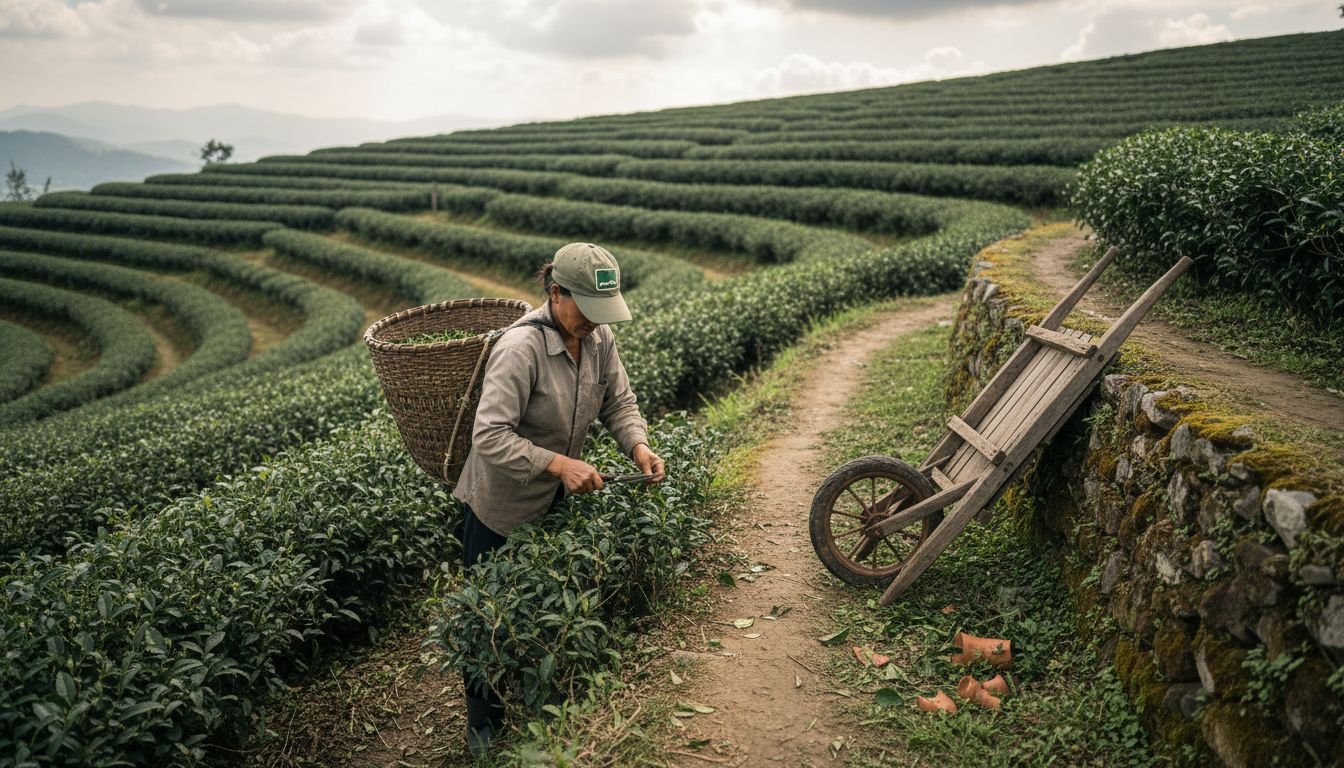
Sustainable farming eliminates synthetic pesticides and fertilizers, whose production and application generate massive greenhouse gas emissions. Shade-grown coffee preserves forest canopy, sequestering carbon while protecting wildlife habitats. Water conservation techniques reduce energy demands for pumping and treatment, while composting organic waste creates natural fertilizers that enrich soil instead of releasing methane in landfills.
Eco-friendly brands often partner with environmental initiatives that amplify their positive impact. Mangrove planting programs supported by eco-friendly brands act as powerful carbon sinks and promote ecosystem health. These coastal forests capture carbon four times faster than terrestrial forests while protecting shorelines from erosion and storm surges. Ocean plastic removal projects tackle another critical environmental crisis by intercepting waste before it enters marine ecosystems.
| Environmental Metric | Conventional Brands | Eco-Friendly Brands | Impact Reduction |
|---|---|---|---|
| Carbon Emissions (kg CO2/kg coffee) | 8-12 | 4-6 | 40-50% |
| Water Usage (liters/kg) | 140-200 | 50-80 | 60-70% |
| Pesticide Application | High | Zero | 100% |
| Soil Erosion Rate | Moderate to High | Minimal | 70-85% |
These mangrove planting and environmental initiatives create ripple effects beyond carbon footprint reduction. Healthier ecosystems support diverse species, regulate local climates, and provide livelihoods for coastal communities. Each purchase becomes a vote for regenerative practices that restore rather than deplete natural resources.
Pro Tip: Check brand websites for impact dashboards showing real-time metrics on trees planted, plastic removed, and carbon offset. Transparency signals authentic commitment rather than marketing spin.
Social and Labor Impacts of Ethical Sourcing
Ethical sourcing improves income stability by up to 20% for smallholder farmers and enhances community health and education outcomes. This economic boost transforms lives in coffee and tea-growing regions where farmers often struggle below poverty lines.
Fair Trade certifications guarantee minimum prices that shield farmers from market volatility. When global commodity prices crash, Fair Trade premiums provide a safety net ensuring families can afford food, medicine, and school fees. This stability allows farmers to invest in their land rather than choosing between immediate survival and long-term sustainability.
Beyond individual households, ethical brands channel funds into community development projects. Health clinics bring medical care to remote villages where treatable diseases once caused preventable deaths. Schools receive supplies, teacher training, and infrastructure improvements that boost attendance rates and educational quality. Clean water systems eliminate waterborne illnesses while freeing women and children from hours spent fetching water.
These ethical coffee benefits create positive feedback loops. Healthier, better-educated communities produce higher quality crops through improved farming knowledge. Stable incomes enable farmers to adopt sustainable practices requiring upfront investments in organic inputs or shade tree planting. Strong community organizations negotiate better terms with buyers and coordinate resource sharing.
The social benefits of ethical sourcing extend to workers throughout the supply chain:
- Safe working conditions with protective equipment and reasonable hours
- Living wages exceeding local minimums
- Freedom of association allowing collective bargaining
- Zero tolerance for child labor or forced labor
- Access to grievance mechanisms for addressing workplace concerns
Pro Tip: Look for brands highlighting specific community partnerships with photos and stories of the people you’re supporting. Generic claims about helping farmers lack the accountability of named relationships.
Common Misconceptions About Eco-Friendly Brands
Myth number one claims eco-friendly coffee and tea always cost significantly more than conventional options. Reality paints a different picture. Many sustainable brands achieve price parity or near parity with conventional brands through efficient supply chains. Direct trade relationships eliminate middleman markups, while bulk purchasing and streamlined logistics keep costs competitive. Premium positioning often reflects superior quality rather than sustainability premiums.
Another persistent myth suggests eco-labels guarantee zero environmental harm. No production system achieves perfect sustainability, but certified brands deliver substantial improvements. Actual impact reduction ranges between 30-70% depending on specific practices and certifications. This meaningful progress deserves recognition even while acknowledging room for further improvement.
The certification confusion myth treats all eco-friendly labels as interchangeable. In truth, different certifications prioritize different values. Fair Trade focuses on labor equity and community investment through guaranteed minimum prices and social premiums. Rainforest Alliance emphasizes environmental protection through biodiversity conservation and sustainable farming practices. USDA Organic bans synthetic inputs but doesn’t address labor conditions or carbon footprints.
| Certification | Primary Focus | Verification Method | Key Benefits |
|---|---|---|---|
| Fair Trade | Labor equity, community development | Third-party audits, cooperative structure | Minimum prices, social premiums, democratic governance |
| Rainforest Alliance | Environmental sustainability | Farm audits, continuous improvement | Biodiversity protection, reduced chemicals, water conservation |
| USDA Organic | Chemical-free production | Annual inspections | No synthetic pesticides or fertilizers, soil health |
| Direct Trade | Quality, farmer relationships | Brand-specific standards | Higher prices, long-term partnerships, quality incentives |
Understanding these differences empowers smarter choices aligned with your values. Someone prioritizing worker welfare might choose Fair Trade, while an environmental purist might prefer Rainforest Alliance certified products.
Choosing eco-friendly coffee means recognizing that eco-friendly coffee myths often stem from outdated information or industry resistance to change. The sustainable coffee and tea sector has matured dramatically, offering accessible options at competitive prices with verified impact.
Framework for Evaluating Eco-Friendly Coffee and Tea Brands
The Triple Impact Framework provides a structured approach assessing brands across three dimensions: environmental footprint, social impact, and certification authenticity. This holistic evaluation prevents greenwashing while identifying genuinely sustainable options.
Environmental footprint evaluation examines farming methods, processing techniques, packaging materials, and transportation emissions. Look for shade-grown or agroforestry systems, water conservation practices, renewable energy use, and compostable or recyclable packaging. Carbon offset programs should specify tonnage sequestered and verification methods.
Social impact assessment investigates farmer compensation, working conditions, community investment, and supply chain transparency. Fair pricing above commodity minimums, long-term purchase commitments, and named farm partnerships indicate authentic relationships. Community development projects should show measurable outcomes like school enrollment rates or health clinic usage statistics.
Certification authenticity verification separates legitimate third-party audits from self-awarded labels. Certifications vary: Fair Trade emphasizes labor equity, Rainforest Alliance focuses more on environmental protection. Research each certification’s standards, audit frequency, and enforcement mechanisms.
| Certification Type | Audit Frequency | Independence Level | Public Standards |
|---|---|---|---|
| Fair Trade USA | Annual | Independent nonprofit | Fully published online |
| Rainforest Alliance | Every 3 years | Independent nonprofit | Fully published online |
| USDA Organic | Annual | Government-accredited certifiers | Fully published by USDA |
| Brand-created labels | Varies widely | Self-reported | Often vague or unpublished |
Follow this step sequence to research and purchase confidently:
- Identify brands claiming eco-friendly or sustainable practices through online searches or retailer recommendations.
- Visit brand websites to review sustainability pages, impact reports, and certification documentation.
- Verify certifications by checking certifier databases for listed operations and valid certificates.
- Evaluate transparency by assessing detail level in impact reporting and supply chain information.
- Compare options across price, quality, and impact metrics to find the best fit for your values and budget.
- Make initial purchases and assess quality, taste, and ongoing brand communication about impact.
Pro Tip: Beware of vague language like “eco-friendly” or “sustainably sourced” without supporting certifications. Legitimate brands proudly display specific third-party certifications and provide detailed impact data.
These planet-friendly coffee selection tools and a comprehensive sustainable coffee checklist equip you to navigate the marketplace with confidence.
How Supporting Eco-Friendly Brands Transforms Consumer Impact
One purchase supports measurable carbon sequestration, plastic removal, and community benefits, increasing consumer loyalty. This tangible impact transforms abstract environmental concern into concrete action you can see and quantify.
Consider the math. A single bag of sustainably sourced coffee might fund planting five mangrove trees capturing 250 kg of CO2 over their lifetime. That same purchase could remove 10 plastic bottles from ocean-bound waste streams, preventing marine ecosystem damage. The Fair Trade premium might contribute $2 toward a community school, with your annual coffee budget funding an entire student’s education.
These quantified impacts create emotional connections strengthening brand loyalty. Consumers feel invested in the communities they support and the environmental projects they fund. Brands reporting regular impact updates build trust and engagement, with customers becoming advocates who share their positive experiences.
Long-term benefits compound as sustained support enables ambitious projects:
- Reforestation initiatives restoring degraded landscapes and wildlife corridors
- Water infrastructure providing clean drinking water to thousands of people
- Agricultural training programs improving yields and resilience to climate change
- Microfinance programs enabling farmers to invest in equipment and diversification
Ecosystems recover when farming pressure decreases through improved productivity on existing land. Biodiversity rebounds as chemical runoff declines and habitat corridors reconnect fragmented forests. Carbon sequestration accelerates as mature trees and healthy soils lock away atmospheric greenhouse gases.
Farming communities build resilience through education, healthcare access, and economic diversification. Children break poverty cycles through quality schooling. Farmers adapt to climate change with drought-resistant varieties and water harvesting systems funded by premiums.
Your consumer impact from eco-friendly coffee multiplies through network effects as brands scale successful programs and other consumers follow your lead.
Practical Steps to Support Eco-Friendly Coffee and Tea
Taking action starts with research. Identifying verified certifications and evaluating brand transparency are crucial for supporting credible eco-friendly brands. Begin by listing your values and priorities, whether emphasizing carbon reduction, farmer welfare, or plastic elimination.
Follow these steps to align purchases with principles:
- Research brand sourcing by reading about page content, reviewing sustainability reports, and checking certification documentation.
- Verify independent certifications through certifier databases like Fair Trade USA or Rainforest Alliance websites showing current certificate holders.
- Evaluate impact transparency by reviewing detailed metrics on environmental and social outcomes rather than vague claims.
- Compare price and quality across certified brands to find options fitting your budget without compromising on verified standards.
- Start with sample sizes or variety packs to test quality before committing to larger purchases.
- Join loyalty programs or subscribe for regular deliveries to maximize your cumulative impact through consistent support.
Consider brands supporting environmental projects like mangrove planting and ocean plastic removal. These initiatives deliver benefits beyond farm-level sustainability, addressing global environmental crises through measurable interventions. Check brand websites for impact counters or reports quantifying trees planted and plastic removed.
Price-quality balance matters for sustainable purchasing habits. Premium options exist, but many certified brands compete on price with conventional products. Buying in bulk, choosing whole beans over pre-ground, or opting for house blends over single-origin specialty coffees can reduce costs while maintaining ethical standards.
Pro Tip: Subscribe to brand newsletters for exclusive discounts and impact updates. Many sustainable brands offer subscriber-only deals making eco-friendly choices more affordable than one-time purchases while keeping you informed about the difference your loyalty makes.
These support sustainable coffee farms strategies and sustainable coffee checklist steps provide clear pathways from intention to action.
Conclusion: Making Your Coffee and Tea Choices Matter
Supporting eco-friendly coffee and tea brands significantly reduces your carbon footprint while improving lives in farming communities. The 30-50% emissions reductions and 20% income improvements for farmers represent real, measurable change scaled across millions of daily purchases.
Common misconceptions about cost premiums and vague environmental claims no longer hold water. Price parity exists across many certified brands, and clear certification standards enable confident evaluation of authentic sustainability. The framework and practical steps provided equip you to cut through greenwashing and identify brands delivering genuine impact.
Using the Triple Impact Framework ensures your purchases align with your values:
- Environmental criteria including carbon footprint, water conservation, and biodiversity protection
- Social standards guaranteeing fair wages, safe conditions, and community investment
- Certification authenticity verified through independent third-party audits
Your daily coffee or tea ritual becomes a powerful vote for the kind of world you want to create. Each cup supports regenerative farming, protects ecosystems, and invests in human dignity. These choices ripple outward, influencing markets, inspiring others, and demonstrating that sustainable consumption is both possible and rewarding.
Discover Sustainable Coffee and Tea Choices with EcoVibe Roast
EcoVibe Roast offers carefully vetted eco-friendly coffee and tea products meeting the highest sustainability standards. Every purchase plants mangrove trees and removes ocean-bound plastic, translating your values into measurable environmental action. Our transparent supply chains and verified certifications eliminate guesswork from sustainable shopping.

Explore emerging sustainability trends in coffee 2026 shaping the industry’s future. Build your expertise with our comprehensive sustainable coffee checklist covering every decision factor. Discover our organic sustainable tea collection featuring ethically sourced options supporting farming communities worldwide. Join conscious consumers making every sip count for people and planet.
FAQ
What certifications truly guarantee eco-friendly coffee and tea?
Fair Trade ensures labor equity through guaranteed minimum prices and community development premiums. Rainforest Alliance emphasizes environmental protection via sustainable farming standards and biodiversity conservation. Always verify certifications through independent third-party databases listed on official certifier websites rather than trusting brand claims alone.
Are eco-friendly coffee and tea more expensive than conventional brands?
Many sustainable brands achieve price parity or come within 5% of conventional prices through efficient supply chains and direct trade relationships. Growing consumer demand and economies of scale continue driving costs down. Premium positioning often reflects superior quality rather than sustainability costs, with bulk purchases and subscriptions offering additional savings.
How can I verify a brand’s sustainability claims?
Research certifications by checking official certifier databases for valid, current certificates listing the specific farms or cooperatives. Look for detailed impact reports with specific metrics rather than vague marketing language. Investigate participation in tangible environmental projects like mangrove planting with verifiable tree counts and locations. Third-party audits and transparent supply chain documentation signal authentic commitment versus greenwashing.
What environmental impact does one coffee purchase create?
A single bag of eco-friendly coffee typically funds planting multiple mangrove trees sequestering hundreds of kilograms of CO2 over their lifetime. Many brands remove 5-10 plastic bottles from ocean-bound waste per purchase. The cumulative carbon reduction from choosing sustainable over conventional coffee averages 2-4 kg CO2 per bag through reduced farming and processing emissions. Annual consumption by one household prevents 50-100 kg of carbon emissions while supporting community development.
How do ethical sourcing standards improve farmer livelihoods?
Ethical certifications guarantee minimum prices protecting farmers from market crashes and volatile commodity pricing. Fair Trade premiums fund community projects including schools, health clinics, and water infrastructure. Direct trade relationships enable 20-40% higher prices than conventional supply chains by eliminating middlemen. Long-term purchase commitments provide income stability allowing farmers to invest in sustainable practices and plan for the future rather than surviving season to season.


