

Coffee farmers participating in community support programs earn up to 30% more than their non-cooperative peers, transforming not just individual livelihoods but entire rural communities. This income boost isn’t a happy accident. It’s the result of deliberate supply chain restructuring that prioritizes farmer welfare, environmental health, and consumer trust. Understanding how authentic community support works helps you choose coffee that delivers real impact, not just marketing promises.
Table of Contents
- Introduction To Community Support In Coffee Brands
- How Community Support Benefits Coffee Farmers And Their Communities
- Environmental Impact Of Community Support Programs
- Consumer Trust And Perceptions Of Community-Supported Coffee Brands
- Comparing Community Support Models In Coffee Supply Chains
- Overcoming Challenges And Tradeoffs In Community Support Initiatives
- Practical Steps For Consumers To Support Community-Driven Coffee Brands
- Conclusion: Empowering Eco-Conscious Choices Through Community Support
- Explore EcoVibe Roast’s Community-Focused Coffee & Tea Collection
- Frequently Asked Questions
Key Takeaways
| Point | Details |
|---|---|
| Farmer Income Gains | Cooperative farmers earn up to 30% more through fair pricing and collective bargaining power. |
| Environmental Benefits | Community support initiatives reduce deforestation by 25% and boost soil organic matter by 40%. |
| Consumer Trust Impact | Brands with genuine community support programs are perceived as 50% more trustworthy by consumers. |
| Premium Willingness | Transparent community reporting increases consumer willingness to pay premiums by 15-20%. |
| Scalability Challenges | Half of community projects struggle to expand beyond local markets without strategic partnerships. |
Introduction to Community Support in Coffee Brands
Community support in coffee production means coffee brands actively invest in farmer cooperatives, fund local infrastructure projects, and ensure fair compensation throughout the supply chain. It’s not just about paying fair prices. It includes financing healthcare clinics, building schools, providing agricultural training, and supporting environmental restoration in coffee-growing regions.
This approach evolved from the fair trade movement of the 1980s, which emerged as farmers in Latin America and Africa faced devastating price crashes. Early cooperatives proved that collective bargaining could stabilize incomes and improve living conditions. Today’s community support in coffee programs go further, integrating environmental sustainability with social development.
Why does this matter? Coffee farmers typically earn just 10% of retail coffee prices. Without community support structures, they lack negotiating power, face volatile markets alone, and struggle to invest in sustainable farming practices. Supporting community-driven models creates a virtuous cycle: better farmer incomes fund education and healthcare, while technical support enables environmentally sound farming that protects future harvests.
Key elements of effective community support include:
- Direct relationships between roasters and farmer cooperatives
- Premium payments that exceed commodity market rates
- Long-term purchase commitments providing income stability
- Investment in local infrastructure like processing facilities
- Training programs for sustainable agriculture techniques
When farmers in cooperatives earn up to 30% more than non-cooperative peers in similar regions, that extra income transforms communities. Children attend school instead of working fields. Families access healthcare. Farmers invest in equipment that improves quality and reduces environmental impact.
How Community Support Benefits Coffee Farmers and Their Communities
Cooperatives aggregate small farmers’ harvests, giving them collective bargaining power they’d never achieve individually. This structure lets them negotiate better prices, access international markets, and share processing facilities that would be financially impossible for individual smallholders.
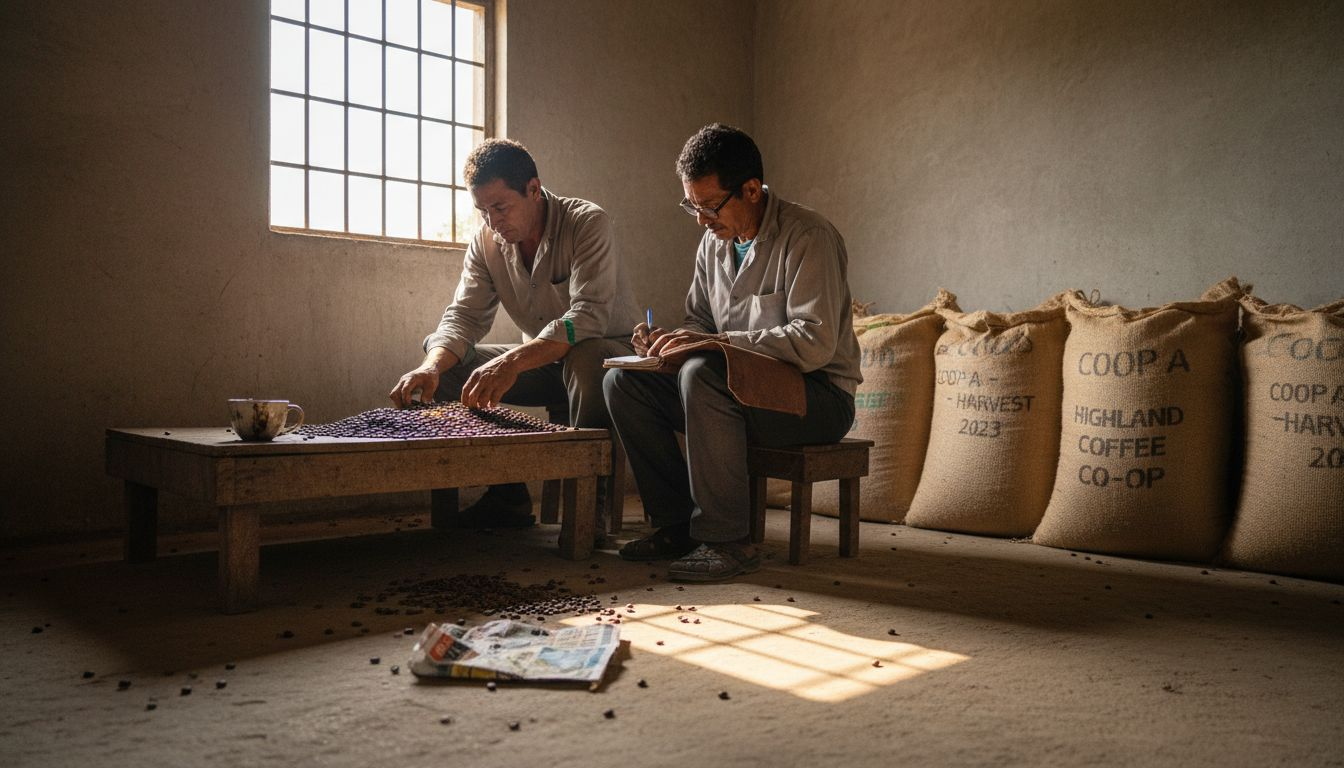
The income impact is substantial. Farmers in cooperatives earn up to 30% more than their non-cooperative counterparts. That percentage translates to life-changing dollars in regions where the average farmer earns under $2 per day. The premium doesn’t just pad pockets. It funds community development projects that benefit entire villages.
Coffee brands committed to support sustainable coffee farms typically channel portions of their profits into community projects. You’ll find brand-funded initiatives building:
- Primary schools that reduce child labor and improve literacy rates
- Health clinics providing maternal care and disease prevention
- Clean water systems eliminating waterborne illnesses
- Processing facilities that let farmers capture more value locally
- Agricultural training centers teaching organic farming methods
These investments create multiplier effects. A new school means children grow up literate, enabling them to negotiate better deals and adopt innovative farming techniques. A health clinic reduces preventable deaths and keeps farmers productive. Clean water saves hours previously spent hauling water, freeing time for farm improvements.
Pro Tip: Brands that name specific cooperatives they support and detail community projects funded are far more credible than those making vague “giving back” claims. Look for annual impact reports with photos, project budgets, and farmer testimonials.
The social impact coffee benefits extend beyond immediate communities. When coffee farming becomes economically viable, it reduces pressure for farmers to convert land to cattle ranching or illegal crops. It keeps rural communities intact instead of forcing migration to overcrowded cities.
Environmental Impact of Community Support Programs
Community support initiatives don’t separate social welfare from environmental health. The two are inseparable. Community support initiatives contribute to 25% deforestation reduction and increase soil organic matter by 40%, directly benefiting ecosystems.
Agroforestry is central to this environmental transformation. Instead of clearing land for sun-grown coffee monocultures, community-supported farmers plant coffee under native tree canopies. This mimics natural forest structure, providing habitat for migratory birds, pollinators, and other wildlife. The shade trees also stabilize soil, reduce erosion, and sequester carbon.
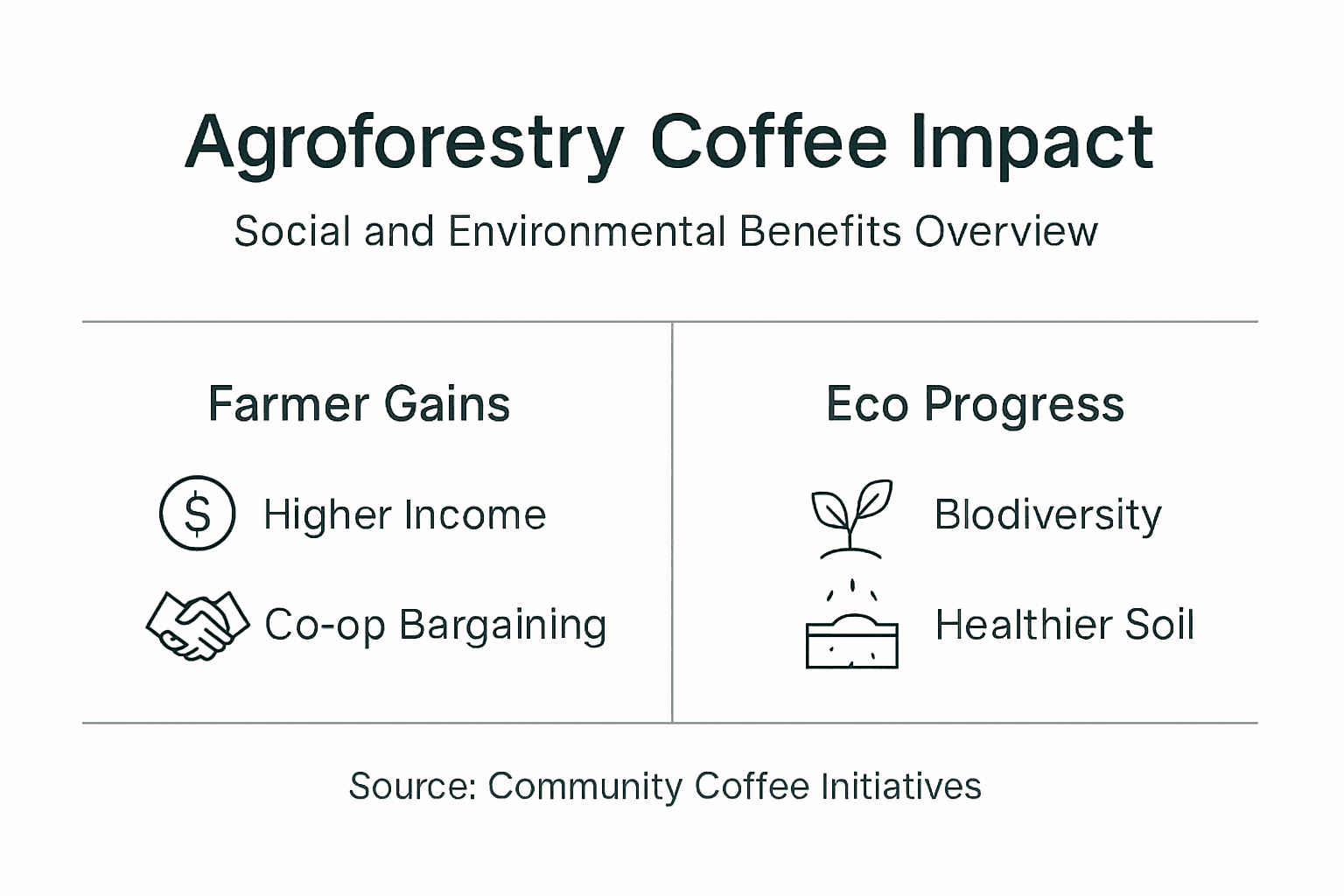
| Environmental Metric | Traditional Farming | Community-Supported Agroforestry | Improvement |
|---|---|---|---|
| Deforestation Rate | Baseline | 25% reduction | Significantly lower |
| Soil Organic Matter | Baseline | 40% increase | Richer soil health |
| Biodiversity Index | Low | Medium to High | Enhanced ecosystems |
| Pesticide Use | High | Minimal to none | Reduced chemical load |
The soil health improvements matter enormously. Increased organic matter means soil holds more water during dry periods, reducing crop failure risk. It supports beneficial microorganisms that naturally suppress pests and diseases. Healthier soil requires less synthetic fertilizer, cutting costs and preventing nitrogen runoff that pollutes rivers.
Carbon sequestration through agroforestry offsets some of coffee production’s footprint. While not carbon neutral, community-supported shade-grown coffee has a dramatically smaller climate impact than industrial sun-grown varieties. The trees absorb CO2, and organic farming practices avoid emissions from synthetic fertilizer production.
Biodiversity benefits are equally impressive. Studies show shade-grown coffee farms support 50-70% of the bird species found in undisturbed forests. These birds control insect pests naturally, reducing pesticide need. Diverse plantings also provide wild food sources and migration corridors connecting forest fragments.
Pro Tip: Look for brands supporting agroforestry projects for maximum ecological impact. Terms like “shade-grown,” “bird-friendly,” or specific mentions of forest conservation signal genuine environmental commitment beyond basic organic certification.
Brands that support eco-friendly coffee benefits understand that environmental stewardship requires farmer buy-in. When community support programs provide training and cover transition costs, farmers adopt sustainable practices that might otherwise be financially risky.
Consumer Trust and Perceptions of Community-Supported Coffee Brands
Consumers perceive coffee brands with active community support as 50% more trustworthy, influencing purchase loyalty positively. This trust gap gives community-focused brands a competitive advantage in crowded markets.
Why such a dramatic trust difference? Consumers increasingly question corporate motives. Generic sustainability claims feel hollow. But when brands provide specific details about which cooperatives they support, show photos of community projects, and share farmer stories, skepticism melts. Transparency signals authenticity.
This trust translates directly to willingness to pay more. Coffee brands with transparent community-support reporting increase consumer willingness to pay a premium by 15-20%. That premium isn’t charity. It’s consumers recognizing that ethical sourcing costs more and choosing to fund it.
Common misconceptions muddy the waters. Many consumers assume any certified coffee automatically means strong community support. Reality is more complex. Some certifications verify minimum standards but don’t guarantee community investment. Others focus solely on environmental criteria, ignoring social impact.
To evaluate community support claims effectively:
- Check if brands name specific cooperatives and show ongoing relationships
- Look for detailed impact reports with measurable outcomes, not vague commitments
- Verify third-party certifications like Fair Trade, Rainforest Alliance, or B Corp status
- Research whether brands visit origin communities or just buy through importers
- Read farmer testimonials and look for reciprocal relationships, not extractive ones
Consumers supporting green coffee initiatives want assurance their purchases create real change. Brands that document impact through videos, blog posts from origin, and annual reports earn loyalty that transcends price competition.
The conscious coffee drinker focused on eco impact and ethics increasingly researches brands before purchasing. They compare impact claims, check for greenwashing, and share findings in online communities. This scrutiny pressures brands toward greater authenticity.
Comparing Community Support Models in Coffee Supply Chains
Three primary models dominate community support in coffee: direct trade, cooperatives, and NGO partnerships. Each offers distinct advantages and tradeoffs for farmers, brands, and consumers.
Direct trade eliminates intermediaries. Roasters build relationships directly with farmers or farmer groups, negotiate prices, and often provide technical support. This model offers maximum transparency. Consumers can trace beans to specific farms. Farmers receive higher prices without middlemen taking cuts.
Cooperative models pool small farmers together. The cooperative handles processing, quality control, and sales negotiations. This provides economies of scale and professional management that individual farmers couldn’t afford. It democratizes access to international markets for smallholders who’d otherwise sell to local buyers at rock-bottom prices.
NGO partnership models involve nonprofits that connect farmers with markets, provide training, and certify sustainable practices. Organizations like Fairtrade International set standards, audit compliance, and guarantee minimum prices. They bring credibility and structure but add certification costs.
| Model | Transparency | Farmer Income | Community Projects | Scalability | Best For |
|---|---|---|---|---|---|
| Direct Trade | Highest | High | Variable | Limited | Quality-focused consumers wanting direct connection |
| Cooperatives | High | Medium-High | Consistent | Good | Consumers prioritizing broad farmer access and democratic structures |
| NGO Partnerships | Medium | Medium | Structured | Excellent | Consumers wanting verified standards and auditable impact |
Which model works best depends on your priorities:
- Choose direct trade if you value personal connection, exceptional quality, and don’t mind higher prices for smaller volumes.
- Choose cooperatives if you want to support democratic farmer organizations and broad access for smallholders.
- Choose NGO partnerships if you need third-party verification and standardized impact metrics.
The social impact models in coffee aren’t mutually exclusive. Some brands combine approaches, buying direct from cooperatives while supporting NGO training programs. The key is whether the model delivers sustained benefits to farmers and their communities, not which label it carries.
Farmer satisfaction varies. Direct trade farmers often report strongest relationships but worry about over-dependence on single buyers. Cooperative members appreciate shared resources but sometimes chafe at democratic decision-making delays. NGO-partnered farmers value certifications but complain about audit costs.
Overcoming Challenges and Tradeoffs in Community Support Initiatives
Community support programs face real obstacles. Market access remains the biggest barrier. 50% of community projects report difficulty scaling beyond local markets, limiting income potential regardless of quality improvements.
Small cooperatives struggle to meet volume requirements that large roasters demand. They lack storage facilities to hold inventory until prices improve. They can’t afford the certifications that open premium market doors. Without connections to international buyers, they sell to local traders who pay commodity prices, negating quality investments.
Scalability limitations threaten long-term viability. A pilot project that works beautifully with 50 farmers might collapse trying to serve 500. Management systems, quality control, and processing infrastructure that suffice at small scale become bottlenecks at larger volumes. Funding that covers startup costs rarely supports the operational expenses needed to sustain programs.
Brand partnerships solve many of these challenges. When established roasters commit to multi-year purchase agreements, cooperatives can secure loans for infrastructure improvements. Brand technical support helps maintain quality at scale. Marketing partnerships expose small-origin coffees to consumers who’d never discover them otherwise.
Common pitfalls and strategic remedies include:
- Pitfall: Over-promising community projects without sustainable funding. Remedy: Start with achievable goals tied directly to coffee revenues, expand as sales grow.
- Pitfall: Imposing external development priorities that don’t match community needs. Remedy: Let communities identify priorities through democratic processes.
- Pitfall: Focusing solely on production volume, sacrificing quality and premiums. Remedy: Invest in quality training and equipment that command higher prices.
- Pitfall: Creating dependency on single buyers or funding sources. Remedy: Diversify market relationships and build cooperative reserves.
- Pitfall: Ignoring the scalability challenges in community support during growth phases. Remedy: Plan infrastructure and management capacity ahead of volume increases.
Another tradeoff involves certification costs. Organic, Fair Trade, and other certifications open market doors but require annual fees, inspections, and paperwork that strain small cooperatives. Some excellent community programs can’t afford certification, making their coffee harder to sell despite meeting or exceeding standards.
Weather and climate change add uncertainty. Community investments in infrastructure or tree planting pay off over decades. But increasingly erratic weather threatens harvests before long-term benefits materialize. Programs need climate adaptation strategies, not just static improvement plans.
Practical Steps for Consumers to Support Community-Driven Coffee Brands
You can identify authentic community support and make purchases that drive real impact by following this systematic approach.
-
Research the brand’s community support claims and certifications. Visit their website and look for specifics: cooperative names, project descriptions, impact metrics. Generic “giving back” language without details is a red flag. Check for certifications like Fair Trade, Rainforest Alliance, or B Corp that verify claims through third-party audits.
-
Assess social and environmental outcomes using available data. Does the brand publish annual impact reports? Do they share farmer income data or community project outcomes? Look for measurable results like number of farmers supported, premium percentages paid, or community projects funded, not just aspirational statements.
-
Consider consumer reviews and brand transparency indicators. Read what other customers say about the brand’s authenticity. Check social media for behind-the-scenes content from origin. Brands genuinely engaged with communities regularly share photos, videos, and stories from coffee regions, not just polished marketing.
-
Choose brands with verified community engagement and long-term relationships. Look for evidence of multi-year partnerships, not one-off projects. Brands that return to the same cooperatives year after year demonstrate genuine commitment. Check if they provide technical support, not just purchase coffee.
Pro Tip: Most people verify certifications but overlook checking whether brands actually visit their partner communities. Look for trip reports, staff profiles mentioning origin visits, or blog posts documenting relationships. Brands that never send staff to origin likely lack deep community connections despite certification labels.
The sustainable coffee support guide helps you dig deeper into specific practices that signal authentic commitment. Understanding coffee certifications for conscious consumers clarifies which labels deliver meaningful guarantees versus marketing fluff.
Don’t assume higher prices automatically mean better community support. Some premium coffees pay farmers poorly while capturing margins in marketing. Conversely, some moderately priced coffees deliver strong farmer benefits through efficient supply chains. Price matters less than transparent reporting of where your money goes.
Conclusion: Empowering Eco-Conscious Choices Through Community Support
Community support in coffee brands delivers measurable social, environmental, and economic benefits. Farmers earn 30% more through cooperatives. Communities gain schools, clinics, and infrastructure. Environments benefit from reduced deforestation and improved soil health. Consumers access coffee that aligns with their values while brands build trust and loyalty.
Your purchasing decisions drive these outcomes. Every bag of coffee represents a vote for the supply chain model you want to support. When you choose brands with verified community engagement, you fund sustainable livelihoods and environmental restoration. When you accept vague claims without verification, you enable greenwashing.
The comparison framework and practical steps outlined here give you tools to evaluate coffee brands critically. Apply them before your next purchase. Research cooperatives. Check impact reports. Verify certifications. Support brands that transparently document their community relationships and environmental commitments.
Small consumer choices aggregate into market forces powerful enough to reshape entire industries. Your coffee decision matters.
Explore EcoVibe Roast’s Community-Focused Coffee & Tea Collection
Ready to put these principles into practice? EcoVibe Roast partners with verified sustainable cooperatives and documents impact through transparent reporting. Every purchase supports mangrove reforestation and ocean plastic removal, extending community benefits beyond coffee origins.
Explore our curated collection of coffees and teas that meet the standards outlined in this article. Learn about sustainability trends in coffee 2026 shaping the industry’s future. Follow our step-by-step guide to support sustainable coffee farms with every purchase. Discover our organic sustainable tea collection that extends our community support model to tea-growing regions.

Your journey toward more conscious coffee consumption starts with informed choices. We’re here to make those choices easier, more transparent, and more impactful.
Frequently Asked Questions
What distinguishes authentic community support from marketing claims?
Authentic community support includes specific details: cooperative names, project descriptions, measurable outcomes, and third-party verification through certifications. Marketing claims use vague language like “giving back” without naming partners or documenting results. Real programs publish annual impact reports with data and photos.
How can I verify if a coffee brand truly supports its farmer communities?
Check for named cooperative partnerships and multi-year relationships, not one-time projects. Look for staff visits to origin documented through blogs or social media. Verify third-party certifications like Fair Trade or B Corp. Read impact reports with specific metrics on farmers supported and premiums paid. Genuine brands transparently share both successes and challenges.
Does buying community-supported coffee make a real environmental difference?
Yes. Community-supported farms reduce deforestation by 25% through agroforestry practices and increase soil organic matter by 40%. These farms support biodiversity, sequester carbon, and reduce pesticide use. Your purchases fund the premium prices and technical support that make sustainable farming financially viable for smallholders.
What certifications most reliably indicate community engagement?
Fair Trade certification directly addresses farmer income and community development. B Corp certification verifies overall social and environmental performance. Rainforest Alliance includes community criteria alongside environmental standards. However, certification isn’t everything. Some excellent community programs operate without formal certification due to cost barriers.
Can small consumers really influence sustainability in coffee supply chains?
Absolutely. Consumer demand for verified community support drives brands to improve sourcing practices. When you consistently choose transparent brands and share your reasoning, you create market pressure that competitors must address. Collective small purchases fund the premiums that transform farmer livelihoods and communities. Your individual choice aggregates with others into significant market forces.


