

You’ve probably seen labels like Fair Trade or Organic on your favorite coffee and tea packages, but responsible sourcing extends far beyond certifications. The truth is, creating genuine environmental and social impact requires deeper strategies that many brands overlook. This guide reveals what truly defines responsible sourcing and how you can ensure your beverage choices support farmers, ecosystems, and communities worldwide.
Table of Contents
- What Is Responsible Sourcing And Why It Matters
- Certifications And Their Role In Responsible Sourcing
- Beyond Certifications: Relationship-Based And Transparent Sourcing Practices
- Practical Steps For Consumers To Support Responsible Sourcing
- Explore Our Responsibly Sourced Coffee And Tea Collection
- FAQ
Key takeaways
| Point | Details |
|---|---|
| Responsible sourcing is multidimensional | It encompasses environmental protection, social equity, and economic sustainability beyond basic certifications. |
| Direct relationships matter most | Building transparent partnerships with farmers creates more meaningful impact than certification alone. |
| Traceability enables accountability | Tracking products from farm to cup allows verification of ethical claims and supplier practices. |
| Certifications provide a foundation | Standards like Fair Trade and Organic offer starting points but have inherent limitations. |
| Consumer choices drive change | Supporting transparent brands and asking questions pushes the industry toward better practices. |
What is responsible sourcing and why it matters
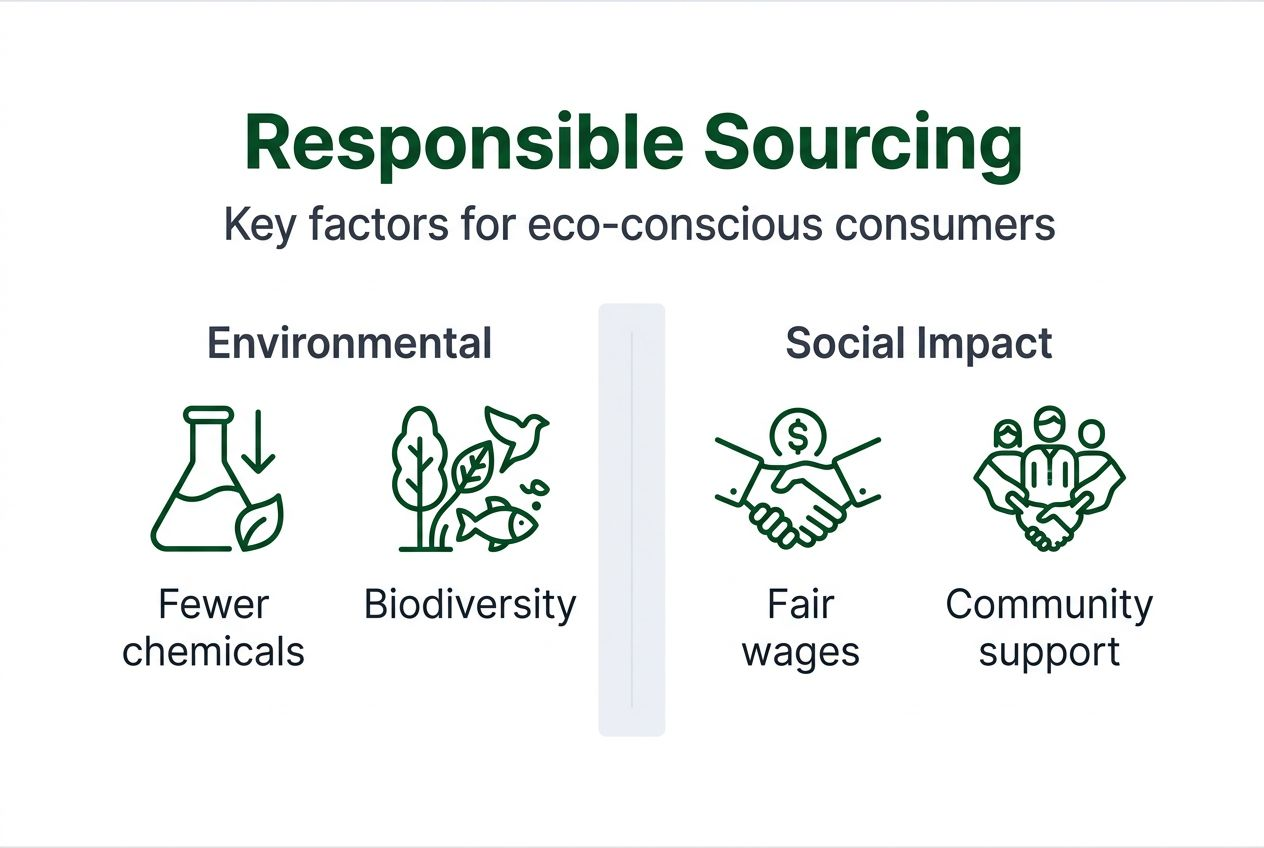
Responsible sourcing represents a holistic approach to procurement that considers environmental, social, and economic impacts throughout the supply chain. The global coffee supply chain is undergoing significant sustainability transformations, driven by consumer demand for ethical products. Unlike simple certification stamps, responsible sourcing requires comprehensive strategies that address climate resilience, fair labor conditions, and community development.
Many consumers believe a Fair Trade label guarantees ethical production, but the reality involves far more complexity. True responsible sourcing examines how farming practices affect biodiversity, whether workers receive living wages, and if communities gain long term benefits from trade relationships. It requires ongoing verification and adaptation as conditions change.
When you support responsible sourcing coffee tea, you participate in systems that prioritize:
- Environmental stewardship through regenerative farming and reduced chemical use
- Social justice ensuring fair compensation and safe working conditions
- Economic viability supporting farmer livelihoods and community infrastructure
- Supply chain transparency enabling verification of claims
The stakes are high because coffee and tea production impacts millions of smallholder farmers globally. Ethical coffee sourcing practices determine whether these communities thrive or struggle. Climate change, price volatility, and exploitative labor practices threaten the future of these crops. Responsible sourcing builds resilience against these challenges while delivering higher quality products to consumers.
Certifications and their role in responsible sourcing
Certifications like Fair Trade and Organic are a starting point, not the finish line. Understanding major certification programs helps you evaluate products more critically and recognize their limitations.
Fair Trade guarantees minimum prices to protect farmers from market crashes and provides premiums for community projects. Producers must meet labor and environmental standards. However, premiums may not always reach individual workers, and the system works best for cooperatives rather than independent farms.
Rainforest Alliance emphasizes environmental protection and climate adaptation. Rainforest Alliance Certification Program supports better farmer livelihoods through training in sustainable agriculture, water conservation, and biodiversity protection. This certification addresses ecosystem health alongside social factors.
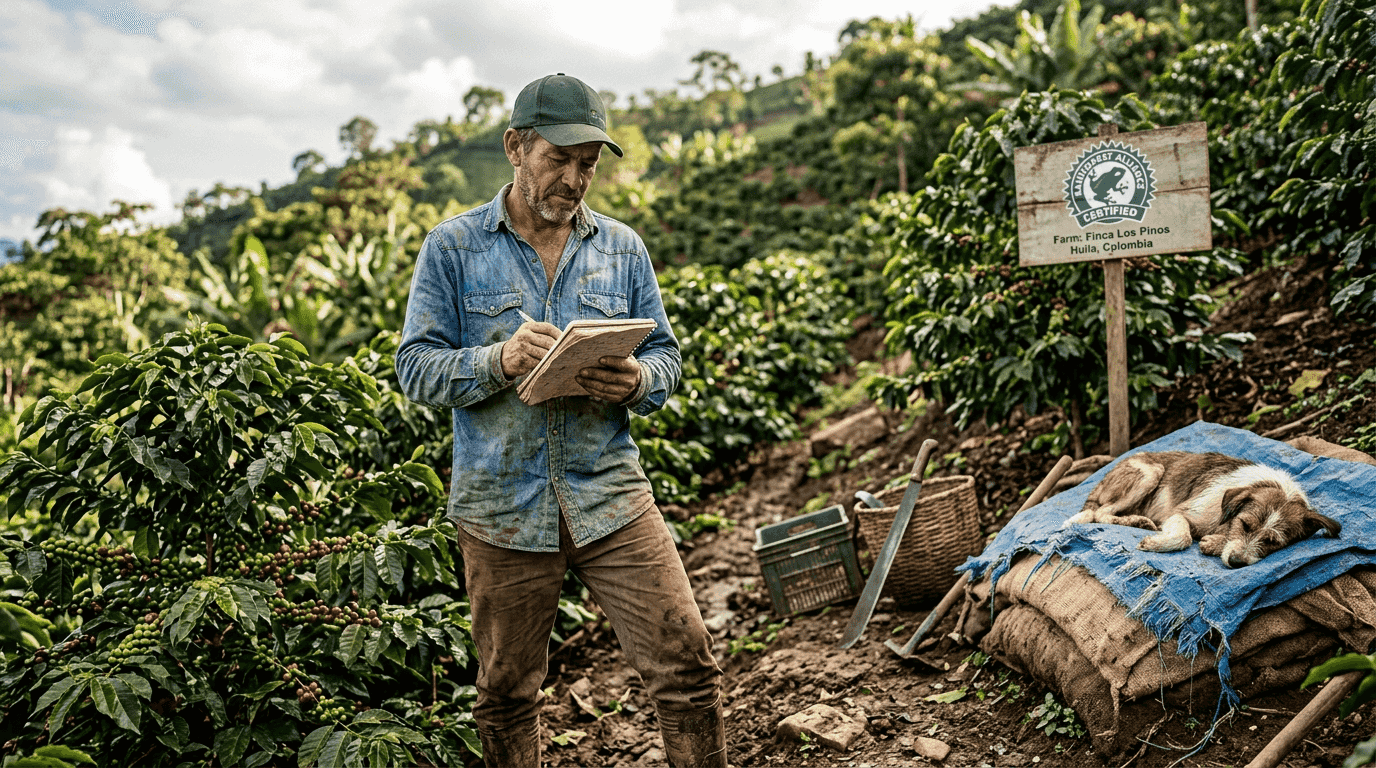
Organic prohibits synthetic pesticides and fertilizers, protecting soil health and water quality. Organic farms promote biodiversity and reduce chemical exposure for workers. The certification process is rigorous but focuses primarily on environmental factors rather than social equity.
Regenerative Agriculture goes beyond sustainability to actively restore ecosystems. These practices rebuild soil carbon, enhance water retention, and increase biodiversity. While not yet widely certified, regenerative methods represent the future of responsible farming.
| Certification | Primary Focus | Key Benefit | Limitation |
|---|---|---|---|
| Fair Trade | Social equity | Minimum prices and community premiums | May not reach all workers equally |
| Rainforest Alliance | Environmental protection | Biodiversity and climate resilience | Complex multi-stakeholder requirements |
| Organic | Chemical-free farming | Soil and ecosystem health | Limited social criteria |
| Regenerative | Ecosystem restoration | Carbon sequestration and resilience | Lacks standardized certification |
Understanding types of coffee certifications empowers you to look beyond labels. Tea certification guide programs follow similar patterns with variations specific to tea production.
Pro Tip: Check if brands combine multiple certifications or implement additional sourcing standards beyond basic requirements. Layered approaches indicate deeper commitment to responsible practices.
Beyond certifications: relationship-based and transparent sourcing practices
Ethical sourcing moves beyond certifications to relationship-based practices, ensuring future industry sustainability. Direct trade relationships and transparency systems overcome certification limitations.
Direct relationships between roasters and farmers create accountability that third party certifications cannot match. These partnerships enable:
- Fair pricing negotiations reflecting actual production costs and quality premiums
- Technical support helping farmers adopt sustainable practices and improve yields
- Long term contracts providing financial stability for farm investments
- Quality feedback loops improving production and cupping scores
- Community investment in infrastructure, education, and healthcare
Transparency transforms supply chains from opaque networks to traceable systems. Ethical coffee sourcing depends on traceability linking shipments to specific farms and producer groups. Modern technology enables lot tracking from harvest through roasting, creating verifiable chains of custody.
Transparent sourcing requires:
- Clear pricing disclosure showing what farmers actually receive
- Farm visit documentation with photos and producer stories
- Third party verification of social and environmental claims
- Grievance mechanisms allowing workers to report issues safely
- Public reporting on sustainability metrics and impact
Buyers implementing relationship-based sourcing establish minimum standards tailored to their values and verify supplier compliance through direct engagement. This approach addresses gaps certification programs miss, such as water management, local labor laws, and community relationships.
“True ethical sourcing happens when buyers and producers collaborate as partners, sharing risks and rewards while building supply chain resilience together.”
Pro Tip: Look for brands that publish origin stories with specific farm names and locations. Vague references to regions rather than identified producers often signal less direct relationships.
When you choose sustainably sourced coffee, you support systems that prioritize these deeper relationships over superficial compliance.
Practical steps for consumers to support responsible sourcing
You wield significant power through purchasing decisions. Buyers should treat missing data as a risk and require evidence before purchasing again. Here’s how to identify and support genuinely responsible products.
Research before purchasing:
- Check product packaging for traceability information like farm names or cooperative details
- Visit brand websites to review their sourcing policies and supplier relationships
- Look for transparency reports detailing environmental and social impact metrics
- Search for third party assessments or news coverage of sourcing practices
Ask critical questions:
- Does this brand maintain direct relationships with producers or rely solely on certifications?
- Can the company trace products back to specific farms or processing facilities?
- What pricing model ensures farmers receive fair compensation?
- How does the brand verify labor conditions and environmental claims?
- What community investments or farmer support programs does the company fund?
Support accountability:
- Choose brands that publish detailed origin information and farmer payments
- Prioritize products with multiple verification methods beyond single certifications
- Contact companies to request sourcing details if information is unclear
- Share feedback about transparency expectations with your favorite brands
- Recommend responsible brands to friends and family
Maximize your impact:
- Buy in appropriate quantities to reduce waste and transportation emissions
- Properly store coffee and tea to maintain freshness and avoid spoilage
- Compost grounds and leaves to return nutrients to soil
- Choose products with minimal or recyclable packaging when possible
- Support brands that offset environmental impacts through verified programs
When you choose responsible coffee beans, you send market signals that influence industry practices. Collective consumer demand for transparency and ethical practices drives suppliers to improve standards.
Remember that perfect doesn’t exist in global supply chains. Progress happens incrementally as brands improve practices and consumers reward transparency. Your informed choices accelerate this positive change.
Explore our responsibly sourced coffee and tea collection
Now that you understand what responsible sourcing truly means, putting your knowledge into action becomes straightforward. EcoVibe Roast curates products that meet rigorous standards for environmental stewardship and social impact, eliminating the guesswork from ethical purchasing.

Our organic sustainable tea collection features varieties sourced from farms implementing regenerative practices and fair labor standards. Each product includes detailed origin information so you know exactly where your tea comes from and how it impacts farming communities. Whether you prefer convenience or traditional brewing, our single serve coffee pods 60 pack delivers quality and sustainability in every cup.
Every purchase plants mangrove trees and removes ocean-bound plastic, multiplying your positive environmental impact. Join our community of conscious consumers who prove that exceptional quality and ethical sourcing go hand in hand.
FAQ
What is the difference between responsible sourcing and sustainable sourcing?
Responsible sourcing encompasses environmental sustainability plus social equity and economic viability throughout supply chains. Sustainable sourcing primarily emphasizes environmental impacts like carbon emissions, water use, and chemical inputs. While the terms overlap significantly, responsible sourcing explicitly includes fair labor practices, community development, and economic justice as core components rather than secondary considerations.
How do certifications like Fair Trade help farmers?
Fair Trade promotes fair prices, premiums, and sustainable farming through guaranteed minimum prices and community development funds. Farmers receive premiums for investing in cooperative infrastructure, education, and healthcare. However, benefits distribution varies, and hired workers may not receive the same advantages as cooperative members. Certifications establish baseline standards but don’t guarantee optimal outcomes for all participants.
How can I verify if my coffee or tea is truly ethically sourced?
Traceability and transparency are crucial for accountability in ethical sourcing. Look for specific farm names, cooperative details, or processing facility information on packaging and websites. Research whether brands publish transparency reports, farm visit documentation, or third party audit results. Contact companies directly to request evidence of fair pricing, labor conditions, and environmental practices. Brands committed to transparency in tea sourcing willingly share detailed information.
Why are direct trade relationships better than certifications alone?
Direct relationships enable customized standards addressing specific local contexts that standardized certifications miss. Buyers can verify practices through farm visits, implement higher payment rates, and provide technical support improving quality and sustainability. Long term partnerships create financial stability allowing farmers to invest in better practices. Direct trade also builds personal accountability between buyers and producers that third party certifications cannot replicate.
Can small purchasing decisions really impact global supply chains?
Collective consumer choices absolutely influence industry practices and priorities. When enough consumers demand transparency and ethical sourcing, brands respond to maintain market share. Your purchases signal what matters, encouraging companies to invest in better practices. Small decisions aggregate into market trends that reshape entire industries. Supporting responsible brands demonstrates profitable business models, inspiring competitors to improve their standards.
Recommended
- Why support responsible sourcing for coffee and tea – EcoVibe Roast
- Conscious Coffee Drinkers: Eco Impact and Ethics – EcoVibe Roast
- Transparency in tea sourcing empowers eco-conscious buyers – EcoVibe Roast
- Master the Sustainable Coffee Sourcing Workflow Easily – EcoVibe Roast
- Natural Lip Oils: Eco-Friendly Lip Health Benefits – Luméra Cosmetica


