

Every year, over 2.25 billion cups of coffee are consumed worldwide, yet many eco-conscious millennials and Gen Z shoppers question where that coffee truly comes from. American consumers are increasingly demanding transparency and accountability across the entire value chain. Sustainable coffee sourcing goes far beyond just organic labels—it is about shaping impactful criteria, supporting responsible suppliers, and protecting people and planet at every stage. Discover how you can align your daily ritual with real ecological progress and push for ethical change in the global coffee industry.
Table of Contents
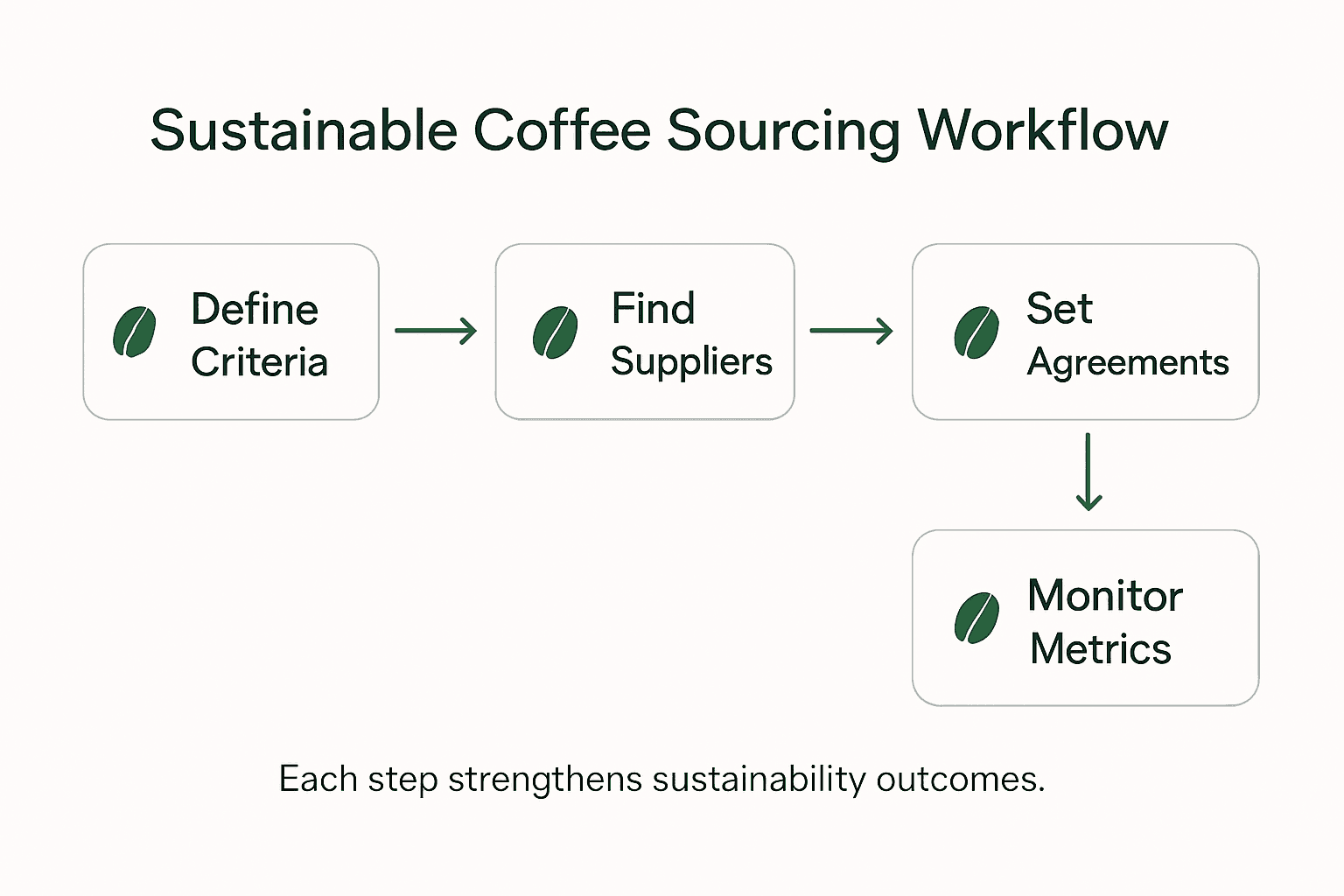
- Step 1: Define Sustainable Coffee Sourcing Criteria
- Step 2: Identify and Evaluate Responsible Suppliers
- Step 3: Establish Transparent Sourcing Agreements
- Step 4: Monitor Supply Chain Sustainability Metrics
- Step 5: Verify Sourcing Practices and Ecological Impact
Quick Summary
| Key Insight | Explanation |
|---|---|
| 1. Define Sustainable Sourcing Criteria | Establish clear standards that ensure ethical coffee selection, focusing on environmental, social, and economic dimensions. |
| 2. Evaluate Responsible Suppliers | Build a network of suppliers committed to sustainability, using a weighted scoring system to assess their practices. |
| 3. Establish Transparent Agreements | Create fair contracts that ensure mutual accountability and include provisions for continuous improvement on sustainability. |
| 4. Monitor Sustainability Metrics | Develop a tracking system to measure your sourcing impact consistently, focusing on key indicators related to environmental and social performance. |
| 5. Verify Sourcing Practices | Implement rigorous verification processes to ensure compliance with sustainability standards, including third-party audits and inspections. |
Step 1: Define sustainable coffee sourcing criteria
Defining sustainable coffee sourcing criteria helps you create an ethical framework for selecting coffee that supports both environmental and social responsibility. Your goal is to establish clear, measurable standards that ensure positive impacts throughout the coffee production ecosystem.
To create comprehensive sustainable sourcing criteria, focus on three critical dimensions: environmental stewardship, social welfare, and economic viability. The Coffee Sustainability Reference Code provides an excellent global framework for understanding these requirements. Start by evaluating each potential coffee source against key principles such as:
- Elimination of child and forced labor practices
- Prevention of deforestation and habitat destruction
- Prohibition of harmful chemical pesticides
- Protection of worker rights and fair compensation
- Promotion of biodiversity and ecosystem health
- Commitment to continuous improvement in sustainable practices
These criteria transform coffee sourcing from a transactional process into a meaningful opportunity for positive global impact. By carefully assessing each component of your sourcing workflow, you create a robust system that supports coffee farmers, protects natural resources, and delivers high-quality beans.
Pro tip: Consider creating a detailed scorecard or evaluation matrix that weights different sustainability criteria, allowing you to systematically compare and select coffee sources that align with your environmental and social values.
Step 2: Identify and evaluate responsible suppliers
Identifying and evaluating responsible coffee suppliers requires a strategic approach that goes beyond simple price comparisons. Your goal is to build a robust network of suppliers who demonstrate genuine commitment to sustainable and ethical coffee production.
Responsible supplier assessment involves comprehensive analysis across multiple dimensions. Start by developing a detailed evaluation framework that examines key criteria:
- Transparency in farming and business practices
- Fair pricing and living income support for farmers
- Environmental sustainability techniques
- Social responsibility and worker welfare programs
- Climate resilience and adaptation strategies
- Documented commitment to continuous improvement
Think of this process as building a partnership rather than just selecting a vendor. Each supplier should demonstrate measurable positive impacts on local communities and ecosystems. Requesting detailed documentation such as sustainability reports, third party certifications, and impact metrics will help you make informed decisions that align with your ethical sourcing standards.
Pro tip: Create a weighted scoring system that assigns different point values to sustainability criteria, allowing you to objectively compare potential suppliers and track their performance over time.
Step 3: Establish transparent sourcing agreements
Establishing transparent sourcing agreements transforms coffee procurement from a simple transaction into a collaborative partnership that supports sustainable development. Your goal is to create comprehensive contracts that protect both your business interests and the well-being of coffee producers.
Transparent sourcing agreements are critical for building trust and ensuring mutual accountability across the coffee supply chain. Your agreement should comprehensively address several key components:
- Clear pricing mechanisms that guarantee fair compensation
- Specific quality and sustainability performance standards
- Defined contract duration and renewal terms
- Commitments to farmer capacity building and skills development
- Mechanisms for ongoing performance monitoring and feedback
- Explicit environmental and social responsibility requirements
Think of these agreements as living documents that evolve with your relationship. By establishing clear expectations and shared goals, you create a framework that supports continuous improvement and sustainable practices. Detailed documentation helps both parties understand their responsibilities and demonstrates your genuine commitment to ethical sourcing.

Pro tip: Include flexible review periods in your sourcing agreements that allow for periodic reassessment of sustainability metrics and collaborative strategy adjustments.
Step 4: Monitor supply chain sustainability metrics
Monitoring supply chain sustainability metrics transforms your coffee sourcing from a passive process into an active strategy for positive global impact. Your goal is to develop a comprehensive tracking system that provides actionable insights into your environmental and social performance.
Comprehensive sustainability metrics are essential for understanding your true impact across the coffee supply chain. Focus on tracking key indicators that reveal the depth of your sustainable sourcing efforts:
- Greenhouse gas emissions reduction
- Volumes of certified sustainable coffee purchased
- Farmer income improvements
- Labor condition assessments
- Deforestation prevention metrics
- Carbon footprint tracking
- Social impact measurements
Think of these metrics as your sustainability dashboard. Regular monitoring allows you to identify improvement opportunities, celebrate progress, and demonstrate your commitment to ethical sourcing. By collecting and analyzing data consistently, you create a transparent narrative of your environmental and social responsibility that goes beyond simple compliance.
Pro tip: Implement a digital tracking system that automates metric collection and generates quarterly sustainability reports, making it easier to visualize your progress and communicate your impact to stakeholders.
Step 5: Verify sourcing practices and ecological impact
Verifying sourcing practices and ecological impact transforms your sustainability commitment from a promise to a proven reality. Your goal is to develop a rigorous verification process that independently confirms your suppliers meet the highest environmental and social standards.
Coffee sustainability verification requires a comprehensive approach that goes beyond surface level assessments. Key verification elements should include:
- Independent third party audits
- On site inspections of farming practices
- Assessment of labor rights and worker conditions
- Detailed documentation of ecological preservation efforts
- Measurement of greenhouse gas emissions
- Validation of biodiversity protection strategies
- Transparent reporting of sustainability performance
Think of verification as a collaborative process that empowers local communities and protects ecosystem health. By implementing robust verification mechanisms, you create accountability that drives meaningful change. Your commitment becomes visible through concrete evidence of environmental stewardship and social responsibility.
This table contrasts the roles of supplier evaluation and verification in sustainable coffee sourcing:
| Process | Purpose | Typical Methods |
|---|---|---|
| Supplier Evaluation | Screen for commitment to standards | Reviews, reports, interviews |
| Verification | Confirm adherence and impact | Audits, site inspections, third-party validation |
Pro tip: Develop a standardized verification checklist that includes both quantitative metrics and qualitative assessments to capture the full complexity of sustainable coffee sourcing.
Here’s a summary of how each step supports ethical and sustainable coffee sourcing:
| Step | Main Focus | Key Outcome |
|---|---|---|
| Define Criteria | Set clear sustainability standards | Guides ethical sourcing decisions |
| Evaluate Suppliers | Assess supplier responsibility | Builds a strong, reliable network |
| Sourcing Agreements | Establish fair contracts | Ensures mutual accountability |
| Monitor Metrics | Track impact through data | Drives continuous improvement |
| Verify Practices | Independent confirmation | Proves real-world sustainability |
Take Control of Sustainable Coffee Sourcing with EcoVibe Roast
Navigating the complex journey of ethical coffee sourcing means balancing environmental stewardship, social responsibility, and fair economic practices. This article highlights challenges like defining clear sustainability criteria, evaluating suppliers, and monitoring impact—all crucial steps to ensure your coffee supports positive global change. At EcoVibe Roast, we understand the pain points of establishing transparent sourcing agreements and verifying real-world ecological impact. That is why we offer a carefully curated selection of coffee products that meet rigorous sustainability standards and promote responsible farming practices.

Discover how choosing EcoVibe Roast not only delivers high-quality coffee but also advances your commitment to sustainability. By shopping with us, you join a community dedicated to environmental activism through actions like planting mangrove trees and removing ocean-bound plastics. Ready to experience coffee that aligns with your values? Visit our main website and explore our range of sustainably sourced coffees and teas today. Learn more about our mission and products on the EcoVibe Roast homepage and start making a meaningful impact with every cup.
Frequently Asked Questions
What are the essential criteria for sustainable coffee sourcing?
Establish environmental stewardship, social welfare, and economic viability as your core criteria. Define measurable standards such as the elimination of child labor, prevention of deforestation, and protection of worker rights to guide your sourcing decisions.
How can I identify responsible coffee suppliers?
Evaluate potential suppliers based on transparency, fair pricing, and their commitment to sustainability. Develop a framework that assigns scores to each criterion to systematically compare suppliers and select those who align with your ethical values.
What should be included in sourcing agreements for sustainable coffee?
Create agreements that detail pricing mechanisms, quality standards, and environmental responsibilities. Ensure these contracts evolve with your partnership to foster continuous improvement and mutual accountability.
How can I monitor sustainability metrics effectively?
Implement a comprehensive tracking system to gather data on key indicators like greenhouse gas emissions and farmer income. Regularly review this data—ideally quarterly—to assess your progress and identify areas for improvement.
What verification processes should I use for coffee sourcing practices?
Conduct independent third-party audits and on-site inspections to ensure suppliers meet your sustainability standards. Develop a verification checklist that includes both quantitative metrics and qualitative assessments to capture a complete picture of compliance.
Recommended
- Sustainable Coffee Guide: Practical Tips for Ethical Sourcing & Enjoyment – EcoVibe Roast
- Five Eco Friendly Coffee Hacks for a Greener Cup Guide – EcoVibe Roast
- Transform Your Morning Routine: The Eco-Friendly Coffee Showdown – EcoVibe Roast
- How Coffee Is Grown: A Complete Guide for Beginners – EcoVibe Roast


