

Most tea companies keep their supply chains hidden. In 2021, only 17 out of 65 leading tea brands publicly disclosed where their tea came from or how workers were treated. That leaves millions of eco-conscious consumers guessing whether their daily cup supports ethical practices or exploits vulnerable farmers. This guide clarifies how transparency works in tea sourcing and shows you how to choose genuinely sustainable tea products.
Table of Contents
- Understanding Transparency In Tea Sourcing
- How Transparency Drives Sustainable And Ethical Tea Production
- Technologies And Certifications Enhancing Transparency In Tea Sourcing
- Common Misconceptions About Transparency In Tea Sourcing
- How Eco-Conscious Consumers Can Identify Transparently Sourced Tea
- Benefits Of Supporting Transparent Tea Sourcing For Consumers And The Planet
- Explore Sustainable Choices With EcoVibe Roast
- Frequently Asked Questions
Key takeaways
| Point | Details |
|---|---|
| Transparency verifies sustainability | Clear supply chain disclosure lets you confirm ethical sourcing claims beyond marketing. |
| Technology improves traceability | Blockchain and certifications enhance visibility but don’t guarantee complete transparency. |
| Social impact matters equally | Transparency protects 13 million workers and addresses labor rights, not just environmental issues. |
| Consumer action drives change | Supporting transparent brands pushes the industry toward accountability and ethical standards. |
| Multiple indicators build trust | Combine certifications, disclosures, and technology checks to evaluate tea brands accurately. |
Understanding transparency in tea sourcing
Transparency in tea sourcing means companies clearly disclose where tea originates, who grows it, and how it moves through the supply chain. You should be able to trace your tea from farm to cup without guessing. Despite growing consumer interest in ethical products, most tea companies remain opaque about their sourcing practices.
Global tea production employs 13 million workers, with 9 million smallholder farmers producing 60% of the world’s tea. These farmers often work in vulnerable conditions with limited bargaining power. Transparency protects their livelihoods by exposing unfair practices and enabling consumer pressure for change. Without visibility into the global tea supply chain, you cannot know whether your purchase supports exploitation or sustainability.
Current disclosure levels fall short of what eco-conscious consumers need:
- Only 26% of leading tea companies shared supply chain details in 2021
- Many brands provide vague origin claims without verification
- Smallholder farmers lack direct access to transparent marketplaces
- Limited public data makes comparing brands difficult
This information gap undermines trust and prevents meaningful progress toward sustainable tea production. Understanding these challenges helps you recognize genuine transparency when evaluating sustainability trends impacting ethical sourcing. The tea industry must improve disclosure standards to meet rising consumer expectations for accountability.
How transparency drives sustainable and ethical tea production
Visible supply chains expose labor abuses and environmental harms that hidden systems allow to persist. When companies publicly share sourcing details, they face pressure to maintain ethical standards. Transparency reduces forced labor, wage violations, and gender-based violence by making exploitation harder to hide from consumers and regulators.
Smallholder farmers gain critical support through transparent sourcing:
- Direct market access improves income stability and bargaining power
- Visible supply chains enable fair pricing and reduce exploitation by intermediaries
- Transparency connects farmers to buyers who value ethical practices
- Open monitoring helps farmers access training and resources for sustainable methods
Environmental sustainability improves dramatically when farming practices face public scrutiny. You can verify whether brands use pesticide-free methods, protect biodiversity, or reduce water waste. Certified transparent brands integrate social responsibility with environmental goals, supporting community welfare alongside ecological protection. This comprehensive approach delivers greater impact than focusing on environmental practices alone.

Pro Tip: Look for brands that publish detailed sustainability reports showing outcomes for both workers and ecosystems, not just general commitments to ethical sourcing.
Your purchasing decisions directly influence these outcomes. Supporting transparent tea brands rewards companies that invest in ethical practices and pressures others to improve. This creates positive feedback loops that benefit millions of workers and protect vulnerable ecosystems. The connection between your choice and its impact becomes clear when supply chains operate openly, empowering you to make purchases aligned with your values. Discover more about benefits of eco-friendly tea that transparency enables.
Technologies and certifications enhancing transparency in tea sourcing
Multiple systems exist to improve supply chain visibility, each with distinct strengths and limitations. Understanding these tools helps you evaluate transparency claims accurately.
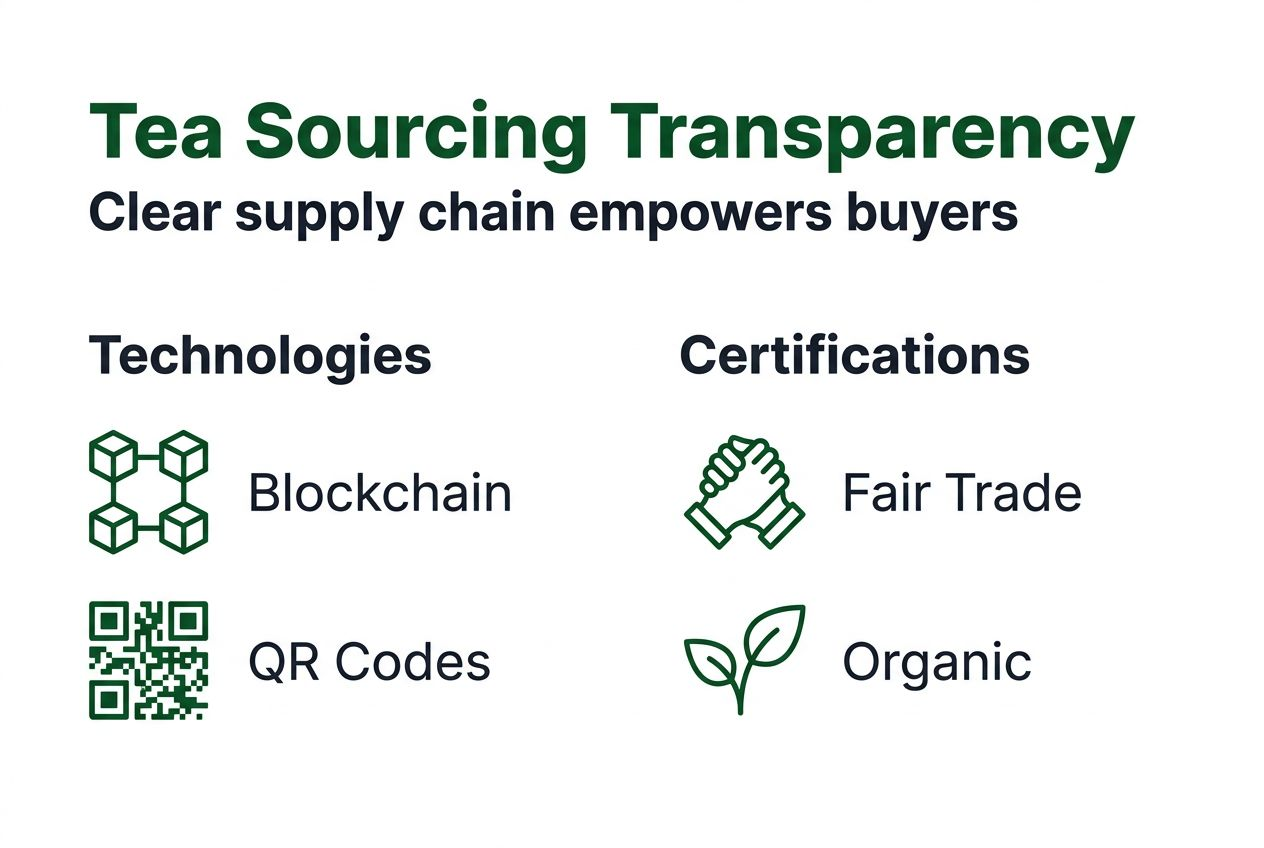
Blockchain technology enhances tea supply chain transparency by creating immutable records of origin and sustainability data. Every transaction from farm to retailer gets recorded on a shared ledger you can verify. This technology empowers your decision making by providing real-time access to provenance information. However, blockchain requires widespread adoption and integration with existing systems to deliver its full potential.
| Method | Strengths | Limitations |
|---|---|---|
| Blockchain | Immutable records, real-time data, consumer access | Requires industry adoption, needs infrastructure investment |
| Third-party certifications | Independent verification, established standards | May not cover full supply chain, varies by certifier |
| Company disclosures | Direct information, detailed when comprehensive | Depends on corporate commitment, self-reported |
Third-party certifications like Rainforest Alliance and Ethical Tea Partnership verify that farms meet specific sustainability standards. These certifications provide independent validation beyond company claims. Yet certifications alone do not guarantee complete transparency because they often focus on specific practices rather than full supply chain visibility.
Company disclosures vary widely in depth and usefulness:
- Some brands publish detailed sourcing maps and farm-level data
- Others provide only regional origin information without specifics
- Comprehensive reports include social impact metrics and worker testimonies
- Minimal disclosures may list general commitments without evidence
Pro Tip: Check whether certifications cover all sourcing regions or only selected farms, as partial certification can obscure problematic practices elsewhere in the supply chain.
Combining multiple indicators gives you the clearest picture. A brand using blockchain alongside credible certifications and detailed public disclosures demonstrates stronger commitment than one relying on a single tool. Understanding the impact of certifications on sustainability helps you weigh these factors when choosing tea products. Technology and certifications work best when integrated with genuine corporate accountability and transparency culture.
Common misconceptions about transparency in tea sourcing
Several widespread misunderstandings prevent consumers from accurately assessing transparency claims. Clearing up these misconceptions helps you make better informed decisions.
Certification labels do not automatically mean full supply chain transparency. A certified product may meet specific environmental or labor standards without revealing its complete sourcing journey. Many certifications verify practices at farm level but do not track tea through processing and distribution. You need additional information beyond labels to confirm genuine transparency.
Transparency encompasses much more than environmental sustainability:
- Labor rights protections including fair wages and safe conditions
- Gender equality and prevention of violence against workers
- Community impacts and economic development
- Worker voice and participation in decision making
Focusing only on environmental aspects ignores critical social dimensions that affect millions of tea workers. Genuine transparency addresses both ecological and human welfare comprehensively.
Blockchain and similar technologies are not too complex or irrelevant for tea sourcing. These tools increasingly provide practical solutions for traceability that benefit both companies and consumers. Simple smartphone apps can now let you scan product codes to access full supply chain histories. The technology continues becoming more accessible and user friendly.
Transparency requires ongoing commitment beyond initial certifications or technology adoption. Companies must continuously update information, respond to audits, and address problems as they arise. A brand that obtained certification years ago without recent updates may have declining standards. Look for regular reporting and current data rather than assuming past credentials guarantee present transparency.
You should critically evaluate all claims instead of accepting marketing at face value. Learn more about understanding certifications and transparency to develop informed skepticism. Companies genuinely committed to transparency welcome scrutiny and provide evidence to back their claims.
How eco-conscious consumers can identify transparently sourced tea
Applying practical criteria helps you confidently select tea brands with genuine transparency. Follow these steps to evaluate products effectively.
- Visit brand websites and look for detailed origin information including specific farms, regions, or cooperatives where tea comes from. Vague claims about “ethically sourced” without specifics indicate limited transparency.
- Verify third-party certifications by checking certifier websites to confirm current status and scope of coverage. Look for certifications that align with your priorities whether environmental, labor focused, or comprehensive.
- Search for published sustainability or impact reports showing measurable outcomes such as worker wage data, environmental metrics, or community development results. Annual reporting demonstrates ongoing commitment.
- Check whether brands use blockchain or similar traceability technologies that let you independently verify supply chain information through apps or QR codes on packaging.
- Compare multiple sources including brand disclosures, certification details, and independent reviews to confirm consistency across claims. Inconsistencies suggest incomplete or selective transparency.
- Contact companies directly with specific questions about sourcing practices and evaluate response quality and willingness to provide detailed information.
Pro Tip: Brands with nothing to hide typically respond quickly and thoroughly to transparency questions, while evasive or generic responses signal potential problems.
Consumers consider transparency extremely important, with 72% indicating it significantly influences purchasing decisions. Your standards matter because they shape industry practices. Supporting truly transparent brands encourages others to improve disclosure and accountability. Learn how to support eco-friendly coffee and tea while reducing your carbon footprint.
Building your evaluation skills takes practice but becomes easier as you learn what genuine transparency looks like. Start by comparing a few brands using these criteria to develop your judgment. Over time, you will quickly recognize red flags and identify companies genuinely committed to ethical sourcing.
Benefits of supporting transparent tea sourcing for consumers and the planet
Prioritizing transparency in your tea purchases creates multiple positive impacts across social, environmental, and economic dimensions. These benefits extend far beyond individual satisfaction.
You gain increased confidence making sustainable purchases when supply chain information is readily available. Transparency eliminates guesswork and lets you align spending with your values. This empowerment strengthens your role as a conscious consumer driving market change.
Smallholder farmers and tea workers experience improved conditions:
- Fair wages and safer working environments become enforceable
- Direct market access increases income stability
- Training and resources for sustainable practices become available
- Community development initiatives receive funding and support
Environmental benefits multiply as transparent practices promote responsible stewardship. You can verify reduced pesticide use, water conservation, biodiversity protection, and climate adaptation strategies. These ecological gains protect ecosystems while maintaining productive farmland for future generations.
Premium tea brands adopting transparent practices gain competitive advantage by meeting rising consumer demand for responsibly sourced, eco-friendly products.
Transparent sourcing pushes the entire tea industry toward greater accountability and ethical standards. As more consumers demand visibility, companies must improve practices or risk losing market share. This competitive pressure accelerates positive change across the sector. Your individual choices contribute to this collective momentum.
Supporting transparency creates sustainable cycles benefiting everyone involved in tea production and consumption. Workers gain better livelihoods, environments recover from exploitation, companies build genuine trust, and you enjoy quality tea knowing its true impact. These interconnected benefits make transparency essential for meaningful progress toward sustainability. Explore more benefits of eco-friendly tea and learn about consumer trust in transparent products to understand the broader implications.
Explore sustainable choices with EcoVibe Roast
Ready to put transparency into practice? EcoVibe Roast offers sustainably sourced tea and coffee with clear supply chain information you can trust. We prioritize ethical sourcing and environmental stewardship in every product.

Discover detailed insights on eco-friendly tea benefits and learn why supporting eco-friendly coffee and tea in 2026 makes a real difference. Our commitment includes planting mangrove trees and removing ocean-bound plastics with every purchase, connecting your beverage choices to measurable environmental impact. Visit EcoVibe Roast to explore our full range of transparently sourced products and join a community of conscious consumers making informed decisions for a sustainable future.
Frequently asked questions
What is transparency in tea sourcing?
Transparency means companies openly share where tea originates, who produces it, and how it moves through the supply chain from farm to your cup. This includes disclosing farming practices, labor conditions, and environmental impacts.
How does transparency differ from certification?
Certification verifies that specific standards are met through third-party audits, while transparency reveals the full supply chain journey including information beyond certification scope. A product can be certified without full transparency or transparent without formal certification.
Why should consumers care about tea sourcing transparency?
Transparency lets you verify that your purchases support ethical labor practices, environmental sustainability, and fair treatment of the 13 million workers in tea production. It empowers informed decisions aligned with your values and drives industry accountability.
Can I trust blockchain traceability in tea products?
Blockchain provides immutable records difficult to falsify, making it reliable for traceability when properly implemented. However, verify that the technology covers the complete supply chain and that companies regularly update data to ensure accuracy.
What certifications indicate transparent tea sourcing?
Rainforest Alliance, Ethical Tea Partnership, Fair Trade, and organic certifications suggest stronger transparency practices. Check certifier websites to understand what each certification covers and confirm current validity for specific products.
How can I support transparency if budget limits premium tea purchases?
Start by supporting transparent brands when possible, share information about transparency with others to increase awareness, and contact your preferred brands requesting better supply chain disclosure. Collective consumer pressure drives industry change regardless of individual purchase frequency.


