

Grabbing your morning coffee is more than a daily ritual—it’s a chance to support real change. Certifications offer proof that your brew was grown with care for people and planet, verified by independent organizations and rooted in traceability. For eco-conscious buyers, understanding the core promise behind certifications sets you apart from casual coffee shoppers. This guide clarifies how different certification seals shape environmental impact, ethical sourcing, and transparency in every cup.
Table of Contents
- What Coffee Certifications Really Mean
- Comparing Key Coffee Certification Types
- Standards, Verification, And Traceability Process
- How Certifications Influence Farmers And Quality
- Recognizing Greenwashing And Choosing Right
Key Takeaways
| Point | Details |
|---|---|
| Understand Certification Types | Coffee certifications vary in focus and criteria; it’s crucial to research what each one ensures regarding social, environmental, and economic impacts. |
| Identify Genuine Claims | Look for recognized certification seals and verify them through official websites to avoid greenwashing in coffee marketing. |
| Support Fair Practices | Choosing certified coffee not only impacts the quality of your brew but also supports ethical practices and sustainable livelihoods for farmers. |
| Check for Transparency | Transparency in sourcing and certification details from retailers can empower consumers to make purchases aligned with their values. |
What Coffee Certifications Really Mean
Coffee certifications aren’t just labels on fancy bags. They’re verification systems that prove your coffee was grown and processed responsibly. Certified coffees adhere to specific guidelines adopted by growers and verified by independent third-party organizations.
Think of certifications as accountability mechanisms. Farmers commit to certain practices, independent auditors inspect their work, and you get transparency about where your morning brew comes from.
The Core Promise Behind Certifications
Three pillars support every legitimate coffee certification:
- Economic viability for farmers and their communities
- Environmental conservation protecting soil, water, and biodiversity
- Social responsibility ensuring fair wages and safe working conditions
Certifications communicate that retailers invest in traceability throughout the supply chain. This means tracking coffee from specific farms, through processing, to your cup. But here’s what matters: understanding what each certification actually covers.
Certifications exist to bridge the gap between farmer needs and consumer values—but only when you understand what they measure.
Why Certifications Evolved
Coffee certifications started as responses to environmental and social movements in the 1980s and 1990s. Consumers wanted proof their purchases supported sustainable practices. Producers needed market differentiation. Certifiers stepped in to verify claims.
Today, certifications serve a dual purpose: they prove genuine commitment to sustainability while meeting growing consumer demand for transparency. When you see a certification seal, you’re looking at documented evidence that someone independent verified the claim.
The Transparency Challenge
Here’s the honest part: certifications can confuse consumers. Different programs measure different impacts. Some focus heavily on environmental practices, others on farmer welfare. Some certifications examine entire operations, others check specific processes.
Consumer understanding about what issues and processes are covered remains limited. You might see five different certifications on coffee bags without knowing their actual differences. Learning what different coffee certifications mean for conscious consumers helps cut through the noise.
What Makes a Certification Credible
Legitimate certifications share common features:
- Independent third-party auditors (not the seller verifying themselves)
- Published standards available for public review
- Regular inspections and re-certification requirements
- Traceability systems tracking coffee from farm to retailer
- Clear communication about what’s actually being certified
Certifications also maintain quality standards. Certified coffee must meet both sustainability criteria and flavor benchmarks. You’re not just buying ethics—you’re buying genuinely good coffee.
Why This Matters to You
Every certification you choose directly impacts farmer livelihoods and ecosystems. Your certified coffee purchase supports growers earning fair compensation, protecting forests from deforestation, and maintaining water quality in coffee-growing regions.
When you understand what certifications really mean, you make purchases aligned with your values. You move beyond marketing claims to actual, verified impact.
Pro tip: When shopping for certified coffee, check both the certification name and what that certification specifically requires—look for third-party audit documentation and transparent supply chain information on the retailer’s website.
Comparing Key Coffee Certification Types
Not all certifications measure the same things. Major coffee certification schemes differ significantly in governance, standards, and market coverage. Understanding these differences helps you choose coffee aligned with your specific values.
Each certification program addresses different sustainability priorities. Some emphasize farmer welfare above all else. Others prioritize environmental protection. Some balance both. This diversity explains why five certifications might appear on coffee bags at your local roaster.
The Big Players Explained
Fair Trade focuses on economic and social aspects. Farmers receive guaranteed minimum prices regardless of market fluctuations. Workers earn fair wages and have access to safe conditions. This certification puts farmer livelihoods front and center.
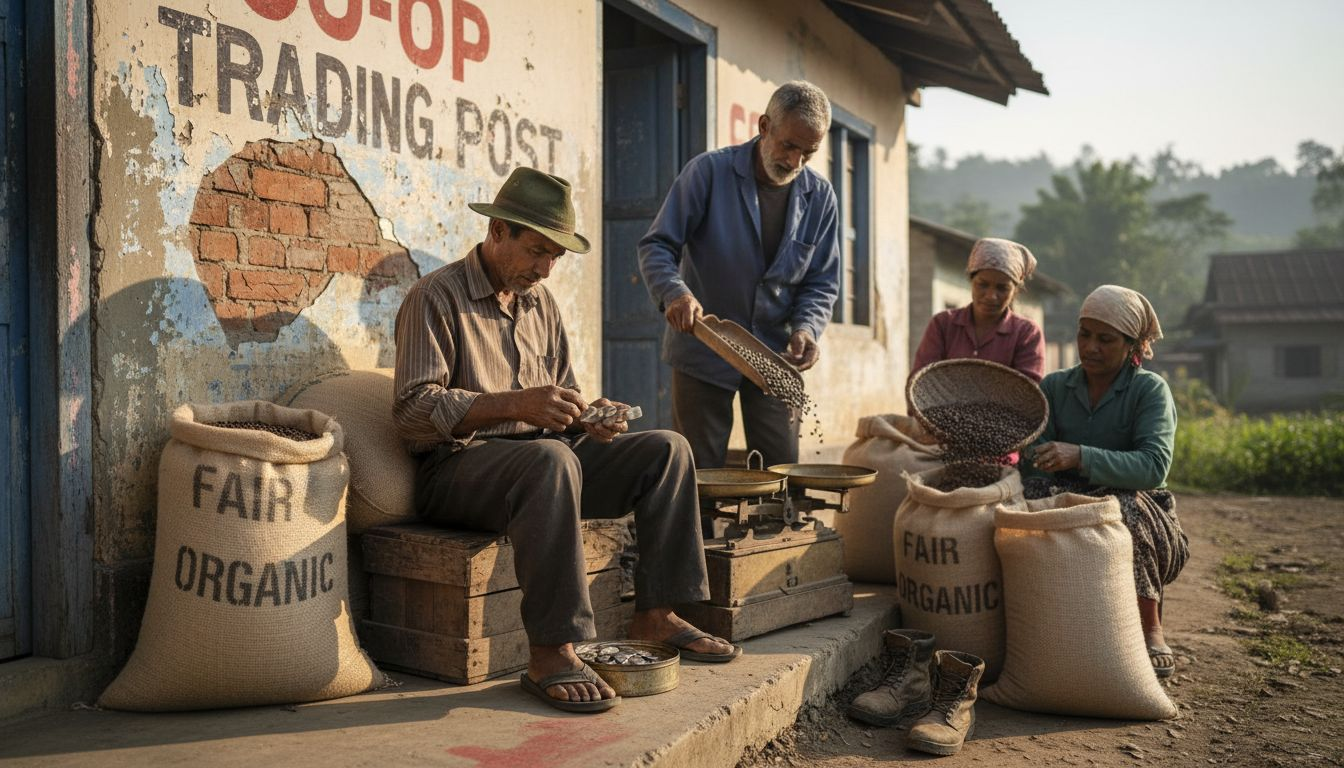
Organic prioritizes ecological standards. No synthetic pesticides, herbicides, or fertilizers. No GMO seeds. Soil health matters. Environmental protection drives every decision under Organic certification.
Rainforest Alliance addresses environmental and social criteria together. This certification protects forest ecosystems while ensuring worker welfare. It’s a middle-ground approach combining ecological conservation with community support.
Bird Friendly has the most rigorous ecological criteria. Shade-grown coffee preserves forest canopy, protecting migratory bird habitats. This certification appeals to birders and serious environmental advocates.
What Each Certification Actually Delivers
| Certification | Social Focus | Environmental Focus | Best For |
|---|---|---|---|
| Fair Trade | Very Strong | Moderate | Farmer income support |
| Organic | Moderate | Very Strong | Chemical-free farming |
| Rainforest Alliance | Strong | Strong | Balanced sustainability |
| Bird Friendly | Moderate | Very Strong | Ecosystem protection |
Here is a quick reference table of widely recognized coffee certification seals and their main governing organizations:
| Certification Seal | Governing Organization | Main Verification Method |
|---|---|---|
| Fair Trade | Fair Trade USA | Regular third-party audits |
| USDA Organic | USDA/National Organic Program | Annual inspections and documentation |
| Rainforest Alliance | Rainforest Alliance | Ongoing site visits and farm checks |
| Bird Friendly | Smithsonian Migratory Bird Center | Rigorous shade criteria & farm audits |
This helps you distinguish authentic certification marks when examining coffee packaging.
Your certification choice reflects your priority. Want to maximize farmer income? Choose Fair Trade. Concerned about pesticide runoff? Organic hits harder. Love birds and forests? Bird Friendly delivers maximum ecological benefit.
There’s no one-size-fits-all certification because sustainability has multiple dimensions—choose based on which impact matters most to you.
Real-World Impact Differences
Fair Trade farmers might operate on conventional farms but receive better prices. Organic farmers use sustainable methods but might still struggle financially. Rainforest Alliance farmers balance both goals. Bird Friendly farmers protect specific habitats through shade-grown practices.
These differences matter when choosing responsible coffee beans. Your purchase supports different outcomes depending on the certification you select.
To clarify how certification impacts farmers, here’s a summary comparing economic, environmental, and quality benefits:
| Certification Type | Economic Benefit | Environmental Impact | Coffee Quality Effect |
|---|---|---|---|
| Fair Trade | Premium prices, stable income | Limited ecological requirements | May use conventional methods |
| Organic | Premium prices for chemical-free crops | Strong conservation standards | Cleaner, often nuanced flavor |
| Rainforest Alliance | Improved market access | Balanced conservation and fair labor | Consistent quality, balanced profiles |
| Bird Friendly | Higher prices for shade-grown beans | Maximum biodiversity preservation | Complex taste from slower ripening |
This table illustrates how certification selections shape outcomes for both farmers and the coffee itself.
Stacking Certifications for Maximum Impact
Some coffee carries multiple certifications simultaneously. Fair Trade Organic coffee exists. Organic Rainforest Alliance exists. Double or triple certification means the producer meets multiple rigorous standards, delivering compounded social and environmental benefits.
Multi-certified coffee costs more because farmers invest extra resources meeting multiple requirements. But your purchase creates layered positive impact—supporting farmer welfare, protecting ecosystems, and maintaining biodiversity simultaneously.
Pro tip: Compare certification combinations on EcoVibe Roast bags to maximize your impact—double-certified coffee often delivers the most comprehensive sustainability outcomes for your investment.
Standards, Verification, and Traceability Process
Certifications only matter if they’re backed by real verification. Behind every legitimate coffee seal is a documented process proving farmers actually meet the standards claimed. Without this backbone, certifications become meaningless marketing.
The verification system works like a quality-control checkpoint. Certification bodies establish standards. Farmers commit to meeting them. Independent auditors inspect compliance. Records track coffee from farm to your cup. This creates accountability at every step.
How Standards Get Established
Each certification organization develops its own rulebook. Fair Trade drafts pricing and labor standards. Organic bodies set pesticide and fertilizer restrictions. Rainforest Alliance creates environmental impact requirements. These aren’t arbitrary—they reflect research on what actually drives sustainability.
Farmers receive detailed guidelines explaining what’s required. No guesswork. No assumptions. Everything gets spelled out in writing so producers understand exactly what certification demands.
The Verification Journey
Here’s how the process actually flows:
- Farmer applies for certification and pledges to follow guidelines
- Independent auditor conducts farm inspection
- Auditor reviews records, interviews workers, examines practices
- Results determine whether certification gets awarded or denied
- Regular re-inspections ensure ongoing compliance
Third-party auditors remain independent from both farmers and certification bodies. This neutrality prevents favoritism or corruption. A suspicious pattern or practice gets flagged, not overlooked.
Traceability: The Coffee’s Biography
Traceability systems track coffee from farm to consumer. Each batch gets documented with origin information, processing details, and certification proof. When you buy certified coffee, you can theoretically trace it back to the specific farm that grew it.
This transparency protects you and the producer. You verify the coffee truly comes from a certified source. Farmers prove their work meets standards. Buyers gain confidence in what they’re purchasing.
Real Challenges in Traceability
Traceability systems face genuine obstacles. Setting up tracking technology costs money. Small farmers struggle with documentation requirements. Supply chains fragment across multiple handlers. Cooperatives help consolidate records, making tracking feasible at scale.
Effective traceability requires cooperation across the entire supply chain—from farmers to roasters to retailers—creating transparency that protects everyone involved.
What That Certification Seal Actually Guarantees
Certified coffee displays a seal indicating compliance with standards addressing social, environmental, economic, and quality aspects. That seal proves someone independent verified the claims. It’s not just the farmer’s word—it’s documented, audited proof.
Different seals signal different verification rigor. Some certifications conduct annual audits. Others inspect every few years. Some use surprise inspections. The specific certification determines how frequently verification occurs.
When you see a seal on EcoVibe Roast coffee, you’re seeing the result of this entire system working together. Independent verification. Documented standards. Traced origins. All supporting your values.
Pro tip: Check the certification organization’s website directly to verify any seal’s authenticity—this prevents confusion with counterfeit or expired certifications.
How Certifications Influence Farmers and Quality
Certifications don’t just benefit the environment—they directly reshape how farmers operate and what they produce. When a farmer commits to certification, everything changes from soil management to harvest timing. These changes ripple through both livelihoods and cup quality.
The financial incentive matters enormously. Certified coffee commands premium prices in global markets. A farmer earning an extra 20-30% on their harvest has resources to invest in better equipment, training, and sustainable practices. That premium becomes the motivation for transformation.
The Economic Transformation
Certification schemes provide incentives and market access that encourage farmers to adopt better practices. Fair Trade guarantees minimum prices protecting against market crashes. Organic premiums reward chemical-free farming. Rainforest Alliance opens doors to buyers seeking sustainability.
These aren’t theoretical benefits. A farmer in Central America receiving Fair Trade certification might jump from living paycheck-to-paycheck to planning multi-year investments. That stability changes everything.
Knowledge and Training
Certification organizations don’t just demand compliance—they provide education. Farmers receive training on soil health, water conservation, pest management, and harvest timing. Cooperatives facilitate group learning where farmers share experiences and solutions.
This knowledge compounds over years. Better farming practices produce healthier plants. Healthier plants yield higher-quality beans with more complex flavors. Quality directly reflects farmer education and investment.
Real Challenges Farmers Face
Certification isn’t effortless. Barriers genuinely exist:
- Compliance costs for record-keeping and inspections strain small operations
- Knowledge gaps require training investment before seeing returns
- Transition periods mean lower yields while converting to sustainable methods
- Geographic limitations affect which certifications apply to specific regions
Some farmers see dramatic income increases. Others experience modest improvements. Success depends on location, crop variety, market access, and farmer motivation.
The effectiveness of certification depends less on the program itself and more on whether farmers have resources, motivation, and cooperative support to implement it successfully.
Quality Improvements You Can Taste
Voluntary certification schemes promote sustainable farming practices that enhance product quality through careful cultivation. Shade-grown coffee develops slower, creating richer flavor profiles. Organic farming without synthetic chemicals produces beans with distinct characteristics. Careful harvesting of ripe cherries ensures consistency.
You notice this in the cup. Certified specialty coffees often display cleaner taste, more nuanced acidity, and better body than conventional alternatives. The farmer’s increased investment in quality translates directly to what you experience when brewing.
The Cooperative Advantage
Individual farmers face certification barriers that cooperatives overcome. Shared audits reduce costs. Collective training reaches more producers. Group negotiating power secures better prices. Cooperatives transform certification from an isolated farmer challenge into a community opportunity.
Farmers working through cooperatives achieve higher yields and incomes more consistently than solo operators pursuing certification. Community support matters as much as individual effort.
Pro tip: Look for certifications emphasizing cooperative membership when purchasing—farmers in organized groups typically achieve stronger sustainability and quality outcomes than individual certified producers.
Recognizing Greenwashing and Choosing Right
Not every coffee claiming sustainability actually delivers it. Some companies slap eco-friendly language on conventional products without changing anything underneath. This greenwashing exploits your values while avoiding real investment in sustainability.
The difference between genuine certification and marketing deception matters enormously. A truly certified coffee proves third-party verification. A greenwashed coffee uses vague environmental language without accountability. Learning to spot the difference protects your values and your wallet.
How Greenwashing Works
Companies exploit consumer demand for sustainability through several tactics:
- Vague language like “eco-friendly” or “natural” without specific claims
- Fake certifications that look official but lack independent verification
- Selective focus highlighting one small sustainable practice while ignoring major impacts
- Hidden trade-offs using paper straws while ignoring unethical sourcing
- No third-party proof claiming sustainability with zero independent audits
These tactics prey on good intentions. You want sustainable coffee. Greenwashers count on that desire clouding your judgment.
The Certification Exploitation Problem
Certifications can be exploited for greenwashing where claims about sustainability are exaggerated or misleading. Some companies pay for certification then exaggerate what it means. Others make sustainability claims entirely unrelated to any certification.
Structural weaknesses exist within certification systems themselves. Free-riding companies use similar-looking seals. Structural inertia allows outdated standards to persist. Transparency gaps let companies hide their real practices.
Red Flags That Signal Greenwashing
Watch for these warning signs when shopping:
- Missing certification details — No specific certification name or organization mentioned
- Unclear claims — “Sustainable” or “eco-conscious” without defining what that means
- No third-party evidence — No seal from recognized organizations like Fair Trade, Organic, or Rainforest Alliance
- Inconsistent practices — Beautiful sustainability messaging paired with plastic packaging and no recycling options
- Unavailable documentation — Company can’t provide audit reports or certification details when asked
- Suspiciously cheap pricing — Certified coffee costs more because standards require investment
Genuine certifications provide documentation you can verify; greenwashing thrives on vague promises and missing accountability.
How to Verify Real Certification
Legitimate certified coffee includes specific certification names with recognizable seals. Look for established organizations like Fair Trade USA, USDA Organic, Rainforest Alliance, or Bird Friendly on the label.
Visit the certification organization’s website directly. Search for the coffee producer or farm name. Verify they’re actually certified. This simple step eliminates most greenwashing immediately.
EcoVibe Roast provides certification documentation for every product. You can trace sourcing details, verify claims, and see actual audit results. Transparency like this signals genuine commitment beyond marketing.
Making Your Smart Purchase
Supporting green coffee initiatives requires checking certifications yourself. Don’t assume beautiful packaging means genuine sustainability. Take 60 seconds to verify the certification actually exists.
Choose coffee from retailers who openly share certification details and farmer information. Demand transparency. Your purchase power incentivizes honesty.
Pro tip: Before buying, visit the certification organization’s official website and search for the producer’s name—this two-minute verification step eliminates greenwashing deception completely.
Choose Certified Coffee That Makes a Real Difference
Understanding coffee certifications reveals the challenges and opportunities tied to sustainability and ethics in your daily cup. Many coffee drinkers want to support fair wages, protect ecosystems, and ensure transparency in farming, yet find the certification landscape confusing and opaque. EcoVibe Roast bridges that gap by offering responsibly certified coffees that meet rigorous social and environmental standards while delivering exceptional quality.

Discover our Explore Premium Coffee Collection for Coffee Lovers | Shop Now – EcoVibe Roast and savor varieties that reflect true commitment to farmer welfare and ecological conservation. Whether you prefer convenient options from our EcoVibe Roast Single Serve Collection | Sustainable Coffee Convenience or bold, rich profiles available in our Bold & Dark Roasts Collection | Rich & Intense Coffee Flavors – EcoVibe Roast, every purchase supports transparent sourcing traceability and impactful environmental initiatives. Join a community of conscious consumers dedicated to coffee that aligns with your values at EcoVibe Roast. Act now to make your coffee ritual a force for positive change.
Frequently Asked Questions
What are coffee certifications?
Coffee certifications are labels that verify coffee was grown and processed according to specific social, environmental, and economic guidelines, ensuring responsible practices.
Why are coffee certifications important for sustainability?
Coffee certifications serve as accountability mechanisms that promote fair wages, environmental conservation, and transparency in the coffee supply chain, ultimately supporting sustainable farming practices.
How do different coffee certifications differ from one another?
Different coffee certifications focus on various aspects; for example, Fair Trade emphasizes economic and social aspects, while Organic prioritizes ecological standards. Each certification has unique criteria and verification processes.
How can I verify if a coffee certification is legitimate?
To ensure a coffee certification is legitimate, look for a specific certification name with a recognized seal, and verify it on the certification organization’s official website to confirm the producer is certified.


