

Your daily coffee ritual might be costing the planet more than you think. Single-serve pods generate up to 20 times more waste per cup than manual brewing methods. This guide explores practical tips for sustainable coffee drinking that enhance both flavor and environmental impact. You’ll discover how to choose ethically sourced beans, adopt eco-friendly brewing techniques, minimize waste, and support coffee-growing communities through conscious consumption.
Table of Contents
- Selection Criteria For Sustainable Coffee Drinking Tips
- Selecting Sustainable Coffee Beans
- Eco-Friendly Brewing Methods
- Waste Minimization Strategies
- Mindful Consumption Practices To Enhance Enjoyment
- Social Impact Through Conscious Coffee Choices
- Summary Comparison And Situational Recommendations
- Explore Sustainable Coffee Solutions With Ecovibe Roast
Key Takeaways
| Point | Details |
|---|---|
| Sustainable bean selection | Certifications like Organic and Fair Trade support environmental stewardship and social equity in coffee production. |
| Eco-friendly brewing | Manual methods like French press dramatically reduce waste and energy consumption compared to pod machines. |
| Waste reduction tactics | Reusable filters and composting coffee grounds cut landfill contributions while enriching soil health. |
| Mindful consumption | Precise measurements and fresh roasting schedules improve flavor quality and minimize resource waste. |
| Social impact engagement | Supporting ethical programs empowers farming communities and drives sustainable agricultural practices. |
Selection Criteria for Sustainable Coffee Drinking Tips
Choosing sustainable coffee requires evaluating multiple factors that affect both environmental and social outcomes. The environmental impact of coffee sourcing stands as the primary consideration, influencing everything from biodiversity preservation to carbon emissions.
Waste generation during brewing plays an equally critical role. Different brewing methods produce vastly different amounts of disposable materials, from filters to packaging. Social responsibility factors include certifications that ensure fair wages and safe working conditions for farmers.
Energy and resource efficiency in your brewing method matters more than you might expect. Some machines consume significantly more electricity and water than others. Finally, flavor and freshness remain important because enjoying your coffee reduces the likelihood of waste from discarded beverages.
Key criteria to evaluate:
- Environmental footprint of bean cultivation and transportation
- Waste output from brewing equipment and consumables
- Social certifications ensuring ethical labor practices
- Energy consumption of brewing methods
- Freshness standards that prevent flavor degradation and waste
Selecting Sustainable Coffee Beans
The beans you choose form the foundation of sustainable coffee drinking. Shade-grown coffee supports diverse ecosystems by preserving forest canopy habitats for birds and beneficial insects, while sun-grown varieties often require deforestation.
Organic certification signals commitment to environmental health. Organic coffee farms reduce synthetic input use by 30% compared to conventional farms, minimizing soil and water contamination. Fair Trade certification guarantees social premiums that fund community development projects in growing regions.
Buying locally roasted coffee cuts transportation emissions substantially. Fresh roasting also enhances flavor, encouraging you to savor every cup rather than pouring stale coffee down the drain. Our responsible coffee beans guide explores these considerations in depth.
Prioritize these sustainable bean characteristics:
- Shade-grown cultivation methods preserving biodiversity
- Organic certification reducing chemical use by approximately 30%
- Fair Trade labels supporting farmer communities
- Local roasting reducing carbon footprint
- Transparent supply chains demonstrating accountability
Eco-Friendly Brewing Methods
Your brewing method dramatically affects your coffee’s environmental footprint. French press and pour-over techniques create minimal waste because they rely on reusable equipment and eliminate disposable components. These manual methods also give you precise control over water temperature and extraction time, enhancing flavor.
Espresso machines consume more energy than cold brew systems but still outperform many pod-based machines in overall efficiency. Speaking of pods, coffee pods generate up to 20 times more waste per cup than manual brewing, primarily because aluminum and plastic pod recycling rates remain disappointingly low.
Reusable filters eliminate the need for paper filters entirely, cutting waste while allowing natural coffee oils to enrich your brew. The eco-conscious coffee brewing process examines these methods comprehensively.
| Brewing Method | Waste Level | Energy Use | Flavor Control |
|---|---|---|---|
| French Press | Minimal | None | High |
| Pour-Over | Low | Minimal | High |
| Espresso | Low | Moderate | High |
| Cold Brew | Minimal | None | Medium |
| Pod Machine | Very High | Moderate | Low |
Pro Tip: Manual brewing methods deliver superior flavor while minimizing environmental impact. Start with a simple pour-over setup to master water temperature and timing.
Explore our eco-conscious coffee making workflow for step-by-step guidance.
Waste Minimization Strategies
Reducing coffee waste extends beyond choosing the right brewing method. Switching to reusable coffee filters saves approximately 100 grams of disposable filters annually per user. These filters pay for themselves quickly while reducing landfill contributions.
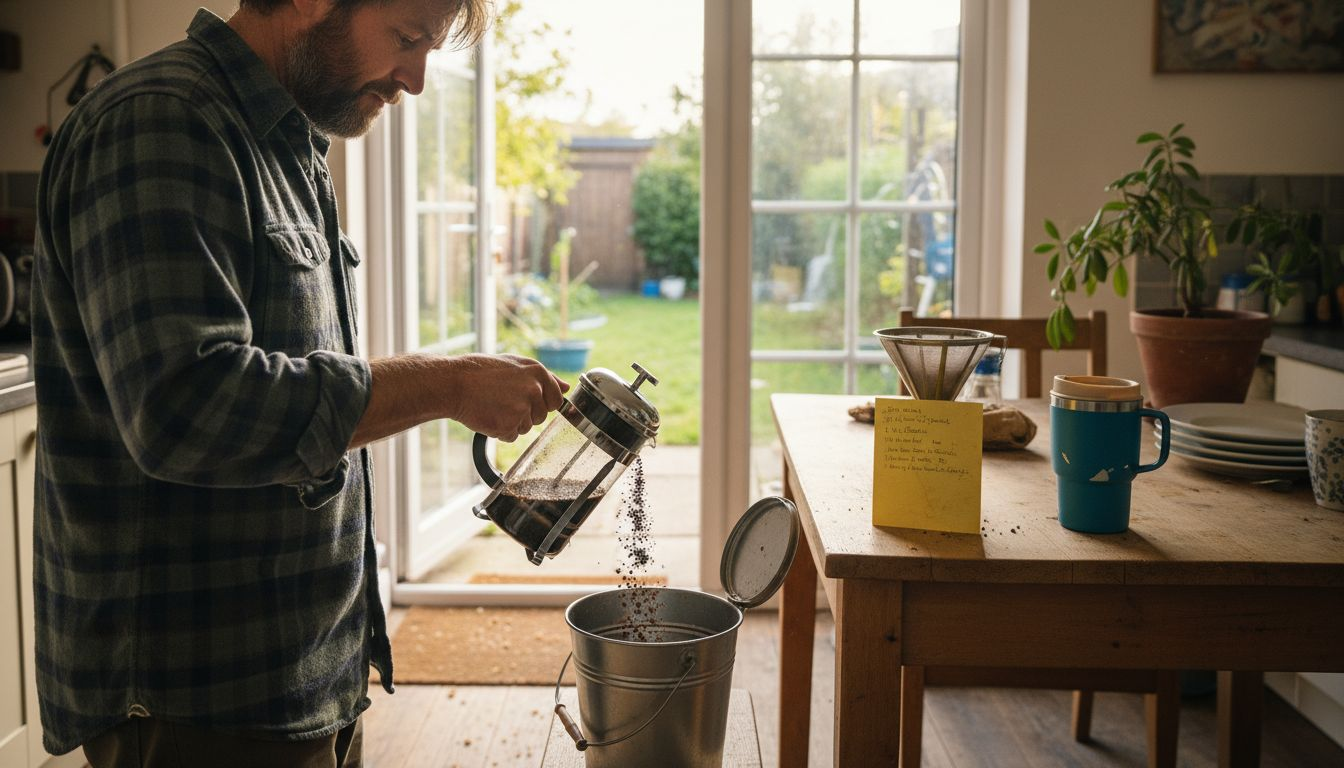
Composting coffee grounds transforms waste into valuable soil amendment. Grounds add nitrogen to compost and improve soil structure when mixed with other organic materials. Your garden benefits while landfills receive less waste.
Reusable cups eliminate single-use cup waste entirely. Many coffee shops offer discounts for bringing your own cup, creating financial incentive alongside environmental benefits. Our guide on how to reduce coffee pod waste offers additional strategies.
Implement these waste reduction tactics:
- Switch to metal or cloth reusable filters
- Establish a dedicated coffee compost bin
- Carry a reusable insulated cup for on-the-go drinks
- Choose whole beans over pre-ground to reduce packaging
- Properly dispose of unavoidable waste through specialized recycling programs
Pro Tip: Create a simple home compost system specifically for coffee grounds and filters. Coffee grounds are considered “green” compost material and break down quickly when balanced with “brown” materials like dry leaves.
Mindful Consumption Practices to Enhance Enjoyment
Precise coffee habits improve both flavor quality and resource efficiency. Measuring coffee grounds carefully prevents overuse and ensures consistent results. The golden ratio of 1:16 coffee to water provides a reliable starting point.
Freshness matters enormously. Coffee begins losing flavor complexity within two weeks of roasting as volatile aromatic compounds dissipate. Buying smaller quantities more frequently maintains peak flavor and reduces waste from stale coffee.
Brew only what you’ll consume immediately. Reheated coffee tastes bitter because heat degrades delicate flavor compounds. Cold brew stays fresh longer if you prefer making larger batches.
Follow these mindful consumption steps:
- Weigh coffee grounds using a kitchen scale for accuracy
- Purchase coffee in quantities you’ll consume within two weeks
- Store beans in an airtight container away from light and heat
- Adjust grind size based on brewing method for optimal extraction
- Pay attention to water temperature, keeping it between 195-205°F
- Savor each cup mindfully rather than drinking automatically
Our actionable tips for eco-conscious coffee drinkers expands on these practices with additional techniques.
Social Impact Through Conscious Coffee Choices
Your coffee purchases influence farming communities globally. Fair Trade social premiums fund essential services like education, healthcare, and infrastructure development in coffee-growing regions. These programs address systemic inequality in agricultural supply chains.
Engaging with local and global coffee communities amplifies sustainability awareness. When consumers demonstrate preference for ethically produced coffee, retailers and roasters respond by expanding sustainable offerings. Your purchasing decisions signal market demand for responsible practices.
Ethical buying patterns support farmers in adopting sustainable agriculture. Higher prices for certified coffee provide financial security that enables long-term planning and environmental stewardship. Understanding the role of social impact in coffee helps you make informed choices.
Consider these social impact dimensions:
- Fair Trade premiums funding community development projects
- Direct trade relationships building producer and consumer connections
- Cooperative models empowering smallholder farmers through collective bargaining
- Gender equity programs supporting women in coffee agriculture
- Educational initiatives improving farming techniques and business skills
Explore how your choices drive positive change in coffee communities worldwide.
Summary Comparison and Situational Recommendations
Different situations call for different sustainable approaches. Home brewers prioritize French press or pour-over methods for their minimal waste and excellent flavor. These methods suit anyone with counter space and a few minutes for the brewing ritual.
Commuters benefit from investing in quality reusable cups and thermoses. Preparing coffee at home and transporting it eliminates single-use cups while maintaining temperature. Cold brew concentrates travel particularly well.
| Priority | Best Practice | Environmental Benefit | Flavor Impact |
|---|---|---|---|
| Maximum waste reduction | French press with reusable cup | Eliminates disposables entirely | Excellent |
| Convenience with sustainability | Reusable pod systems | Reduces waste by 80% vs disposables | Good |
| Social impact focus | Fair Trade certified beans | Supports farmer communities | Variable |
| Energy efficiency | Cold brew method | Zero energy consumption | Smooth, mild |
| Flavor optimization | Pour-over with fresh beans | Low waste, precise brewing | Outstanding |
Recommendations by situation:
- Home brewers: Manual methods with locally roasted organic beans
- Office workers: Reusable cups with batch cold brew preparation
- Travelers: Portable French press and whole beans
- Social impact advocates: Fair Trade and direct trade certified coffees
- Flavor enthusiasts: Pour-over with beans used within two weeks of roasting
Explore Sustainable Coffee Solutions with EcoVibe Roast
Ready to transform your coffee routine? EcoVibe Roast provides the resources and products you need to drink sustainably without sacrificing quality. Our sustainable coffee checklist walks you through building responsible habits step by step.

Master the eco-conscious brewing process with our detailed guides and video tutorials. Looking for convenience with a conscience? Explore our Single Serve Collection, featuring responsibly sourced options that balance ease and environmental responsibility. Every purchase plants mangrove trees and removes ocean-bound plastics, amplifying your positive impact.
FAQ
What are the most sustainable coffee brewing methods?
Manual methods like French press and pour-over top the sustainability rankings due to minimal waste generation and zero electricity consumption. These techniques also preserve coffee’s natural oils and flavors better than many automated systems. Our eco-conscious brewing process guide explains the details.
How can I reduce coffee waste at home?
Switch to reusable filters and cups, compost your coffee grounds, and measure precisely to avoid overbrewing. Limit single-use pod consumption since recycling rates remain low despite manufacturer claims. Check out our tips to reduce coffee pod waste for additional strategies.
What certifications should I look for in sustainable coffee beans?
Prioritize Organic and Fair Trade certifications as reliable indicators of environmental and social responsibility. Organic certification means approximately 30% less synthetic fertilizer and pesticide use, while Fair Trade ensures fair wages and community development funding. Learn more about selecting responsible coffee beans.
Does using reusable coffee filters really make a difference?
Absolutely. Switching to reusable filters saves approximately 100 grams of disposable filter waste annually per user. Metal and cloth filters clean easily and last for years, dramatically reducing landfill contributions while often improving flavor by allowing natural coffee oils through.
How fresh should my coffee beans be for best results?
Use coffee within two weeks of roasting for optimal flavor and aroma. Roasted beans begin losing volatile compounds immediately, with noticeable degradation after the two-week mark. Buy smaller quantities more frequently rather than bulk purchasing, ensuring every cup delivers peak enjoyment.


