

If you’re a coffee drinker in the U.S., you might be surprised to learn that your daily cup generates about 29 pounds of waste each year. From disposable filters to single-use pods, the environmental footprint adds up fast. But here’s the good news: you can slash that waste in half while maintaining the quality and ritual you love. This guide will walk you through practical, low-waste coffee brewing methods that save money, reduce clutter, and protect the planet without compromising flavor.
Table of Contents
- Introduction To Low-Waste Coffee Rituals
- Prerequisites: What You Need To Start Low-Waste Brewing
- Step-By-Step Low-Waste Brewing Methods And Tools
- Proper Waste Management And Composting
- Common Mistakes And Troubleshooting
- Safety Considerations And Maintenance Tips
- Expected Outcomes And Environmental Impact
- Explore Sustainable Coffee With Ecovibe Roast
- FAQ
Key takeaways
| Point | Details |
|---|---|
| Waste reduction potential | Low-waste brewing can cut coffee-related waste by half while preserving flavor quality. |
| Essential equipment | Burr grinders, reusable filters, and composting setups are foundational tools for sustainable brewing. |
| Composting impact | Composting coffee grounds diverts up to 95% of coffee waste from landfills. |
| Freshness matters | Avoid pre-ground coffee to reduce stale grounds and flavor loss. |
| Equipment care | Proper cleaning and maintenance ensure safety and longevity of reusable equipment. |
Introduction to low-waste coffee rituals
The environmental toll of coffee consumption extends far beyond the cup. Annual coffee-related waste averages 29 pounds per consumer in the U.S., contributing to overflowing landfills and methane emissions. Single-use pods, paper filters, and packaging create a persistent waste stream that accumulates silently in your kitchen and local dump.
But adopting low-waste coffee rituals delivers personal wins too. You’ll reduce household clutter, simplify your morning routine, and cut spending on disposable products. Over time, these small changes add up to significant cost savings and a cleaner, more intentional lifestyle.
This guide covers the full spectrum of sustainable brewing. You’ll learn which tools to invest in, how to master waste-free methods, and how to maintain equipment for years of reliable use. The goal is simple: enjoy exceptional coffee while taking responsibility for the environmental impact of your daily habit. Here’s what you’ll gain:
- Clear guidance on selecting reusable brewing equipment
- Step-by-step methods to eliminate disposable waste
- Composting strategies that keep grounds out of landfills
- Troubleshooting tips to avoid common pitfalls
Prerequisites: what you need to start low-waste brewing
Starting a low-waste coffee routine requires a few essential tools and a shift in mindset. The right equipment makes sustainable brewing effortless while protecting flavor quality. Here’s what you need to gather before diving in.
First, invest in a burr grinder. Burr grinders produce consistent particle sizes, which is critical for even extraction and waste reduction. Pre-grinding coffee beans results in accelerated flavor degradation and increases coffee waste due to unused stale grounds. Grinding fresh each morning ensures you use only what you need.
Next, choose a brewing device that eliminates disposable filters. French presses and Aeropresses paired with reusable metal or cloth filters are ideal starting points. These tools deliver rich, full-bodied coffee without generating paper waste. Metal filters allow more oils and fine particles through, enhancing flavor complexity.
Composting access is the final piece of the puzzle. Whether you maintain a backyard compost bin or participate in a municipal program, you need a system to divert used grounds from the trash. Coffee grounds are nitrogen-rich and break down quickly, making them a composting superstar.
Here’s a quick reference for essential low-waste coffee tools and tips:
| Tool | Purpose | Benefit |
|---|---|---|
| Burr grinder | Consistent grind size | Maximizes extraction, reduces stale waste |
| French press | Immersion brewing | Zero paper waste, bold flavor |
| Reusable metal filter | Replaces paper filters | Durable, cost-effective, enhances oils |
| Compost bin | Waste diversion | Keeps grounds out of landfills |
Pro Tip: Grind coffee right before brewing to maximize freshness and minimize stale waste. Set your grinder once and stick to that setting for consistency.
Step-by-step low-waste brewing methods and tools
Once you’ve gathered your equipment, it’s time to put it to work. Each brewing method offers a unique balance of waste reduction, flavor profile, and convenience. Choose the approach that fits your taste preferences and daily routine.
French press brewing
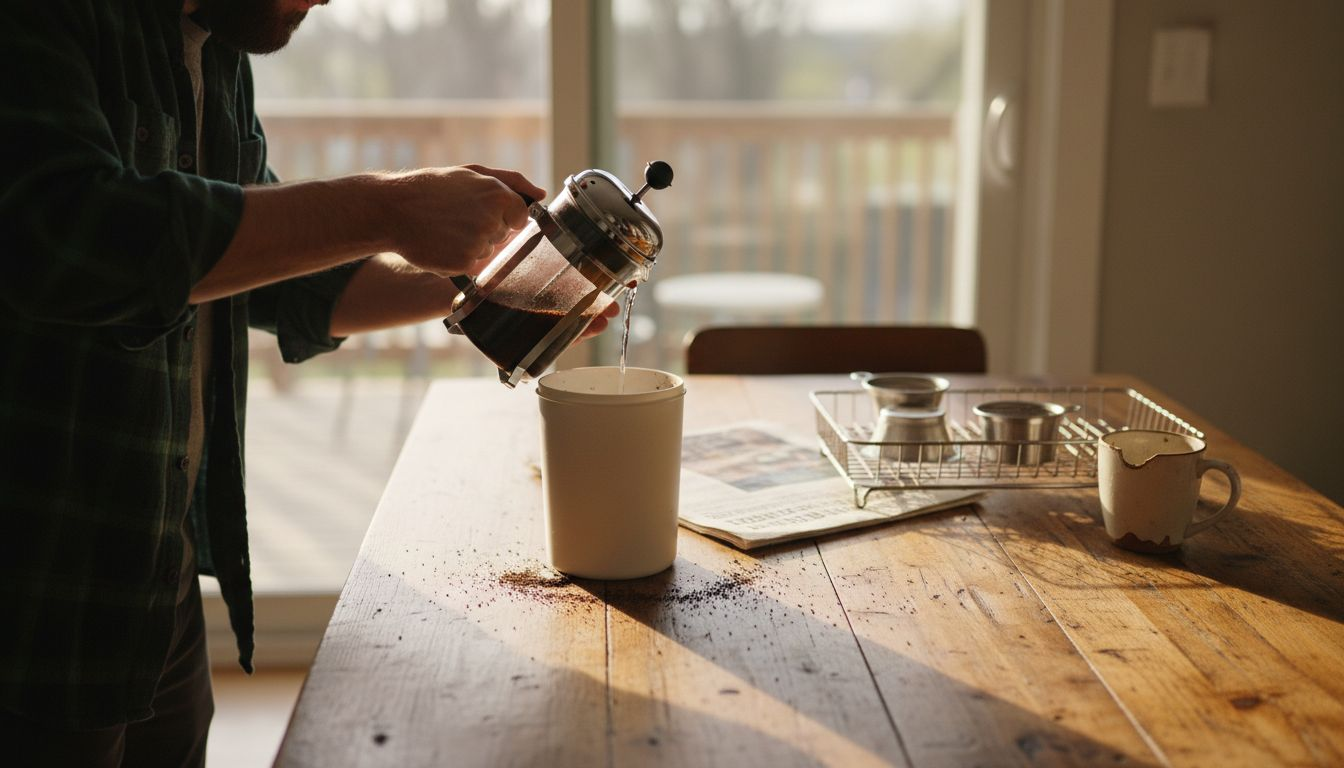
The French press is the gold standard for zero-waste brewing. Its built-in metal mesh filter eliminates the need for paper, and the immersion method extracts deep, complex flavors. Use a coarse grind to prevent fine particles from slipping through the mesh. Here’s the process:
- Heat water to 200°F and measure 1 tablespoon of coarsely ground coffee per 4 ounces of water.
- Add grounds to the press, pour hot water evenly over them, and stir gently.
- Place the lid on top and let steep for 4 minutes.
- Press the plunger down slowly and pour immediately to avoid over-extraction.
The French press produces a full-bodied cup with a slightly heavier mouthfeel. It’s perfect for those who enjoy robust, oil-rich coffee.
Aeropress with reusable filters
The Aeropress combines versatility with moderate waste reduction. By swapping disposable paper filters for reusable metal or cloth versions, you eliminate single-use waste while maintaining brewing flexibility. The Aeropress accommodates a range of grind sizes and brew times, making it ideal for experimentation. Follow these steps:
- Insert a reusable filter into the cap and rinse with hot water.
- Add 1 to 2 tablespoons of medium-fine ground coffee to the chamber.
- Pour 6 ounces of water heated to 175-185°F and stir for 10 seconds.
- Attach the cap, flip the Aeropress onto your mug, and press gently for 30 seconds.
The Aeropress delivers a clean, smooth cup with balanced acidity. It’s a great choice if you value portability and quick cleanup.
Reusable coffee pods
If convenience is non-negotiable, reusable pods reduce plastic and aluminum waste by over 80% compared to single-use versions. These stainless steel or silicone pods fit most pod-based machines and can be refilled hundreds of times. They require slightly more effort than tossing a disposable pod, but the waste savings are substantial.
- Fill the reusable pod with 2 teaspoons of finely ground coffee.
- Tamp lightly to compress the grounds without over-packing.
- Insert the pod into your machine and brew as usual.
- Empty used grounds into your compost bin and rinse the pod immediately.
Reusable pods offer the convenience of single-serve brewing with a fraction of the environmental cost. For more on low-waste brewing methods, explore additional strategies that align with your lifestyle.
| Method | Waste Generated | Flavor Quality | Convenience |
|---|---|---|---|
| French press | Zero paper waste | Bold, full-bodied | Moderate cleanup |
| Aeropress | Zero with reusable filter | Clean, balanced | Quick, portable |
| Reusable pods | 80% less than disposable | Consistent | Machine-dependent |
Pro Tip: Match grind size precisely to brewing method to avoid wasteful over or under extraction. Coarse for French press, medium for Aeropress, fine for pods. Learn more about the environmental benefits of reusable filters to understand the long-term impact.
Proper waste management and composting
Brewing sustainably is only half the equation. Proper waste management ensures your coffee grounds nourish soil instead of rotting in a landfill. Composting used coffee grounds diverts about 95% of coffee waste from landfills, significantly lowering methane emissions.
Home composting is straightforward if you follow a few simple rules. Coffee grounds are considered “green” material, meaning they’re rich in nitrogen. Balance them with “brown” materials like dry leaves, cardboard, or wood chips to maintain a healthy compost pile. Add grounds directly to your bin after each brew, mixing them into the pile to speed decomposition.
If you don’t have space for a backyard composter, check for municipal or community composting programs in your area. Many cities now offer curbside pickup for organic waste, making it easy to participate without extra effort. Some local coffee shops even collect used grounds for community gardens.
Here are key do’s and don’ts for coffee grounds composting methods:
- Do add grounds in thin layers to avoid clumping
- Do mix grounds with carbon-rich materials for balance
- Do use compost in gardens, potted plants, or donate to community projects
- Don’t add flavored coffee grounds with synthetic additives
- Don’t let grounds sit in sealed containers, which can create mold
- Don’t dispose of grounds down the sink, where they can clog pipes
Composting transforms waste into a valuable resource. Within weeks, your grounds become nutrient-dense soil amendment that helps plants thrive. For detailed guidance, visit the EPA’s page on home composting coffee grounds.
Common mistakes and troubleshooting
Even experienced brewers stumble when transitioning to low-waste rituals. Recognizing these mistakes early saves you from wasted coffee, diminished flavor, and unnecessary trash.
Pre-grinding beans is the most common error. Once coffee is ground, it begins losing flavor within 15 minutes due to oxidation. Many people grind a week’s worth at once for convenience, but this leads to stale, flavorless coffee that often gets tossed. The fix is simple: grind only what you need for each brew.
Incorrect grind size causes both waste and quality issues. Over-extraction from incorrect grind size and neglecting filter cleaning cause waste and quality issues. Too fine a grind in a French press creates sludge and bitterness. Too coarse in an Aeropress results in weak, under-extracted coffee. Adjust your grinder settings and taste-test until you hit the sweet spot.
Neglecting to clean reusable filters is another pitfall. Old coffee oils turn rancid and impart bitter, off-putting flavors. Filters also harbor bacteria if left damp. Rinse filters immediately after use and perform a deep clean with vinegar or baking soda weekly.
Improper composting undermines your waste reduction efforts. Mixing coffee grounds with non-compostable materials like plastic-lined pods or flavored syrups contaminates your compost. Always separate grounds from packaging and avoid adding anything synthetic to your bin.
Here’s how to fix each mistake:
- Switch to grinding fresh beans daily using a burr grinder
- Calibrate grind size to match your brewing method exactly
- Establish a cleaning routine: rinse after every use, deep clean weekly
- Sort waste carefully, composting only pure coffee grounds and biodegradable filters
For more troubleshooting sustainable coffee brewing tips, explore common challenges and their solutions.
Safety considerations and maintenance tips
Maintaining reusable equipment properly protects your health, preserves coffee quality, and extends the lifespan of your tools. Neglecting hygiene creates health risks and ruins the taste of your daily brew.
Clean reusable filters and brewing devices after every use. Residual oils and fine particles accumulate quickly, fostering bacterial growth and imparting stale flavors. Rinse thoroughly with hot water immediately after brewing, and use a soft brush to dislodge trapped grounds. For metal filters, soak in a solution of equal parts water and white vinegar once a week to remove stubborn buildup.
Avoid cross-contamination by designating separate cleaning tools for coffee equipment. Sponges used for dishes can transfer food residues and odors to your filters, compromising the taste of your coffee. Keep a dedicated brush or cloth for coffee gear only.
Store reusable components in a dry, well-ventilated area. Damp filters and grounds left in closed containers create a breeding ground for mold. After washing, air-dry filters completely before putting them away. If you notice any musty odors or discoloration, discard the item and replace it.
Pro Tip: Schedule regular deep cleanings to maintain optimal brewing performance and hygiene. Mark your calendar for monthly maintenance sessions to inspect seals, gaskets, and filters for wear.
Follow these best practices for maintenance tips for reusable coffee equipment:
- Disassemble multi-part devices like French presses to clean every component
- Check rubber seals and gaskets for cracks or degradation every few months
- Replace metal filters if they develop holes or significant warping
- Store equipment in a cool, dry place away from direct sunlight
Expected outcomes and environmental impact
Adopting low-waste coffee rituals delivers measurable benefits that extend beyond your kitchen. You’ll reduce waste, save money, and enjoy better-tasting coffee, all while contributing to a healthier planet.
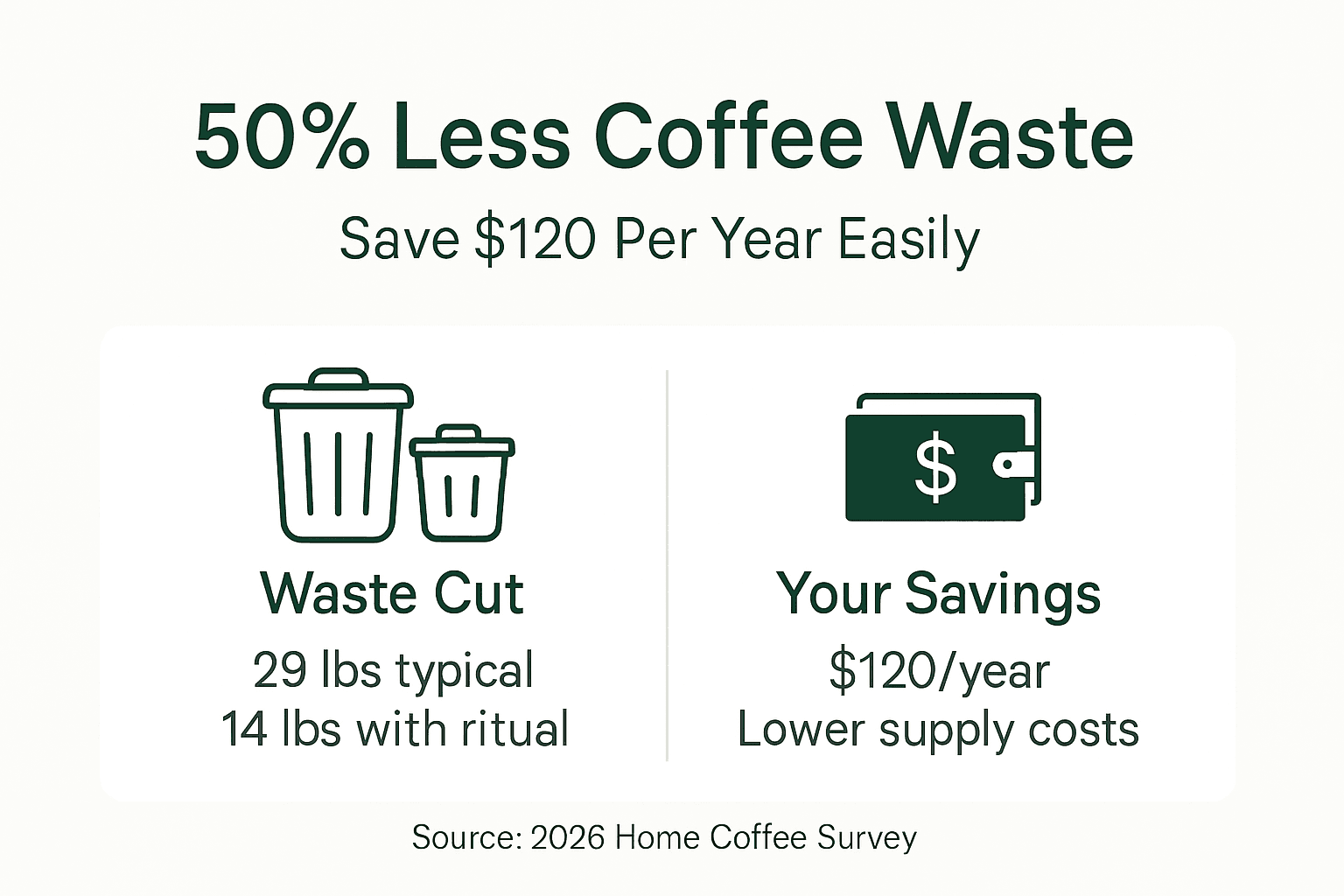
Low-waste brewing can result in up to a 50% reduction in coffee waste annually and save up to $120 per year. For a typical household brewing two cups daily, that translates to about 14.5 pounds less waste heading to the landfill each year. Over a decade, you’re diverting nearly 150 pounds of trash, a substantial impact multiplied across millions of coffee drinkers.
Financial savings add up faster than you might expect. Disposable filters cost $0.05 to $0.10 each, while single-use pods run $0.50 to $0.75 per serving. Switching to reusable alternatives eliminates these recurring expenses. Most reusable filters and pods pay for themselves within two to three months, then generate pure savings for years.
Flavor quality improves when you grind fresh and use proper techniques. Freshly ground beans release aromatic compounds that paper filters often trap. Metal filters allow more oils through, creating a richer, more complex cup. Many people report that their coffee tastes better after switching to low-waste methods, contradicting the myth that sustainability requires sacrifice.
Low-waste brewing cuts coffee waste by 50% annually while saving households up to $120 per year.
Beyond personal benefits, your actions contribute to broader environmental goals. Reducing landfill waste lowers methane emissions, a potent greenhouse gas. Composting grounds returns nutrients to soil, supporting local ecosystems and reducing the need for chemical fertilizers. Every cup brewed sustainably is a small but meaningful step toward a more resilient planet. For insights into emerging practices, explore coffee waste reduction outcomes 2026. Learn more about the financial savings from low-waste coffee and how these habits compound over time.
Explore sustainable coffee with EcoVibe Roast
You’ve learned how to brew sustainably, now take the next step with coffee that matches your values. EcoVibe Roast offers sustainably sourced coffee that supports environmental and social impact initiatives. Every purchase plants mangrove trees and removes ocean-bound plastics, extending your low-waste commitment beyond the kitchen.

Explore our blog for additional guides on eco-conscious coffee habits, including the latest sustainability trends in coffee and practical tips to reduce your footprint further. Whether you’re looking for ethically sourced beans, reusable brewing tools, or composting advice, EcoVibe Roast provides the resources and products to support your sustainable coffee journey. Visit the EcoVibe Roast sustainable coffee shop to discover offerings that align with your low-waste lifestyle and make every cup count.
FAQ
How do I choose the best low-waste brewing method for my lifestyle?
Choosing the right method depends on your taste preferences, daily routine, and waste reduction goals. If you prioritize bold, full-bodied coffee and don’t mind a bit of cleanup, the French press delivers zero paper waste and rich flavor. For flexibility and portability, the Aeropress with a reusable filter offers quick brewing and easy experimentation. If convenience matters most, choosing low-waste coffee pods that are reusable provides machine compatibility with over 80% waste reduction. Expect some trial and adjustment as you dial in your preferred method.
Can I compost coffee pods and filters, and how?
You can readily compost used coffee grounds at home or through municipal programs. Biodegradable paper filters break down quickly and can go straight into your compost bin. However, most plastic or aluminum pods cannot be composted, even if they’re marketed as recyclable. Composting used coffee grounds diverts about 95% of coffee waste from landfills, making it one of the highest-impact actions you can take. Always check local composting guidelines for pods, as rules vary by region. For detailed instructions, visit the EPA’s composting coffee grounds guidelines.
How often should I clean reusable coffee equipment to stay safe?
Clean reusable filters and brewing devices after every use with hot water and food-safe dish soap to prevent bacterial buildup and off-flavors. Perform a deeper clean weekly using a vinegar soak or baking soda scrub to remove oils and residues that daily rinsing misses. Avoid cross-contamination by using separate cleaning tools dedicated solely to your coffee equipment. For comprehensive care routines, check out tips on cleaning reusable coffee equipment.
What are the main financial benefits of switching to low-waste coffee rituals?
Switching to low-waste brewing eliminates recurring purchases of disposable filters, pods, and packaging, reducing your overall coffee expenses significantly. Switching to low-waste coffee brewing rituals can save users an estimated $50-$120 per year for typical households. Reusable equipment pays for itself within a few months, then generates pure savings for years. You’ll also reduce waste disposal costs if your municipality charges for trash pickup by volume. Learn more about cost savings from low-waste coffee.


