

Hosting a coffee event shouldn’t mean generating mountains of waste. Every gathering creates an opportunity to demonstrate environmental responsibility while serving quality beverages. This guide walks you through practical steps to eliminate landfill waste at your next coffee event, from sustainable sourcing to attendee engagement, ensuring both environmental impact and memorable experiences.
Table of Contents
- Introduction To Zero Waste Coffee Events
- Materials And Supply Prerequisites For Zero Waste Coffee Events
- Sourcing Sustainable Coffee And Eco-Friendly Packaging
- Waste Sorting And Composting Methods
- Attendee Engagement And Sustainability Promotion
- Common Pitfalls And How To Avoid Them
- Expected Results And Outcomes Of Hosting A Zero Waste Coffee Event
- Explore Sustainable Coffee Products For Your Zero Waste Event
- Frequently Asked Questions
Key takeaways
| Point | Details |
|---|---|
| Planning timeline | Expect 3 to 6 months for vendor coordination, material sourcing, and attendee communication setup. |
| Waste reduction impact | Properly executed zero waste events achieve 75 to 90 percent waste reduction compared to conventional gatherings. |
| Critical success factors | Clear signage, trained staff, and partnerships with local composting services enable true zero waste outcomes. |
| Material requirements | Reusable cups, compostable alternatives, and visible waste stations form the foundation of waste elimination. |
| Attendee education | Interactive demonstrations and multilingual signage boost waste sorting compliance by up to 60 percent. |
Introduction to zero waste coffee events
A zero waste coffee event eliminates landfill contributions by using exclusively reusable or compostable materials throughout the gathering. Unlike conventional events that generate pounds of single use cup waste per attendee, these sustainable gatherings redirect materials to composting or recycling streams.
Conventional coffee events produce significant environmental harm. Single use plastic cups, stirrers, and packaging contribute to landfill overflow and ocean pollution. Each standard event generates an average of 2 to 4 pounds of waste per person, with much of it consisting of non biodegradable plastics.
Zero waste approaches deliver measurable benefits:
- Waste reduction of 75 to 90 percent compared to traditional events
- Enhanced brand reputation through visible sustainability commitment
- Community engagement around environmental stewardship
- Long term cost savings through reusable infrastructure
- Educational opportunities for attendees about sustainable practices
Three pillars support successful zero waste coffee events. First, sustainable sourcing ensures coffee and materials meet environmental standards. Second, comprehensive waste management systems separate compostable, recyclable, and minimal landfill materials. Third, attendee participation through education and clear communication sustains proper waste handling throughout the event.
Implementing a sustainable coffee checklist streamlines vendor selection and material verification. Hosting a zero waste coffee event typically requires 3 to 6 months of preparation to secure sustainable vendors, materials, and attendee communication systems.
Materials and supply prerequisites for zero waste coffee events
Securing the right materials before your event determines success. Essential supplies fall into three categories: reusable items, compostable alternatives, and communication tools.
Reusable supplies form your primary waste elimination strategy:
- Ceramic or stainless steel cups with 500 plus use lifespan
- Metal utensils and serving equipment
- Cloth napkins and tablecloths
- Washable serving trays and pitchers
- Permanent signage and display materials
Compostable alternatives handle situations where reusables prove impractical:
- Certified compostable cups made from plant based materials
- Bamboo or wooden stirrers
- Compostable coffee pods for single serve stations
- Plant based trash bags for organic waste collection
Communication materials reduce confusion and boost compliance. Digital displays eliminate paper waste while providing real time updates. However, permanent physical signage at waste stations proves essential for proper sorting.
Providing clearly labeled segregated bins increased proper waste sorting by 60%, demonstrating the critical role of visible, standardized waste station design. Each station requires clear icons, multiple language instructions, and examples of acceptable materials.
| Supply Category | Essential Items | Environmental Impact |
|---|---|---|
| Reusable | Ceramic cups, metal utensils, cloth napkins | 90% waste reduction over single use |
| Compostable | Plant based cups, bamboo stirrers, certified pods | 80% diversion from landfill |
| Communication | Digital displays, permanent signage, bin labels | Zero paper waste, improved compliance |
| Infrastructure | Wash stations, sorting bins, collection containers | Enables material reuse and proper disposal |
Staffing needs include trained volunteers at each waste station to answer questions and prevent contamination. Plan for one trained volunteer per 50 attendees to maintain sorting accuracy throughout the event.
Pro Tip: Partner with local dishwashing services or rent commercial dishwashing stations for events exceeding 100 attendees. This infrastructure supports reusable cup sanitation without overwhelming your team, ensuring guests receive clean cups throughout the gathering.
Explore eco friendly packaging examples to identify certified compostable options that meet both functionality and environmental standards.
Sourcing sustainable coffee and eco-friendly packaging
Your coffee selection directly impacts event sustainability. Third party certifications verify environmental and social responsibility claims, eliminating greenwashing concerns.
Seek these certifications when selecting coffee suppliers:
- Fair Trade ensures equitable farmer compensation
- Rainforest Alliance verifies forest conservation practices
- USDA Organic confirms pesticide free cultivation
- B Corporation status demonstrates comprehensive sustainability commitment
Reusable cups deliver the highest waste reduction impact. Using reusable coffee cups at events can reduce single use cup waste by over 90%, making them the preferred choice for gatherings with dishwashing infrastructure. Ceramic and stainless steel options withstand hundreds of uses while maintaining beverage temperature.
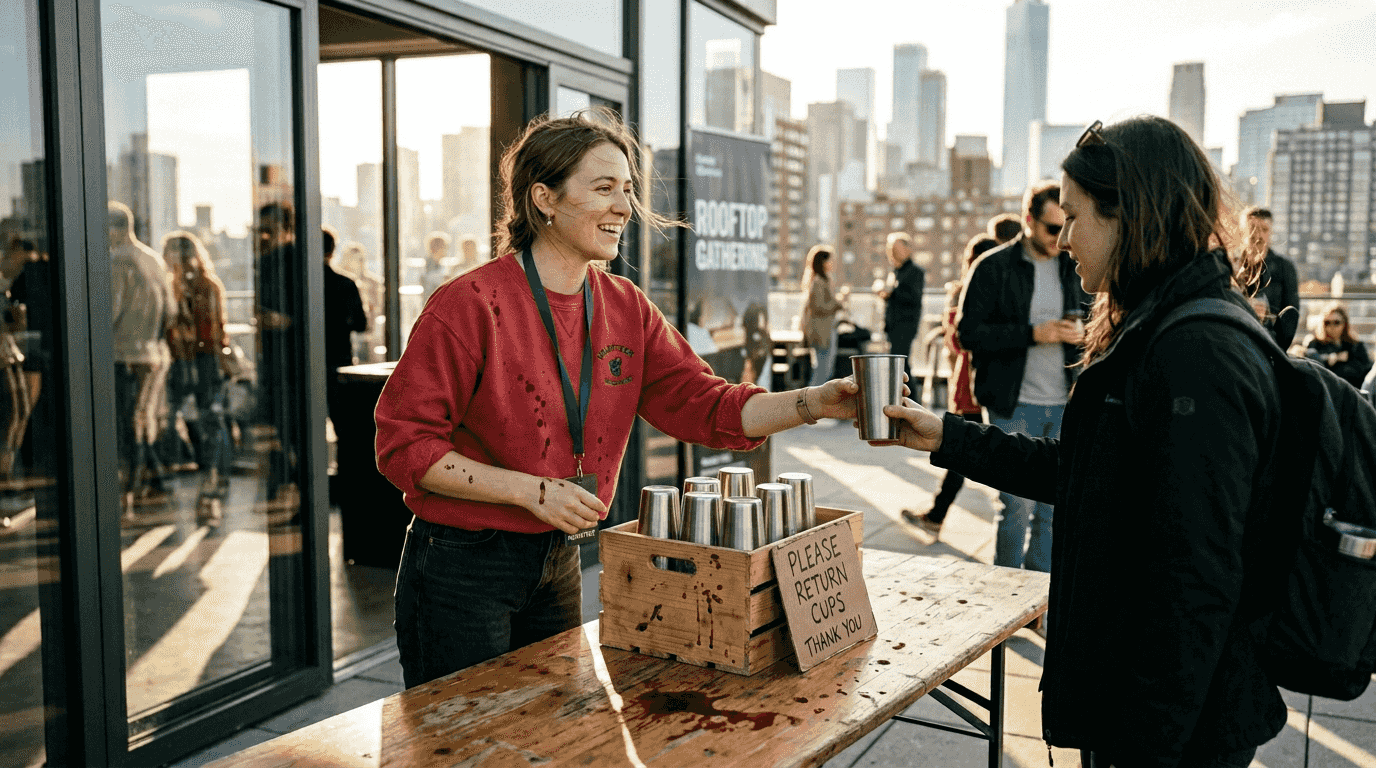
Compostable cups serve as backup options when reusables prove logistically challenging. Plant based cups certified to BPI or CMA standards break down in commercial composting facilities within 90 to 180 days. Verify local composting facilities accept these materials before purchasing.
| Packaging Option | Waste Reduction | Cost per Use | Best Application |
|---|---|---|---|
| Reusable ceramic cups | 90 to 95% | $0.15 after 200 uses | Events with dishwashing access |
| Compostable plant cups | 75 to 80% | $0.40 to $0.60 | Large outdoor gatherings |
| Reusable metal tumblers | 90 to 95% | $0.20 after 150 uses | Multi day conferences |
| Bamboo serving ware | 85% | $0.25 to $0.35 | Food service applications |
Avoid plastic lined paper cups marketed as recyclable. These hybrid materials contaminate recycling streams and require specialized processing rarely available at standard facilities.
For single serve coffee stations, select pods certified compostable by BPI standards. Traditional plastic pods persist in landfills for centuries, while certified compostable versions break down alongside coffee grounds. Pair with metal or bamboo stirrers to eliminate plastic waste completely.
Straw alternatives matter for specialty coffee drinks. Bamboo, stainless steel, and glass straws eliminate plastic waste while providing comparable functionality. Purchase enough reusable straws for your expected attendance, with extras for rotation through dishwashing.
Learn more about choosing planet friendly coffee beans to deepen your understanding of sustainable sourcing beyond certifications.
Waste sorting and composting methods
Effective waste management transforms good intentions into measurable results. Your sorting infrastructure and composting partnerships determine whether materials actually avoid landfills.
Establish three distinct waste stations with consistent visual design:
- Compost bins for coffee grounds, food scraps, and certified compostable materials
- Recycling containers for glass, metal, and clean paper products
- Landfill receptacles for truly non recyclable items
Each station requires standardized signage using universal icons and multiple languages. Include photo examples of acceptable materials above each bin opening. Color coding enhances quick recognition, with green for compost, blue for recycling, and gray for landfill.
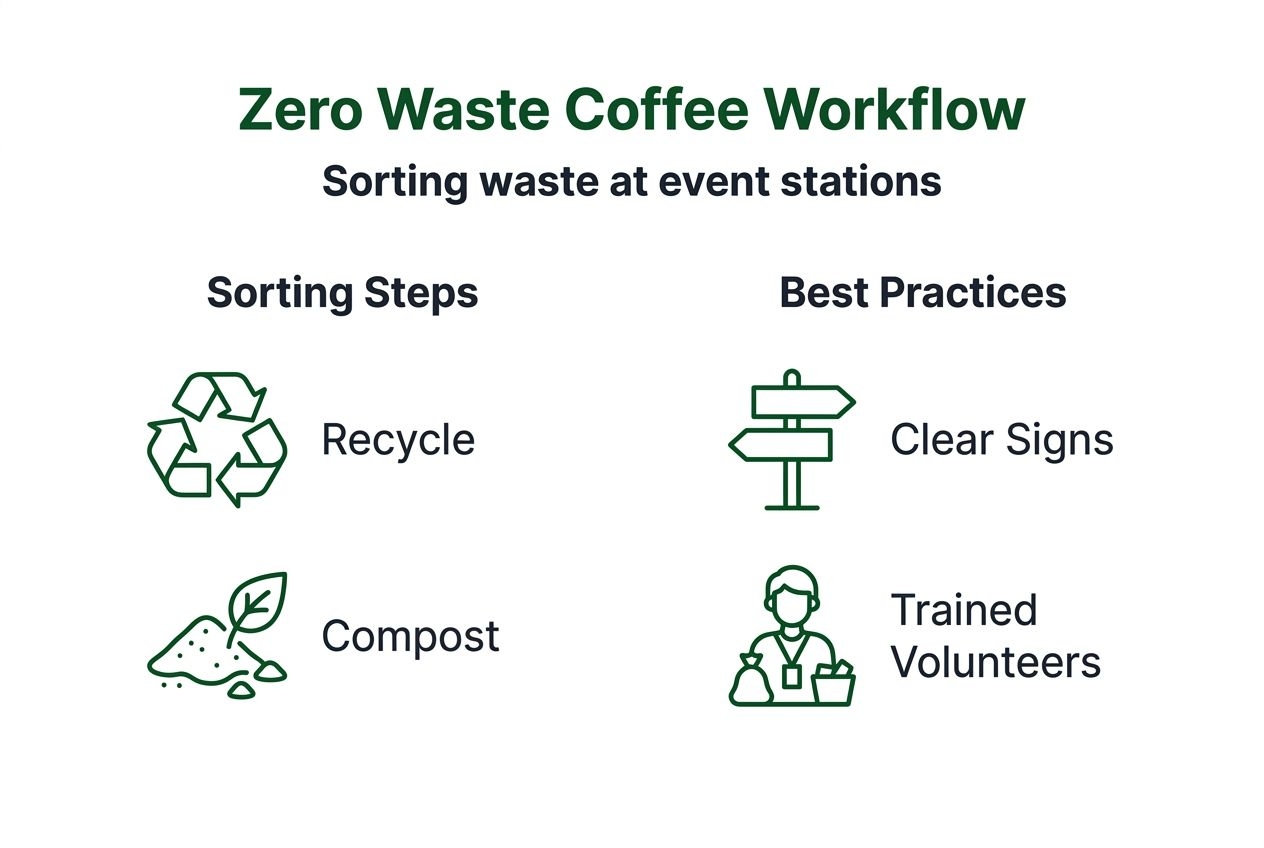
Contamination prevention protects composting effectiveness. A single plastic item in a compost bin can reject an entire batch at processing facilities. Train volunteers to monitor bins constantly, removing contaminants immediately and redirecting confused attendees.
Properly labeled segregated bins and partnerships with local composting services increase zero waste success rates by ensuring materials reach appropriate processing facilities. Contact municipal composting programs or private haulers months before your event to arrange pickup and verify accepted materials.
Pro Tip: Position one trained volunteer at each waste station during peak traffic periods. These volunteers answer questions in real time, demonstrate proper sorting, and catch mistakes before contamination spreads. Their presence alone increases compliance by reminding attendees that waste management matters.
Implement real time adjustments based on observed behavior. If attendees consistently misplace items, add clarifying signage or adjust bin placement. Monitor fill levels to prevent overflow, which encourages improper disposal.
Document your waste diversion rate by weighing bins before disposal. Calculate the percentage diverted from landfill by dividing compost plus recycling weight by total waste weight. This metric demonstrates impact and guides future improvements.
Review the coffee waste reduction workflow for additional strategies applicable to event settings.
Attendee engagement and sustainability promotion
Educated attendees become active partners in waste elimination. Your communication strategy determines whether guests view sustainability as a burden or an opportunity to contribute.
Pre event communication sets expectations before arrival. Email announcements explain zero waste goals, request attendees bring reusable cups if possible, and preview waste sorting procedures. Social media posts generate excitement while normalizing sustainable practices.
Interactive elements boost engagement during events:
- Live demonstrations of proper waste sorting
- Coffee brewing workshops highlighting sustainable sourcing
- Composting education stations showing decomposition processes
- Sustainability challenges with small prizes for participation
Signage quality directly impacts compliance. Use large, bold fonts visible from 10 feet away. Incorporate humor or positive messaging rather than scolding tones. Multilingual instructions accommodate diverse attendees and demonstrate inclusive planning.
Incentive programs motivate sustainable choices. Offer small discounts or priority access to attendees bringing reusable cups. Recognize top sustainability contributors through social media shoutouts or certificates. These rewards create positive associations with environmental action.
Attendee education and clear signage significantly improve waste sorting compliance by up to 60%, proving that investment in communication materials delivers measurable returns.
Ongoing reminders sustain attention throughout multi hour events. Brief announcements between program segments reinforce waste sorting procedures. Digital displays rotate between event information and sustainability tips, maintaining visibility without interrupting the experience.
Create shareable moments that extend your message beyond the event. Photo opportunities with sustainability messaging encourage social media posts, spreading awareness to attendees’ networks. Provide suggested hashtags to aggregate posts and measure reach.
Explore eco conscious coffee tips for additional educational content to share with attendees before and after your event.
Common pitfalls and how to avoid them
Even well planned events encounter obstacles. Anticipating common mistakes helps you implement preventive measures.
Poor signage creates the most frequent problems. Generic “compost” labels without examples leave attendees guessing about acceptable materials. Solution: Use photo based signage showing exactly what belongs in each bin, with clear examples and counterexamples.
Uncertified vendors undermine sustainability claims. Suppliers may market products as compostable without meeting BPI or CMA standards, resulting in contaminated compost or landfill waste. Solution: Request and verify certification documentation before purchase, and test materials with your composting partner.
Under educated attendees default to convenient rather than correct disposal. Without clear communication, guests treat waste stations like regular trash cans. Solution: Implement the multi touchpoint education strategy covering pre event emails, entrance signage, volunteer presence, and ongoing announcements.
Missing composting partnerships waste your material investments. Collecting compostable items without processing arrangements sends everything to landfill. Solution: Establish partnerships three to six months before your event, confirm pickup logistics, and obtain written agreements specifying accepted materials.
Greenwashed single use plastics appear sustainable but behave like conventional plastic. Products labeled “biodegradable” often require industrial composting unavailable in most areas, or contain plastic that fragments rather than decomposing. Solution: Verify true compostability through BPI certification and confirm your composting partner accepts specific products.
Inadequate bin capacity causes overflow and contamination. Overflowing bins encourage attendees to use whichever container has space, mixing waste streams. Solution: Calculate bin needs based on expected attendance and waste generation rates, then add 25 percent capacity buffer. Monitor and empty bins before reaching 80 percent full.
Study strategies to avoid zero waste mistakes that apply to both personal and event settings.
Expected results and outcomes of hosting a zero waste coffee event
Realistic expectations guide planning and help you assess feasibility. Understanding typical timelines, costs, and results informs your decision making process.
“Hosting a zero waste coffee event typically requires 3 to 6 months of preparation to secure sustainable vendors, materials, and attendee communication systems.”
Timeline planning for sustainable events should begin immediately after deciding to pursue zero waste goals. Early vendor outreach, material sourcing, and partnership development require extended lead times unavailable in rushed planning.
Financial considerations include higher upfront costs offset by long term benefits. Reusable infrastructure requires initial investment but delivers per use savings over time. Expect 20 to 30 percent higher costs for your first zero waste event compared to conventional approaches, with subsequent events showing 10 to 15 percent savings as you reuse materials.
| Metric | Conventional Event | Zero Waste Event | Improvement |
|---|---|---|---|
| Planning timeline | 4 to 8 weeks | 12 to 24 weeks | Requires earlier start |
| Cost per attendee | $8 to $12 | $10 to $16 first event, $7 to $10 subsequent | Higher initial, lower ongoing |
| Waste to landfill | 2 to 4 lbs per person | 0.2 to 0.8 lbs per person | 75 to 90% reduction |
| Attendee satisfaction | Baseline | 15 to 25% increase | Enhanced experience |
Waste reduction rates between 75 and 90 percent represent achievable targets for well executed events. Your first attempt may achieve lower diversion rates as you refine processes, with improvement in subsequent events as you address identified challenges.
Attendee satisfaction typically increases 15 to 25 percent when sustainability efforts are visible and well communicated. Guests appreciate organizations demonstrating environmental responsibility, particularly when education elements add value to their experience.
Measurable outcomes extend beyond waste metrics. Enhanced brand reputation, media coverage opportunities, and community relationship building provide lasting value difficult to quantify financially but significant for organizational growth.
Post event assessment identifies improvement opportunities. Survey attendees about their experience with waste sorting, gather volunteer feedback about operational challenges, and review actual waste diversion rates against goals. Document lessons learned to streamline future planning.
Review the coffee waste reduction guide for additional measurement and improvement strategies.
Explore sustainable coffee products for your zero waste event
Now that you understand zero waste event planning, you need reliable suppliers delivering truly sustainable products. EcoVibe Roast specializes in certified sustainable coffee and tea that aligns perfectly with zero waste goals.

Our single serve coffee collection features compostable pods that break down alongside coffee grounds, eliminating the plastic waste plaguing conventional single serve options. Each pod delivers premium quality while supporting your waste elimination objectives.
The organic tea collection provides sustainably sourced alternatives for non coffee drinkers at your event. Packaged in compostable materials, these teas maintain quality standards while meeting environmental commitments.
Every purchase contributes to measurable environmental action. Learn about our initiatives at our environmental impact page, where we detail mangrove planting and ocean plastic removal programs funded by your coffee purchases.
Frequently asked questions
What is the recommended preparation timeline?
Begin planning 3 to 6 months before your event date. This timeline accommodates vendor research, certification verification, material sourcing, composting partnership establishment, and attendee communication development. Rushed planning compromises sustainability goals and increases contamination risks.
Are zero waste events more expensive?
Expect 20 to 30 percent higher costs for initial zero waste events compared to conventional approaches. However, reusable infrastructure reduces per event costs for subsequent gatherings, typically achieving 10 to 15 percent savings by the third event. Long term financial benefits combine with environmental impact to justify upfront investment.
How to ensure guests comply with waste sorting?
Implement multi touchpoint education including pre event emails, entrance signage, volunteer presence at waste stations, and periodic announcements. Clear photo based signage and trained volunteers answering questions in real time boost compliance significantly. Incentive programs offering small rewards for bringing reusable cups further encourage participation.
What materials are absolutely required?
Essential materials include reusable or certified compostable cups, metal or bamboo utensils and stirrers, clearly labeled waste stations with standardized signage, and partnerships with local composting services. Without proper processing arrangements, even compostable materials end up in landfills, undermining your sustainability goals.
How to measure success of a zero waste coffee event?
Calculate waste diversion rate by weighing compost and recycling bins separately from landfill waste, then dividing diverted weight by total waste weight. Target 75 to 90 percent diversion for successful zero waste events. Additionally, survey attendees about their experience with waste sorting procedures and gather volunteer feedback about operational challenges to identify improvement opportunities for future events.
Recommended
- Master workflow to reduce coffee waste sustainably in 2026 – EcoVibe Roast
- Low-waste coffee rituals cut 50% waste and save $120 in 2026 – EcoVibe Roast
- Cut Coffee Waste by 30% in 2026: A Sustainability Guide – EcoVibe Roast
- How to Reduce Waste with Coffee Pods for Eco-Friendly Brewing – EcoVibe Roast
- Eco-Friendly Oral Hygiene: Transforming Dental Routines – Stop Oral Care


