

Every year, coffee lovers discard thousands of pounds of perfectly good beans and grounds simply because they brew too much or store improperly. This waste harms the environment and contradicts the values of eco-conscious consumers. A structured workflow can cut your coffee waste by up to 50%, preserving freshness, saving money, and aligning your daily routine with sustainable practices.
Table of Contents
- Introduction To Coffee Waste And Sustainability
- Prerequisites: What You Need Before You Start
- Step 1: Preparing And Storing Coffee
- Step 2: Portion Control And Brewing Practices
- Step 3: Monitoring And Adjusting Workflow
- Step 4: Repurposing And Composting Coffee Waste
- Common Mistakes And Troubleshooting
- Expected Outcomes And Benefits
- Explore Eco-Friendly Coffee And Tea Options At EcoVibe Roast
- Frequently Asked Questions
Key takeaways
| Point | Details |
|---|---|
| Structured workflow reduces waste | Following systematic preparation, brewing, and disposal steps cuts coffee waste by 40-50%. |
| Proper storage extends freshness | Airtight containers in cool, dry places preserve beans for 2-4 weeks longer. |
| Precise measuring prevents excess | Digital scales ensure accurate portions, eliminating leftover brewed coffee. |
| Monitoring improves habits | Weekly tracking identifies waste patterns and optimizes brewing adjustments. |
| Composting repurposes grounds | Coffee grounds compost within 6 months, diverting 30% of waste from landfills. |
Introduction to coffee waste and sustainability
Coffee production and consumption generate massive environmental challenges. Global coffee waste impacts environmental health significantly, from cultivation through disposal. When grounds end up in landfills, they decompose anaerobically, releasing methane and contributing to greenhouse gas emissions. Single-use packaging, discarded filters, and spoiled beans compound the problem.
Reducing coffee waste supports broader eco-friendly goals. You conserve water and energy used during cultivation and processing. You minimize landfill contributions and lower your carbon footprint. Sustainable sourcing choices amplify these benefits by supporting farms that prioritize environmental stewardship and biodiversity.
Coffee lovers hold significant power to drive change. By adopting intentional habits at home, you reduce waste while enjoying fresher, better-tasting coffee. The workflow outlined here addresses common waste sources: overbrewing, improper storage, and careless disposal. These steps work together to create a sustainable coffee routine that honors both quality and environmental responsibility.
Key waste reduction strategies include:
- Buying only what you can consume within freshness windows
- Storing beans properly to prevent spoilage and mold
- Measuring grounds precisely to avoid brewing excess
- Composting or repurposing used grounds instead of trashing them
- Choosing reusable brewing methods over disposable options
Understanding sustainability trends in coffee for 2026 helps you align your routine with current best practices. Learn more about proper coffee storage techniques to maximize bean longevity.
Prerequisites: what you need before you start
Before implementing the workflow, gather essential tools and knowledge. These prerequisites ensure you can execute each step effectively and measure your progress accurately.
Start with airtight storage containers specifically designed for coffee. Glass or ceramic containers with rubber-sealed lids work best. Avoid transparent containers unless you store them in dark cabinets, as light degrades coffee oils. Size your containers to match your consumption rate, typically holding one to two weeks of beans.
A digital kitchen scale is non-negotiable for precise measuring. Look for models accurate to 0.1 grams, which cost around $15 to $30. This tool eliminates guesswork and ensures consistent brew ratios every time.
In humid climates, consider a moisture meter to detect early signs of mold or spoilage. These inexpensive devices (under $20) help you catch storage problems before they ruin entire batches.
Basic brewing knowledge supports effective waste reduction. Understand your preferred coffee-to-water ratio, typically 1:15 to 1:17 for most methods. Know your grinder settings and how they affect extraction. Familiarize yourself with your brewing equipment’s capacity to avoid making more than you’ll drink.
Finally, establish access to composting. Research local composting programs or set up a small home compost bin. If composting isn’t feasible, identify creative reuse options for spent grounds.
| Tool | Purpose | Approximate Cost |
|---|---|---|
| Airtight container | Preserve bean freshness | $20-$40 |
| Digital scale | Measure precise portions | $15-$30 |
| Moisture meter | Detect spoilage in humid areas | $10-$20 |
| Burr grinder | Create uniform grind size | $40-$150 |
| Compost bin | Repurpose grounds sustainably | $25-$80 |
Learn how to build an eco-conscious coffee workflow that integrates these tools seamlessly into your daily routine.
Step 1: preparing and storing coffee
Proper storage forms the foundation of waste reduction. Airtight storage extends coffee freshness by 2-4 weeks compared to non-sealed methods. This extra time prevents premature spoilage that forces you to discard stale beans.
Transfer beans to your airtight container immediately after opening the original bag. Store containers in cool, dry locations away from heat sources like stoves or direct sunlight. Ideal storage temperature ranges from 60 to 70 degrees Fahrenheit.
Avoid refrigerators or freezers unless you live in extremely hot climates. Temperature fluctuations cause condensation, introducing moisture that degrades bean quality. If you must freeze coffee for long-term storage, use vacuum-sealed bags and thaw completely before opening to prevent condensation.
In humid environments, use your moisture meter weekly. Insert the probe into the bean mass to check for readings above 12%, which indicate potential mold risk. If moisture creeps up, spread beans on a baking sheet in a well-ventilated area for a few hours to dry.
Buy sustainably sourced beans in quantities matching your consumption rate. Most coffee tastes best within two to four weeks of roasting. Purchase from roasters who date their bags and calculate how much you’ll realistically use in that window.
Pro Tip: Mark your container with the roast date using masking tape and a marker. This simple habit helps you rotate stock and use older beans first, minimizing waste from forgotten stale coffee.
Storage best practices include:
- Never store beans in original non-resealable bags longer than a few days
- Keep containers closed except when removing beans for immediate use
- Clean containers monthly to remove accumulated oils
- Store different coffee origins separately to preserve distinct flavor profiles
- Position containers away from spices or strong-smelling foods that beans might absorb
Review the sustainable coffee checklist for additional storage and sourcing guidance. Consult coffee storage best practices for detailed preservation techniques.
Step 2: portion control and brewing practices
Controlled brewing eliminates the most common source of coffee waste: making more than you’ll drink. Precision starts with accurate measuring using your digital scale.
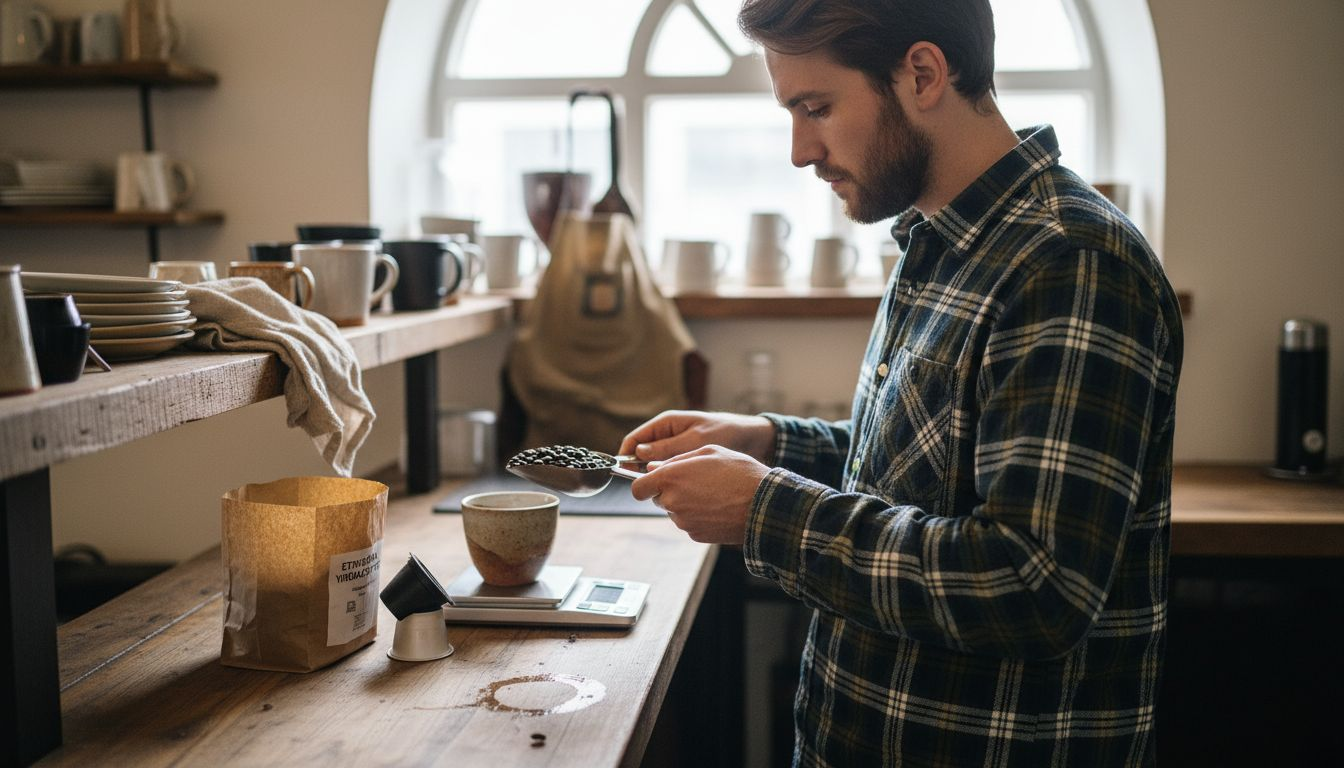
Weigh both beans and water for every brew. A typical ratio is 1 gram of coffee per 16 grams of water, adjusted to taste. For a 12-ounce cup (340 grams of water), use about 21 grams of coffee. This consistency prevents the guesswork that leads to overbrewing.
Choose brewing methods that match your consumption patterns. Cold brew and batch brewing work well if multiple people drink coffee throughout the day. Single-cup methods like pour-over or Aeropress suit individual servings without leftovers.
Burr grinders create uniform particle size, maximizing extraction efficiency. Blade grinders produce inconsistent grounds that extract unevenly, often requiring you to use more coffee to achieve desired strength. Invest in a burr grinder to reduce grounds waste by 10 to 15%.
Reusable single-serve pods drastically cut packaging waste compared to disposable options. Fill reusable pods with your measured grounds, brew, then rinse and reuse. This simple switch can eliminate hundreds of disposable pods annually.
Pro Tip: Brew only what you’ll consume within two hours. Coffee oxidizes quickly after brewing, losing flavor and encouraging waste. If you regularly have leftovers, reduce your batch size by 20% and adjust from there.
Brewing efficiency checklist:
- Weigh beans before grinding to exact specifications
- Grind immediately before brewing to preserve volatile aromatics
- Set a timer to ensure proper extraction time
- Pour only the amount of water matching your desired yield
- Clean equipment after each use to prevent oil buildup affecting taste
Explore eco-conscious coffee tips for additional brewing strategies. Learn specific techniques for reducing waste with coffee pods if you prefer single-serve convenience.
| Method | Waste Level | Best For |
|---|---|---|
| Pour-over | Very Low | Single servings, precise control |
| French press | Low | 2-4 servings, full immersion flavor |
| Reusable pods | Low | Convenience without disposable waste |
| Drip machine | Medium | Large batches, busy mornings |
| Disposable pods | Very High | Convenience (not recommended) |
Step 3: monitoring and adjusting workflow
Tracking consumption patterns reveals hidden waste and optimization opportunities. Dedicate five minutes weekly to review your coffee habits and identify improvement areas.
Create a simple log noting daily beans used, water measured, and any leftovers discarded. After two weeks, patterns emerge. You might discover you consistently overbrew on weekends or that certain brewing methods leave more waste.
Analyze this data to adjust portions and methods. If you regularly discard the last two ounces from your French press, reduce your batch by that amount. If Monday mornings generate excess waste because you’re rushed, prep your beans and water the night before.
Experiment with variables systematically. Try adjusting grind size finer or coarser to see if extraction improves, reducing the temptation to brew stronger coffee by using more grounds. Test different coffee-to-water ratios to find your sweet spot that balances flavor and efficiency.
Establish a feedback loop for continuous improvement. Every month, calculate your waste percentage by dividing discarded coffee (beans plus grounds plus brewed liquid) by total coffee purchased. Set a goal to reduce this percentage by 10% monthly until you reach optimal efficiency.
Document your improvements in a journal or spreadsheet. Note what changes worked and which didn’t. This record reinforces positive habits and provides motivation as you see waste numbers decline.
Monitoring strategies include:
- Photographing your daily coffee setup to spot inconsistencies
- Setting phone reminders to log consumption before bed
- Using a kitchen notebook specifically for coffee tracking
- Reviewing utility bills to correlate coffee habits with water usage
- Sharing progress with friends or online communities for accountability
Discover low-waste coffee rituals that integrate monitoring into your daily routine seamlessly.
Step 4: repurposing and composting coffee waste
Even with perfect brewing, used grounds remain. Composting transforms this byproduct into a resource rather than waste. Coffee grounds compost within 6 months, improving soil quality and diverting up to 30% of household coffee waste from landfills.
Add used grounds directly to your compost bin, mixing them with brown materials like dried leaves or cardboard at a 1:3 ratio. Grounds are nitrogen-rich (green material), so balance them properly to prevent odor and ensure efficient decomposition.
If you lack outdoor space, explore municipal composting programs. Many cities now offer curbside collection or drop-off sites for organic waste. Store grounds in a sealed container in your freezer between drop-offs to prevent mold and smell.
Coffee grounds offer numerous reuse applications beyond composting. Sprinkle dry grounds around garden plants as a natural slug and snail deterrent. Mix grounds with coconut oil for a gentle exfoliating body scrub. Place dried grounds in breathable fabric bags as natural deodorizers for shoes, closets, or refrigerators.
Never dispose of grounds down the sink drain. Despite being organic, they clump and contribute to plumbing blockages. Always compost or trash them in sealed bags.
Pro Tip: Keep a small countertop compost pail with a charcoal filter near your coffee station. This makes composting convenient and eliminates excuses to trash grounds. Empty it every few days to maintain freshness.
Repurposing ideas for coffee waste:
- Natural dye for fabrics or paper crafts (creates warm brown tones)
- Furniture scratch concealer on dark wood surfaces
- Odor neutralizer mixed into cat litter or diaper pails
- Fertilizer for acid-loving plants like blueberries, azaleas, or roses
- Vermicompost ingredient for worm bins (worms love coffee grounds)
Read about compostable coffee packaging impact to extend sustainability beyond grounds. Access the official coffee grounds composting guide for detailed instructions.
Common mistakes and troubleshooting
Even committed eco-conscious consumers make errors that increase waste. Recognizing these pitfalls helps you avoid them and troubleshoot problems quickly.
Overbrewing remains the primary mistake. Enthusiasm for strong coffee or hosting guests tempts you to make extra “just in case.” This habit generates consistent leftovers. Fix this by measuring precisely for known consumption and brewing a second batch if needed.
Inaccurate measuring without a scale leads to inconsistent results. You compensate by using more coffee to ensure strength, wasting grounds. Invest in a scale and commit to weighing every time, even when rushed.
Improper storage causes premature spoilage and mold growth. Beans stored in non-airtight containers or humid environments degrade rapidly. Review your storage conditions monthly and upgrade containers if you notice staleness developing faster than expected.
Continuing to use disposable single-serve pods despite environmental concerns creates massive packaging waste. Transition to reusable pods or alternative brewing methods. The initial investment pays off within months through reduced waste and cost savings.
Neglecting consumption tracking prevents identifying waste sources. Without data, you can’t optimize your workflow. Start tracking immediately, even if you only note rough estimates initially. Precision improves with practice.
Troubleshooting common issues:
- Mold on stored beans: Move to drier location, use moisture meter, reduce quantity purchased
- Bitter overextracted coffee: Coarsen grind, reduce brew time, lower water temperature
- Weak underextracted coffee: Fine grind, extend contact time, increase water temperature
- Frequent leftovers: Reduce batch size by 25%, brew on demand instead of in advance
- Inconsistent flavor: Weigh precisely, maintain equipment cleanliness, track variables systematically
Avoid these coffee waste reduction mistakes by learning from others’ experiences. Addressing errors early prevents them from becoming entrenched bad habits.
Expected outcomes and benefits
Committing to this workflow delivers measurable environmental and personal benefits within weeks. Setting realistic expectations helps maintain motivation during the adjustment period.
Expect to reduce coffee waste by 40 to 50% within three months of consistent implementation. This reduction comes from better storage, precise brewing, and composting grounds. Your actual results depend on starting waste levels and adherence to the workflow.
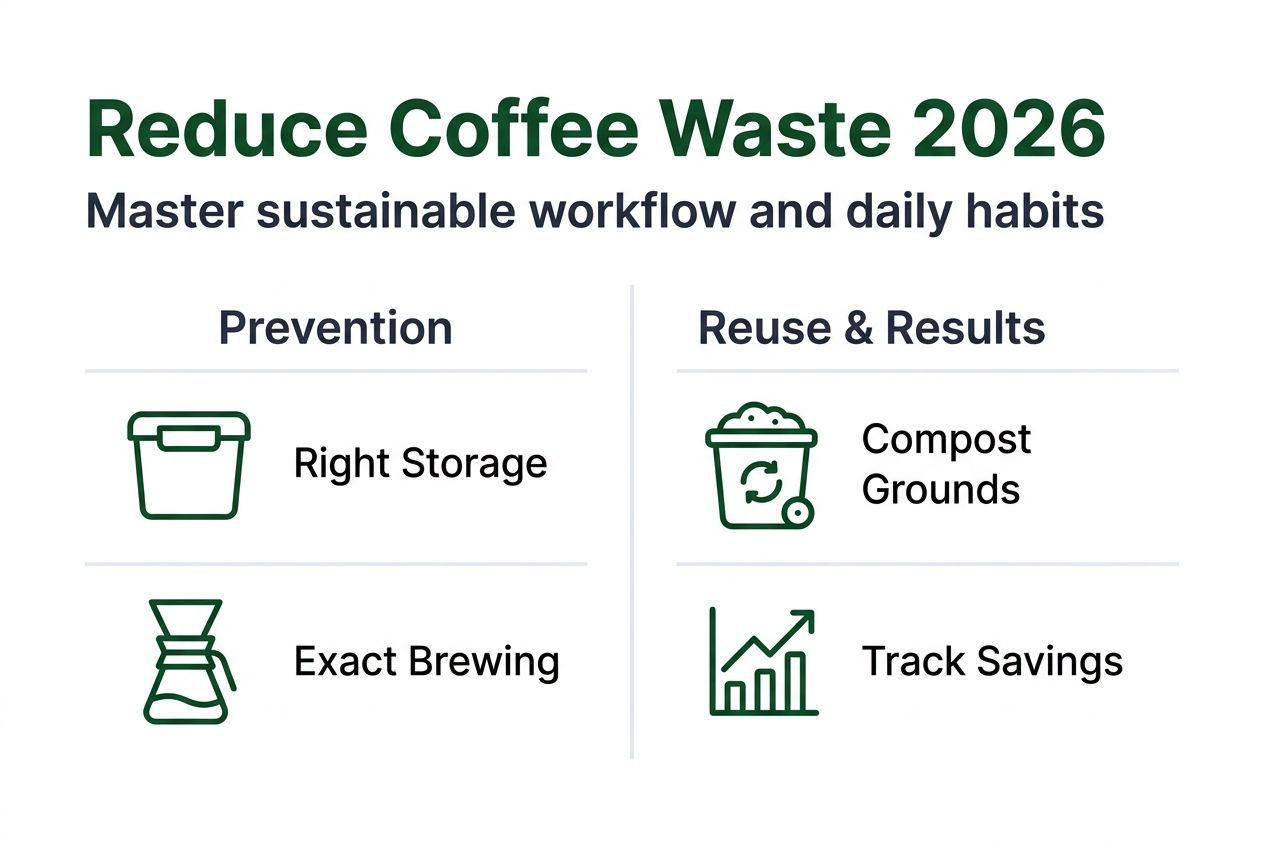
Environmental impact extends beyond your kitchen. By buying sustainably sourced coffee and minimizing waste, you support farms practicing regenerative agriculture. Every pound of coffee not wasted conserves the water, energy, and labor invested in its production.
Coffee flavor improves noticeably with fresher beans and optimized brewing. You’ll taste more nuanced notes and brighter acidity because beans haven’t oxidized in poor storage. Precise measuring ensures consistent extraction, eliminating the bitterness or weakness that results from guesswork.
Financial savings accumulate quickly. Wasting less coffee means buying less frequently. If you currently discard 20% of purchased coffee through spoilage and overbrewing, eliminating that waste is equivalent to a 20% discount on every bag.
Personal satisfaction grows from aligning your daily routine with your values. Knowing your coffee habit supports environmental initiatives rather than harming them creates genuine psychological benefits. This positive reinforcement makes the workflow self-sustaining.
Quantifiable benefits include:
- 40-50% reduction in total coffee waste within 90 days
- $5-$15 monthly savings on coffee purchases (varies by consumption volume)
- 2-3 week improvement in bean freshness and flavor quality
- 80-90% reduction in packaging waste (switching from disposable to reusable pods)
- Measurable decrease in household garbage volume sent to landfills
These outcomes compound over time, making your coffee routine progressively more sustainable and cost-effective. Tracking your specific results reinforces positive changes and highlights areas for further optimization.
Explore eco-friendly coffee and tea options at EcoVibe Roast
Reducing waste becomes easier when you start with sustainably sourced products designed for eco-conscious consumers. EcoVibe Roast offers coffee and tea that align perfectly with the waste reduction workflow you’ve just learned.
Every purchase at EcoVibe Roast supports environmental initiatives: mangrove tree planting and ocean-bound plastic removal. 
Browse the coffee and tea collection to find sustainably sourced beans and single-serve options that minimize packaging waste. The organic tea selection complements your coffee routine with biodegradable packaging and ethically sourced ingredients.
Learn more about EcoVibe Roast’s environmental impact to see how your purchases contribute to tangible sustainability outcomes. When you buy coffee aligned with your values, reducing waste feels natural rather than sacrificial.
Frequently asked questions
What equipment is essential for reducing coffee waste at home?
Airtight storage containers, a digital kitchen scale accurate to 0.1 grams, and a moisture meter for humid climates form the essential toolkit. These tools enable precise measuring, proper storage, and early spoilage detection. Basic brewing knowledge and access to composting complete the foundation for an effective waste reduction workflow. Explore the complete eco-conscious coffee workflow guide for detailed equipment recommendations.
How long does composting coffee grounds take to reduce waste effectively?
Coffee grounds break down within 6 months when properly mixed with brown materials in a compost bin. This process diverts significant waste from landfills while creating nutrient-rich soil amendment. Home composting systems work efficiently if you maintain proper nitrogen-to-carbon ratios and adequate moisture levels. Municipal composting programs may process grounds even faster using industrial methods. Check the coffee grounds composting duration guide for specific timelines.
What are the most common mistakes that increase coffee waste?
Brewing excessive amounts, measuring inaccurately without a scale, and storing beans improperly in non-airtight containers rank as the top waste-generating mistakes. Using disposable single-serve pods adds substantial packaging waste. Failing to track consumption prevents identifying and fixing waste patterns. Address these errors by implementing precise measuring, proper storage, reusable brewing methods, and weekly monitoring. Learn to avoid common coffee waste mistakes through proven strategies.
Can I freeze coffee beans to extend freshness and reduce waste?
Freezing works for long-term storage only if you use vacuum-sealed bags and thaw beans completely before opening. Temperature fluctuations create condensation that degrades quality, so frozen beans should never be removed and returned multiple times. For most consumers, buying smaller quantities and storing properly at room temperature in airtight containers proves more practical. Freezing suits bulk purchases or infrequent use scenarios but requires careful execution to prevent moisture damage and freezer burn.
Recommended
- Cut Coffee Waste by 30% in 2026: A Sustainability Guide – EcoVibe Roast
- Low-waste coffee rituals cut 50% waste and save $120 in 2026 – EcoVibe Roast
- Master Eco-Conscious Coffee Making Workflow for Sustainability – EcoVibe Roast
- How to Reduce Waste with Coffee Pods for Eco-Friendly Brewing – EcoVibe Roast
- Experience Café-Quality Coffee with Sugar Free Shots – MyGymSupplements


