

TL;DR:
- Ethical tea sourcing involves environmental responsibility, social fairness, and transparency.
- Verify certifications and gather detailed supply chain information to ensure authenticity.
- Continuous consumer engagement and research are crucial for sustaining ethical purchasing habits.
Choosing ethical tea sounds simple until you’re standing in a store aisle, surrounded by green packaging and feel-good buzzwords that may mean very little. Transparency in tea sourcing empowers you to cut through that noise and make choices that genuinely support people and the planet. The truth is, many tea brands make sustainability claims without the practices to back them up. But here’s the good news: with the right knowledge and a clear process, you can source tea that truly aligns with your values. This guide walks you through every step, from understanding what ethical sourcing actually means to verifying your final purchase.
Table of Contents
- Understand what makes tea ethical
- Essential preparation: What you need to source ethically
- Step-by-step guide to sourcing ethical tea
- Verify, enjoy, and advance your impact
- Why true ethical tea sourcing means never stopping at ‘certified’
- Take the next step: Enjoy ethical teas with EcoVibe Roast
- Frequently asked questions
Key Takeaways
| Point | Details |
|---|---|
| Certifications matter | Look for third-party ethical certifications but always check supply chain transparency too. |
| Prepare before buying | Use a checklist and dig deeper into brand practices before making a purchase. |
| Follow practical steps | Sourcing ethical tea is easier with clear research, targeted questions, and careful verification. |
| Impact goes beyond labels | Ongoing curiosity and supporting smaller brands can maximize your positive footprint. |
Understand what makes tea ethical
Before you can source ethical tea with confidence, you need to know what “ethical” actually looks like in practice. It’s more than a pretty label or a nature photo on the box. Ethical tea sourcing touches three core areas: environmental responsibility, social fairness, and economic sustainability.
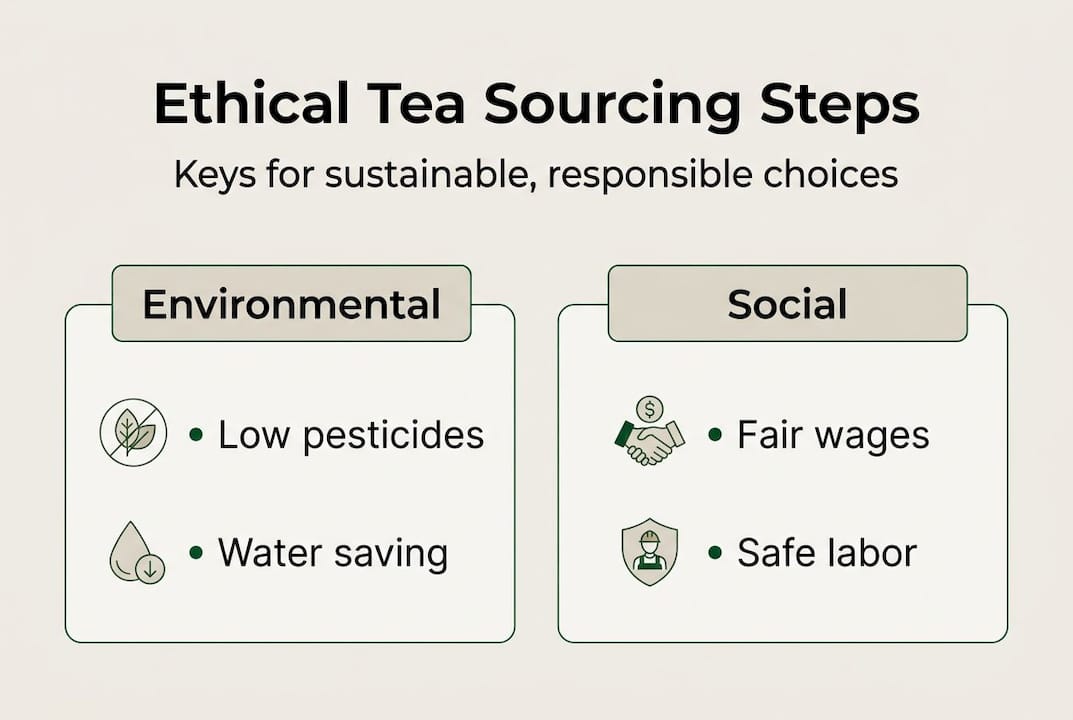
On the environmental side, look for farming methods that protect biodiversity, minimize pesticide use, and conserve water. Shade-grown tea, for example, supports bird habitats and reduces the need for chemical inputs. On the social side, workers should earn fair wages, operate in safe conditions, and benefit from community investment programs.
Certifications are your fastest shortcut. Fair Trade and organic certifications are leading indicators of ethical tea, and they signal that a brand has been independently verified. Here’s a quick breakdown of the most recognized certifications:
| Certification | What it covers | Who verifies it |
|---|---|---|
| Fair Trade | Fair wages, safe conditions, community funds | Fair Trade International |
| USDA Organic | No synthetic pesticides or fertilizers | USDA National Organic Program |
| Rainforest Alliance | Biodiversity, worker welfare, farm management | Rainforest Alliance |
| B Corp | Overall social and environmental performance | B Lab |
That said, not every ethical tea brand carries a certification. Some small-scale producers simply can’t afford the fees. That’s why supply chain transparency matters so much. A brand willing to share detailed information about its farms, workers, and practices is often more trustworthy than one hiding behind a single logo.
Key things to look for beyond certifications:
- Named origin farms listed on the packaging or website
- Worker welfare reports or third-party audits available publicly
- Pesticide and chemical use policies stated clearly
- Community investment programs described with specifics
You can also use your ethical tea sourcing guide as a reference when evaluating brands, and check eco labels in consumer products to understand how label rigor varies across industries.
Pro Tip: Browse third-party directories like the Ethical Consumer database or Fair World Project to find pre-vetted brands that meet rigorous sourcing standards.
Essential preparation: What you need to source ethically
With those concepts in mind, gather the tools and information you’ll need to make smart sourcing decisions. Jumping into ethical tea shopping without preparation is a bit like hiking without a map. You might get somewhere, but you’ll waste a lot of energy along the way.
Start by assembling your research toolkit. You’ll want access to brand websites, retailer directories, and mobile apps like “Buycott” or “Good On You” that let you scan products for ethical ratings on the spot. These tools put real-time information in your hands when you’re browsing in store or online.

A sustainable tea checklist streamlines decision-making and keeps you from getting distracted by clever marketing. Having a checklist means you evaluate every brand against the same criteria, which makes comparisons much easier.
Here’s a comparison to help you understand the difference between certified and non-certified teas:
| Factor | Certified tea | Non-certified tea |
|---|---|---|
| Cost | Often slightly higher | Varies widely |
| Traceability | Usually documented | Depends on brand |
| Labor standards | Verified by third party | Self-reported or unknown |
| Environmental practices | Audited regularly | May not be monitored |
| Trust level | High (if reputable cert) | Requires deeper research |
Before you shop, prepare a short list of questions to ask retailers or brands directly. Strong questions include:
- Where exactly is this tea grown, and can I see the farm details?
- What certifications does this product hold, and are they current?
- How are workers compensated, and are audits conducted?
- What is your policy on pesticide use and water conservation?
Also, know your red flags. Vague language like “eco-friendly” or “natural” without any certification or sourcing detail is a warning sign. Brands that can’t answer basic questions about their supply chain are worth skipping. Understanding the reasons for responsible sourcing helps reinforce why this preparation step is worth your time.
Step-by-step guide to sourcing ethical tea
With your essentials in place, you’re ready to follow the ethical sourcing process. Think of this as your personal roadmap, one you can return to every time you’re ready to try a new tea.
-
Research brands thoroughly. Start online. Look for brands with detailed “About Us” or “Our Impact” pages that name specific farms, regions, and partners. Vague mission statements are not enough.
-
Check certifications and labels. Use the certification table from the previous section as your guide. Verify that certifications are current by checking the certifying body’s website directly. Expired or misused certifications are more common than you’d think.
-
Investigate the supply chain. Go beyond the label. Look for annual sustainability reports, third-party audits, or interviews with the brand’s founders. Evaluating suppliers carefully and asking about sourcing practices is essential to finding brands you can truly trust.
-
Ask questions directly. Email or message the brand. Ask where their tea is grown, how workers are paid, and what environmental practices they follow. A brand that responds quickly and specifically is a strong sign. Transparency in the supply chain is one of the most reliable trust signals you can find.
-
Read community reviews. Look for reviews on platforms that focus on ethics, not just flavor. Other conscious consumers often flag issues that don’t appear in official marketing.
-
Make your purchase with confidence. Once a brand passes your checklist, buy with enthusiasm. You’re voting with your wallet for a better tea industry.
For more detailed tips for ethical tea selection, explore resources that break down the nuances of each step even further.
Pro Tip: Keep a simple notes document or spreadsheet where you log each brand you research, their certifications, and your impressions. Over time, this becomes an invaluable personal reference that saves you from repeating the same research.
Verify, enjoy, and advance your impact
Once you’ve followed the steps and sourced your tea, your ethical journey isn’t over. Verification is where many well-meaning shoppers stop short, and it’s also where your impact can grow the most.
After your purchase arrives, take a few minutes to confirm what you bought. Check the packaging for certification logos and compare them against the certifying body’s public database. Save your receipts and any supply chain documentation the brand provides. This creates a paper trail that helps you evaluate the brand again in the future.
“The real impact comes when every cup supports both people and planet.”
Avoid these common mistakes that can undermine your efforts:
- Assuming all “eco” labels mean ethical. Many terms like “natural” or “green” are unregulated and can be used freely by any brand.
- Ignoring labor issues. Environmental certifications don’t always cover worker welfare. Check both dimensions.
- Buying once and forgetting. Brands change ownership, suppliers, and practices. Regularly reviewing your tea sourcing helps you maximize your ethical impact over time.
- Overlooking packaging waste. Ethical tea in excessive plastic packaging is still a problem. Look for brands using compostable or minimal packaging.
You can also amplify your impact beyond your own cup. Share what you learn with friends and family. Write honest reviews that highlight a brand’s ethical practices, because other conscious shoppers rely on those insights. Support small and independent tea brands that are doing the right thing but don’t have massive marketing budgets.
For inspiration on building a fully sustainable routine, check out these holistic sustainability tips and explore sustainable brewing tips that reduce your environmental footprint right down to how you prepare your cup.
Why true ethical tea sourcing means never stopping at ‘certified’
Here’s our honest take: certifications are a wonderful starting point, but they are not the finish line. We’ve seen brands with impressive logos on their packaging that still have murky labor practices buried in their supply chains. And we’ve seen small, uncertified farms producing some of the most responsibly grown tea in the world.
The certification system is imperfect. It costs money to get certified, which means smaller, genuinely ethical producers are sometimes excluded. Meanwhile, larger corporations can afford the fees and the paperwork while still cutting corners elsewhere.
What actually moves the needle is a curious, engaged consumer who keeps asking questions even after the purchase. Read the news about your favorite brands. Follow advocacy organizations. Notice when a company’s story changes.
We believe the best outcomes come from informed consumers who treat sourcing as an ongoing practice, not a one-time checkbox. Explore the full ethical tea benefits and revisit our in-depth tea sourcing guide regularly as the industry evolves. Your curiosity is one of the most powerful tools for change.
Take the next step: Enjoy ethical teas with EcoVibe Roast
Ready to put this guide into action? At EcoVibe Roast, we’ve done a lot of the sourcing work for you, so every sip feels like a warm hug for both you and Mother Earth.

Explore our aromatic Hibiscus Berry Tea for a fruity, vibrant brew, or enjoy the delicate floral notes of our Jasmine Tea, both responsibly sourced and crafted with care. Every purchase supports mangrove tree planting and ocean-bound plastic removal, so your tea habit becomes a force for real good. Want to see exactly how we walk the talk? Visit our EcoVibe Roast’s environmental impact page for full transparency on our sourcing and sustainability commitments.
Frequently asked questions
What is the most reliable indicator of ethical tea?
Third-party certifications and supply chain transparency together offer the strongest reliability, since certifications verify standards while transparency reveals the full picture behind the label.
How can I tell if a tea brand engages in greenwashing?
Look for specific, verifiable claims backed by recognized certifications or open sourcing details. Vague marketing claims without evidence are a clear sign of greenwashing.
What questions should I ask when buying ethical tea?
Ask about supplier relationships, labor practices, current certifications, and environmental stewardship policies. Retailers should clearly explain their sourcing and labor standards without hesitation.
Does buying local or small-batch tea matter ethically?
Yes, smaller and local producers often offer higher transparency and a lower environmental footprint. Small and local sourcing can meaningfully support ethical practices and community investment.
Can I trust eco-labels on tea?
Most reputable eco-labels are trustworthy, but always confirm they’re backed by recognized third parties. Not all eco-labels carry the same rigor, so validation is essential before you trust the claim.
Recommended
- What is ethical tea sourcing: a 2026 guide – EcoVibe Roast
- Sustainable tea checklist: essential steps for eco-conscious drinkers – EcoVibe Roast
- Why choose ethical tea? Benefits, impact, and guidance – EcoVibe Roast
- How to choose sustainable tea for ethical enjoyment – EcoVibe Roast
- How to source vegan skincare: ethical beauty guide – Didis Beauty Center


