

Grabbing your morning cup of shade-grown coffee and feeling good about it is a wonderful start, but true sustainability runs much deeper than a single label on a bag. Many eco-conscious consumers assume that choosing an ‘organic’ or ‘eco-friendly’ product is enough, yet holistic sustainability is an integrated approach that addresses the interdependencies among environmental, social, and economic systems simultaneously. That means your aromatic morning brew touches far more lives and ecosystems than you might realize. This article walks you through what holistic sustainability really means, how it applies to coffee and tea, and how you can put it into practice every single day.
Table of Contents
- Understanding holistic sustainability
- How holistic sustainability applies to coffee and tea
- Holistic methodologies: From theory to practice
- Practical steps for holistic sustainability at home
- Find holistic sustainability in your next cup
- Frequently asked questions
Key Takeaways
| Point | Details |
|---|---|
| Integrated approach | Holistic sustainability blends environmental, social, and economic concerns, avoiding single-issue fixes. |
| Beyond certifications | Certifications are a useful guide, but true sustainability requires deeper transparency and fair economic outcomes. |
| Frameworks and practices | Life Cycle Sustainability Assessment and Holistic Management help prevent unintended consequences in sustainable coffee and tea. |
| Smart consumer choices | Picking certified, traceable, regenerative brands empowers your role in holistic sustainability. |
Understanding holistic sustainability
So what exactly separates holistic sustainability from simply buying a reusable cup or choosing a recycled bag? The difference is systems thinking. Instead of fixing one problem in isolation, holistic sustainability asks how every decision ripples outward across people, planet, and profit.
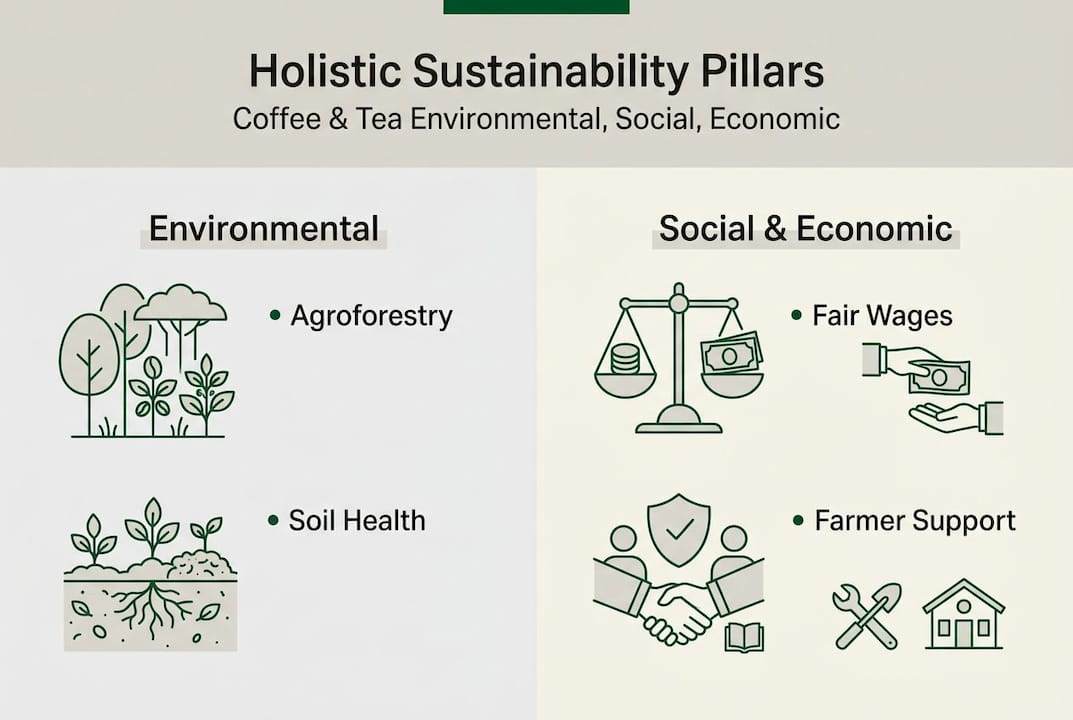
At its core, the concept rests on what researchers call the triple bottom line: environmental health, social equity, and economic viability. These three pillars are not separate checklists. They are deeply connected, and improving one without considering the others can actually make things worse. Some researchers now propose integrated definitions that also emphasize equity, resilience, and systems thinking across interconnected health domains.
Here is a quick breakdown of what each pillar means in practice:
- Environmental: Protecting biodiversity, reducing carbon emissions, maintaining healthy soil and water
- Social: Ensuring fair wages, safe working conditions, and thriving farming communities
- Economic: Making sure farmers and supply chains are financially viable long-term
“Holistic sustainability is not about perfection. It is about recognizing that every cup of coffee or tea you enjoy is connected to a web of relationships, and choosing to honor that web.”
This is why understanding the social impact in coffee matters just as much as knowing the environmental impact of coffee production. And when you start exploring specialty grade beans, you will find that quality and sustainability often go hand in hand.
How holistic sustainability applies to coffee and tea
With the concept established, let’s examine how holistic sustainability actually works in coffee and tea. The good news is that several certification frameworks already try to reflect the triple bottom line, even if imperfectly.
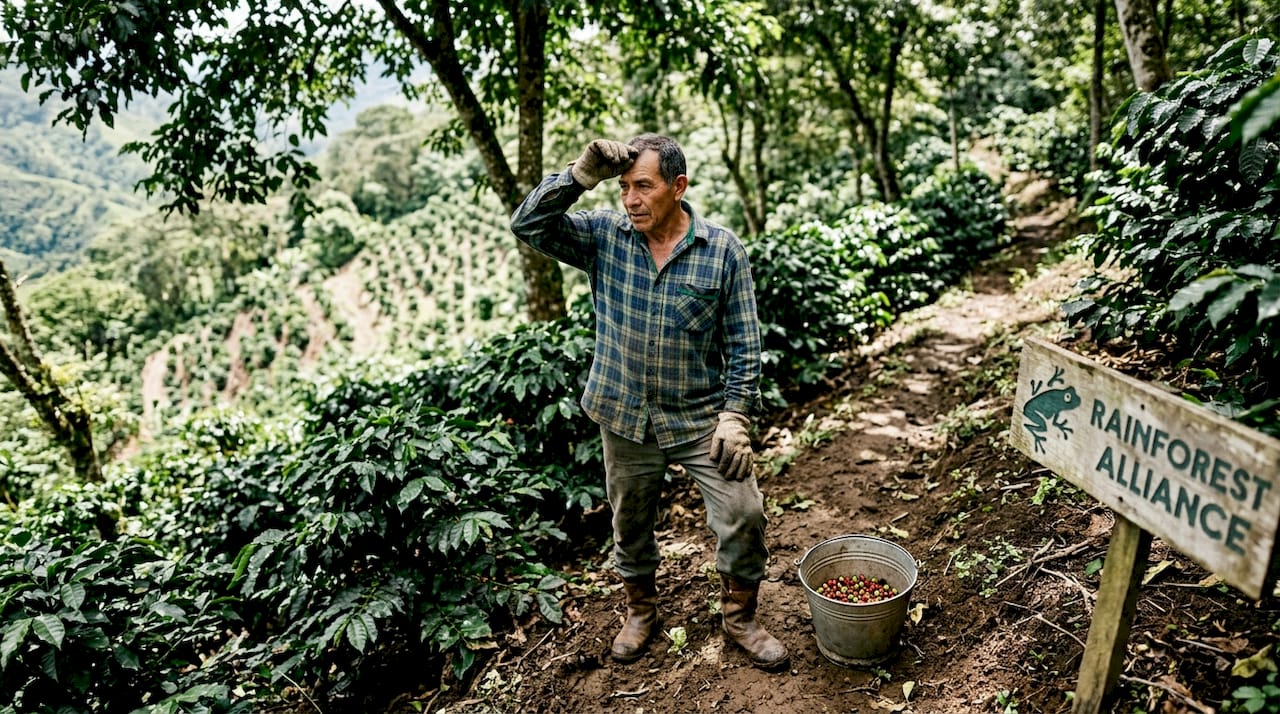
Rainforest Alliance standards cover all three pillars for coffee and tea: environmental practices like agroforestry and soil health, social elements like livelihoods and community support, and economic factors. A regenerative certification tier is also emerging, pushing the bar even higher.
Carbon footprint data tells a compelling story too. Research on Yemen specialty coffee found a carbon footprint of 3.14 kg CO2 per kilogram of green beans, with 90% of emissions coming from cultivation alone. Natural processing methods help keep that number lower compared to washed processing, which uses significantly more water.
Here is how major certification types stack up across the three pillars:
| Certification | Environmental focus | Social focus | Economic focus |
|---|---|---|---|
| Rainforest Alliance | High (agroforestry, soil) | Medium to high | Medium |
| Fair Trade | Medium | High (fair wages) | Medium to high |
| Organic | High (no synthetics) | Low to medium | Low to medium |
| Regenerative Organic | Very high | High | Medium |
However, certifications are not a silver bullet. Certifications like Fair Trade and Rainforest Alliance provide important baselines, but they may not ensure full economic viability if the premiums paid are not sufficient for farmers to earn living incomes. That is a real gap worth knowing about.
Practices that genuinely move the needle include:
- Agroforestry: Growing coffee and tea under a canopy of trees, which supports biodiversity and sequesters carbon
- Regenerative agriculture: Rebuilding soil health rather than just maintaining it
- Traceability: Knowing exactly which farm your beans came from, so accountability is real
Learning about the impact of coffee certifications and the types of coffee certifications available helps you read labels with much sharper eyes. And understanding sustainable agriculture for coffee and tea gives you the bigger picture behind every sip.
Holistic methodologies: From theory to practice
These certifications and impact measures are grounded in concrete frameworks. Let’s unpack those so you can see how producers and brands actually put holistic sustainability to work.
One of the most rigorous tools is the Life Cycle Sustainability Assessment, or LCSA. This framework combines three assessments: Life Cycle Assessment for environmental impact, Social Life Cycle Assessment for social impact, and Life Cycle Costing for economic impact. Together, they evaluate a product across its entire lifecycle, from seed to your cup.
Another powerful approach is Holistic Management, a decision-making framework for farms that integrates social, environmental, and financial goals. Farm managers test every decision against a clearly defined whole-farm goal, making sure no single improvement comes at the expense of another.
A critical insight from LCSA research is that holistic approaches avoid what experts call ‘problem shifting,’ which means fixing one pillar while quietly worsening another. For example, switching to a water-intensive processing method to improve flavor quality could reduce the social sustainability of a water-scarce farming community.
Here is how these methodologies translate into practical steps for brands and farm managers:
- Map the full supply chain to identify where environmental, social, or economic risks are hiding
- Set whole-farm goals that balance soil health, worker wellbeing, and financial stability together
- Use traceability tools so every stakeholder from farmer to consumer can verify claims
- Measure carbon and water footprints at the farm level, not just at the roasting or packaging stage
- Review certifications annually to ensure premiums are actually reaching farmers as living wages
Pro Tip: When you are researching a coffee or tea brand, look for transparency reports or farm partnership pages. Brands that share specific farm names, GPS coordinates, or farmer income data are practicing genuine traceability, not just marketing.
Exploring regenerative agriculture in coffee and learning how to support sustainable coffee farms gives you a practical lens for evaluating the brands you already love.
Practical steps for holistic sustainability at home
Finally, let’s bring holistic sustainability home and empower your own choices. You do not need a degree in environmental science to make a real difference. You just need the right questions and a little curiosity.
Start by looking beyond the label. A bag that says ‘eco-friendly’ might only address one pillar. Instead, look for brands that can answer these questions clearly:
- Where exactly was this coffee or tea grown, and by whom?
- What farming practices were used, and do they include agroforestry or regenerative methods?
- Are farmers paid a living wage, not just a fair trade premium?
- How does the brand measure and reduce its carbon footprint?
- Is there a third-party certification, and which pillars does it actually cover?
Choosing Rainforest Alliance or organic certified coffee and tea with regenerative practices like agroforestry and soil health gives you the strongest holistic integration. Always verify claims through traceability, not just packaging promises.
Watch out for problem-shifting in your own choices too. For example, switching to single-serve pods for convenience might reduce your brewing waste but increase plastic waste. A truly holistic choice considers the full picture, including packaging, shipping distance, and whether the brand supports its farming communities.
Pro Tip: Supporting local coffee suppliers when possible reduces transportation emissions and often means stronger relationships between roasters and farmers, which supports better social outcomes.
Keeping up with sustainability trends in coffee helps you stay ahead of greenwashing and spot genuinely innovative brands. And exploring coffee with positive social impact shows you what it looks like when the social pillar is truly prioritized.
Find holistic sustainability in your next cup
You now have a clear picture of what holistic sustainability really means and how to apply it to your coffee and tea choices. The next step is finding products that actually live up to those standards.

At EcoVibe Roast, every product is chosen with all three pillars in mind: environmental responsibility, social impact, and economic fairness for farming communities. With every purchase, mangrove trees are planted and ocean-bound plastics are removed, so your morning ritual becomes a warm hug for both you and Mother Earth. Browse our organic tea collection for ethically sourced herbal blends, or try our sustainable coffee pods for a convenient option that does not compromise on values. Explore the full range of sustainable coffee and tea and make your next cup count.
Frequently asked questions
What makes sustainability ‘holistic’ in coffee and tea?
Holistic sustainability considers environmental, social, and economic factors together rather than treating each as a separate issue. In coffee and tea, this means looking at farming practices, farmer livelihoods, and long-term economic viability all at once.
Are certifications enough for true holistic sustainability?
Certifications are a helpful starting point, but Fair Trade and Rainforest Alliance labels do not always guarantee that farmers earn living incomes or that all three pillars are fully addressed. They work best as one part of a broader evaluation.
How can consumers support holistic sustainability?
Choose Rainforest Alliance or organic certified coffee and tea from brands that practice regenerative agriculture and share transparent traceability information. Asking questions about farm origins and farmer pay goes a long way.
What is Life Cycle Sustainability Assessment (LCSA) and why does it matter?
LCSA combines environmental, social, and economic assessments across a product’s full lifecycle, helping brands and researchers avoid problem-shifting. It matters because it ensures that improving one area does not quietly harm another.
Recommended
- Master Eco-Conscious Coffee Making Workflow for Sustainability – EcoVibe Roast
- Eco-Conscious Coffee Brewing Process for Sustainable Enjoyment – EcoVibe Roast
- Circular economy in beverage: eco guide for coffee & tea – EcoVibe Roast
- Why sustainable agriculture matters for coffee and tea – EcoVibe Roast
- Sustainable Coffee Wholesale | Eco Friendly Supplier | Devon Somerse


