

TL;DR:
- Truly sustainable coffee and tea gifts focus on ethical sourcing, regenerative practices, and responsible packaging.
- Trends for 2026 include curated single-origin sets, reusable items, shade-grown beans, and minimalist packaging.
- Effective zero-waste gifting involves choosing regenerative products, pairing with reusable gear, and eco-friendly wrapping materials.
Picking a sustainable coffee or tea gift feels straightforward until you realize that a “Fair Trade” label doesn’t automatically mean low carbon footprint, minimal packaging waste, or fair wages all the way down the supply chain. Certifications like Fair Trade and Organic are now widely expected, yet truly sustainable gifts require deeper sourcing awareness and smarter packaging choices. This guide walks you through what sustainability actually means for coffee and tea gifts, the trends shaping 2026, how to build a zero-waste gift from scratch, and how to evaluate brands with confidence. You’ll leave with practical tools, not just good intentions.
Table of Contents
- What makes a coffee or tea gift truly sustainable?
- Top sustainable gift trends in coffee and tea for 2026
- How to choose and present zero-waste coffee and tea gifts
- Sourcing gifts responsibly: certifications, climate impact, and brand practices
- The nuance most miss: sustainability is a spectrum, not a stamp
- Discover sustainable gifting with EcoVibe Roast
- Frequently asked questions
Key Takeaways
| Point | Details |
|---|---|
| Beyond certifications | Look for regenerative and transparent sourcing for maximum sustainability impact. |
| Zero-waste gifting | Pair refillable coffee or tea with reusable containers to eliminate package waste. |
| 2026 trends | Sampler sets, climate-positive packaging, and reusable gear are the hottest sustainable gift ideas. |
| Progress over perfection | Even small sustainable changes add up—don’t let perfection stop you from making better gifting choices. |
What makes a coffee or tea gift truly sustainable?
With growing interest in sustainable gifting, it’s important to know what truly sets eco-friendly coffee and tea gifts apart. The word “sustainable” gets stretched so thin that it can mean almost anything. For coffee and tea gifts specifically, it covers a wide range of practices, from how the crop is grown and harvested to how workers are treated and how the final product reaches your door.
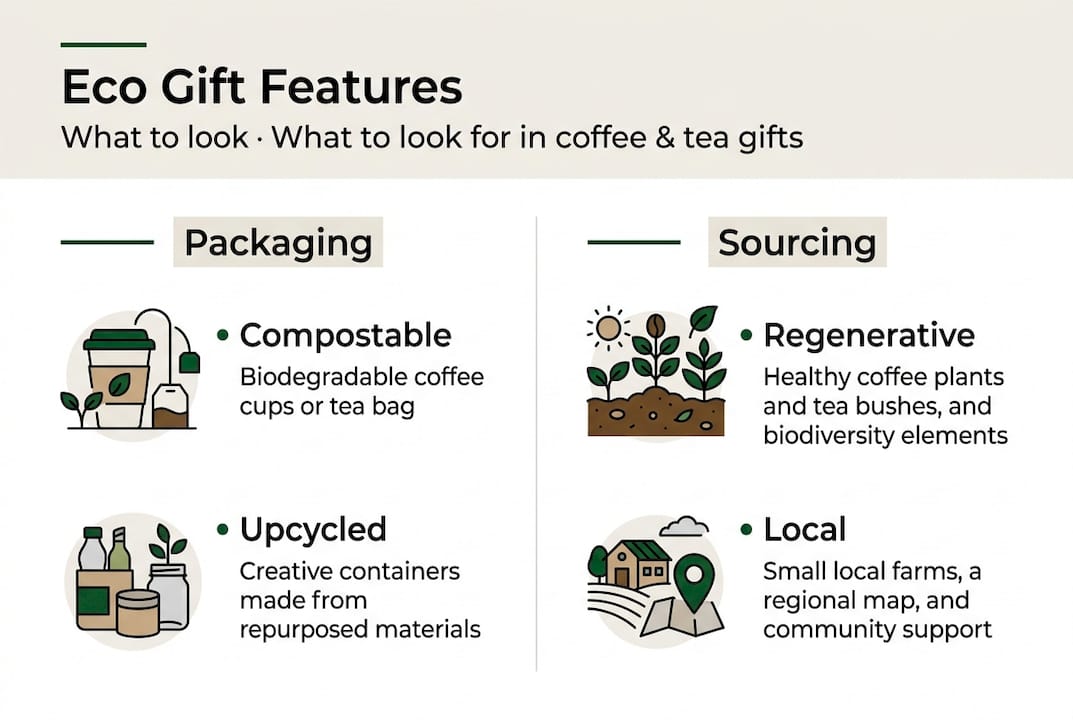
At its core, a sustainable coffee or tea gift should reflect:
- Ethical sourcing: Farmers receive fair wages and work in safe conditions.
- Low-impact farming: Methods that protect soil, water, and biodiversity rather than deplete them.
- Responsible packaging: Materials that are compostable, recyclable, or reusable rather than single-use plastic.
- Supply chain transparency: The brand can tell you exactly where the product comes from.
Certifications like Fair Trade and Organic are a solid starting point, but they’re just that: a starting point. Fair Trade ensures minimum pricing and community premiums. Organic restricts synthetic inputs. Neither, however, requires a brand to actively restore the land or reduce its carbon footprint beyond a baseline.
That’s where regenerative agriculture enters the picture. Unlike conventional sustainability, regenerative practices are rising in popularity for their climate resilience benefits. Regenerative farming rebuilds soil organic matter, increases water retention, and sequesters carbon actively. It’s the difference between doing less harm and actively healing the land.
Packaging is equally critical. A beautifully sourced coffee wrapped in layers of plastic foam is still an environmental problem. Look for gifts that use kraft paper, compostable bags, or minimalist designs with no excess material.
Pro Tip: Look for shade-grown or compost-driven beans and leaves, not just labels. Shade-grown coffee supports bird habitats and reduces the need for chemical fertilizers, making it a meaningful upgrade over standard certified options.
When you’re thinking about cutting your coffee gift’s carbon footprint, every layer of the product matters. And if you want a broader view, exploring responsibly sourced beverage gifts gives you a fuller picture of what brands are doing right.
Top sustainable gift trends in coffee and tea for 2026
Now that you know the essentials, let’s explore the specific gifting trends shaping 2026 and how they stack up against what was popular just a year ago.
| Trend category | 2025 focus | 2026 focus |
|---|---|---|
| Samplers | Generic variety packs | Curated single-origin with terroir notes |
| Packaging | Recyclable materials | Compostable and upcycled packaging |
| Reusables | Branded mugs as add-ons | Reusable infusers and mugs as core gift items |
| Farming method | Organic certified | Regenerative and shade-grown sourcing |
| Personalization | Name on the box | Sourcing story included with the gift |
The shift is clear: gifters in 2026 want more than a pretty box. They want a story, a verified impact, and a product that reflects their values.
Here are the trends worth knowing right now:
- Curated sampler sets: Beginners prefer curated samplers; experts want single-origin with terroir notes. Both audiences are well served by thoughtfully assembled sets that highlight a farm’s unique flavor profile.
- Reusable mugs and infusers: These have moved from afterthought to centerpiece. Pairing a quality tea or coffee with a reusable vessel reduces long-term waste and adds lasting value to the gift.
- Shade-grown and regenerative beans: Gifters are seeking out brands that go beyond organic, choosing products that actively support biodiversity and soil health.
- Minimalist and compostable packaging: Less is genuinely more. Clean, compostable packaging signals that a brand has thought through every layer of its environmental impact.
Review the must-have sustainable coffee gift features before you finalize your selection, and check out eco-friendly packaging examples to see what responsible design actually looks like in practice.
How to choose and present zero-waste coffee and tea gifts
Once you’ve spotted the hottest trends, it’s time to put them into action with practical zero-waste gifting. Building a truly zero-waste gift takes a little planning, but the result is something the recipient will genuinely appreciate.
Here’s a simple step-by-step process:
- Choose your core product. Select a coffee or tea with verified sourcing, ideally regenerative or shade-grown, from a brand that publishes its supply chain information.
- Source a reusable companion. A stainless steel infuser, a ceramic mug, or a glass travel bottle transforms a consumable gift into something lasting.
- Bundle intentionally. Keep the pairing simple and purposeful. A single-origin Ethiopian coffee with a hand-thrown ceramic mug says more than a generic gift basket.
- Package with zero-waste materials. Skip the plastic wrap and opt for something better.
For wrapping, you have genuinely beautiful options:
- Furoshiki cloth: A Japanese wrapping technique using a reusable fabric square. The wrap itself becomes part of the gift.
- Upcycled paper: Old maps, sheet music, or kraft paper tied with twine create a warm, personal look.
- Beeswax wraps or fabric bags: Reusable and compostable, these signal care from the very first moment.
Reusable mugs and containers are among the most sought-after add-ons for coffee and tea gifts, so pairing them with your chosen beverage is both on-trend and genuinely useful.
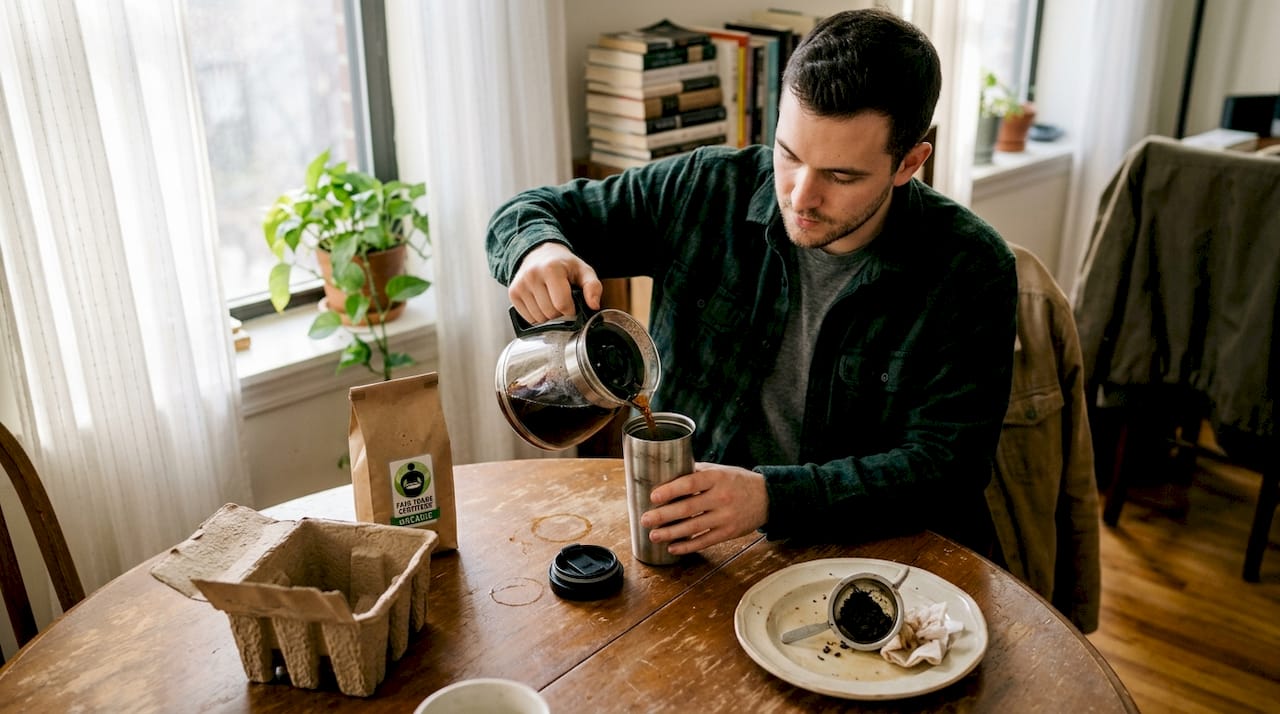
Pro Tip: Use a local roaster’s sampler and a steel infuser for maximum impact. Local sourcing cuts shipping emissions, and a quality infuser lasts for years, making your gift a warm hug for both the recipient and Mother Earth.
For deeper guidance on materials, the eco-conscious packaging for coffee and tea resource is a great next read. And if tea is your focus, these eco-friendly tea selection tips will help you choose wisely.
Sourcing gifts responsibly: certifications, climate impact, and brand practices
Beyond wrapping and presentation, your choice in brands and sourcing criteria makes a powerful impact. Not all certifications are created equal, and understanding the differences helps you give with confidence.
| Practice | What it covers | Climate impact |
|---|---|---|
| Fair Trade | Minimum pricing, community premiums | Low to moderate |
| Organic | No synthetic pesticides or fertilizers | Moderate |
| Shade-grown | Biodiversity, natural canopy preservation | Moderate to high |
| Regenerative | Soil rebuilding, carbon sequestration, water retention | High |
Regenerative coffee farming improves climate resilience beyond what standard Organic or Fair Trade practices achieve, making it the gold standard for eco-conscious gifters who want real impact.
When evaluating a brand, look for:
- Published sourcing reports that name farms and regions, not just countries.
- Third-party verification of environmental and labor claims.
- Packaging transparency, including disposal instructions and material sourcing.
- Impact metrics, such as carbon offset data, trees planted, or ocean plastic removed.
Brands that openly share their supply chain data and environmental impact numbers are the ones worth your loyalty. Transparency isn’t a bonus feature; it’s the baseline for responsible gifting.
Here’s a quick checklist before you buy:
- Does the brand name its farms or cooperatives?
- Is the packaging compostable, recyclable, or reusable?
- Does the brand support regenerative or shade-grown farming?
- Are environmental claims backed by third-party data?
Exploring upcycled packaging benefits gives you a clearer picture of how packaging choices ripple outward. And if you want to go further, supporting sustainable beverage brands breaks down what long-term brand loyalty actually looks like in practice.
The nuance most miss: sustainability is a spectrum, not a stamp
After digging into the data and trends, it’s worth taking a step back to see the bigger picture. Here’s something most gifting guides won’t tell you: there is no perfectly zero-impact gift. Every product has a footprint, and chasing perfection can actually paralyze good decision-making.
Most buyers treat sustainability like a checkbox. Either a product has the right label or it doesn’t. But real impact is built across multiple fronts, sourcing, packaging, transport, and end-of-life disposal, and improving even one of those areas genuinely matters. Switching from a plastic-wrapped generic coffee to a regenerative, compostably packaged single-origin blend is a meaningful step, even if the shipping still uses a diesel truck.
The real trend in 2026 isn’t perfection. It’s progress. Each gift you give is an opportunity to push a little further along the circular economy for coffee gifts spectrum. Small upgrades, like choosing regenerative beans or reusable wrapping, carry real meaning. They signal values, support better farming systems, and encourage brands to keep improving. That’s a gift worth giving.
Discover sustainable gifting with EcoVibe Roast
If you’re inspired to apply these trends, EcoVibe Roast offers a range of sustainable, thoughtful coffee and tea gifts that make eco-conscious giving genuinely easy.

From 60-pack single serve coffee pods crafted with responsible sourcing to the aromatic hibiscus berry tea that’s as beautiful to give as it is to sip, every product reflects a commitment to quality and planet-friendly practices. Browse the full single serve coffee collection to find options that pair perfectly with a reusable mug or infuser. With every purchase, EcoVibe Roast plants mangrove trees and helps remove ocean-bound plastics, so your gift does good far beyond the cup.
Frequently asked questions
What is regenerative agriculture and why does it matter for coffee and tea gifting?
Regenerative agriculture goes beyond organic to rebuild soil health and boost climate resilience, making it a major step up in sustainability for coffee and tea gifts. It actively sequesters carbon rather than simply reducing harm.
How can I make my coffee or tea gift completely zero-waste?
Pair refillable coffee or tea with reusable mugs or infusers, use compostable or upcycled wrapping, and choose local or shelf-stable samplers to minimize packaging and transport waste.
Do certifications like Fair Trade guarantee that a gift is sustainable?
Fair Trade and Organic set a valuable baseline, but for deeper impact, look for regenerative practices alongside shade-grown sourcing and full supply chain transparency.
Are single-serve coffee products sustainable if used for gifting?
Yes, if you choose compostable pods or recyclable packaging and verify that the brand is transparent about sourcing and responsible disposal options.
Recommended
- 7 Essentials for a Sustainable Coffee Gift Checklist – EcoVibe Roast
- Sustainable packaging in beverages: eco-conscious guide 2026 – EcoVibe Roast
- Circular economy in beverage: eco guide for coffee & tea – EcoVibe Roast
- 8 smart ways to support eco-conscious coffee and tea brands – EcoVibe Roast
- Coco Green Matcha Snack Squadz | Netflix x Chill| PopCornaa


