

Most packaging labeled “green” is actually just recycled, and recycling often means breaking materials down into something lower quality than what you started with. That’s called downcycling, and it’s surprisingly common. Upcycled packaging flips that script entirely, transforming waste into something of higher value rather than lesser quality. For eco-conscious coffee and tea lovers, this distinction matters more than most guides let on. Whether you’re choosing your next bag of shade-grown beans or a box of aromatic herbal tea, understanding upcycled packaging helps you make choices that genuinely move the needle for the planet.
Table of Contents
- Defining upcycled packaging: Meaning and origins
- How upcycled packaging works: Methods and materials
- Upcycled vs. recycled packaging: What’s the real difference?
- Upcycled packaging in coffee & tea: Innovations and examples
- The bigger picture: Benefits, limitations, and how to support upcycling
- What most eco guides miss about upcycled packaging
- Take action: Choose upcycled packaging and eco-friendly tea
- Frequently asked questions
Key Takeaways
| Point | Details |
|---|---|
| Upcycling reimagines waste | Upcycled packaging turns agricultural byproducts and waste into new, valuable packaging without breaking them down like recycling. |
| Energy and environmental savings | This approach reduces landfill waste, lessens energy use, and preserves material quality compared to conventional recycling. |
| Coffee and tea innovations | New packaging for coffee and tea now uses upcycled coffee grounds, tea leaves, and repurposed tins for eco-friendly impact. |
| Smart choices matter | Choosing upcycled packaging supports sustainable brands and helps reduce your environmental footprint. |
Defining upcycled packaging: Meaning and origins
With the interest sparked, let’s clarify the core question: what does “upcycled packaging” really mean?
The term “upcycling” has roots in the 1990s sustainability movement, popularized by designers and environmental thinkers who noticed that recycling, while better than landfilling, still lost a lot of material value. Upcycled packaging takes that idea further by using waste or byproducts and transforming them into something genuinely better, not just different.
Upcycled packaging is made from waste materials or byproducts transformed into new materials of higher quality or value.
This is a crucial distinction from standard recycling. When you recycle a plastic bottle, it typically gets melted down and reformed into a lower-grade product, like carpet fiber or park benches. Upcycling, by contrast, preserves or elevates the material’s integrity. A tea tin that becomes a seed planter, or coffee grounds pressed into a sturdy compostable cup, are both examples of upcycling in action.
Here’s what upcycled packaging is NOT:
- Recycled packaging: Breaks materials down through energy-intensive processes, often resulting in lower-quality outputs
- Composted packaging: Designed to biodegrade, not to be repurposed into a new product
- Reused packaging: The same item used again without transformation
- Greenwashed packaging: Marketing claims without verified material transformation
You can explore more context in this eco-friendly packaging guide that covers how different packaging types stack up for beverages. For a broader look at terminology, the sustainable packaging terminology resource is a solid reference. The bottom line is that upcycled packaging is about creative elevation, not just waste diversion.
How upcycled packaging works: Methods and materials
Now that we’re clear on the definition, here’s how upcycled packaging actually comes to life in factories and creative studios.
The process isn’t magic, but it is genuinely clever. It starts with identifying waste streams that have untapped potential, especially agricultural byproducts that would otherwise be discarded. Agricultural byproducts like tea leaves, coffee grounds, pineapple leaves, and olive stones are all being repurposed into new packaging materials right now.
Here’s how the process typically unfolds:
- Collection: Waste materials are gathered from farms, factories, or processing facilities. Coffee roasters, for example, generate enormous amounts of spent grounds daily.
- Sorting and cleaning: The raw waste is sorted and cleaned to remove contaminants that could compromise the final product’s quality.
- Processing: Materials are dried, ground, or broken down into a workable form, such as a pulp, powder, or fiber.
- Binding and forming: The processed material is combined with natural binders and pressed or molded into packaging shapes like boxes, trays, cups, or wrapping sheets.
- Finishing: The final packaging is treated for moisture resistance, food safety, or aesthetic appeal without adding harmful chemicals.
One inspiring example is the innovation in tea waste packaging, where spent tea leaves are compressed into biodegradable paper boxes and trays. Coffee grounds follow a similar path, becoming compostable cups and inserts that would otherwise sit in landfills for years.
Pro Tip: When shopping for coffee or tea, look for brands that name their packaging materials specifically. “Made with upcycled coffee grounds” tells a much richer story than a generic “eco-friendly packaging” claim.
Upcycling also tends to save more energy than recycling because it skips the energy-intensive breakdown phase. You can see how this fits into a broader system by reading about the circular economy in coffee and tea, and check out real-world eco packaging examples that conscious buyers are already choosing.
Upcycled vs. recycled packaging: What’s the real difference?
With the mechanics established, let’s clear up the ongoing confusion between upcycling and traditional recycling.
Both approaches are better than sending waste to a landfill, but they’re not equal. Upcycling preserves material integrity and creates higher-value items with less energy, while recycling breaks down materials and often results in lower-quality products.
Here’s a side-by-side comparison:
| Factor | Upcycled packaging | Recycled packaging |
|---|---|---|
| Material quality | Maintained or improved | Often reduced |
| Energy use | Lower | Higher |
| End product value | Higher | Lower to equal |
| Process complexity | Creative, design-driven | Industrial, chemical |
| Best for | Agricultural waste, specialty materials | High-volume plastics, paper, glass |
The numbers make the case even stronger. Only 9% of plastic gets recycled globally, meaning the vast majority ends up in landfills or oceans regardless of your best intentions at the bin. Upcycling sidesteps this bottleneck by creating value before materials ever enter the waste stream.
That said, recycling still plays a vital role. For materials like aluminum cans or glass jars, recycling is efficient and well-established. The real win comes from combining both approaches in a full circular economy, where upcycling handles specialty and agricultural waste while recycling manages high-volume industrial materials. Learn more about how packaging choices ripple outward in this look at eco packaging impact, and see the broader upcycling vs. recycling breakdown for more data.
Upcycled packaging in coffee & tea: Innovations and examples
With the comparison clear, let’s spotlight how these innovations are reshaping coffee and tea packaging right now.
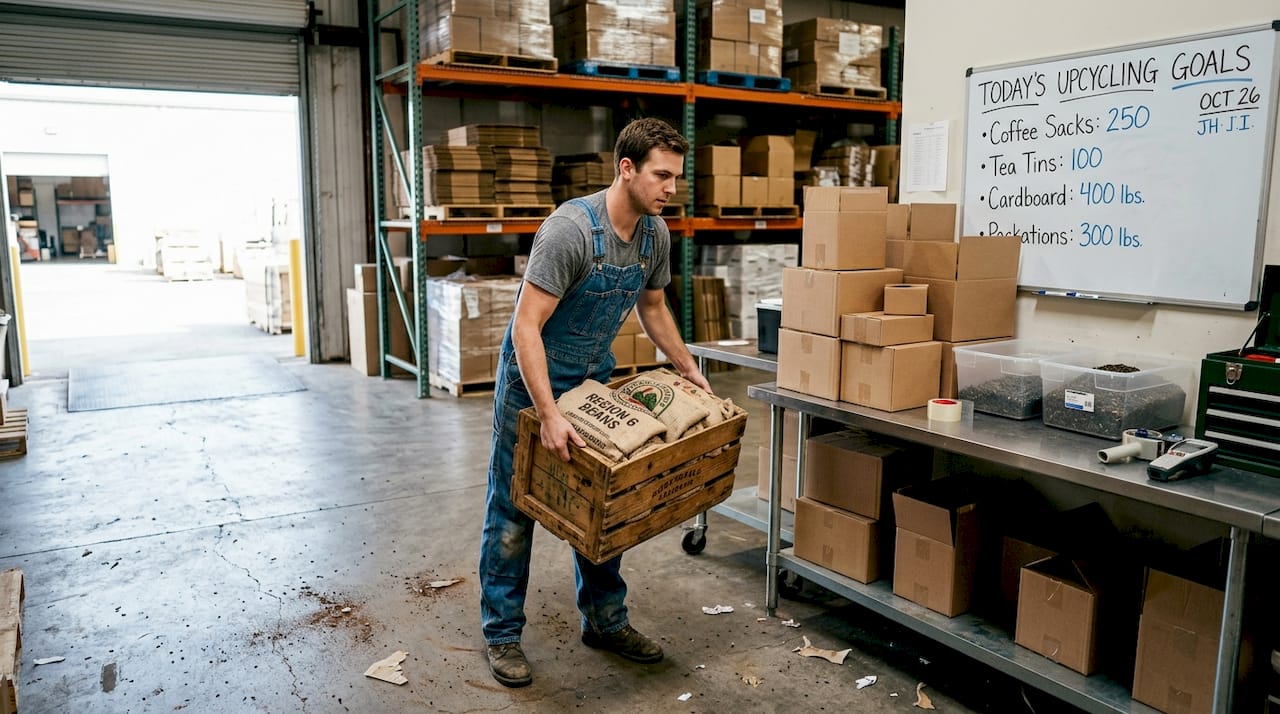
The coffee and tea industries are surprisingly well-positioned for upcycled packaging because both generate significant agricultural byproducts at scale. Tea bags and tins are being repurposed, tea waste is being transformed into packaging materials, and coffee grounds are being pressed into biodegradable cups and containers.
Here’s a quick-reference table of upcycled materials and their coffee or tea packaging endpoints:
| Upcycled material | Source | Packaging application |
|---|---|---|
| Spent coffee grounds | Coffee roasters | Compostable cups, inserts |
| Tea leaf waste | Tea processors | Biodegradable boxes, trays |
| Pineapple leaf fiber | Tropical farms | Flexible wrapping, bags |
| Olive stones | Olive oil production | Rigid packaging inserts |
| Rice husks | Rice mills | Molded packaging forms |
Beyond the table, here’s what’s exciting for everyday shoppers like you:
- Reusable tea tins made from upcycled metal scraps that double as kitchen storage after the tea is gone
- Compostable tea bags pressed from plant fiber byproducts, meaning the entire bag goes into your compost bin
- Coffee pod inserts made from upcycled coffee grounds that biodegrade far faster than conventional plastic pods
- Printed boxes using inks derived from food waste pigments, reducing chemical dye use
Pro Tip: Save your aromatic tea tins! A quality tin made from upcycled or responsibly sourced metal can store spices, small accessories, or even seeds, giving it a second life right in your kitchen.
For more ideas on reducing what ends up in the bin, explore how to reduce coffee waste sustainably and browse coffee waste tips tailored for conscious drinkers.
The bigger picture: Benefits, limitations, and how to support upcycling
To finish the core guide, let’s zoom out and cover the wins, the challenges, and the simple actions eco-conscious buyers can take.
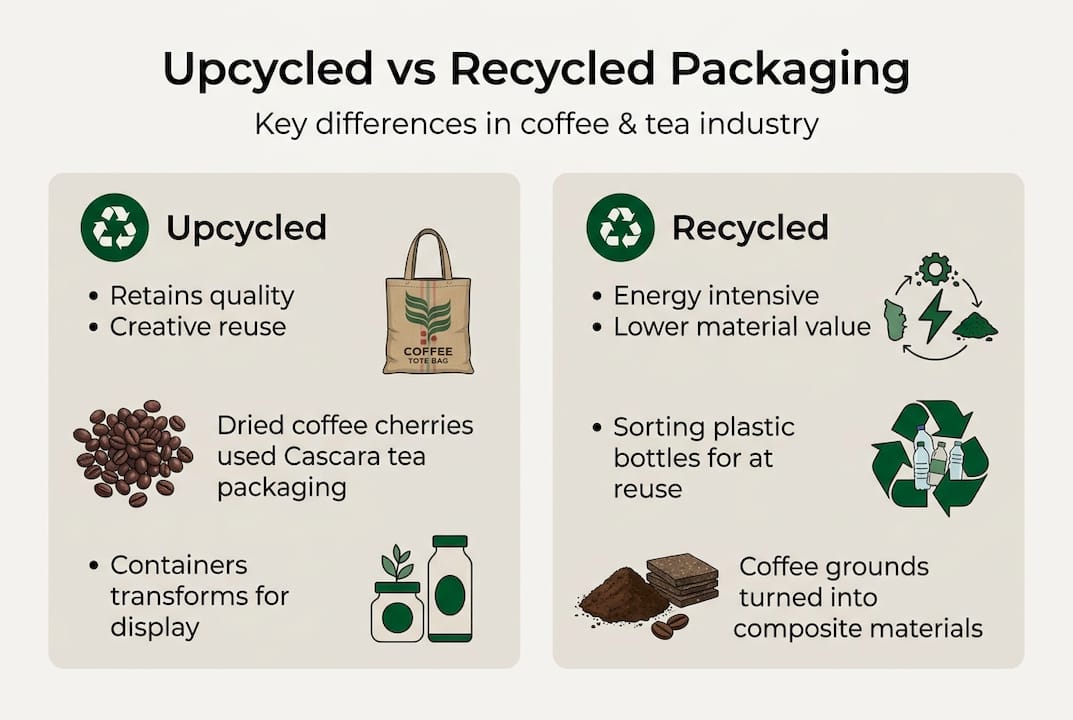
The environmental benefits of upcycled packaging are real and measurable. Upcycling reduces landfill use and cuts demand for virgin materials, which means fewer trees harvested, less petroleum extracted, and less energy burned. For consumers, it also adds a traceable story to the products you buy, which feels like a warm hug for both you and Mother Earth.
Here’s what makes upcycled packaging genuinely worth supporting:
- Lower carbon footprint compared to producing new materials from scratch
- Supports agricultural communities by creating value from farm waste that would otherwise be discarded
- Encourages brand transparency because companies using upcycled materials tend to share their sourcing stories openly
- Reduces ocean-bound plastic by diverting waste before it enters waterways
But let’s be honest about the limitations too.
Upcycling is not always cheaper or scalable for all materials. Artisanal upcycling can be beautiful but costly, and industrial upcycling requires infrastructure investment that not every brand can manage yet.
You can explore the full picture at upcycling advantages for a balanced industry perspective. The good news is that as demand grows, costs are coming down.
Here’s how you can actively support upcycled packaging as a consumer:
- Look for specific material claims on packaging, not just vague “eco” labels
- Support brands that publish their packaging sourcing and impact data
- Choose products with certifications from recognized sustainability bodies
- Reuse packaging where possible before recycling or composting it
For a deeper look at how small choices add up, check out this guide on coffee waste sustainability.
What most eco guides miss about upcycled packaging
Before you go, here’s a perspective missing from mainstream eco packaging articles, and one that can genuinely shift your buying habits.
Most eco guides treat recycling as the gold standard and mention upcycling as a bonus. We think that framing is backwards. Recycling, as it exists today, is largely a system designed to make consumers feel better while industry continues producing virgin materials at scale. The 9% global recycling rate for plastics tells you everything you need to know about how well that system is actually working.
Upcycling is not just a feel-good choice. It’s a strategic move toward higher-value circular solutions that don’t depend on broken infrastructure. When a coffee brand turns its spent grounds into packaging, it closes a loop that recycling can’t even reach.
The uncomfortable truth is that most “recycled” packaging is actually downcycled, meaning the material loses quality with every pass through the system. Upcycling reverses that trajectory. Coffee and tea brands are uniquely positioned to lead here because they generate consistent, high-quality agricultural waste that is perfect feedstock for innovative packaging.
Our honest take: upcycling and recycling together, not one or the other, is the real path forward. Brands that trace their packaging story and invite you into that journey are the ones worth supporting.
Take action: Choose upcycled packaging and eco-friendly tea
If you’re ready to make your next cup more sustainable, here’s how EcoVibe Roast can help.
At EcoVibe Roast, we believe every sip should feel good from farm to cup, and that includes what your tea or coffee arrives in. We’re committed to eco-minded packaging and sourcing practices that go beyond the label.

Explore our organic hibiscus berry tea and organic jasmine tea, both thoughtfully packaged with sustainability in mind. With every purchase, we plant mangrove trees and remove ocean-bound plastics, so your morning ritual becomes a small act of environmental stewardship. Visit our environmental impact page to see exactly what your support makes possible. Your cup of tea can do more than warm your hands.
Frequently asked questions
Is upcycled packaging compostable or recyclable?
Most upcycled packaging for coffee or tea is biodegradable or recyclable, but it depends on the exact materials and design. For example, tea waste into biodegradable boxes and coffee grounds into compostable cups are common formats, each with different end-of-life options.
Does upcycling really use less energy than recycling?
Yes, upcycling typically uses less energy because it repurposes materials without the intense breakdown and re-manufacturing processes that recycling requires. Upcycling preserves material integrity and skips the energy-heavy melting or chemical processing stage entirely.
How can I tell if my tea or coffee packaging is upcycled?
Check for specific material claims, brand transparency, and certifications that reference upcycled agricultural inputs or waste. Brands gain marketing value by sharing traceable upcycled stories, so genuinely committed companies will usually tell you exactly what’s in their packaging.
Is upcycled packaging always more expensive than recycled packaging?
Not always. While industrial upcycling can carry higher upfront costs due to infrastructure needs, prices vary widely and economies of scale are improving as more brands adopt these methods and demand grows.


