

Every time you brew a cup of tea, you’re making choices that ripple far beyond your kitchen. Conventional tea bags can release up to 11.6 billion microplastics into a single cup, while excess water boiling wastes energy and drives up emissions. The good news? You can transform your tea ritual into a truly sustainable practice with simple, step-by-step changes. This guide walks you through every detail, from choosing the right tools to composting your leaves, so you can enjoy delicious tea while protecting the planet.
Table of Contents
- Eco-friendly tea: What’s the environmental problem?
- Eco essentials: Tools and materials for green brewing
- Step by step: How to brew eco-friendly tea
- Making the most: Re-steeping and repurposing tea leaves
- Quick-reference table: Your sustainable tea workflow
- Next steps: Eco-friendly teas and impact with EcoVibe Roast
- Frequently asked questions
Key Takeaways
| Point | Details |
|---|---|
| Choose loose leaf | Loose leaf avoids microplastics and reduces packaging waste for a cleaner brew. |
| Use only needed water | Boil just the water you’ll drink to save energy and lower greenhouse emissions. |
| Reuse tea leaves | Steep leaves multiple times and compost or repurpose used leaves to minimize waste. |
| Select sustainable tools | Invest in reusable, plastic-free brewing tools and eco-certified teas. |
| Follow precise steps | Brewing with correct temperatures and times ensures great taste and eco savings. |
Eco-friendly tea: What’s the environmental problem?
Your daily tea habit might be doing more harm than you realize. Many commercial tea bags leach billions of microplastics into your drink, and those convenient single-use bags often come wrapped in layers of plastic packaging. Even worse, boiling excess water contributes to 20% of household greenhouse gas emissions, with kettle efficiency ranging from just 31 to 70 percent.
Conventional tea farming adds another layer of environmental stress. Pesticide-heavy cultivation damages soil health and biodiversity, while plastic packaging from bags to boxes ends up in landfills or oceans. You might think switching to PLA or “biodegradable” tea bags solves the problem, but these materials still release harmful particles into your cup and the environment.
Here’s what’s at stake when you stick with conventional tea practices:
- Microplastic exposure: Standard tea bags release up to 11.6 billion microplastic particles per cup, while loose leaf tea has zero
- Energy waste: Overfilling your kettle burns unnecessary electricity or gas
- Packaging pollution: Single-use wrappers and boxes create mountains of waste
- Chemical runoff: Pesticides from non-organic farms contaminate water and soil
- Lost biodiversity: Monoculture tea plantations replace diverse ecosystems
The solution isn’t complicated. Simple swaps reduce toxins in your body, protect wildlife habitats, and shrink your carbon footprint. When you choose eco-friendly tea benefits and sustainable brewing methods, you’re voting for a healthier planet with every sip. Ready to make the shift? Let’s explore eco-conscious tea selection tips and build a greener tea routine that fits seamlessly into your life, supporting a circular economy for tea from leaf to compost.
Eco essentials: Tools and materials for green brewing
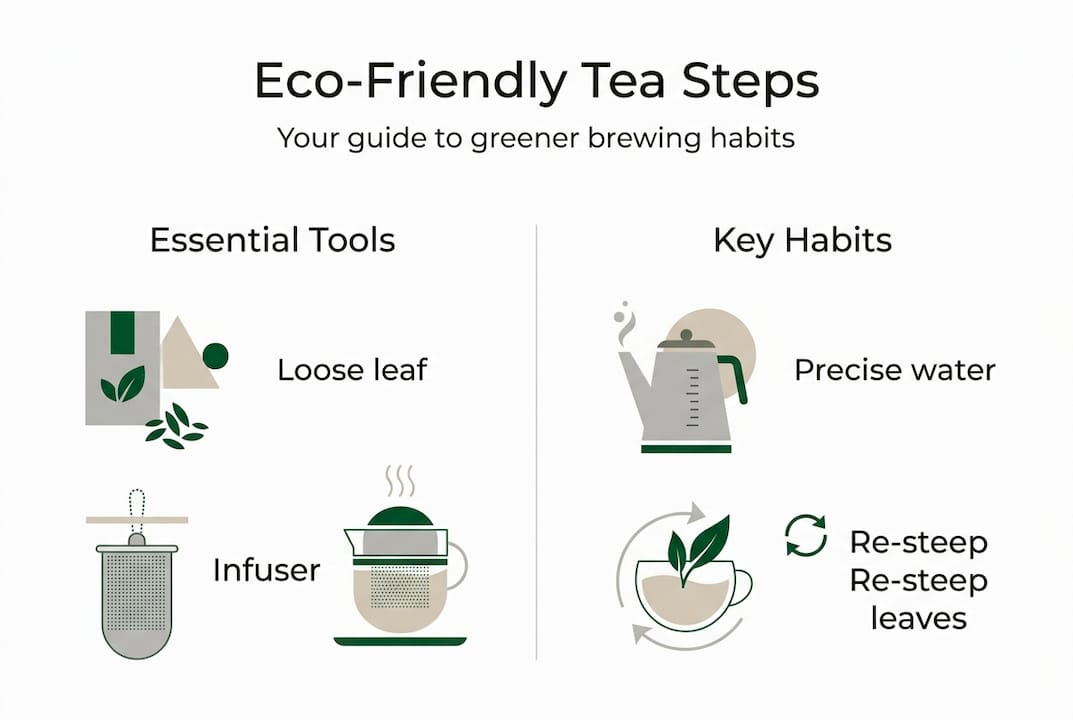
Before you brew your first sustainable cup, you need the right toolkit. The good news? Most eco-friendly tea tools are affordable, long-lasting, and elevate your tea experience. Start with loose leaf tea that’s organic and ethically sourced. Look for certifications like Rainforest Alliance, Fair Trade, or USDA Organic to ensure your tea supports sustainable farming practices and fair wages for workers.
Your brewing tools make a massive difference. Reusable options like stainless steel infusers and glass or ceramic teapots eliminate single-use waste and last for years. Mesh infusers fit inside your favorite mug, while larger strainers work perfectly for teapots. Glass and ceramic vessels are non-reactive, so they won’t alter your tea’s delicate flavors.
Here’s what to avoid and what to prioritize:
Skip these:
- Single-use tea bags, even “biodegradable” PLA versions
- Plastic infusers that can leach chemicals when heated
- Individually wrapped tea sachets with excess packaging
Choose these:
- Stainless steel mesh infusers or bamboo strainers
- Glass, ceramic, or cast iron teapots
- Airtight glass or metal containers for tea storage
- Filtered or spring water for better taste and purity
Pro Tip: Store your organic loose leaf tea in airtight containers away from light and moisture. This keeps your tea fresh for months and reduces the need for frequent reordering, cutting down on shipping emissions.
Filtered or spring water isn’t just about taste. It protects the integrity of your tea leaves and ensures you’re getting the full spectrum of flavors and antioxidants. Tap water with heavy chlorine or minerals can mask subtle notes and even damage delicate leaves over multiple steeps.
| Tool | Eco Rating | Why It Matters |
|---|---|---|
| Loose leaf tea (organic) | Excellent | Zero microplastics, supports ethical tea sourcing |
| Stainless steel infuser | Excellent | Reusable for years, no chemical leaching |
| Glass/ceramic teapot | Excellent | Non-reactive, durable, plastic-free |
| Bamboo strainer | Very Good | Renewable material, biodegradable |
| PLA tea bags | Poor | Still releases particles, misleading “eco” claims |
| Plastic infusers | Poor | Can leach chemicals, not durable |
With your sustainable toolkit assembled, you’re ready to brew. The next section walks you through every step, from measuring water to savoring that first sip, so you can make choosing sustainable tea a daily habit that feels effortless and rewarding.
Step by step: How to brew eco-friendly tea
Now comes the fun part: brewing a cup that’s as kind to the planet as it is delicious. Follow these five steps to create your perfect sustainable tea ritual, and you’ll never look back.
Step 1: Measure your water precisely
Boil only the amount of water you need to minimize energy waste and carbon emissions. If you’re making one cup, fill your mug first, then pour that water into your kettle. This simple habit can cut your tea-related energy use by half. Choose an energy-efficient electric kettle or, even better, a stovetop kettle on a gas or induction burner for maximum efficiency.
Step 2: Load your reusable infuser
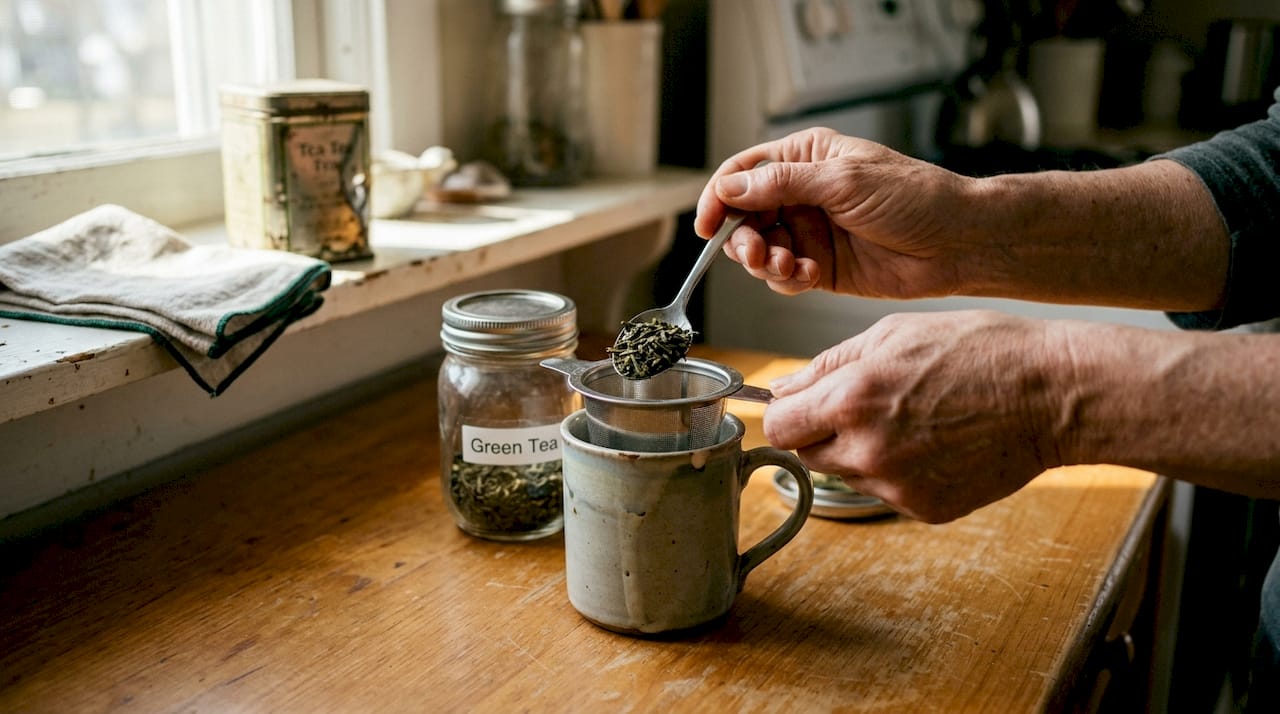
Place your stainless steel or mesh infuser in your cup or teapot. Add the right portion of organic loose leaf tea, typically one teaspoon per 8 ounces of water. Different teas have different densities, so fluffy white teas might need a bit more, while dense oolongs need less. Get to know your favorite blends through experimentation.
Step 3: Heat water to the right temperature
Not all teas love boiling water. Brewing temperatures vary by tea type to optimize flavor and preserve delicate compounds. Here’s your quick reference:
- Green tea: 165-175°F (74-79°C)
- White tea: 160-185°F (71-85°C)
- Oolong tea: 185-205°F (85-96°C)
- Black tea: 200-212°F (93-100°C)
- Herbal tea: 212°F (100°C, full boil)
If your kettle doesn’t have temperature settings, bring water to a boil and let it cool for the appropriate time: 5-7 minutes for green tea, 3-4 minutes for oolong, or use it immediately for black tea.
Step 4: Brew for the recommended time
Steep your tea according to type. Green teas shine with 1-3 minutes, while black teas develop full flavor in 3-5 minutes. Oolongs and white teas fall somewhere in between. Set a timer so you don’t over-steep, which can make tea bitter and reduce the leaves’ potential for re-steeping.
“The perfect cup of tea is a balance of time, temperature, and quality leaves. When you respect each element, you unlock flavors that mass-produced bags can never deliver.”
Step 5: Remove, enjoy, and repeat
Once your timer goes off, remove the infuser and savor your tea. Here’s the beautiful part: those same leaves are ready for another round. Most quality loose leaf teas can be steeped multiple times, with each infusion revealing new layers of flavor. We’ll cover re-steeping in detail in the next section.
Pro Tip: Keep a tea journal noting your favorite steep times and temperatures for different teas. This helps you dial in your perfect cup and reduces waste from over-steeped, undrinkable batches.
As you sip, know that you’ve made choices aligned with choosing eco tea products and sustainable packaging tips. Your tea ritual now supports farmers, protects ecosystems, and keeps microplastics out of your body. That’s something worth celebrating with every cup.
Making the most: Re-steeping and repurposing tea leaves
Why stop at one cup when your tea leaves have so much more to give? Most loose leaf teas are designed for multiple infusions, and learning to re-steep properly transforms your tea experience while slashing waste. Quality loose leaf teas can be steeped 2-8 times depending on the variety, with oolongs leading the pack at up to 10 infusions.
Each re-steep reveals different flavor notes. Your first infusion might be bright and grassy, while the second brings out sweetness, and the third offers mellow, smooth depth. The key is adjusting your steep time. Increase it by 30-60 seconds with each subsequent infusion to maintain flavor strength as the leaves gradually release their compounds.
Here’s how different tea types perform with multiple steeps:
| Tea Type | Typical Re-steeps | Flavor Evolution |
|---|---|---|
| Oolong | 6-10 times | Floral to fruity to sweet |
| Pu-erh | 5-8 times | Earthy to smooth to mellow |
| Green tea | 2-4 times | Fresh to sweet to delicate |
| White tea | 2-4 times | Light to honeyed to subtle |
| Black tea | 2-3 times | Bold to smooth to gentle |
The secret to successful re-steeping? Don’t over-steep your first infusion. If you extract too much too soon, your leaves won’t have enough left for round two. Stick to recommended times, and your leaves will reward you with multiple delicious cups.
Pro Tip: Oolong teas excel with the gongfu brewing style, which uses short, repeated steeps of 20-60 seconds. This method can yield 8-10 flavorful infusions from a single portion of leaves, making it incredibly sustainable and cost-effective.
When your leaves have given their all, don’t toss them in the trash. Compost or repurpose used tea leaves for garden fertilizer or creative kitchen uses. Here are some brilliant ways to extend their life:
- Compost: Tea leaves add nitrogen and improve soil structure
- Garden fertilizer: Sprinkle directly around acid-loving plants like roses and tomatoes
- Fridge deodorizer: Dry used leaves and place in an open container to absorb odors
- Soup flavoring: Add a small amount to broths for subtle depth
- Natural scrub: Mix with coconut oil for an exfoliating body scrub
- Pet odor control: Dry leaves neutralize smells in litter boxes or pet areas
By re-steeping and repurposing, you’re maximizing every ounce of value from your tea while keeping organic matter out of landfills. This approach perfectly embodies the eco-friendly tea health benefits philosophy: good for you, good for the earth, and surprisingly simple to implement.
Quick-reference table: Your sustainable tea workflow
Let’s bring everything together with a side-by-side comparison of sustainable versus conventional tea habits. Keep this table handy in your kitchen as your go-to cheat sheet for green brewing.
| Aspect | Sustainable Method | Conventional Method |
|---|---|---|
| Tea format | Organic loose leaf, bulk purchased | Single-use tea bags, individually wrapped |
| Brewing tools | Stainless steel infuser, glass/ceramic pot | Disposable bags, plastic infusers |
| Water heating | Measure exact amount, efficient kettle | Overfill kettle, waste energy |
| Steep count | 2-8 infusions per portion | 1 use, then discard |
| Waste generated | Compostable leaves only | Bags, wrappers, microplastics |
| Energy use | Minimal, precise heating | High, repeated full boils |
| Cost per cup | $0.10-0.30 (with re-steeps) | $0.30-0.80 |
| Environmental impact | Low carbon, zero plastic | High carbon, plastic pollution |
| Flavor quality | Complex, evolving, fresh | Flat, limited, stale |
Your sustainable tea workflow in five quick steps:
- Prep: Fill mug with water, pour into kettle, heat to tea-specific temperature
- Brew: Add loose leaf to infuser, steep for recommended time
- Enjoy: Remove infuser, savor your cup
- Re-steep: Add 30-60 seconds to steep time, repeat 2-7 times
- Compost: Add spent leaves to compost or garden
This simple routine cuts your tea-related waste by over 90 percent while improving flavor and reducing costs. You’re not sacrificing convenience; you’re upgrading your entire tea experience. The few extra seconds spent measuring water and using an infuser pay dividends in taste, health, and environmental impact.
Next steps: Eco-friendly teas and impact with EcoVibe Roast
You’ve learned the steps, assembled your toolkit, and discovered how to maximize every leaf. Now it’s time to source teas that align with your values. At EcoVibe Roast, we’ve curated a collection of organic, ethically sourced teas that make sustainable brewing effortless and delicious.
Our organic hibiscus berry tea delivers vibrant flavor with zero plastic packaging, while our loose leaf jasmine tea offers the perfect canvas for practicing your new re-steeping skills. Every purchase supports our environmental impact programs, including mangrove tree planting and ocean plastic removal.

When you choose EcoVibe Roast, you’re joining a community of tea lovers who refuse to compromise between quality and sustainability. We source directly from farms that prioritize biodiversity, fair wages, and regenerative practices. Our packaging is plastic-free, our shipping is carbon-neutral, and our commitment to transparency means you always know exactly where your tea comes from. Explore our environmental impact to see how your tea choices create real change, one cup at a time.
Frequently asked questions
Why is loose leaf tea more eco-friendly than tea bags?
Loose leaf tea eliminates microplastic and packaging waste, can be reused multiple times, and typically comes in minimal, recyclable packaging instead of individual plastic wrappers.
How many times can I re-steep loose leaf tea?
Most loose leaf teas can be steeped 2-8 times depending on the type, with oolongs and pu-erhs offering the most infusions when you adjust steep time with each round.
What is the most energy-efficient way to boil water for tea?
Measure only what you’ll drink to avoid boiling excess water that contributes to greenhouse gas emissions, and use a kettle sized appropriately for your batch.
Are biodegradable tea bags really safe for the environment?
Even PLA bags release particles despite eco-friendly marketing claims, making loose leaf the superior choice for truly sustainable tea drinking.
What can I do with used tea leaves?
Compost them, add to your garden as fertilizer, use as fridge deodorizers, or incorporate into natural scrubs and soups for creative reuse.


