

TL;DR:
- Most “green” coffee labels are modest and do not indicate true climate positivity. Climate positive coffee actively removes more CO2 than it emits, but verification and measurement vary widely. Transparency, audits, and clear scope boundaries are essential for authentic climate impact claims.
You’ve probably picked up a bag of coffee with a promising label, something like “sustainable,” “carbon neutral,” or even “eco-friendly,” and thought, great, this one’s doing good. But here’s the surprising reality: very few coffees actually remove more carbon from the atmosphere than they emit. Most “green” labels mean something much more modest, and the gap between “neutral” and truly “climate positive” is enormous. Knowing the difference, and knowing how to verify it, is one of the most powerful choices you can make as a conscious coffee drinker.
Table of Contents
- What does climate positive coffee actually mean?
- How is ‘climate positive’ measured in coffee?
- The role of regenerative agriculture and land-use change
- Certifications, audits, and credibility: How to spot the real thing
- Our take: The uncomfortable truth about climate positive coffee
- How EcoVibe Roast supports climate positive coffee choices
- Frequently asked questions
Key Takeaways
| Point | Details |
|---|---|
| Beyond carbon neutral | Climate positive coffee removes more carbon than it emits and requires robust verification. |
| Credibility is measurable | Look for third-party audits, transparent numbers, and detailed supply chain boundary disclosures. |
| Regenerative practices help | Agroforestry and soil-first farming boost climate outcomes when paired with verified measurement. |
| Land use history matters | Past deforestation can undermine climate positive claims—always ask about land cover changes. |
What does climate positive coffee actually mean?
Now that we’ve set the stage, it’s time to unravel what “climate positive coffee” is and how it differs from other eco-labels.
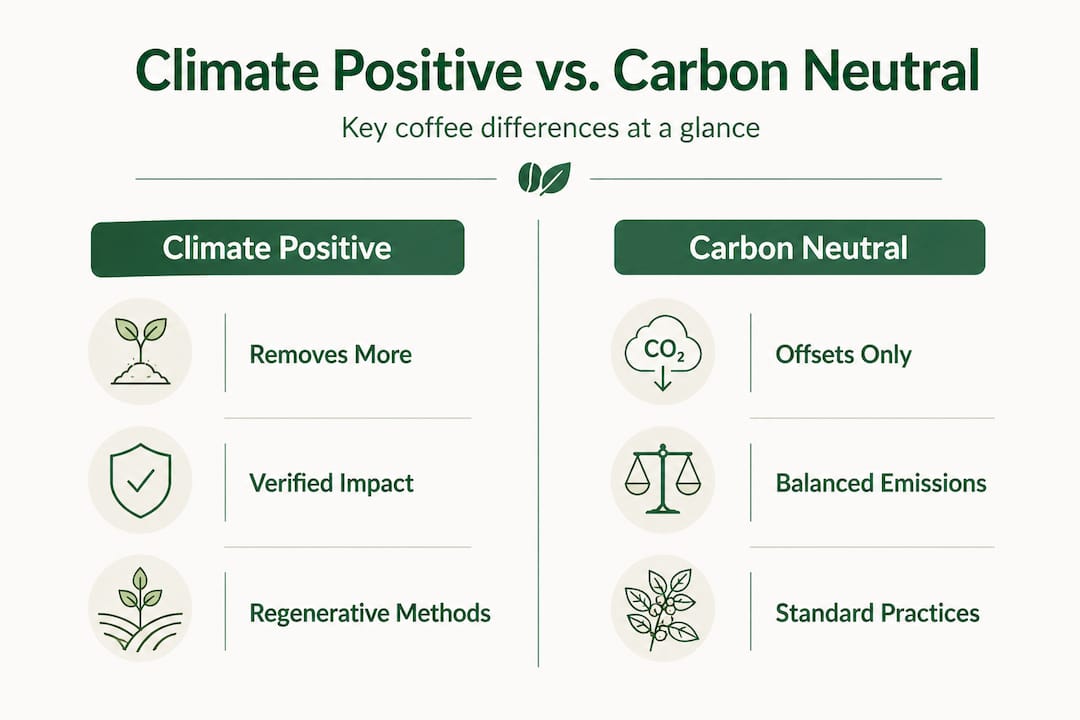
At its core, climate positive coffee isn’t just about doing less harm. It’s about doing more good. As one detailed industry analysis puts it, “climate-positive coffee” generally refers to coffee systems that are expected to do more for the climate than they emit, meaning the net result is actually pulling carbon dioxide out of the atmosphere, not merely balancing it out. That’s a meaningful step beyond carbon neutrality, which only aims to offset what’s released.
“Climate positive” means the coffee’s entire value chain removes more CO2 than it produces, factoring in farming, processing, transport, roasting, and sometimes even packaging disposal.
The tricky part? There is no single universal definition for “climate positive” in coffee. Different brands, certifiers, and programs draw their boundaries in very different places. Some count only farm-level emissions. Others include transportation, roasting, and retail. Some recognize only direct carbon reductions, while others count “insetting,” which is funding carbon removal projects within their own supply chain rather than purchasing external offsets.
When you’re evaluating a climate positive claim, here are the core concepts worth understanding:
- Carbon removals: Active sequestration of CO2 through trees, soil, or other natural systems connected to the coffee farm or supply chain
- Insetting: Carbon reduction or removal projects funded within a brand’s own value chain, rather than buying credits elsewhere
- Quantifiable improvement: A specific, measurable reduction in emissions compared to a baseline, tracked over time
- Boundary scope: Does the claim cover only the farm? Or does it extend across processing, transport, roasting, and retail?
Understanding coffee carbon footprints helps you see just how wide the range can be. A single cup of coffee can generate anywhere from 0.1 kg to over 0.5 kg of CO2-equivalent emissions depending on farming methods, origin country, and whether it’s brewed at home or in a café. Learning more about the broader environmental impact of coffee production gives you the full picture of why these distinctions matter so deeply.
How is ‘climate positive’ measured in coffee?
With the definition in mind, understanding how climate positivity is calculated is the next crucial step.
Credible approaches rely on measurement frameworks including carbon footprint assessments, Life Cycle Assessment (LCA), and clearly defined scope boundaries with explicit accounting for both reductions and removals. But here’s where it gets complex: no harmonized methodology exists across the industry, which means two brands can use the phrase “climate positive” while calculating it in entirely different ways.
Here’s a simplified overview of the major measurement steps and what they typically include or exclude:
| Measurement step | What’s typically included | What’s often excluded |
|---|---|---|
| Farm-level LCA | Fertilizer use, soil emissions, water | Land-use history, biodiversity |
| Supply chain footprint | Transport, processing, roasting | Retail energy, consumer use |
| Carbon removal accounting | Agroforestry, cover crops | Permanence risk, additionality |
| Third-party audit | Verification of data and methodology | Future commitment tracking |
| Improvement plan | Reduction targets and timelines | Independent progress monitoring |
A credible climate positive claim doesn’t just measure; it also commits to improvement. For “climate positive” to be more than marketing, many programs operationalize their claims via audited carbon footprinting combined with a documented improvement plan that can be reviewed externally. That’s the gold standard.
Here are the key steps a trustworthy program should follow:
- Establish a baseline footprint using a recognized LCA or carbon accounting methodology
- Define scope boundaries clearly, specifying what parts of the supply chain are included
- Identify and quantify carbon removals through verified natural or engineered processes
- Commission a third-party audit to verify the data, methodology, and claimed outcomes
- Publish an improvement plan with specific targets, timelines, and accountability mechanisms
- Report progress annually with updated footprint data and transparent disclosures
Pro Tip: When a brand claims “climate positive,” ask them directly: “Can you share your most recent audited carbon footprint report?” A brand committed to genuine impact will have a document, not just a logo. If they can’t point you to one, the claim deserves skepticism.
Exploring resources about carbon neutral coffee can also help you benchmark what “neutral” looks like before comparing it to a full climate positive claim. The jump from neutral to positive requires significantly more investment, transparency, and verified action.
The role of regenerative agriculture and land-use change
Once you understand measurement, it’s vital to know which farming methods support real climate progress and which historical land uses might undermine even well-intended efforts.
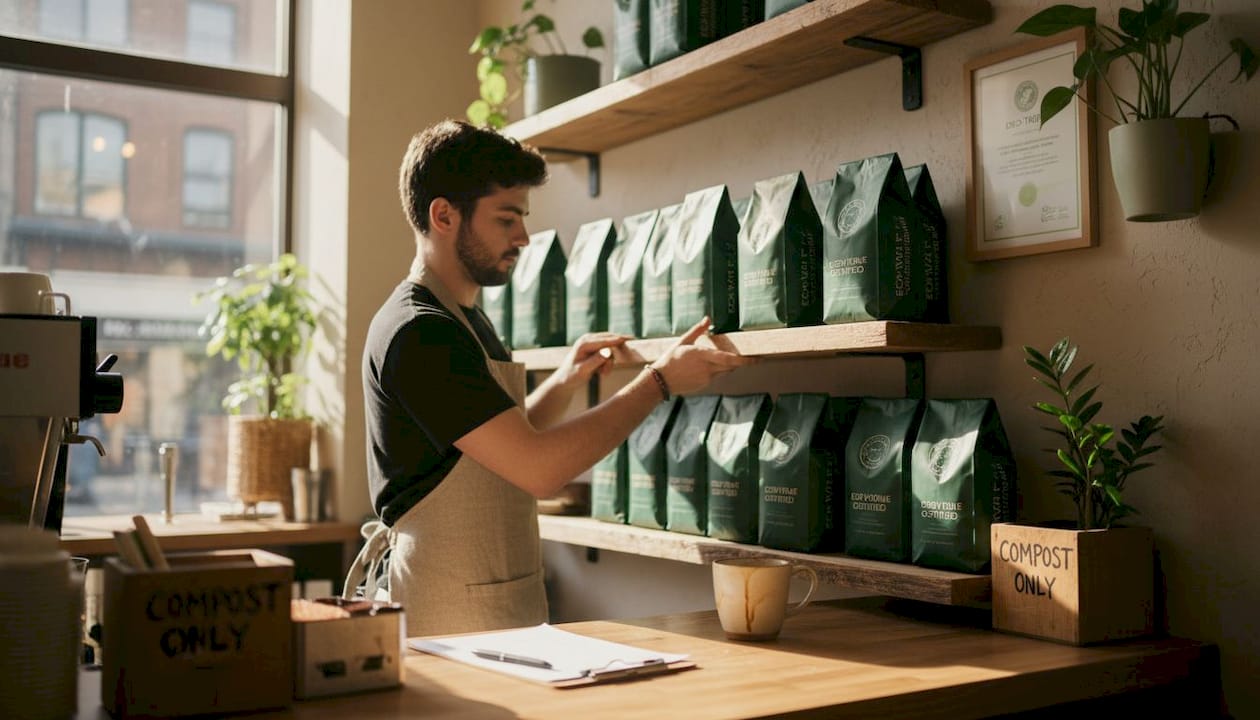
One common pathway used in the coffee sector is regenerative agriculture and agroforestry, approaches that restore soil health, increase biodiversity, and often support meaningful carbon sequestration. Shade-grown coffee, for example, involves planting coffee under a canopy of trees, which draws down carbon, supports bird habitats, and reduces the need for synthetic fertilizers. Healthy, biologically active soils also store carbon in ways that degraded, heavily tilled soils simply cannot.
But here’s the part that often gets left out of the marketing story: climate positive claims hinge on edge cases like land-use change and the deep complexity of measurement. If a farm was carved out of a forest 20 years ago, that historical deforestation carries a massive carbon debt that no amount of current good practice can instantly erase. The “climate positive” math can fall apart entirely depending on that history.
Land-use change is one of the single largest sources of greenhouse gas emissions globally, and coffee farming is not immune. A farm that replaced rich forest with monoculture decades ago may still be paying a carbon debt, even if today’s management looks exemplary.
Here’s a comparison of how different land-use scenarios affect climate positive outcomes:
| Land-use scenario | Climate impact | Does it support climate positive claims? |
|---|---|---|
| Shade-grown agroforestry on degraded land | High carbon sequestration | Yes, with verified additionality |
| Converting primary forest to coffee farm | Massive carbon release | No, creates long-term carbon debt |
| Transitioning monoculture to agroforestry | Gradual improvement over time | Potentially, with proper measurement |
| Organic farming on historically farmed land | Moderate benefit | Depends on soil carbon tracking |
| Reforestation alongside existing farms | Strong sequestration potential | Yes, if independently verified |
Pro Tip: When researching a brand’s climate story, don’t just ask what they’re doing today. Ask how long the land has been under responsible management and whether prior deforestation is factored into their baseline calculations. That historical context is everything.
Understanding regenerative methods in coffee gives you a deeper look at what best-practice farming actually involves. And if you want to understand why forest protection is so central to climate claims, the topic of coffee’s deforestation impact is essential reading. Brands that go further, like those funding mangrove planting alongside coffee sourcing, are finding creative ways to extend their positive reach beyond the farm gate.
Certifications, audits, and credibility: How to spot the real thing
Knowing the practices isn’t enough. Real impact depends on proof you can trust.
A credible “climate positive” initiative usually pairs climate claims with independent auditability or recognized standards and certifications. Certification alone doesn’t seal the deal, but it does provide a framework that requires documented evidence, standardized reporting, and external review. Without those elements, a “climate positive” label is little more than a marketing phrase.
Here’s what to look for, and what should raise a red flag:
Signs of a credible climate positive claim:
- Audited carbon footprint covering the full supply chain, not just the farm
- Third-party certification from a recognized body such as the 4C Carbon Footprint Add-On or equivalent
- Published improvement plan with annual targets and progress updates
- Clear distinction between carbon reductions (doing less harm) and carbon removals (actively pulling CO2 from the atmosphere)
- Transparent disclosure of what is and isn’t included in their climate boundary
- Specific, quantified emissions data available to the public, not just general statements
Red flags that should make you pause:
- Vague language like “we care about the planet” without any supporting data
- No mention of third-party verification or named certifying bodies
- Offset purchases with no transparency about the quality or type of credits used
- Claims that don’t acknowledge the complexity of land use or supply chain scope
- Inability or unwillingness to share a carbon footprint report upon request
The statistic worth noting: Some roasters and brands now connect their climate claims to regenerative agricultural transitions and verified carbon removal credits specifically to address remaining emissions, rather than relying on vague offset purchases or claiming removals that aren’t backed by audited data. This full-chain accountability is where the industry’s leading voices are pushing things forward.
Digging into coffee certification and ethics is a great way to understand how different labels approach transparency. For a detailed breakdown of what different badges actually mean, the overview of types of coffee certifications for conscious consumers is incredibly helpful. And if you want to understand how certifications drive sustainability across the coffee and tea industries, there’s a broader systemic story worth exploring too.
Our take: The uncomfortable truth about climate positive coffee
Let’s step back and consider the big picture, and the challenges that don’t fit neatly into certification logos.
Here’s what we’ve observed: most climate positive coffee coverage focuses on the inspiring parts. The shade trees, the farmer partnerships, the carbon numbers that look great in an infographic. What gets far less attention is the messy middle, specifically the measurement nuances, the concept of “additionality” (meaning: would this carbon removal have happened anyway, without your investment?), and the honest acknowledgment that climate accounting isn’t yet standardized enough to make every claim fully comparable.
Because regenerative approaches can vary widely and carbon accounting isn’t harmonized, expert scrutiny centers on additionality and verification, and on whether tree cover and land-use conditions were genuinely favorable over the relevant timeframe, not just whether a farm uses “best practices” today. That’s a nuanced and often inconvenient truth that marketing teams rarely headline.
What we believe, and what the evidence supports, is that the true mark of progress in climate positive coffee isn’t a perfect scorecard. It’s open reporting, continuous improvement, and honest acknowledgment of what’s still being figured out. A brand willing to say “here’s what we know, here’s what we don’t, and here’s our plan” is far more trustworthy than one projecting polished confidence with no data behind it.
We also think the future of climate positive coffee depends on coffee sustainability trends converging around harmonized measurement standards, something the industry urgently needs. Until that happens, your best tool as a conscious consumer is asking hard questions, rewarding transparency, and supporting brands that treat accountability as a core value rather than a footnote.
How EcoVibe Roast supports climate positive coffee choices
For readers ready to take the next step, here’s how EcoVibe Roast is moving the industry forward.
We believe that your morning cup can be a warm hug for both you and Mother Earth, but only if the claims behind it are real. At EcoVibe Roast, we’re committed to backing measurable, credible climate action across everything we source and sell.

Every purchase you make through EcoVibe Roast contributes directly to planting mangrove trees and removing ocean-bound plastics, two of the most impactful nature-based interventions available today. We work hard to align our sourcing with responsible land-use practices and transparent supply chains. Want to understand exactly how we walk that talk? Explore our environmental impact initiatives for a full look at our commitments, partners, and the measurable outcomes your purchases are helping create. Because we think you deserve more than a feel-good label. You deserve the receipts.
Frequently asked questions
What is the difference between climate positive and carbon neutral coffee?
Climate positive coffee removes more carbon than it emits, while carbon neutral coffee simply offsets its emissions to reach net zero, meaning nothing extra is removed from the atmosphere.
How do I know if a coffee is truly climate positive?
Look for audited, transparent carbon footprint reporting, independent certification from a recognized body, and clear information about land use, scope boundaries, and how emissions reductions are tracked over time.
Does regenerative agriculture guarantee climate positive coffee?
No. Climate outcomes depend on prior land use, tree cover history, and whether emissions reductions are verified, not just on whether a farm uses regenerative practices today.
Can a coffee company offset its way to climate positivity?
Offsets can play a supporting role, but genuine climate positive claims require direct reductions and verified removals within the supply chain, not just compensation credits that don’t address the underlying emissions.


