

TL;DR:
- Not all certifications guarantee fair farmer income or environmental protection due to varying standards and enforcement.
- Certification programs require ongoing audits and systemic support to achieve meaningful social and ecological impacts.
- Conscious consumers should look for transparency, community support, and systemic change beyond just certification labels.
That aromatic cup of coffee or herbal tea sitting in your hands might carry a certified label, but here’s the thing: not all certifications deliver equal impact. Certifications signal ethical sourcing to eco-conscious consumers, yet their real-world outcomes vary widely depending on how programs are structured, enforced, and supported by local institutions. Some labels genuinely transform farming communities and protect ecosystems. Others offer a comforting symbol without the substance behind it. So how do you tell the difference? This guide breaks down how certification programs work, what they truly deliver, and how you can make purchases that align with your values, cup by cup.
Table of Contents
- What sustainability certifications really mean
- How certification systems work: process and mechanisms
- The impact of certifications: benefits, limits, and controversies
- Making informed choices as a consumer
- A closer look: why certifications alone aren’t enough
- Discover certified, sustainable coffee and tea options
- Frequently asked questions
Key Takeaways
| Point | Details |
|---|---|
| Certifications have varied impact | Not all certifications deliver the same results for farmers, workers, or the environment. |
| Certification is a process | Genuine schemes require audits, renewals, and constant improvement, not just labels. |
| Consumer choices matter | Your attention to credible certifications can drive positive change—when paired with transparency and accountability. |
| Systemic change is needed | Certifications help, but real progress requires laws, truthful data, and strong local institutions. |
What sustainability certifications really mean
When you spot a certification logo on your favorite bag of single-origin beans or a box of loose-leaf tea, you’re looking at the result of a third-party verification process. A third-party certifier is an independent organization that audits farms and supply chains against a defined set of standards. No self-reporting, no brand promises. Someone actually shows up and checks.
Understanding coffee certifications and ethics requires knowing what these standards actually cover. According to research on coffee and tea certifications, verification of production practices typically spans four major areas:
- Social standards: Fair wages, safe working conditions, and protections for worker rights, including protections against child labor and discrimination.
- Environmental standards: Biodiversity conservation, shade-grown practices, no deforestation, and reduced use of harmful chemicals.
- Economic standards: Price premiums paid to producers, improved market access, and profit-sharing mechanisms.
- Quality standards: Product consistency, traceability, and processing requirements that protect flavor and safety.
Here’s a common misconception worth clearing up. Many people assume a certification means the entire product is sourced perfectly. In reality, some schemes use a “mass balance” approach, which allows certified and uncertified materials to be blended in the supply chain as long as the volume of certified material sold matches what was purchased. That certified label? It may not mean every bean in your bag came from a certified farm.
Worth knowing: A label is a signal, not a guarantee. The quality of that signal depends entirely on the rigor of the standard and the independence of the auditor.
Knowing why green certification matters helps you move beyond surface-level label reading. Meaningful certifications are transparent about their standards, publish audit results, and clearly explain how premiums reach farmers. Superficial labels often lack public documentation or rely on brand self-assessment. Looking for that transparency is your first power move as a conscious consumer.
How certification systems work: process and mechanisms
Understanding what certifications intend is just the start. Next, let’s look at how they’re actually implemented in the real world.
Certification isn’t a one-time stamp of approval. It’s an ongoing relationship between producers and a certifying body. The 4C Certification System, used widely in coffee, illustrates the typical mechanics well:
- Initial audit: An independent body assesses the farm or cooperative against the certification standard before any approval is granted.
- Surveillance audits: Annual check-ins verify that practices are maintained and improvements are progressing.
- Recertification: Every three years, a full audit is repeated to renew the certificate.
- Internal audits: Producer groups or cooperatives conduct their own regular assessments to stay compliant between external visits.
- Continuous improvement plans: Farms must demonstrate measurable progress over time, not just maintain the status quo.
When auditors find problems, those issues are classified as non-conformities. Major non-conformities, like evidence of forced labor or illegal deforestation, require an immediate fix before certification continues. Minor ones trigger a documented improvement plan with a timeline.
| Non-conformity type | Examples | Required response |
|---|---|---|
| Major | Forced labor, illegal land clearing | Immediate corrective action |
| Minor | Missing wage documentation | Improvement plan with deadline |
| Observation | Room for process improvement | Voluntary enhancement |
For smallholder farmers, the administrative and financial burden of this process is significant. ISO certification costs and similar credentialing fees can be steep, and small farms often lack the bookkeeping infrastructure that auditors expect. This is why farmer cooperatives play such a critical role: they pool resources, share administrative tasks, and make certification accessible to growers who couldn’t manage it alone.
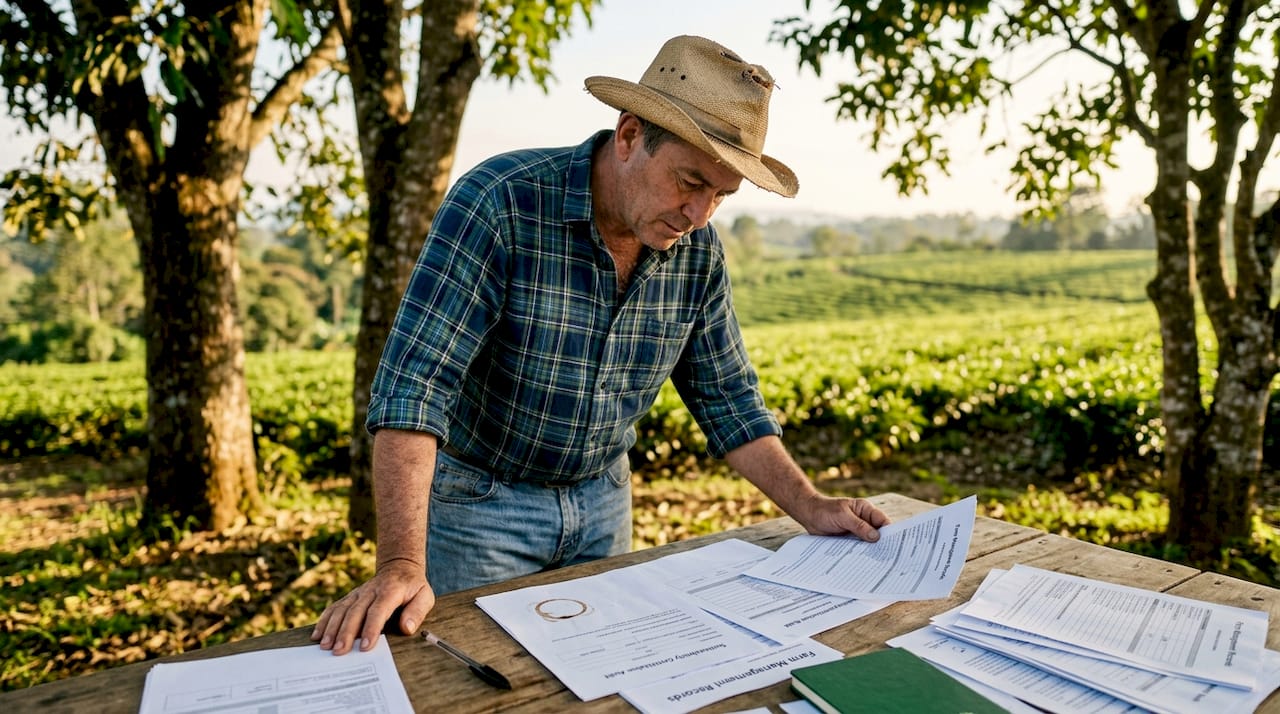
The commitment required for sustainable agriculture for coffee and tea is real and demanding. That’s actually a good sign. Rigorous programs with high requirements tend to deliver better outcomes.
Pro Tip: When evaluating a brand, ask whether their producers are individual farms or cooperatives. Cooperatives often indicate stronger community investment and better compliance support for smallholders.
The impact of certifications: benefits, limits, and controversies
With the mechanics in mind, let’s see what certifications actually accomplish out in the field, and where they fall short.
The three most recognized certifications in coffee and tea are Fairtrade, Rainforest Alliance, and Organic. Each prioritizes different outcomes.
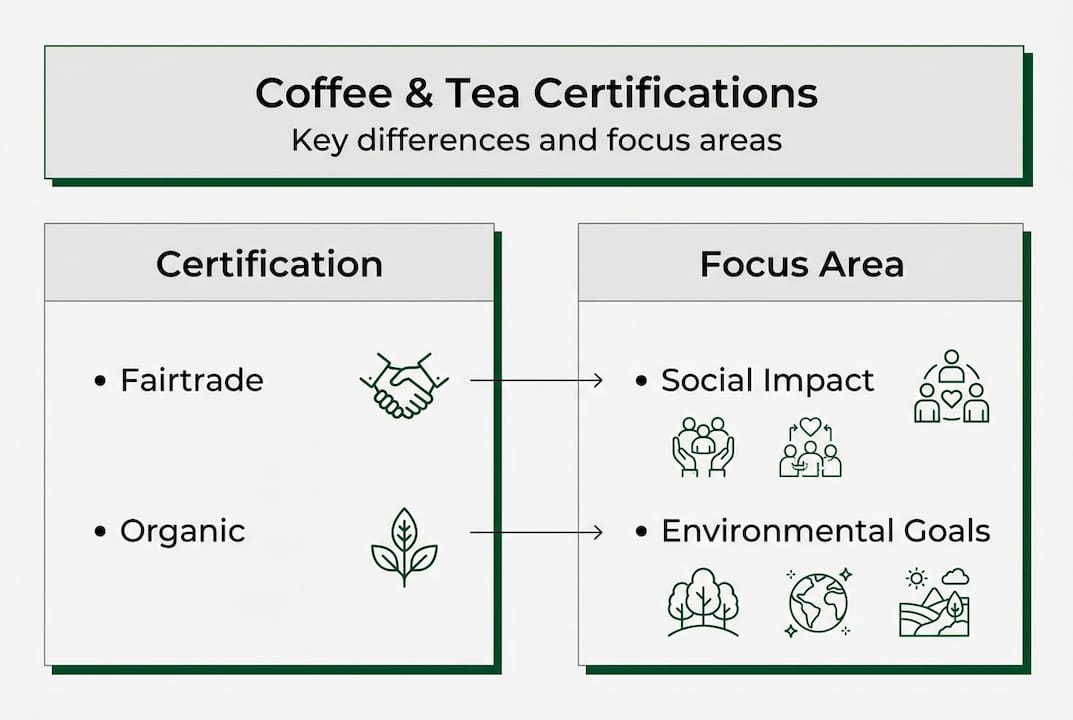
| Certification | Primary focus | Key benefit | Known limitation |
|---|---|---|---|
| Fairtrade | Social and economic | Price premiums, fair wages | Mixed livelihood outcomes |
| Rainforest Alliance | Environmental and social | Biodiversity, farm resilience | Greenwashing risks |
| Organic | Environmental | No synthetic chemicals | Less focus on farmer income |
The benefits are real. Certifications improve responsible sourcing by creating accountability and consumer trust. They also build supply chain resilience by encouraging crop diversification and better land management.
But the evidence on economic impact is nuanced. Fairtrade has been linked to roughly 5 cents per pound higher export prices for Costa Rica coffee producers, yet without a corresponding increase in sales volume. Reviews show mixed or neutral livelihood improvements for smallholders, with the strongest gains appearing where institutions like farmer cooperatives and local governments provide additional support.
On the consumer trust side, certifications do carry weight. Yet critics raise valid concerns about weak poverty alleviation without pricing reform, doubts about auditing rigor, and greenwashing risks when brands use logos without delivering systemic change.
A surprising reality: An estimated 55% of the world’s coffee is certified in some way, but a significant portion is actually sold on conventional markets without the certification premium, because demand for certified product doesn’t always match supply.
Understanding the ethical sourcing benefits also means acknowledging the gaps. Certifications are a floor, not a ceiling. The best brands use them as a starting point and go further with direct trade relationships, transparent pricing, and community investment.
Knowing how to choose ethical coffee or tea means looking beyond the logo to the story behind it.
Making informed choices as a consumer
With the opportunities and limits in view, here’s how you can confidently support true sustainability with your coffee and tea choices.
Decoding labels takes a little practice, but it gets easier once you know what to look for. For a quick orientation:
- Fairtrade: Best choice if social equity and farmer premiums are your top priority. Look for confirmation that premiums actually reached the farming community.
- Rainforest Alliance: Strong environmental focus, covering shade-grown practices, chemical reduction, and habitat protection. Watch for the mass balance issue.
- Organic: Prioritizes no synthetic pesticides or fertilizers, which protects ecosystems and farmworker health. Doesn’t always address income.
- UTZ (now merged with Rainforest Alliance): Historically focused on farm efficiency and good practices. Standards have strengthened post-merger.
According to guidance for sustainability advocates, you should prioritize Fairtrade for social premiums and Rainforest Alliance or Organic for environmental goals, while verifying that premiums genuinely reach farmers and staying alert to mass balance mixing.
Here’s what you can actually ask a brand before buying:
- Do you publish your supply chain partners and sourcing locations?
- What percentage of the certification premium reaches the farmer directly?
- How long have you worked with your farming communities?
- Are your audits conducted by an independent third party?
Exploring types of coffee certifications in detail gives you an even stronger foundation for comparison shopping. And if tea is your daily ritual, a guide to choosing sustainable tea and a handy sustainable tea checklist can make the process feel a lot less overwhelming.
Pro Tip: Brands that voluntarily share detailed sourcing reports, even when not required to, are almost always more trustworthy than those hiding behind a logo alone.
A closer look: why certifications alone aren’t enough
Here at EcoVibe Roast, we believe in certifications, genuinely. But we’d be doing you a disservice if we pretended they were the whole answer.
Research on certification duration outcomes shows that longer certification periods correlate with better results, including improved yields and more shade trees. That’s encouraging. But the same research confirms that voluntary schemes alone are insufficient without supportive laws, consistent buyer premiums that cover costs, and strong local institutions.
Certifications work best when they’re layered on top of systemic support, not substituted for it. When governments enforce labor laws, when buyers commit to long-term pricing agreements, and when communities have access to agricultural training, certifications amplify all of that. Without those foundations, a logo can become more marketing than mechanism.
As a conscious consumer, you’re actually one of the most powerful levers in this system. Your purchasing decisions, your questions to brands, and your advocacy for transparent supply chains put pressure on companies to go beyond the minimum. Supporting environmental stewardship in coffee and tea isn’t just about reading labels. It’s about demanding proof of real impact, every step of the way.
Discover certified, sustainable coffee and tea options
Ready to put your values into action? Start with sustainably certified coffee and tea you can trust.

At EcoVibe Roast, we’ve done the sourcing work so you don’t have to wonder. Our sustainable single serve coffee pods bring you responsibly sourced coffee with every convenient brew, and each purchase supports mangrove tree planting and ocean-bound plastic removal. Prefer something herbal and soothing? Our organic hibiscus berry tea is a vibrant, ethical choice that’s a warm hug for both you and Mother Earth. We believe your daily cup should feel good in every sense, delicious, transparent, and genuinely kind to the planet and the people who grow it.
Frequently asked questions
What is the main purpose of sustainability certifications in coffee and tea?
These labels verify that products meet specific social, environmental, and economic standards through third-party verification of production practices, helping consumers support ethical sourcing with more confidence.
Do certifications guarantee that farmers get better incomes?
Not always. Fairtrade has been linked to about 5 cents per pound in higher export prices, but livelihood improvements depend heavily on scheme details, buyer behavior, and local institutional support.
Why are some certified products still linked to unethical practices?
High certification costs and infrequent audits can leave gaps, especially on large or remote farms. As seen in cases like Kenya’s tea factory disputes, cost burdens can even push farmers away from certification entirely.
Which certification should I look for if I care about the environment?
Rainforest Alliance and Organic certifications both prioritize environmental goals like reduced chemicals and biodiversity, making them strong choices for eco-focused shoppers.
How can I help make certifications more effective?
Ask brands for transparent supply chain details, confirm that premiums reach farmers, and advocate for policies that require fair labor standards alongside certifications, since voluntary schemes alone rarely drive systemic change without legal backing.


