

TL;DR:
- Plant-based coffee pods made from bioplastics decompose in industrial composting within 12 weeks to 6 months.
- Their environmental benefits depend heavily on access to industrial composting facilities and proper waste management.
- High-quality plant-based pods can match or surpass conventional options in flavor and environmental performance when used correctly.
Most coffee pods labeled “eco-friendly” never actually break down the way you’d hope. They sit in landfills, slowly releasing emissions and cluttering the planet for decades. If you care about your morning cup doing more good than harm, it’s worth digging into what plant-based pods really are, how they work, and whether they live up to their promise. Spoiler: they can be genuinely great for the environment, but only under the right conditions. Here’s everything you need to know to make a truly informed choice.
Table of Contents
- What are plant-based coffee pods and how do they work?
- Environmental impact: Do plant-based pods really make a difference?
- Does coffee quality suffer in plant-based pods?
- The limits and caveats of plant-based pods
- A fresh perspective: The real-world math of choosing plant-based pods
- Explore eco-conscious options with EcoVibe Roast
- Frequently asked questions
Key Takeaways
| Point | Details |
|---|---|
| Faster decomposition | Plant-based coffee pods can break down in months under industrial composting instead of centuries in landfills. |
| Lower carbon footprint | Bio-based pods achieve top marks for circularity and CO2 impact if properly composted. |
| No flavor compromise | Plant-based pods deliver premium coffee quality as long as freshness and storage are considered. |
| Composting access is key | Local availability of industrial composting determines whether plant-based pods deliver their green promise. |
What are plant-based coffee pods and how do they work?
Not every “green” pod is created equal, and understanding the difference starts with the materials. Plant-based coffee pods are made from PLA, which stands for polylactic acid, a bioplastic derived from renewable crops like corn starch or sugarcane. Unlike conventional plastic or aluminum pods, PLA is designed to break down under the right conditions, returning to organic matter rather than lingering in the environment.
Here’s where the details really matter. Plant-based pods decompose in 12 weeks to 6 months inside an industrial composting facility, compared to hundreds of years for plastic pods in a landfill, according to Wageningen University research. That’s a dramatic difference, but the key phrase is “industrial composting.” These facilities use high heat and controlled humidity to speed up the process in a way that your backyard bin simply can’t replicate.
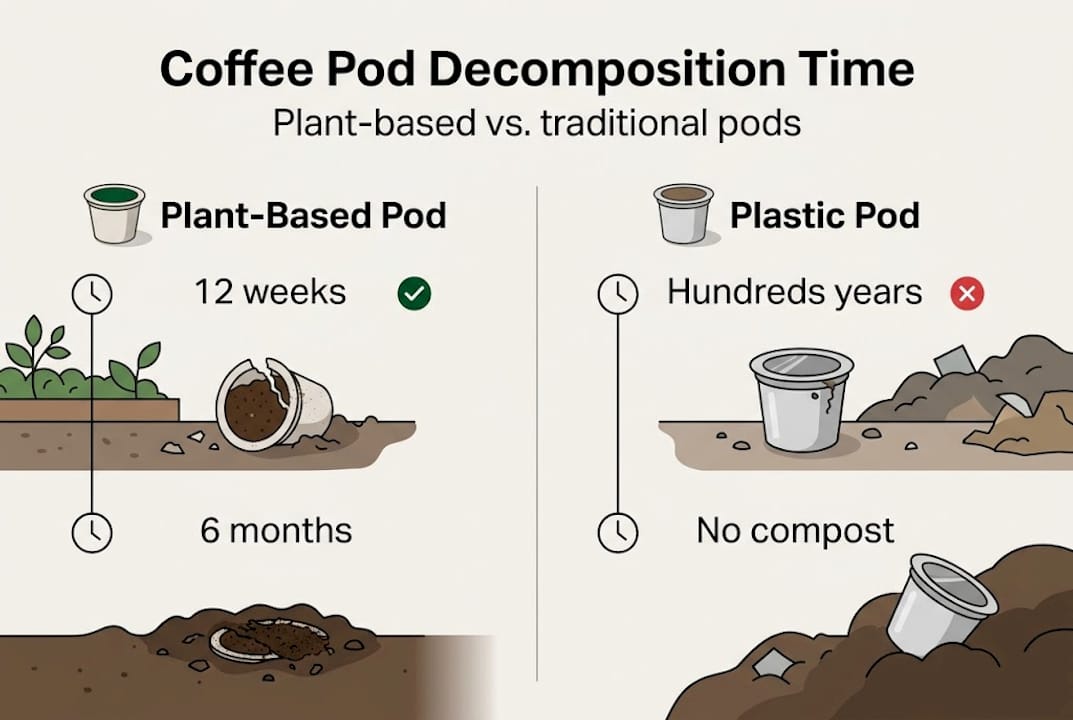
Here’s a quick comparison of pod types and their decomposition:
| Pod type | Material | Decomposition time |
|---|---|---|
| Plant-based (PLA) | Corn starch / sugarcane | 12 weeks to 6 months (industrial) |
| Aluminum | Mined aluminum | Decades (if not recycled) |
| Conventional plastic | Fossil-based plastic | 400+ years |
The core benefits plant-based pods offer over conventional options include:
- Renewable source materials that don’t deplete fossil fuel reserves
- Lower carbon footprint during production compared to aluminum or plastic
- Compostable end-of-life when processed correctly
- Growing compatibility with popular machines like Nespresso
Pro Tip: Before switching to plant-based pods, check whether your city or neighborhood has access to an industrial composting program. Without it, even the best plant-based pod ends up in a landfill where it breaks down very slowly.
Environmental impact: Do plant-based pods really make a difference?
With their unique composition defined, it’s natural to ask whether plant-based pods are actually better for the environment in practice. The short answer is yes, but with conditions attached.
Wageningen University lifecycle analysis shows that compostable bio-based pods achieve the highest circularity scores and the lowest CO2 impact when composted as organic waste. Circularity is measured using a metric called MCI (Material Circularity Indicator), which scores how well a material re-enters the production cycle after use. Bio-based pods score above 80% on the MCI scale, aluminum pods land around 60%, and fossil plastic pods fall below 50%.
Here’s how the three main pod types stack up across key environmental metrics:
| Environmental metric | Plant-based pods | Aluminum pods | Plastic pods |
|---|---|---|---|
| MCI (circularity) | >80% | ~60% | <50% |
| CO2 footprint | Lowest | Medium | Highest |
| End-of-life | Industrial compost | Recycling required | Landfill |
| Infrastructure dependency | Composting access | Recycling access | None needed |
Aluminum actually performs second best, but only in regions where recycling infrastructure exists and people consistently sort their waste. Plastic pods perform worst across every measure, reducing waste with coffee pods starts with simply moving away from fossil-based plastic.
Regulatory momentum is also pushing the industry forward. Market trends and regulations like the EU Packaging and Packaging Waste Regulation (EU PPWR) are actively encouraging manufacturers to switch from fossil-based materials to biomaterials. This means plant-based pod options will only grow more accessible and refined over the next few years. The market shifts in pod materials are happening fast, and staying informed helps you get ahead of it.
Key environmental takeaways:
- Bio-based pods perform best only when composted as organic waste
- Aluminum is a viable second choice where recycling is reliable
- Plastic pods should be avoided whenever possible
- Regulatory pressure is increasing the quality and availability of plant-based options
Does coffee quality suffer in plant-based pods?
Beyond the environmental details, flavor and coffee experience matter just as much for discerning drinkers. You shouldn’t have to choose between a great cup and a clear conscience, and the good news is that you don’t have to.
Taste tests show that high-quality plant-based pods can genuinely impress. Expert tests show that plant-based pods like Kiss the Hippo scored 81 out of 100 for taste, crema quality, and aromatic complexity. That puts them firmly in the premium coffee range, matching or outperforming many conventional pods that have been on shelves for years.
“Plant-based pods delivered impressive complexity and crema… without flavor compromise.”
The secret to getting the best experience from your plant-based pod is pairing it with high-quality, freshly sourced organic coffee. The flavor in compostable pods shines brightest when the beans inside are just as thoughtfully sourced as the pod itself. Dull, stale coffee in a compostable shell is still dull coffee.
Here’s what plant-based pods do well on flavor:
- Thick, satisfying crema comparable to premium conventional pods
- Rich, layered aroma that tantalizes your taste buds from the first pour
- Compatibility with popular Nespresso machines and other home brewers
- Consistent extraction when pods are stored correctly and used within their shelf life
One caveat worth noting: plant-based pods have a shorter shelf life than aluminum pods, which is covered in more detail in the next section. But for pods for conscious consumers, freshness is something you can easily manage with a bit of planning.
The limits and caveats of plant-based pods
Every sustainable solution has its real-world challenges, and here’s what to watch out for with plant-based pods. Being honest about these limitations helps you use plant-based pods in a way that actually delivers on their promise.
The biggest issue is infrastructure. Plant-based pods need industrial composting to break down quickly. If they end up in a landfill, decomposition slows dramatically and the pods may release methane, a greenhouse gas more potent than CO2, as they break down anaerobically. That’s a real problem if composting access is limited in your area.
The second issue is shelf life. Plant-based pods have a shelf life of just 3 to 6 months, compared to 12 to 18 months for aluminum pods. The reason is oxygen transmission: plant-based materials have an oxygen transmission rate (OTR) of 100 to 300, while aluminum’s OTR is below 0.05. That means plant-based pods let in far more oxygen over time, which gradually degrades coffee freshness.
Here’s how to use plant-based pods wisely:
- Confirm composting access. Search for municipal composting programs or local drop-off points before you commit to plant-based pods long term.
- Buy in smaller quantities. Rather than stocking up for months, order smaller batches to keep your pods within their freshness window.
- Store pods carefully. Keep them in a cool, dry place away from sunlight and humidity to slow oxygen exposure.
- Pair with fresh, organic coffee. High-quality beans make the most of whatever freshness remains in the pod.
- Check the certification. Look for “certified compostable” labels, which confirm the pod has been independently tested for proper breakdown.
Pro Tip: Search “industrial composting near me” or check your local government’s waste management website before switching. If composting isn’t available, choosing ethical pods made from aluminum with a strong local recycling program may be the smarter move for now. You can also explore tips for using compostable pods and the advantages of organic pairing to get the most from your setup.
A fresh perspective: The real-world math of choosing plant-based pods
Here’s the opinion you won’t always hear: plant-based pods are not automatically the right choice for every eco-conscious coffee drinker. That might sound surprising coming from a brand that believes deeply in sustainability, but we think honesty serves you better than a sales pitch.
Infrastructure trumps idealism. If industrial composting isn’t available where you live, a plant-based pod that ends up in a landfill may actually produce more harm than an aluminum pod that gets recycled. The actual impact of plant-based pods depends almost entirely on what happens after your cup is brewed.
“Sustainability isn’t just materials. It’s about what happens after your cup is brewed.”
If you do have composting access and you pair your pods with high-quality organic coffee, plant-based pods are a genuinely powerful choice. They close the loop in the most meaningful way possible. But if your local infrastructure isn’t there yet, aluminum with strong recycling habits may serve the planet better right now. The goal is real impact, not a green label on your counter.
Explore eco-conscious options with EcoVibe Roast
Ready to put what you’ve learned into action? At EcoVibe Roast, we believe your morning ritual can be a warm hug for both you and Mother Earth, and we’ve built our entire catalog around that idea.

Browse our sustainable coffee and tea options to find thoughtfully sourced pods, beans, and teas that align with your values. Every purchase supports our EcoVibe environmental commitment, from planting mangrove trees to removing ocean-bound plastics. We make it easy to enjoy exceptional coffee while knowing your choice is doing genuine good in the world. Explore what’s possible when quality and purpose share the same cup.
Frequently asked questions
How long do plant-based coffee pods take to decompose?
In industrial composting, plant-based pods break down in 12 weeks to 6 months, which is dramatically faster than traditional plastic pods that persist for centuries.
Can I compost plant-based coffee pods at home?
Most plant-based pods require industrial composting to decompose properly and will not break down effectively in a standard home compost bin.
Do plant-based pods affect coffee flavor or freshness?
High-quality plant-based pods can deliver excellent flavor, but their 3 to 6 month shelf life is shorter than aluminum, so buying in small, fresh batches is the best approach.
Are plant-based pods always better than aluminum?
Not always. Aluminum pods offer better shelf life and can be the more practical sustainable choice in areas with strong recycling systems and limited composting access.
Why are regulations driving a switch to plant-based pods?
New policies like EU PPWR push for biomaterials because they reduce waste and CO2 impact when properly composted, making them the preferred solution as packaging rules tighten globally.


