

TL;DR:
- Genuine environmental stewardship involves active protection and restoration of ecosystems across the supply chain.
- Practices like regenerative agriculture and agroforestry improve soil health, biodiversity, and climate resilience.
- Supporting certified brands and transparent companies encourages sustainable practices and benefits communities.
You grab your morning cup, spot the green leaf logo on the bag, and feel good about your choice. But here’s the thing: not every eco-labeled beverage lives up to its promise. Some brands use vague terms like “natural” or “responsibly sourced” without any third-party verification or real environmental commitment behind them. Understanding what genuine environmental stewardship actually looks like, and why it matters for your daily coffee and tea ritual, is the key to making choices that truly align with your values. Let’s explore what separates a meaningful green claim from a hollow one.
Table of Contents
- Defining environmental stewardship in the beverage world
- Regenerative agriculture: Proven benefits in coffee and tea
- Agroforestry and resilience: Securing supply and supporting communities
- Stewardship in practice: Certifications and brand responsibility
- The impact of stewardship on brands and the planet
- Our take: What most guides miss about environmental stewardship
- Ready to make every cup matter?
- Frequently asked questions
Key Takeaways
| Point | Details |
|---|---|
| Beyond labels | True stewardship means ongoing responsibility, not just using ‘green’ marketing claims. |
| Supply chain resilience | Regenerative and agroforestry practices future-proof beverage crops against climate crisis. |
| Your impact matters | Every purchase of genuinely responsible coffee or tea supports ecosystems and farming communities. |
| Look for proof | Choose third-party certifications and transparent brands for real environmental impact. |
| Collective power | Eco-driven demand encourages brands and growers to invest in planet-friendly practices that last. |
Defining environmental stewardship in the beverage world
Environmental stewardship is more than a feel-good phrase on a coffee bag. At its core, it means actively protecting and restoring the natural systems that make life, and great coffee, possible. For the food and beverage industry, that includes safeguarding soil health, water quality, local wildlife, and the climate stability that farmers depend on season after season.
The difference between stewardship and simple “eco-friendly” labeling is significant. A product might use recycled packaging and still source its beans from farms that clear rainforest habitat. Real environmental stewardship in coffee and tea goes deeper, addressing the entire supply chain from seed to cup.
Why does this matter so much? Because human pressures on biodiversity are accelerating at a pace that threatens the very ecosystems where coffee and tea grow. Deforestation, soil erosion, and water pollution don’t just hurt wildlife. They destabilize the growing conditions that produce the rich, aromatic flavors you love. Environmental stewardship protects biodiversity across ecosystems, which means protecting the future of your favorite beverages too.
“True stewardship isn’t about doing less harm. It’s about actively restoring the systems that sustain us all.”
Here’s what genuine stewardship looks like in practice for beverage brands and their supply chains:
- Biodiversity protection: Maintaining native plant corridors and shade trees around growing areas
- Water stewardship: Reducing runoff, protecting watersheds, and using water-efficient processing
- Soil health: Building organic matter and avoiding chemical overload that strips nutrients
- Climate action: Measuring, reducing, and offsetting carbon emissions across the supply chain
- Transparency: Publishing sourcing data and third-party audit results for public review
As a conscious consumer, you have real power here. Checking certifications, asking brands about their sourcing, and exploring coffee production impact facts before you buy are simple steps that send a clear market signal. With this foundational understanding, let’s look at how stewardship methods transform coffee and tea production.
Regenerative agriculture: Proven benefits in coffee and tea
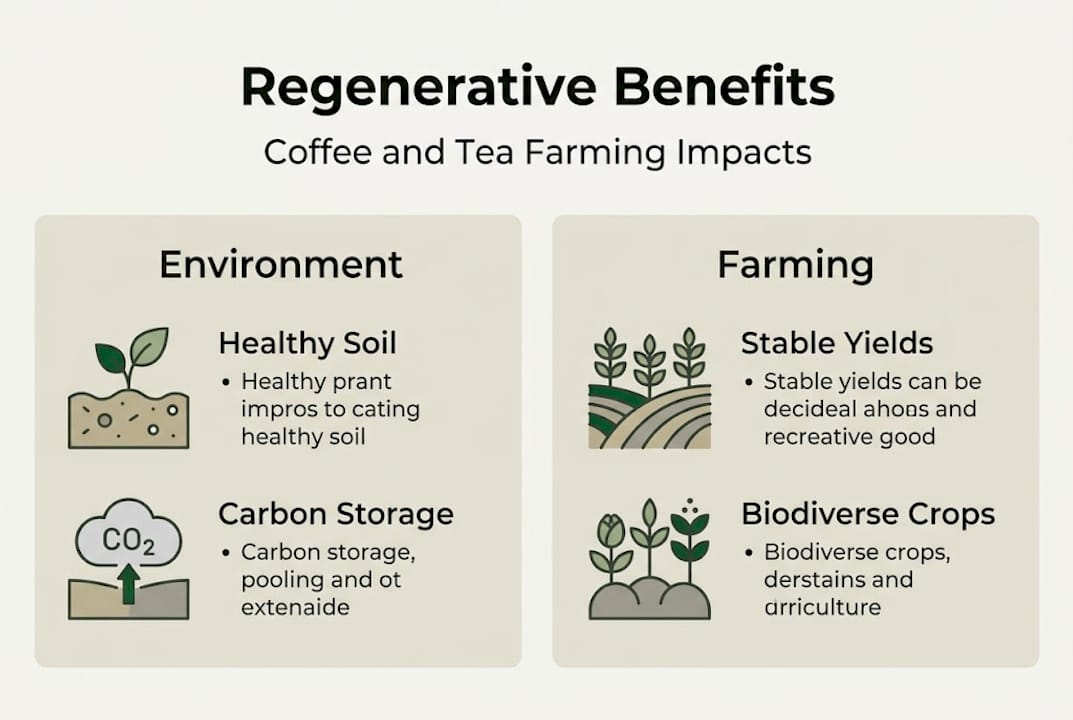
If environmental stewardship is the goal, regenerative agriculture is one of the most powerful tools for getting there. Unlike conventional farming that focuses on maximizing short-term yield, regenerative methods rebuild the land while producing crops. Think shade trees filtering sunlight over coffee plants, native vegetation weaving through tea gardens, and biodiversity corridors connecting fragmented habitats.
The results are striking. Regenerative coffee farming in Costa Rica demonstrates how these practices improve soil health, water retention, carbon sequestration, and farm resilience all at once. Aquiares Estate is a standout example. This Costa Rican coffee farm became carbon neutral, hosts over 100 bird species, and maintained stable yields even during extreme weather events that devastated neighboring conventional farms.
The regenerative agriculture impact extends well beyond the farm gate. Healthier soils mean more consistent harvests, which means more stable supply chains and more reliable quality in your cup. Farmers also benefit from reduced input costs when they work with natural systems rather than against them.
Here’s a quick comparison to make this tangible:
| Factor | Conventional farming | Regenerative farming |
|---|---|---|
| Soil organic matter | Declining over time | Actively rebuilding |
| Carbon footprint | High emissions | Net zero or carbon positive |
| Water retention | Poor, high runoff | Strong, reduced irrigation need |
| Biodiversity | Low, monoculture stress | High, habitat corridors maintained |
| Farm resilience | Vulnerable to climate shocks | Adaptive and stable |
The carbon neutral coffee movement is closely tied to these regenerative methods. When farms sequester carbon in healthy soil and vegetation, they offset the emissions from processing and transport, making your morning cup a genuinely climate-positive act.
Pro Tip: When shopping for coffee or tea, look for phrases like “shade-grown,” “agroforestry certified,” or “Rainforest Alliance verified” on the label. These terms signal that regenerative or stewardship-aligned practices are likely in play.
Beyond these broad benefits, regenerative approaches adapt to the unique needs and pressures faced by different coffee and tea-growing regions.
Agroforestry and resilience: Securing supply and supporting communities
Agroforestry takes regenerative thinking a step further by intentionally weaving together beverage crops, fruit trees, timber species, and native plants into one thriving system. Picture coffee plants growing beneath a canopy of banana trees and native hardwoods, with birds and insects moving freely through layers of vegetation. This is what resilience looks like.
The mechanics are elegant. Tree canopies cool the microclimate, reducing heat stress on coffee and tea plants during increasingly hot growing seasons. Root systems from diverse species hold moisture in the soil, cutting irrigation needs and protecting against drought. And when one crop faces a bad season, farmers have others to fall back on, which stabilizes their income and your supply.
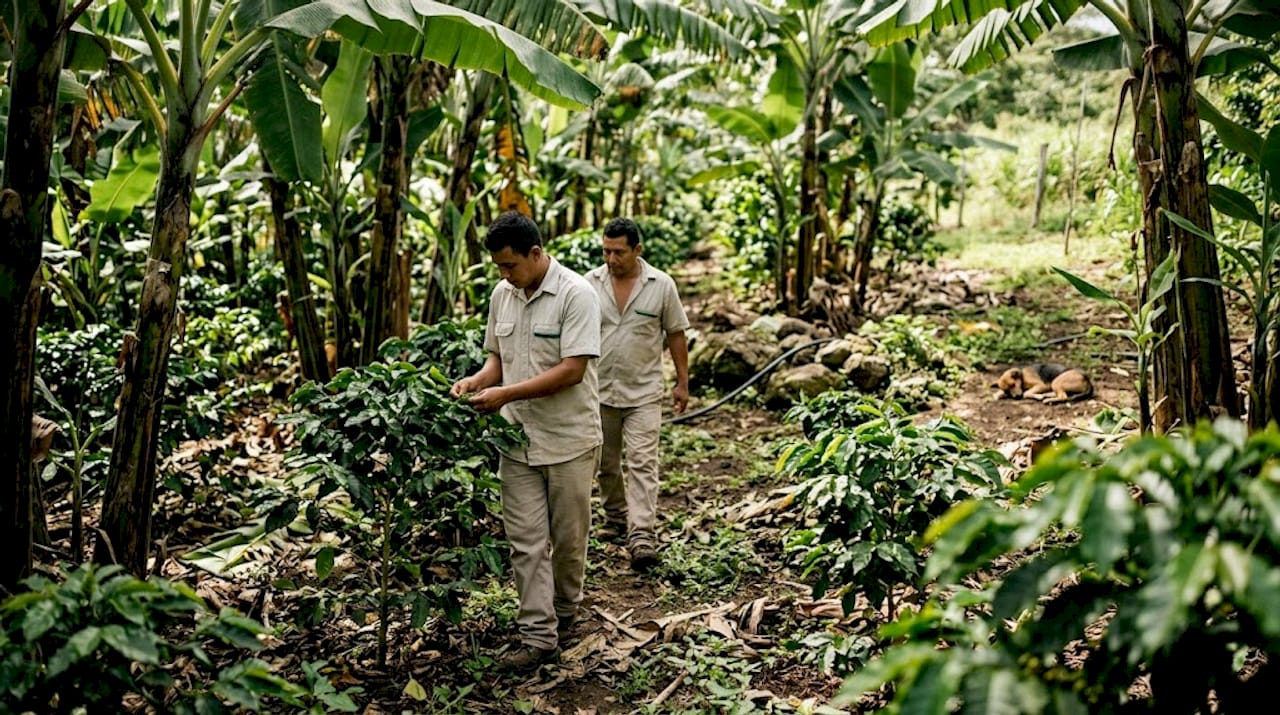
Agroforestry in coffee and tea is gaining serious momentum. Swedish coffee brand Löfbergs made a bold commitment to shift from simply reducing harm to actively restoring ecosystems through regenerative agroforestry, recognizing that regenerative agroforestry improves soil moisture, yield resilience, and farmer income simultaneously.
The community benefits are just as compelling as the ecological ones:
- Fair wages: Diversified farm income reduces pressure to cut labor costs
- Farmer training: Agroforestry programs often include technical education and mentorship
- Local investment: Healthier farms support schools, healthcare, and infrastructure in growing regions
- Food security: Mixed cropping systems provide food for farming families, not just export crops
Here’s how agroforestry stacks up against monoculture farming:
| Outcome | Monoculture | Agroforestry |
|---|---|---|
| Yield stability | Volatile, weather-dependent | More consistent across seasons |
| Farmer income | Single crop risk | Diversified and more stable |
| Ecosystem services | Minimal | High (carbon, water, habitat) |
| Climate vulnerability | High | Significantly reduced |
Exploring the circular economy in beverages reveals how agroforestry fits into a broader vision of zero-waste, regenerative supply chains. And if you’re curious about where the industry is heading, the 2026 coffee sustainability trends show agroforestry adoption accelerating fast. With a grasp of how stewardship bolsters supply and communities, it’s time to see how these practices link to the brands and products in your cup.
Stewardship in practice: Certifications and brand responsibility
Knowing that regenerative and agroforestry practices exist is one thing. Knowing how to find them on a store shelf is another. This is where certifications and brand transparency become your best tools.
Leading certifications in the coffee and tea space include Rainforest Alliance, USDA Organic, and carbon neutral verification programs. Each one audits different aspects of the supply chain, from pesticide use and biodiversity protection to greenhouse gas accounting. No single certification covers everything, which is why looking for multiple labels on one product is a strong signal.
Programs like Nespresso’s AAA and Rainforest Alliance drive better farming practices, productivity, and resilience by providing farmers with scorecards covering soil health, biodiversity, climate impact, and worker welfare. These aren’t just marketing tools. They represent years of field audits, farmer training, and measurable improvement tracked over time.
Brand responsibility goes beyond certification, though. The most trustworthy brands publish annual impact reports, share sourcing maps, and openly discuss the challenges they’re still working through. That kind of honesty is actually a green flag, not a red one.
Pro Tip: The impact of coffee certifications varies widely. Rainforest Alliance and organic certifications are third-party verified, while some brand-created “sustainability programs” are self-reported. Always check who’s doing the auditing.
Here’s how you can actively support stewardship through your purchases:
- Check for third-party certifications on the packaging before you buy
- Visit the brand’s website and look for a dedicated sustainability or impact page
- Ask questions on social media or via email. Transparent brands respond openly
- Choose verified options when price and quality are comparable
- Share your values by recommending stewardship-aligned brands to friends and family
Understanding why green certification matters helps you cut through the noise and find brands that are genuinely walking the talk. Understanding practical actions at every step brings us closer to the impact that stewardship has on businesses and your own daily choices.
The impact of stewardship on brands and the planet
Here’s something that might surprise you: environmental stewardship isn’t just good for the planet. It’s increasingly good for business too. Companies with strong sustainability commitments report higher profit margins, lower operational costs over time, and stronger consumer loyalty than their conventional counterparts.
The numbers back this up. Sustainable business outcomes show that companies with strong ESG (environmental, social, and governance) performance consistently outperform peers on margins and consumer trust. And 62% of Gen Z actively choose sustainable brands even when it means paying more. That’s a powerful market force.
When you support stewardship with your purchasing decisions, you’re part of a collective shift that drives real change at scale. Here’s what that looks like in practice:
- Consumer demand signals push more brands to adopt regenerative sourcing
- Premium pricing for certified products funds farmer training and habitat restoration
- Brand competition on sustainability raises the baseline for the entire industry
- Ecosystem protection at scale preserves the biodiversity that keeps coffee and tea viable for future generations
Scaling stewardship across the global coffee and tea industry could protect millions of acres of tropical habitat, stabilize the livelihoods of tens of millions of smallholder farmers, and reduce the beverage sector’s contribution to climate change significantly. Every aromatic cup you choose with intention is a small vote for that future. To move from understanding to action, let’s consider what all this means for anyone passionate about the future of coffee, tea, and our planet.
Our take: What most guides miss about environmental stewardship
Most articles on sustainable coffee hand you a checklist and call it done. But working closely with sustainable supply chains has shown us something more nuanced: real stewardship is a living practice, not a destination.
Certifications matter, but they’re a snapshot in time. The farms and brands that truly move the needle are the ones that keep learning, adapting to new climate pressures, and being honest when something isn’t working. Perfection isn’t the goal. Progress is.
We also think the daily ritual angle gets underplayed. Your eco-conscious coffee workflow, from how you store your beans to how you brew and dispose of packaging, creates ripple effects that connect back to producers and ecosystems. Stewardship isn’t just a farm-level story. It lives in your kitchen too.
Every cup you brew mindfully is a vote for the world you want to see. That’s not a small thing.
Ready to make every cup matter?
You now have a clear picture of what genuine environmental stewardship looks like, from regenerative farms in Costa Rica to agroforestry systems supporting entire communities. The next step is putting that knowledge into action with every purchase you make.

At EcoVibe Roast, every product is chosen with stewardship values at the center. Our 60-pack single-serve coffee pods make it easy to enjoy sustainably sourced coffee every day, while our Hibiscus Berry Tea brings the same commitment to your tea ritual. Every purchase also plants mangrove trees and removes ocean-bound plastics. See the full story on our environmental impact page and make your next cup count.
Frequently asked questions
What does environmental stewardship mean for coffee and tea drinkers?
It means choosing products from brands that protect ecosystems, support growers, and ensure long-term supply by using regenerative and transparent practices. Regenerative coffee farming supports biodiversity, climate resilience, and supply chain stability all at once.
How can I identify sustainable coffee or tea brands?
Look for third-party certifications like Rainforest Alliance, organic, and carbon neutral, and review brands’ transparency reports about sourcing and community support. Leading programs like Nespresso’s AAA set a strong benchmark for what verified stewardship looks like.
Does paying more guarantee environmental stewardship?
Not always. Credibility comes from third-party certification, transparent impact reporting, and proven community investment, not just a higher price tag. 62% of Gen Z are loyal to brands showing genuine sustainability, not just premium pricing.
How does environmental stewardship support local communities?
It improves farm resilience, secures fairer incomes, funds training, and supports broader community and ecosystem health. Regenerative agroforestry approaches enhance farmer income and community resilience in measurable ways.
Why does stewardship matter for climate change?
It cuts carbon emissions, improves ecosystem resilience, and protects biodiversity, making beverage supply chains less vulnerable to extreme weather. Regenerative stewardship strengthens climate resilience and ensures supply stability for the long term.


