

TL;DR:
- Greenwashing in coffee involves exaggerated claims and unverified sustainability promises.
- Certifications vary in rigor, and many premiums largely benefit roasters and retailers rather than farmers.
- Consumers should scrutinize sourcing transparency, multiple certifications, and ask brands for detailed impact information.
That aromatic morning cup sitting in your hands might carry a leafy green logo, a feel-good story about rainforests, and a premium price tag. But does any of it add up to real sustainability? Greenwashing leads to green confusion that can actually increase boycott intentions among conscious consumers, which means the stakes are high for both buyers and brands. You deserve to know whether your coffee ritual is genuinely helping the planet or simply funding clever marketing. This guide cuts through the noise so you can shop with confidence and choose brews that truly do good.
Table of Contents
- What is greenwashing in coffee?
- How certifications contribute to greenwashing
- Who really benefits from certified coffee premiums?
- Industry variation: do big brands or small roasters drive real change?
- Making choices that matter: how to buy coffee without falling for greenwashing
- Why spotting greenwashing is harder than you think and what actually works
- Choose sustainable coffee with confidence
- Frequently asked questions
Key Takeaways
| Point | Details |
|---|---|
| Not all labels mean true sustainability | Many eco claims in coffee are vague or unverified, requiring closer scrutiny. |
| Certification standards vary widely | Some certifications have weak thresholds, so check the specifics and prefer multiple strong certifications. |
| Premiums often benefit intermediaries | Much of the extra cost of certified coffee goes to brands, not farmers. |
| Research and direct questions matter | Digging deeper and engaging with brands is essential for avoiding greenwashing. |
What is greenwashing in coffee?
Let’s start with the basics. Greenwashing happens when a brand uses sustainability claims that are exaggerated, vague, or completely unverified. It’s the coffee industry’s version of empty promises, and it’s more widespread than most people realize.
Think about phrases like “eco-friendly blend,” “naturally sourced,” or “good for the planet” printed on a bag of coffee. None of those phrases have a legal definition or a third-party verification requirement. A roaster can slap them on any product without changing a single thing about how that coffee was grown, harvested, or shipped. That’s greenwashing in its simplest form.
Some common greenwashing tactics in coffee include:
- Vague environmental claims with no data to back them up (“sustainably sourced” without naming what that means)
- Misuse of certifications by displaying a seal without meeting full compliance requirements
- Hidden trade-offs where one sustainable attribute is highlighted while bigger issues are ignored (like organic farming that still relies on exploitative labor)
- Misleading imagery featuring lush forests or happy farmers that have no connection to the actual supply chain
- Ambiguous language like “working toward sustainability” that sets no measurable benchmark
“Greenwashing doesn’t just mislead consumers. It erodes trust across the entire category and makes it harder for genuinely ethical brands to stand out.” This is why spotting greenwashing matters so deeply for people who care about eco-conscious coffee.
The confusion greenwashing creates is real and measurable. Shoppers who feel deceived often swing to the opposite extreme, either abandoning certified products altogether or developing a general skepticism that makes them distrust even the most transparent brands. Neither outcome helps the farmers, ecosystems, or communities that legitimate sustainability efforts are designed to protect.
How certifications contribute to greenwashing
Once you understand the problem, the obvious next question is: don’t certifications fix this? The short answer is sometimes, but not always. Certifications are meant to verify claims independently, but the quality and rigor of those certifications vary enormously.
Take Rainforest Alliance as an example. It’s one of the most recognizable seals on coffee packaging, and many consumers assume it guarantees a high standard. But Rainforest Alliance standards actually allow products to carry the seal when only 30% of the content is certified, with no minimum price floor for farmers and a compliance model that permits farms to certify while still working toward meeting standards over time. That’s a significant gap between the seal’s implied promise and reality.
Here’s a quick comparison to help you see the differences clearly:
| Certification | Min. certified content | Price guarantee | Compliance rigor |
|---|---|---|---|
| Rainforest Alliance | 30% | None | Process-oriented, phased |
| Fairtrade | 100% (for single-origin) | Yes (minimum floor) | Fixed standards, audited |
| USDA Organic | 95% | None | Strict ingredient control |
The impact of coffee certifications is real, but it depends heavily on which certification you’re looking at and how fully a brand complies. Because of the risk of greenwashing with Rainforest Alliance due to its lower thresholds and process-oriented approach, eco-conscious shoppers should treat it as a starting point rather than a final verdict.
Understanding why certification matters helps you ask better questions. And knowing how certifications drive sustainability in coffee means you can recognize when they’re doing their job well.
Here’s how to vet certification claims like a pro:
- Look up the certification body’s standards directly rather than relying on the logo alone.
- Check the minimum content threshold required to earn the seal on a product.
- Find out if the certification includes a price floor for farmers.
- Search for annual audit reports or third-party verification documents.
- Ask the brand directly how they comply with the certification beyond the minimum requirements.
Pro Tip: Look for products with at least two different certifications. A coffee that is both Fairtrade and Organic certified, for example, has cleared two separate sets of standards, making it far harder to greenwash.
Who really benefits from certified coffee premiums?
Here’s where things get genuinely surprising. You’re paying more for certified coffee because you want that extra money to reach farmers, right? The reality is that the premium you pay rarely travels that far down the supply chain.
Research on the Swedish Fairtrade coffee market reveals a striking breakdown. Fairtrade coffee premium distribution shows that roasters and retailers capture between 61% and 70% of the consumer premium, while producers only receive between 24% and 31%. Fairtrade Sweden itself accounts for the remaining 6% to 8%. That means for every extra dollar you spend on Fairtrade coffee, as little as 24 cents reaches the farmer who grew it.
| Share of premium | Recipient |
|---|---|
| 61% to 70% | Roasters and retailers |
| 24% to 31% | Coffee producers |
| 6% to 8% | Fairtrade organization (Sweden) |
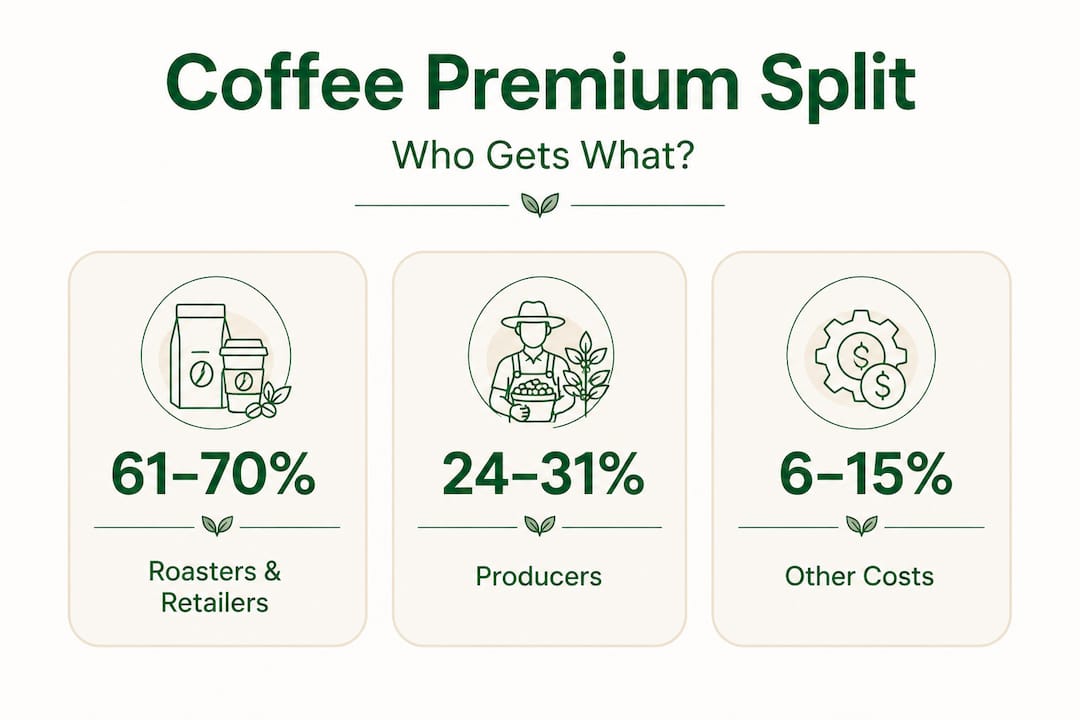
This data is eye-opening because benefits of coffee certifications are often absorbed by intermediaries rather than flowing to smallholder farmers in a meaningful way. It doesn’t mean Fairtrade is worthless. It does mean the story is more complicated than “buy certified, help farmers.”
The benefits of ethical sourcing are very real when a brand is intentional about how it structures its supply chain. The problem is that certification alone doesn’t guarantee that intentionality. A brand can be Fairtrade certified and still maximize its own margin on the premium, leaving farmers with only a fraction of what consumers hoped their purchase would deliver.
Pro Tip: Seek out brands that publish transparent sourcing reports or share the actual price paid per pound to farmers. Some ethical sourcing examples include roasters who post direct trade agreements online, showing exactly what they paid and to whom. That level of transparency is hard to fake.
Industry variation: do big brands or small roasters drive real change?
Not all coffee companies approach sustainability the same way, and the size of the company often shapes the strategy. Research on sustainability initiatives by firm size in the German coffee market shows that larger firms are more actively engaged in certifications, while smaller companies take different and sometimes more locally meaningful approaches.
Here’s a breakdown of how these two categories often differ:
Large coffee companies tend to:
- Invest in Rainforest Alliance, Fairtrade, or Organic certifications at scale
- Publish corporate sustainability reports with measurable targets
- Have dedicated sustainability teams and supplier codes of conduct
- Focus on supply chain transparency for risk management
Small and independent roasters tend to:
- Build direct relationships with individual farms or cooperatives
- Share detailed origin stories for each coffee they sell
- Pay above-market prices without necessarily seeking formal certification
- Invest in local community projects at origin
“The difference between large and small is not about who cares more. It’s about where the levers of change are located. Large firms can move markets through scale; small roasters can move communities through relationships.”
A beautiful example of what small-scale genuine commitment can look like is Bloom Specialty Coffee, which centers its model on deep producer relationships. Neither approach is inherently superior. What matters is whether the sustainability claims match the actual practices, and whether the story holds up when you dig into it. Keeping up with 2026 coffee sustainability trends can help you identify which direction the industry is moving overall, and supporting green coffee initiatives at every level sends the right signal to the market.
Making choices that matter: how to buy coffee without falling for greenwashing
You’ve now got a much clearer picture of the landscape. So what do you actually do when you’re standing in the coffee aisle or browsing online? Here’s a practical framework for avoiding greenwashing and finding coffee that genuinely aligns with your values.
- Read certifications critically. Don’t just look for the logo. Check which certifications are present, and then look up their minimum standards. Aim for certifications with strict thresholds and price guarantees for farmers.
- Look for multiple certifications. A single seal can be gamed. Two or more from different bodies is significantly harder to fake and signals deeper commitment.
- Dig into sourcing transparency. Does the brand share the country, region, farm, and price paid? Vague “sourced from Central America” language is a red flag.
- Check for sustainability reports. Brands serious about impact publish annual data on environmental and social outcomes, not just feel-good blog posts.
- Research where the premium goes. Ask whether the brand publishes how much of your purchase price reaches farmers. If they can’t or won’t answer, that tells you something important.
- Buy directly when possible. Purchasing from roasters who deal directly with farms cuts out intermediaries and increases the share that reaches producers.
- Trust your skepticism. Greenwashing leads to confusion that can make you want to disengage from sustainable purchasing altogether. Don’t let bad actors win. Keep asking questions.
When you’re comparing your options, resources like coffee certifications for conscious consumers can help you understand what each label actually guarantees. And if you’re curious about whether local sourcing is always greener, a deep look at local sourcing in coffee will challenge some assumptions you might not even know you hold.
Pro Tip: Reach out directly to a roaster before buying. Ask where their coffee comes from, what price they paid per pound, and what certifications they hold. A genuinely ethical brand will be happy to answer. A brand that deflects or gives vague answers is showing you exactly what you need to know.
Why spotting greenwashing is harder than you think and what actually works
Here’s the uncomfortable truth that most articles won’t tell you: greenwashing persists not just because brands are dishonest, but because the system makes honesty optional. Certifications are expensive to earn and maintain. Transparency reports take time and resources. And most consumers, even thoughtful ones like you, don’t have time to research every purchase in depth.
Brands know this. Some deliberately rely on consumer fatigue, counting on the fact that most people will glance at a green logo, feel reassured, and move on. The assumption is that the average eco-conscious buyer won’t actually follow up. And unfortunately, that assumption is often correct.
The conventional wisdom says “just look for certified coffee.” But as you’ve now seen, that advice only gets you so far. A green certification perspective that ignores threshold levels, premium distribution, and brand transparency is only half the picture.
“The most powerful thing a conscious consumer can do is be inconveniently curious. Ask more questions than feels comfortable. Follow up. Expect real answers.”
What actually works is developing a layered approach. Look at certifications as a starting filter, not a final verdict. Then layer in sourcing transparency, premium distribution data, and direct communication with the brand. No single check is foolproof, but together they build a picture that’s genuinely hard to fake.
We also believe that every time you walk away from a misleading product and toward a transparent one, you’re voting with your wallet in a way that the industry genuinely feels. Markets respond to demand. When enough consumers demand real accountability, brands that won’t provide it lose ground to those that will.
Choose sustainable coffee with confidence
Ready to put all of this into practice? We built EcoVibe Roast for exactly this moment. We know how exhausting it is to second-guess every label, so we’ve done the work of curating coffee options that meet real sustainability standards, not just the marketing kind.

Every purchase at EcoVibe Roast contributes to planting mangrove trees and removing ocean-bound plastics, giving your morning cup a tangible, measurable impact. Our sourcing stories are detailed and honest, because we believe you deserve to know exactly what your money supports. Whether you’re looking for our popular bulk single serve coffee pods for easy everyday brewing or want to explore our full sustainable coffee collection, you’ll find options you can feel genuinely great about. Your coffee ritual can be a warm hug for both you and Mother Earth. Let’s make it count.
Frequently asked questions
What is a quick way to spot greenwashing on a coffee label?
Look for vague terms like “eco-friendly” or “sustainably sourced” without specific, transparent certifications or sourcing information. Genuine sustainability is always backed by verifiable details, not just feel-good language, as greenwashing relies on exaggerated or unverified claims.
Do coffee certifications always guarantee real sustainability?
No, some certifications allow weak compliance, so it’s worth researching their specific thresholds and requirements. For example, Rainforest Alliance standards permit a seal with only 30% certified content, which is a much lower bar than most consumers expect.
Where does the extra price I pay for certified coffee actually go?
A large chunk stays with roasters and retailers. Fairtrade coffee premium distribution data from the Swedish market shows that producers receive only 24% to 31% of the consumer premium, while roasters and retailers keep 61% to 70%.
Do small or large coffee companies do a better job with sustainability?
It depends on what you mean by “better.” Sustainability initiatives by firm size research shows larger firms certify more frequently, while small roasters often focus on direct relationships and local community impact, which can be equally meaningful in different ways.
Recommended
- Why green certification matters for coffee and tea lovers – EcoVibe Roast
- How to Support Green Coffee Initiatives for Real Impact – EcoVibe Roast
- Is Local Sourcing Greener? The Real Impact for Coffee Lovers – EcoVibe Roast
- Eco-Conscious Coffee Brewing Process for Sustainable Enjoyment – EcoVibe Roast
- Coffee origins decoded: assess and appreciate specialty brews


