

Peering into your morning brew, do you ever think about the living world behind each bean? Coffee farming shaped by biodiversity-rich ecosystems supports far more than just your favorite flavor notes. As more farmers worldwide recognize the importance of biodiversity—including shade trees, soil life, and wildlife—ethical sourcing becomes a blueprint for both environmental stewardship and better coffee. This guide reveals how embracing biodiversity in coffee farms can benefit the planet, farmers, and your daily cup.
Table of Contents
- What Is Biodiversity in Coffee Farming?
- Types of Coffee Farms and Biodiversity Levels
- How Biodiversity Enhances Coffee Quality
- Sustainable Practices That Foster Biodiversity
- Risks of Biodiversity Loss in Coffee Farming
Key Takeaways
| Point | Details |
|---|---|
| Biodiversity Enhances Coffee Quality | Coffee from biodiverse farms benefits from natural pest control and enhanced flavor complexity due to improved ecosystem health. |
| Importance of Shade Trees | Shade trees are crucial for regulating climate conditions and supporting diverse life forms, leading to healthier coffee ecosystems. |
| Economic Resilience Through Biodiversity | Biodiverse farming practices can increase farm income stability while reducing reliance on chemical inputs. |
| Consumer Choices Matter | Choosing certified sustainable coffee directly supports farms that prioritize biodiversity and ecological health. |
What Is Biodiversity in Coffee Farming?
Biodiversity in coffee farming refers to the variety of living organisms thriving within and around coffee plantations. This includes shade trees, soil microorganisms, insects, birds, and other wildlife that coexist in the farming ecosystem.
You might picture a conventional coffee plantation as rows of coffee plants stretching endlessly. But biodiversity-rich coffee farms look dramatically different. They resemble mini-forests where coffee grows beneath a canopy of native trees, alive with ecological activity.
Biodiversity in coffee agroforests encompasses plant, animal, and microbial life that provides critical ecosystem services. Think of it as nature’s insurance policy for your coffee crop and the planet.
The Core Components
Biodiversity in coffee farming includes three interconnected layers:
- Shade tree canopy: Indigenous and native trees that create a protective overhead layer
- Soil ecosystem: Billions of microorganisms, earthworms, and fungi that build soil health
- Wildlife populations: Birds, beneficial insects, and small mammals that support ecosystem balance
Each component plays a specific role. Shade trees regulate temperature and moisture. Soil organisms break down organic matter and release nutrients. Wildlife controls pest populations naturally.
Why This Matters for Your Coffee
The relationship between biodiversity and coffee quality is direct. When you sip a cup from a biodiverse farm, you’re tasting the result of a healthier ecosystem.
Biodiversity provides ecosystem services essential for sustainable coffee production, including pest control and pollination. This reduces the need for chemical inputs that degrade soil and water.
Here’s what a biodiverse coffee farm delivers:
- Natural pest management without synthetic pesticides
- Improved soil structure and water retention
- Carbon sequestration that fights climate change
- Habitat for endangered bird and insect species
- Higher long-term farm resilience against climate stress
The Current Challenge
Many conventional coffee farms sacrifice biodiversity for short-term yield increases. The trade-off seems attractive initially, but it creates long-term problems. Monoculture plantations deplete soils faster, require more chemical inputs, and collapse under environmental stress.
When coffee farming prioritizes short-term productivity over ecological health, everyone loses: farmers face declining soil quality, consumers get lower-quality coffee, and ecosystems suffer irreversible damage.
The good news? This trend is reversing. Coffee farmers worldwide are recognizing that biodiversity and profitability aren’t competing goals. They’re complementary.
When you choose coffee sourced using regenerative methods, you’re supporting farms that understand this balance. These farms invest in biodiversity because it strengthens their business while restoring ecosystems.
Pro tip: _Look for coffee labeled as “shade-grown” or “biodiverse” when making purchases. These terms indicate farms actively managing for ecological health, which directly translates to better flavor, ethical sourcing, and positive environmental impact.
Types of Coffee Farms and Biodiversity Levels
Not all coffee farms are created equal when it comes to biodiversity. The farming system you choose—or support through your purchases—dramatically impacts how many species thrive on that land.
Coffee farming operates across a spectrum, from ultra-simplified monocultures to complex agroforestry ecosystems. Understanding these differences helps you make more informed choices about the coffee you drink.
Monoculture Coffee Farms
Monoculture systems plant only coffee plants in uniform rows across the land. No shade trees. No native vegetation. Just coffee as far as the eye can see.
These farms prioritize short-term yields over ecological health. They require heavy chemical inputs to maintain productivity and control pests without natural predators present.
The biodiversity level here is devastating:
- Minimal bird and insect populations
- Depleted soil lacking beneficial microorganisms
- No habitat for wildlife species
- Heavy dependence on synthetic pesticides and fertilizers
- Rapid soil erosion and nutrient depletion
Shade-Grown and Agroforestry Systems
This is where coffee farming transforms into something beautiful. Shade-grown coffee integrates native trees alongside coffee plants, creating a layered ecosystem.
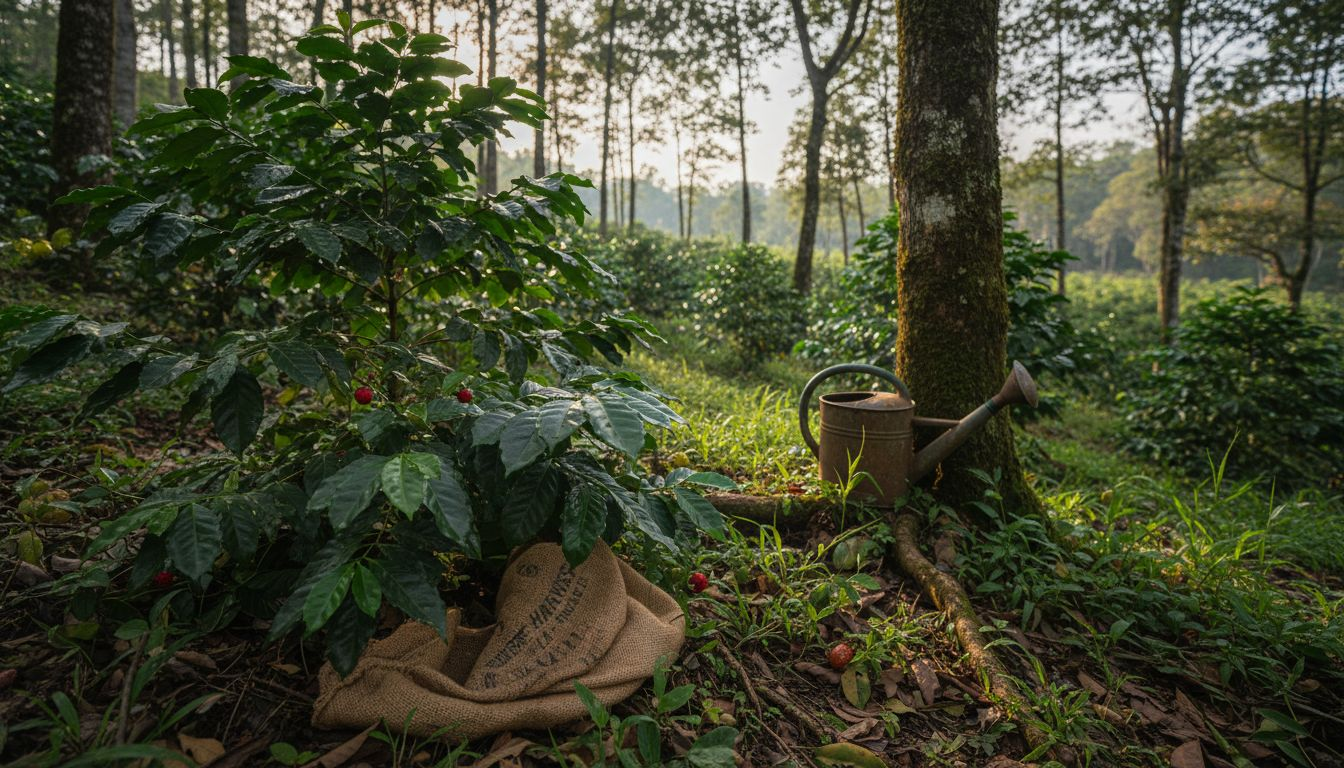
Shade-grown coffee farms support significantly greater biodiversity than sun-grown monocultures. These systems maintain birds, insects, and plant species that would otherwise disappear.
Agroforestry takes this further. It combines coffee with multiple tree species that provide food, timber, or nitrogen-fixing benefits. Picture a coffee farm that looks like a natural forest—because it almost is.
Biodiversity levels jump dramatically:
Here’s a clear comparison of different coffee farm systems and their biodiversity impact:
| Farm Type | Biodiversity Level | Environmental Impact | Economic Resilience |
|---|---|---|---|
| Monoculture | Very low | Soil erosion, habitat loss | Vulnerable to climate, pests |
| Shade-Grown | Moderate to high | Supports wildlife, better soil | More stable yields |
| Agroforestry | Highest | Maximizes ecosystem services | Multiple income sources |
- Thriving bird populations using trees for nesting and food
- Rich soil ecosystems with earthworms and fungi
- Natural pest control from beneficial insects
- Carbon storage in standing trees
- Multiple income streams for farmers from shade tree products
The Research Evidence
Agroforestry systems often maintain or increase biodiversity while providing comparable coffee yields to monocultures. This isn’t a trade-off situation. Farmers don’t sacrifice income for ecology.
The proximity to natural forests further enhances what these farms can do. Forests nearby act as wildlife corridors, allowing species to move and thrive.
Biodiverse coffee farms aren’t just better for the planet—they’re more resilient. When climate stress hits, these farms survive. Monocultures collapse.
Choosing Certified Systems
When shopping, look beyond standard labels. Coffee certifications for conscious consumers often indicate farming practices that support biodiversity.
Certifications like Rainforest Alliance and Bird-Friendly specifically verify shade-grown and agroforestry practices. They’re your shorthand for biodiversity-positive farming.
Pro tip: _When buying coffee, prioritize shade-grown or agroforestry-certified beans over conventional options. These choices directly reward farmers investing in biodiversity while giving you a superior, more complex cup of coffee.
To help consumers identify sustainable coffee options, here’s a summary of major biodiversity-supporting certifications:
| Certification | Core Focus | Biodiversity Benefits | Consumer Advantage |
|---|---|---|---|
| Rainforest Alliance | Environmental standards | Promotes shade trees, wildlife | Signals eco-friendly practices |
| Bird-Friendly | Wildlife protection | Requires diverse canopy cover | Supports bird habitats |
| Organic | No synthetic chemicals | Healthier soil and microflora | Cleaner, more flavorful beans |
How Biodiversity Enhances Coffee Quality
Here’s something that might surprise you: the biodiversity around your coffee plant directly affects how your coffee tastes. It’s not just environmental philosophy—it’s about flavor, aroma, and the entire sensory experience in your cup.
When you drink coffee from a biodiverse farm, you’re tasting the work of thousands of invisible contributors. Insects pollinating flowers. Soil microorganisms building nutrient richness. Shade trees moderating temperature and moisture. All of this translates into quality.
The Science Behind Better Beans
Shade trees improve bean size, weight, and reduce rejection rates while enhancing the biochemical compounds that define flavor. This isn’t marketing language. It’s measurable, scientific improvement.
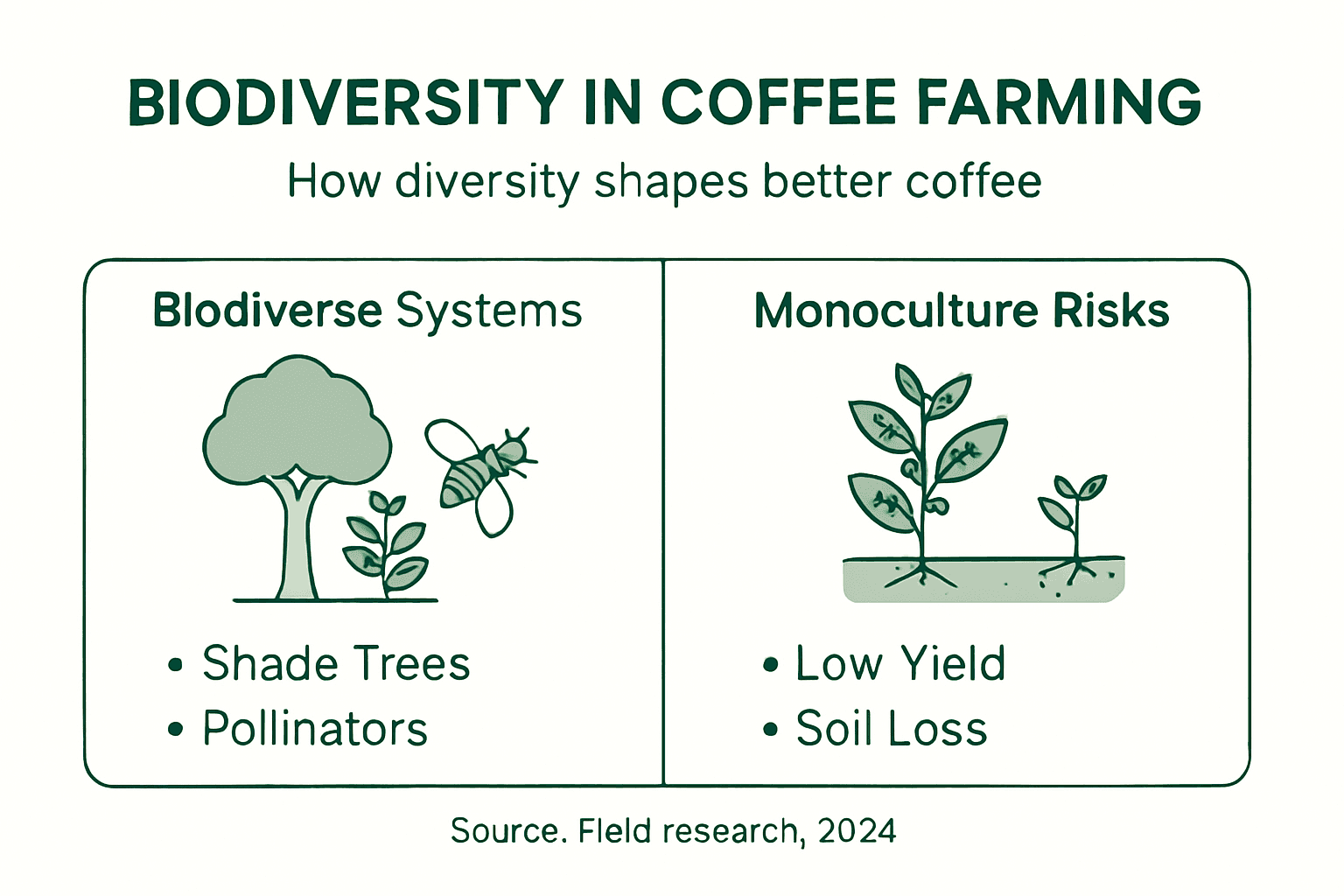
Think of shade trees as nature’s quality control system. They moderate temperature fluctuations that can stress coffee plants. They regulate moisture, preventing both drought stress and waterlogging. The result? Beans that develop more evenly with better flavor concentration.
Beans grown under these conditions are larger, heavier, and contain more of the compounds you actually taste when brewing.
Ecosystem Services That Taste Good
Biodiversity creates three critical ecosystem services that directly improve your coffee experience:
- Pollination: Diverse insects ensure better coffee flower pollination, improving yield and bean quality
- Pest control: Natural predators eliminate crop-damaging insects without chemical sprays that affect flavor
- Soil health: Microbial communities create richer soil, leading to more complex flavor profiles
Agroforestry systems with higher biodiversity support pollination and pest control that directly enhance both coffee yield and cup quality. Farms benefit economically. The planet benefits ecologically. Your palate benefits sensorially.
The Flavor Connection
When soil microorganisms thrive, coffee plants access a wider range of nutrients. This diversity of nutrient uptake translates into more complex, nuanced flavors in your final cup.
Biodiverse farms also foster better microclimates. Temperature and humidity variations encourage coffee plants to develop more concentrated sugars and acids—the building blocks of exceptional flavor.
The best coffee doesn’t just taste better. It tastes more complex, more interesting, more alive. That character comes from biodiversity.
Why This Matters for Your Choices
When you purchase organic coffee beans that support biodiversity, you’re not compromising on quality for ethics. You’re getting both.
Biodiverse farms produce beans with superior flavor complexity because the ecosystem is healthier. It’s a direct cause-and-effect relationship that benefits your morning ritual.
Pro tip: _When tasting coffee from biodiverse farms, pay attention to the flavor complexity and depth. You’ll notice more nuanced notes compared to monoculture beans. This sensory difference is your proof that biodiversity delivers real quality improvements.
Sustainable Practices That Foster Biodiversity
Knowing biodiversity matters is one thing. Understanding which farming practices actually create it is another. The good news? Farmers have concrete, field-tested strategies that work.
These aren’t theoretical solutions. They’re practical approaches that improve farm economics while restoring ecosystems. When you support farms using these practices, you’re investing in real change.
Shade Tree Management
Shade trees are the foundation of biodiverse coffee farming. They’re not decorative—they’re essential infrastructure that transforms monocultures into living ecosystems.
Maintaining diverse shade tree species creates multiple benefits simultaneously. Different tree species support different wildlife. Some fix nitrogen, reducing fertilizer needs. Others produce fruit or timber, providing income diversity for farmers.
Maintaining multipurpose shade trees increases biodiversity and farm resilience while stabilizing yields through more complex habitats. It’s a win for ecology and economics.
Effective shade tree practices include:
- Planting native species suited to local ecosystems
- Creating multiple canopy layers for different wildlife niches
- Spacing trees to avoid excessive shade that reduces coffee yield
- Selecting species that provide farmer income or soil benefits
Soil Enrichment and Water Conservation
Regenerative agriculture techniques enhance soil biodiversity and conserve water while reducing chemical inputs. This creates healthier, more resilient farming systems.
Biological soil enrichment means building microbial communities. Farmers achieve this through composting, mulching, and minimizing tillage that damages soil structure.
Water conservation protects both biodiversity and farm viability. Shade trees reduce evaporation. Better soil structure increases water retention. Reduced chemical runoff protects aquatic ecosystems downstream.
Intercropping and Diversification
Monoculture is risky. Diversification is smart. Intercropping—growing multiple crops together—creates natural pest control and improves soil health simultaneously.
Common intercropping approaches include:
- Growing nitrogen-fixing plants alongside coffee to reduce fertilizer needs
- Integrating food crops that provide farmer nutrition and income
- Planting native species that attract beneficial insects naturally
- Creating buffer zones of native vegetation between fields
Biodiverse farms aren’t just safer from climate shocks. They’re more profitable because they diversify income while reducing input costs.
Pest and Disease Management Without Chemicals
Biodiversity itself controls pests. Natural predators thrive in complex ecosystems. Soil health prevents disease. This eliminates the need for synthetic pesticides that degrade soil, poison water, and reduce coffee quality.
Farmers practicing these methods report dramatic reductions in chemical spending while maintaining healthy yields.
Your Role as a Consumer
When you choose coffee supporting sustainable farming practices, you directly reward farms investing in biodiversity. Your purchases make the financial case for these practices.
Pro tip: _Ask coffee sellers about their farming practices or look for certifications verifying shade-grown and agroforestry methods. Your demand for transparency encourages wider adoption of biodiversity-supporting practices across the coffee industry.
Risks of Biodiversity Loss in Coffee Farming
Biodiversity loss isn’t an abstract environmental concern. It’s a direct threat to coffee production, farm profitability, and global food security. When biodiversity disappears, the consequences ripple outward immediately.
Understanding these risks helps you see why your coffee choices matter beyond personal preference. You’re voting for or against a system with real consequences.
Ecosystem Services Collapse
Biodiverse farms provide free services that monocultures must purchase as expensive chemicals. When biodiversity vanishes, so do these services.
Biodiversity loss elevates risks including diminished pest control and reduced pollination, both critical for coffee production. Without natural predators, insect populations explode. Without pollinators, coffee flower fertilization drops. Suddenly farmers need pesticides and hand pollination instead of free ecosystem support.
The primary ecosystem services at risk include:
- Pest control: Natural predators disappear; chemical costs soar
- Pollination: Bee populations decline; yields fall
- Soil health: Microbial communities collapse; nutrient cycling fails
- Water regulation: Erosion increases; water retention plummets
- Climate moderation: Temperature extremes stress plants more
Climate Vulnerability
Biodiverse farms are resilient. Monocultures are fragile. This distinction becomes critical as climate change intensifies.
Biodiversity loss reduces carbon storage and increases vulnerability to climate change in coffee ecosystems. Shade trees store carbon. Complex soil ecosystems buffer temperature extremes. Diverse genetics help plants adapt to shifting conditions.
Without biodiversity, farms collapse under stress. A single pest outbreak devastates monocultures. A drought season destroys entire plantations. Biodiverse farms have redundancy built in—when one crop or species struggles, others compensate.
Soil Degradation
Soil isn’t just dirt. It’s a living ecosystem that makes coffee possible. Biodiversity loss degrades this foundation.
Monocultures with minimal shade and heavy chemical use deplete soil rapidly. Beneficial microorganisms disappear. Organic matter breaks down without being replaced. Soil structure collapses, increasing erosion and reducing water retention.
Once soil degrades significantly, recovery takes decades. Farmers face declining yields, rising input costs, and shrinking profit margins.
Economic Consequences
Biodiversity loss creates economic pain immediately and long-term. Short-term, farmers lose ecosystem services they relied on. Long-term, land becomes less productive and valuable.
When farms lose biodiversity, they lose resilience. They face higher costs, lower yields, and greater climate vulnerability. This isn’t sustainable—it’s a slow-motion collapse.
The Deforestation Connection
Biodiversity loss in coffee farming connects directly to broader deforestation. Coffee production drives significant global deforestation, destroying wildlife habitat and carbon storage.
Supporting biodiverse coffee farms means supporting forest conservation. The species living in coffee shade trees depend on nearby forests. Farms functioning as ecological corridors allow wildlife populations to survive and thrive.
Pro tip: _When purchasing coffee, ask whether farms maintain native forest connections and shade tree diversity. Farms protecting these features are actively preventing biodiversity loss while building long-term sustainability and resilience.
Support Biodiversity with Every Cup You Drink
The challenge of biodiversity loss in coffee farming directly threatens the quality and sustainability of the coffee you love. By choosing coffee from farms that prioritize shade-grown and agroforestry practices, you help protect vital ecosystem services like natural pest control, pollination, and soil health. These practices not only preserve wildlife habitats and reduce chemical use but also produce richer, more complex flavors. Your choices matter for the planet and your palate.

Explore our Best Sellers – EcoVibe Roast to find responsibly sourced coffee beans and herbal teas that support these regenerative farming methods. With every purchase through EcoVibe Roast, you contribute to planting mangrove trees and removing ocean-bound plastics. Act now to join a community of conscious consumers making a real impact while enjoying exceptional coffee and tea. Discover how easy it is to enjoy your favorite beverage ethically by browsing our Coffee and Tea example products – EcoVibe Roast today.
Frequently Asked Questions
What is biodiversity in coffee farming?
Biodiversity in coffee farming refers to the variety of living organisms, including plants, animals, and microorganisms, that thrive in and around coffee plantations, contributing to a healthier ecosystem.
Why does biodiversity matter for coffee quality?
Biodiversity enhances coffee quality by improving pollination, pest control, and soil health. A diverse ecosystem leads to better flavor concentration and overall superior tasting coffee beans.
How do monoculture and biodiversity affect coffee farming?
Monoculture coffee farms prioritize yield over ecological health, leading to soil depletion and increased chemical usage. In contrast, biodiversity-rich farms support natural ecosystems, improving long-term resilience and sustainability.
What can consumers do to support biodiversity in coffee farming?
Consumers can support biodiversity by choosing coffee labeled as “shade-grown” or certified organic. These certifications often indicate that farms practice methods that promote ecological health and biodiversity.
Recommended
- How Coffee Production Drives Global Deforestation – EcoVibe Roast
- Regenerative Agriculture in Coffee: Real Impact – EcoVibe Roast
- 6 Key Facts About Environmental Impact of Coffee Production – EcoVibe Roast
- Why Buy Organic Coffee Beans: Health, Taste, and Impact – EcoVibe Roast
- Change thats baked in: How our family run bakery is responding to the – St Mawes bakery, family run bakery.


