

TL;DR:
- Circular economy focuses on designing products to minimize waste and keep materials in use.
- Proper disposal systems are essential for the environmental benefits of eco-friendly packaging.
- Consumers can promote sustainability by choosing reusable, compostable products, and supporting take-back programs.
Most eco-conscious coffee and tea drinkers believe recycling is the golden ticket to a sustainable daily ritual. But recycling is really just one small gear in a much larger machine. The circular economy reframes the entire conversation, addressing how your aromatic morning brew is grown, packaged, shipped, and ultimately disposed of. It’s a system that keeps valuable materials in play and reduces waste at every stage, not just at the end. In this article, we’ll walk you through what circularity actually means, why it matters deeply for coffee and tea lovers like you, and how you can take practical steps that genuinely move the needle.
Table of Contents
- Understanding the circular economy: Beyond recycling
- How circular strategies create real sustainability benefits
- The real-life limits of circularity: Why the end matters
- How you can make a difference: Steps for coffee & tea lovers
- Why the circular economy isn’t a magic bullet—but is still essential for coffee and tea sustainability
- Take the next step toward sustainable sipping
- Frequently asked questions
Key Takeaways
| Point | Details |
|---|---|
| Circularity is more than recycling | It addresses product design, sourcing, and responsible end-of-life for true sustainability in coffee and tea. |
| Disposal systems matter | Sustainable outcomes depend on local composting or recycling options aligning with the product. |
| Your choices drive change | Proactive decisions at purchase and disposal make the biggest impact as an eco-conscious beverage drinker. |
| Not all ‘green’ claims are equal | Verify if packaging or products are supported by the systems in your area, not just by labels or marketing language. |
Understanding the circular economy: Beyond recycling
With the limitations of recycling in mind, let’s clarify what truly defines a circular economy and why this shift is essential.
The standard way most products move through the world follows a linear path: take raw materials, make a product, and dispose of it when you’re done. It’s often called the “take-make-dispose” model, and it generates enormous waste. The circular economy flips this on its head by designing products and systems so that materials stay useful for as long as possible, waste is minimized from the very start, and nothing is created without a plan for what happens next.
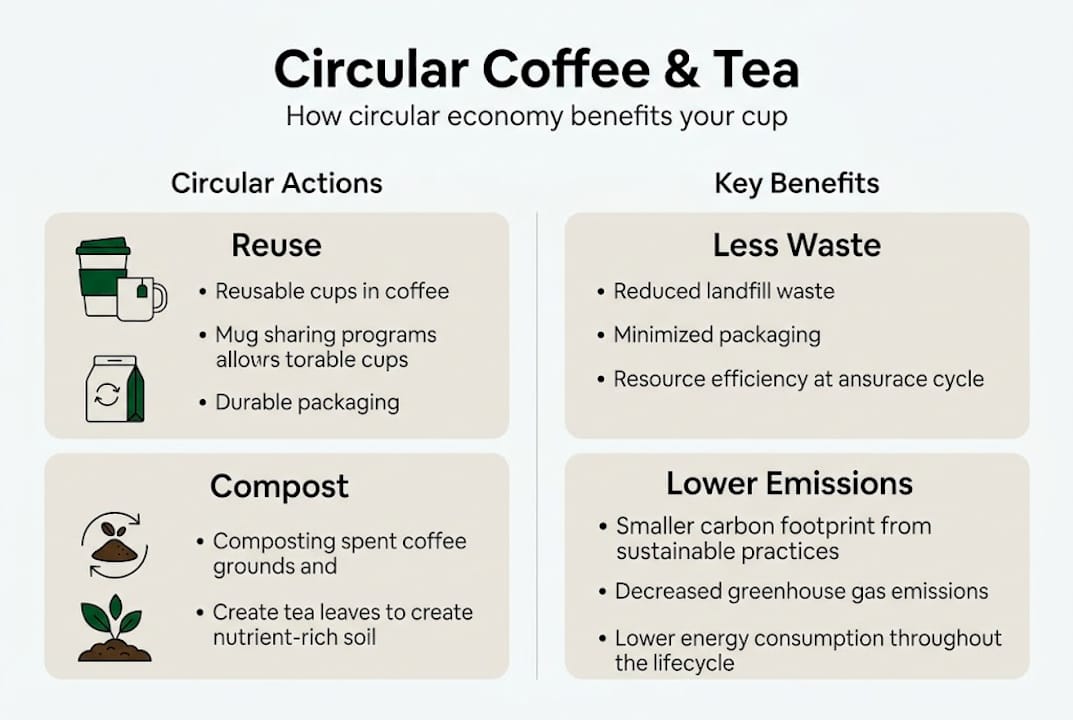
For coffee and tea lovers, this hits close to home. Think about single-serve coffee pods. Billions are used every year, and many end up in landfills because standard pods mix plastic, aluminum, and coffee grounds in a way that’s nearly impossible to separate and recycle efficiently. The challenge isn’t just consumer laziness. It’s a design problem baked into the product before it even reaches your kitchen.
The circular economy in coffee and tea looks different from generic recycling campaigns because it targets the root of the issue. Here’s what a truly circular approach includes:
- Refill programs that let you reuse the same container again and again
- Repair and reuse of durable brewing equipment instead of replacing it
- Take-back schemes where brands reclaim used packaging for proper processing
- Compostable packaging designed to safely return nutrients to the earth
- Upcycled materials that give waste a second life in new products
| Feature | Linear model | Circular model |
|---|---|---|
| Material use | Single-use, then discarded | Kept in use as long as possible |
| Waste generation | High, often unavoidable | Minimized through design |
| Consumer role | Passive buyer | Active participant |
| Cost over time | Lower upfront, higher long-term | Higher upfront, lower long-term |
| Environmental impact | Extractive and polluting | Regenerative and restorative |
When we look at rethinking waste and resources at a systems level, it’s clear that genuine progress requires action well before a product hits your recycling bin.
Research confirms that adoption depends on pre-purchase interventions, not just after-use recycling. In other words, the biggest wins happen when smarter choices are made before you even buy.
How circular strategies create real sustainability benefits
Now that we’ve clarified the concept, let’s see what happens when circular economy principles are applied to your daily brew.
The lifecycle of your morning cup touches more environmental pressure points than most people realize. From the water and land used to grow coffee plants, to the energy burned during roasting and shipping, to the packaging sitting in your trash, each stage offers an opportunity to reduce impact. Circular strategies target multiple stages at once, which is exactly what makes them so powerful.

Compostable coffee packaging is one of the most talked-about shifts in the industry, and for good reason. Research from Wageningen University confirms that compostable capsules lower emissions more than traditional disposal methods when handled correctly. That’s a meaningful win, especially considering that single-serve pods are one of the fastest-growing segments of the coffee market.
Here are five of the most impactful circular interventions for coffee and tea:
- Switch to compostable pods or loose-leaf tea. Compostable formats eliminate the mixed-material problem and return nutrients to soil when composted properly.
- Choose brands with take-back programs. Some roasters and tea companies offer prepaid return envelopes or in-store drop-off for used packaging.
- Opt for eco-friendly packaging. Look for bags made from recycled content, plant-based films, or packaging certified for home composting.
- Support refillable systems. Buying loose coffee or tea in bulk and refilling your own containers dramatically cuts packaging waste per serving.
- Check for upcycled by-products. Some brands repurpose coffee chaff or spent grounds into new products, creating value from what would otherwise be trash.
| End-of-life option | Relative greenhouse gas impact |
|---|---|
| Landfill disposal | Highest emissions |
| Incineration | Moderate to high |
| Conventional recycling | Moderate |
| Organic waste composting | Low |
| Compostable pod, organic stream | Lowest emissions |
The numbers are striking. When a compostable pod goes through an organic waste stream instead of a landfill, the greenhouse gas savings are significant and measurable, according to coffee capsule circularity evidence.
Pro Tip: Choose brands that layer multiple circular strategies, such as compostable packaging plus a take-back option, rather than ones that rely on a single eco feature. Multi-strategy circularity delivers far more impact than one-trick solutions, and you can learn more about smart choices in this reducing coffee waste with pods guide.
The real-life limits of circularity: Why the end matters
Yet, no solution is perfect, so let’s address the often-overlooked real-world limitations and challenges of circularity.
Here’s something that surprises a lot of people: a compostable coffee pod tossed into a regular trash bin is no better for the planet than a conventional one. Circularity only delivers results when the systems needed to close the loop actually exist and function in your area. A beautifully designed product can fail environmentally if it ends up in the wrong waste stream.
Some of the most common mismatches include:
- “Compostable” items sent to landfill where they don’t break down properly and may even release methane
- Laminated foil pouches labeled as recyclable but rejected by most curbside programs
- Mixed-material packaging that requires industrial separation unavailable in many communities
- Take-back programs that are marketed widely but only available in select regions
- Home-compostable claims on packaging that actually requires industrial composting temperatures
Scientists studying why disposal matters make an important point: sustainability requires functioning disposal “sinks.” Not everything can be perpetually cycled, and sometimes the most sustainable option is thoughtful, responsible disposal rather than forced circularity that doesn’t match local infrastructure.
“Sustainability requires functioning disposal sinks; not all items can be truly circular in practice.” This framing is a wake-up call for anyone assuming that buying the “right” product is enough on its own.
This is exactly why your coffee waste reduction workflow matters at the personal level, not just at the brand level. And understanding upcycled packaging for coffee and tea helps you make smarter calls when you’re comparing products.
Pro Tip: Before buying a product with eco-friendly packaging claims, check your local council or waste management website to confirm that the packaging type is actually accepted in your area. A quick five-minute check can make the difference between a genuinely green choice and a well-intentioned mistake.
How you can make a difference: Steps for coffee & tea lovers
With a clear understanding of both promise and pitfalls, you can be part of the solution. Here’s how to start making a measurable impact.
The good news? You have more influence than you might think. Research consistently shows that pre-purchase behavior drives real adoption of circular strategies. Every time you choose a circular product, you send a signal to the market that these options matter.
Here are five actionable steps you can take today:
- Buy compostable or reusable formats first. Before reaching for the familiar pod box, check whether a compostable or refillable option exists for your brewer.
- Participate in brand take-back programs. Sign up for return schemes and actually use them. Your participation validates the investment brands make in these programs.
- Research before you buy. Use the sustainable packaging guide to spot genuinely circular products rather than relying on packaging buzzwords alone.
- Reduce consumption at the source. Brewing a full pot instead of multiple single-serve cups cuts energy and packaging waste per serving immediately.
- Track your impact and build habits. Use the reducing coffee waste guide to set realistic goals and measure your progress over time.
Not sure whether a brand is truly circular or just riding the green marketing wave? Look for these signs of real circularity:
- Third-party certifications such as Cradle to Cradle, B Corp, or certified compostable logos
- Transparent supply chain information showing where materials come from and where they go
- Specific, verifiable take-back or refill programs with clear instructions and geographic availability
- Life cycle assessment data or published sustainability reports with measurable targets
- Honest communication about limitations, not just highlight-reel sustainability claims
Pro Tip: Write a short, friendly note to your favorite coffee or tea brand asking about their circular programs. Brands pay close attention to customer feedback, and your question might just accelerate their next sustainability move.
Why the circular economy isn’t a magic bullet—but is still essential for coffee and tea sustainability
But does this all mean the circular economy is the answer to every eco-challenge? Here’s our take on what actually works.
At EcoVibe Roast, we’ve seen firsthand how easy it is to get excited about a single circular solution and miss the bigger picture. Compostable packaging is wonderful. Take-back programs are valuable. But neither one delivers real results unless the system around it works correctly.
The coffee sustainability trends we’re watching in 2026 point to a clear pattern: the most impactful brands and consumers are the ones who combine smart product design with informed personal choices and real-world disposal infrastructure. As genuine sustainability research confirms, you need real-world functioning sinks, not just optimistic cycling assumptions.
That means your job as an eco-conscious drinker isn’t just to buy better products. It’s to understand your local systems, ask hard questions of the brands you support, and close the loop yourself whenever possible. Circularity is a team sport, and you’re one of the most important players on the field.
Take the next step toward sustainable sipping
If you’re ready to put these insights into practice in your daily routine, here’s where you can start.
At EcoVibe Roast, everything we offer is chosen with circular principles in mind, from responsibly designed sustainable single-serve coffee pods to our soothing organic Hibiscus Berry Tea. Every purchase also contributes to planting mangrove trees and removing ocean-bound plastics, so your daily ritual becomes a warm hug for both you and Mother Earth.

Small, consistent choices add up to something genuinely meaningful. Whether you’re switching to compostable pods or exploring loose-leaf herbal teas, you’re voting for a better system with every sip. Explore EcoVibe Roast and find products that make circularity feel as natural as your morning brew.
Frequently asked questions
What does a circular economy mean for coffee and tea drinkers?
It means choosing products designed for reuse, composting, or proper recycling, then following through with the right disposal steps. Circular economy success hinges on both smart product design and responsible end-of-life handling by the consumer.
Why isn’t recycling enough for sustainability?
Recycling only addresses the end of a product’s life and only works when products match local recycling systems. Adoption of circularity depends on pre-purchase decisions and smarter design upstream, not just what happens to the packaging afterward.
How can I tell if packaging is truly circular or just greenwashed?
Look for third-party certifications and specific, verifiable instructions confirming the packaging works with your local composting or recycling facilities. End-of-life solutions must align with available systems, or circularity simply fails in practice.
Do compostable coffee pods work everywhere?
No. Compostable pods only deliver their full environmental benefit when disposed of in an organic or industrial compost stream. Compostable capsules sent to landfill may not break down properly and won’t achieve the promised emission reductions.
What’s the most impactful action for an eco-conscious beverage drinker?
Choose responsibly designed products and always follow the correct disposal or take-back steps for everything you use. Consumer behavior at the pre-purchase and disposal stages drives the most meaningful sustainability outcomes.
Recommended
- Circular economy in beverage: eco guide for coffee & tea – EcoVibe Roast
- Top benefits of ethical sourcing for coffee & tea lovers – EcoVibe Roast
- Sustainability trends 2026: Smarter, greener choices for coffee & tea – EcoVibe Roast
- Holistic sustainability: Integrate eco-friendly coffee and tea – EcoVibe Roast
- Herbal tea benefits: a guide for women over 40 – Caribella


