

TL;DR:
- Community-supported sourcing empowers farmers through cooperatives, ensuring higher incomes and social investments.
- Cooperatives promote sustainability by democratic governance, environmental projects, and fair trade premiums.
- Consumers can support genuine impact by choosing transparent, certification-backed products with detailed impact information.
When you pick up a bag of shade-grown coffee or an aromatic herbal tea with a Fairtrade logo, it’s easy to assume the ethical story stops at the label. But community support, primarily through farmer cooperatives plays a far more transformative role in sustainable sourcing than most guides let on. It’s not just about certifications or buzzwords. It’s about farmers having real power, real resources, and real community backing. This guide walks you through exactly how cooperative models work, why they matter more than corporate sourcing programs, and how your daily cup can be a genuine force for good.
Table of Contents
- The foundation: What is community-supported sourcing?
- How cooperatives drive sustainability and social impact
- Nuances, challenges, and how to spot genuine community impact
- How community-backed sourcing enriches your experience as a consumer
- A new era for ethical sourcing: What most guides miss
- Discover and support truly sustainable choices
- Frequently asked questions
Key Takeaways
| Point | Details |
|---|---|
| Cooperatives amplify sustainability | Farmer cooperatives are essential for sustainable sourcing and support better incomes and community development. |
| Community premiums drive impact | Social premiums fund projects like schools and agroforestry, empowering local governance and eco-initiatives. |
| Certifications matter long-term | Third-party certifications in community settings consistently outperform corporate-alone sourcing for lasting benefit. |
| Consumer demand shapes sourcing | Over 60% of shoppers now choose certified ethical brands, driving the industry towards transparency and real impact. |
The foundation: What is community-supported sourcing?
Now that we’ve set the stage, let’s define what community-supported sourcing means and why it matters. At its core, community-supported sourcing means farmers don’t go it alone. Instead of negotiating individually with large buyers, smallholder farmers join together in cooperatives, which are farmer-owned organizations that pool resources, share knowledge, and collectively access markets that would otherwise be out of reach.
Think of a cooperative like a neighborhood credit union versus a big bank. You’re still getting financial services, but the profits stay in the community, the members have a say, and everyone shares the risk and the reward. A real-world example is the Oromia Coffee Farmers Cooperative Union in Ethiopia, which connects thousands of smallholder farmers to specialty markets worldwide, enabling them to earn significantly more per harvest than they would selling independently.
Cooperatives pool resources of smallholder farmers for processing, financing, and training, while also enabling access to specialty markets where premium prices reward quality and sustainability. This shared infrastructure is what makes the difference. A single farmer can’t afford a modern wet-milling station or certify their land through Rainforest Alliance on their own budget. But 500 farmers together? That’s a different story entirely.
The evidence behind this model is compelling. Studies surveying more than 634 farmers found measurable improvements in well-being and incomes among cooperative members compared to independent sellers. The data reflects what you’d intuitively expect: collective bargaining, shared costs, and community accountability create a rising tide for everyone involved.
Here’s what community-supported sourcing actually delivers for producers and consumers:
- Higher and more stable incomes for farmers through collective bargaining
- Access to training on sustainable agricultural practices and quality improvement
- Shared processing equipment that raises the quality of the final product in your cup
- Traceability that lets you know exactly where your coffee or tea comes from
- Community reinvestment through social projects like schools and health clinics
- Environmental stewardship via coordinated reforestation and biodiversity programs
Learning about cooperatives and sustainability can genuinely shift how you shop for coffee and tea. And understanding the ethical sourcing benefits goes hand in hand with choosing products that reflect your values.
How cooperatives drive sustainability and social impact
Understanding the structure is one thing. Now, let’s examine how these mechanisms create real environmental and social change.
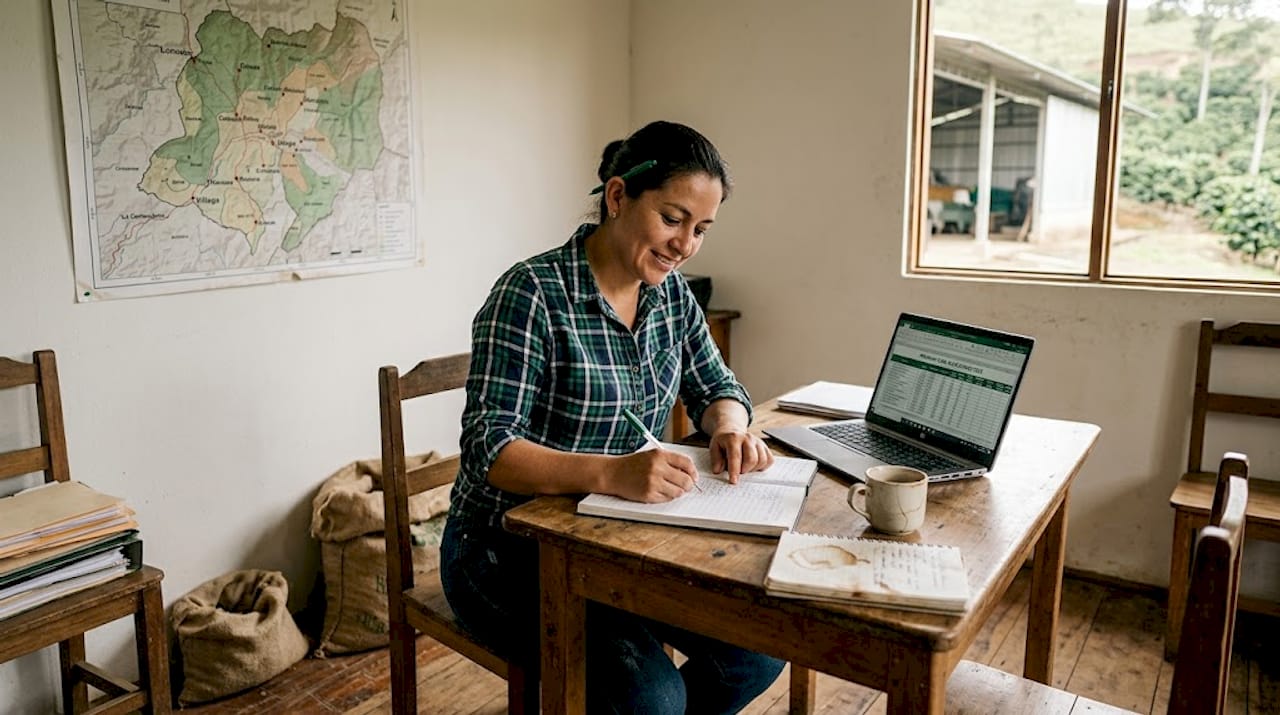
Mechanics include democratic governance, where cooperatives invest premium funds in infrastructure and social projects while supporting certifications like Fairtrade and Rainforest Alliance. Democratic governance means every member gets a vote. Leadership is elected. Profit distribution is agreed upon collectively. This isn’t a top-down corporate program where a distant headquarters decides where the budget goes.
Here’s a look at how community-driven sourcing compares to other models:
| Factor | Cooperatives | Direct trade | Corporate programs |
|---|---|---|---|
| Farmer decision power | High | Medium | Low |
| Social project investment | Regular | Variable | Rare |
| Third-party certification | Common | Less common | Occasional |
| Environmental programs | Coordinated | Individual | Brand-led |
| Income stability | Higher | Variable | Inconsistent |
One of the most tangible impacts of cooperative models is what happens with Fairtrade social premiums. When a cooperative sells coffee or tea under Fairtrade terms, it receives a minimum price floor plus an additional social premium per pound. Communities then vote on how to spend that premium. Real examples include building primary schools in rural Guatemala, funding maternal health clinics in Rwanda, and planting shade trees across Ethiopian coffee forests.
ILO strengthens co-operatives to tackle child labor in Uganda’s tea and coffee sectors, showing that community-based models do more than boost income. They shift social norms. Children go to school. Workers have enforceable rights. Communities build long-term stability.
Here are the best practices that make cooperative sourcing genuinely impactful:
- Democratic leadership elections that keep power in farmers’ hands
- Transparent financial reporting so members know how premiums are spent
- Annual reinvestment plans for social and environmental projects
- Certification partnerships with credible third-party bodies
- Ongoing agronomical training to improve both yield and sustainability
“When communities govern their own sourcing, the ecological and social results compound over time in ways that no corporate program can replicate.”
Exploring supporting sustainable coffee farms shows you how these principles translate into everyday purchasing choices. Understanding coffee certifications and sustainability helps you decode labels with confidence.
Nuances, challenges, and how to spot genuine community impact
As with all systems, not every approach works equally well, so it’s vital to know the limitations and how to make informed choices.
Cooperatives are powerful, but they’re not perfect. Governance failures do happen. Mismanagement, corruption, or lack of member engagement can erode the benefits. And there’s a financial reality worth knowing: farmgate prices drop 20 to 40% after cooperative fees, certification costs, and processing charges are deducted. Third-party certifications outperform in-house labels for long-term yield and impact, which means not all ethical claims are equal.
Here’s how different certification approaches stack up:
| Certification type | Credibility | Transparency | Long-term impact |
|---|---|---|---|
| Third-party (Fairtrade, Rainforest Alliance) | Very high | High | Strong |
| In-house brand labels | Variable | Low to medium | Inconsistent |
| Direct trade claims | Medium | Depends on brand | Variable |
| No certification | Low | Minimal | Uncertain |
So how do you separate genuine community impact from polished marketing spin? A few clear signals help.
Look for brands that share specific impact data, not vague statements like “we support farmers.” Genuine community sourcing usually includes farmer names or cooperative names, geographic specificity, and annual impact reports. Broad, unverifiable claims are a red flag.
Pro Tip: When evaluating a product, search for the cooperative or certification body mentioned on the label. Reputable organizations like Fairtrade International publish public lists of certified cooperatives and their impact data. If you can’t find the cooperative independently, treat the claim with skepticism.
Learn more about choosing ethical sourcing with real examples, and explore how community brands support farmer income in meaningful, documented ways.
How community-backed sourcing enriches your experience as a consumer
Finally, let’s bring it back to you: what does community support actually mean for your cup, and how does it elevate the entire coffee and tea experience?
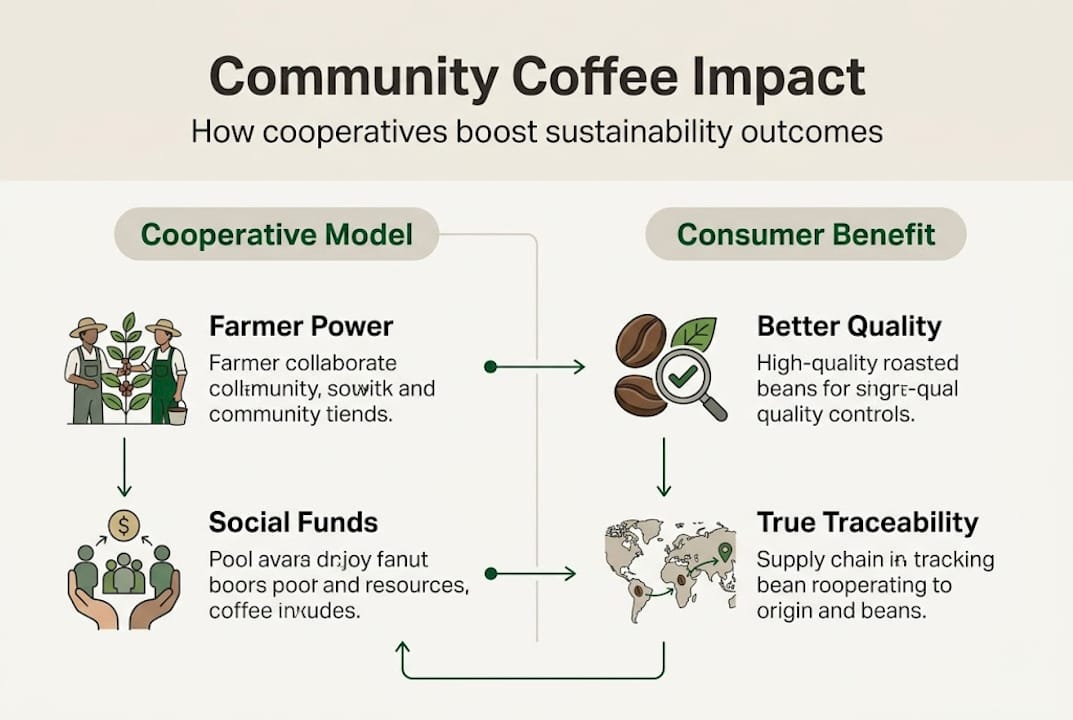
When you buy coffee or tea backed by community-driven sourcing, you’re not just getting a beverage. You’re getting a story, a connection, and a share in something bigger. For eco-conscious consumers, community support enhances experience through traceability, storytelling, and direct environmental impact funding. That’s a warm hug for both you and Mother Earth in every sip.
Over 60% of consumers say they want certified or ethically sourced products, and that demand is already reshaping what major roasters and retailers offer. Your choice matters more than you might realize. Every purchase sends a market signal.
Here’s what community-backed sourcing actually opens up for you:
- Richer flavor profiles because quality-focused cooperatives reward better farming practices
- Provenance stories that connect your cup to a specific farm, region, or cooperative
- Participation in reforestation programs funded by the premiums on your purchase
- Direct links to farmer livelihoods that traceability makes visible and verifiable
- Exclusive single-origin offerings that cooperatives make possible through quality consistency
Pro Tip: Look for labels that include a cooperative name, region of origin, and a recognized certification seal. If the packaging also tells you what the social premium funded (a school, a health clinic, tree planting), you’re looking at a brand that takes community impact seriously.
You can actively support green coffee initiatives starting with your next purchase. Understanding responsible sourcing for coffee and tea empowers you to shop with clarity. And single-origin traceability shows exactly how that connection from farm to cup is built.
A new era for ethical sourcing: What most guides miss
Looking deeper, beyond what most overviews share, here’s what truly matters from years of analyzing ethical sourcing on the ground.
Most conversations about ethical coffee fixate on traceability and direct trade as the gold standard. And yes, both are valuable. But they can miss something fundamental. Cooperatives democratize sourcing, turning smallholders into active participants and fostering resilience and sustainability beyond price alone.
Direct trade benefits are real, but they often depend on a relationship between one buyer and one farm. If that buyer disappears, or the harvest fails, there’s no safety net. Community structures spread risk, pool knowledge, and build institutional memory that outlasts any single trading relationship.
Top-down corporate programs, however well-intentioned, tend to prioritize brand optics over grassroots governance. The next genuine leap in sustainable sourcing isn’t a new certification or a slicker QR code. It’s long-term, compound-impact structures rooted in democratic community governance. That’s what creates lasting ecological and social change. At EcoVibe Roast, we believe this community-driven model is the future worth investing in, one cup at a time.
Discover and support truly sustainable choices
With the knowledge you now have, here’s how to turn your values into action with your next beverage choice.
Every insight in this guide points toward one empowering truth: you have the power to support community-driven sourcing with every purchase you make. EcoVibe Roast makes that easy by curating products tied to real environmental and social commitments.

Explore our sustainable coffee pods for an everyday option that’s rich in flavor and rooted in responsible sourcing. Or try our organic jasmine tea for a soothing cup with community-backed origins. Every order also contributes to planting mangrove trees and removing ocean-bound plastics. Discover the full story behind our commitments on our environmental impact page.
Frequently asked questions
How do cooperatives improve the lives of coffee and tea farmers?
Cooperatives enable pooled resources, collective bargaining, and community investment, which raise farmer incomes and fund local benefits like schools and healthcare. Members share costs and gains in ways that independent farmers simply cannot access on their own.
What makes community-backed sourcing more sustainable than corporate programs?
Cooperative structures link to better long-term sustainability metrics because democratic governance and social premiums let communities drive eco-initiatives rather than outsourcing decisions to a distant headquarters.
How can I tell if a product supports community sourcing?
Look for third-party certifications like Fairtrade, impact stories focused on community projects, and clear traceability details. Third-party certifications outperform in-house labels for long-term yield and verified impact.
Does this apply to tea as well as coffee?
Absolutely. ILO strengthens tea and coffee co-ops in Uganda and Kenya, tackling child labor and supporting sustainability through the same cooperative principles that benefit coffee farmers worldwide.


