

Choosing your next cup of coffee is about more than just taste for many eco-conscious millennials and Gen Z drinkers. With single-origin coffee, every sip connects you to the unique story of its geographical source, reflecting the flavors shaped by soil, altitude, and climate in places like Colombia or Ethiopia. If you care about sustainability, ethical sourcing, and exploring distinct flavor profiles, single-origin coffee invites you to make informed choices that support global farming communities and environmental stewardship.
Table of Contents
- What Single-Origin Coffee Really Means
- How Single-Origin Differs from Coffee Blends
- World Regions and Flavor Profiles Explained
- Sustainability and Ethical Sourcing Impacts
- Why Single-Origin Costs More Than Blends
Key Takeaways
| Point | Details |
|---|---|
| Single-origin coffee emphasizes unique flavors | It provides a distinct taste experience reflective of specific geographic origins and farming practices. |
| Sustainability and ethical sourcing are vital | Supporting single-origin requires an understanding of the economic and environmental impacts on small-scale farmers. |
| Production methods influence pricing | The hand-harvesting and quality control in single-origin coffee lead to higher costs compared to blends. |
| Learning about origin enhances appreciation | Consumers should inquire about the specific farms or regions to deepen their understanding of the coffee’s story. |
What Single-Origin Coffee Really Means
Single-origin coffee represents more than just a beverage - it’s a nuanced exploration of flavor, geography, and ethical sourcing. Coffee sourced from a distinct geographic location can range from an entire country to a specific farm or micro-lot, offering coffee enthusiasts an opportunity to experience the unique characteristics of a particular terroir.
This specialized coffee category emerged during the third wave of coffee consumption, which prioritizes quality, transparency, and the celebration of distinctive flavor profiles. Unlike blended coffees that mix beans from multiple regions, single-origin coffees tell a specific story through taste. Key characteristics include:
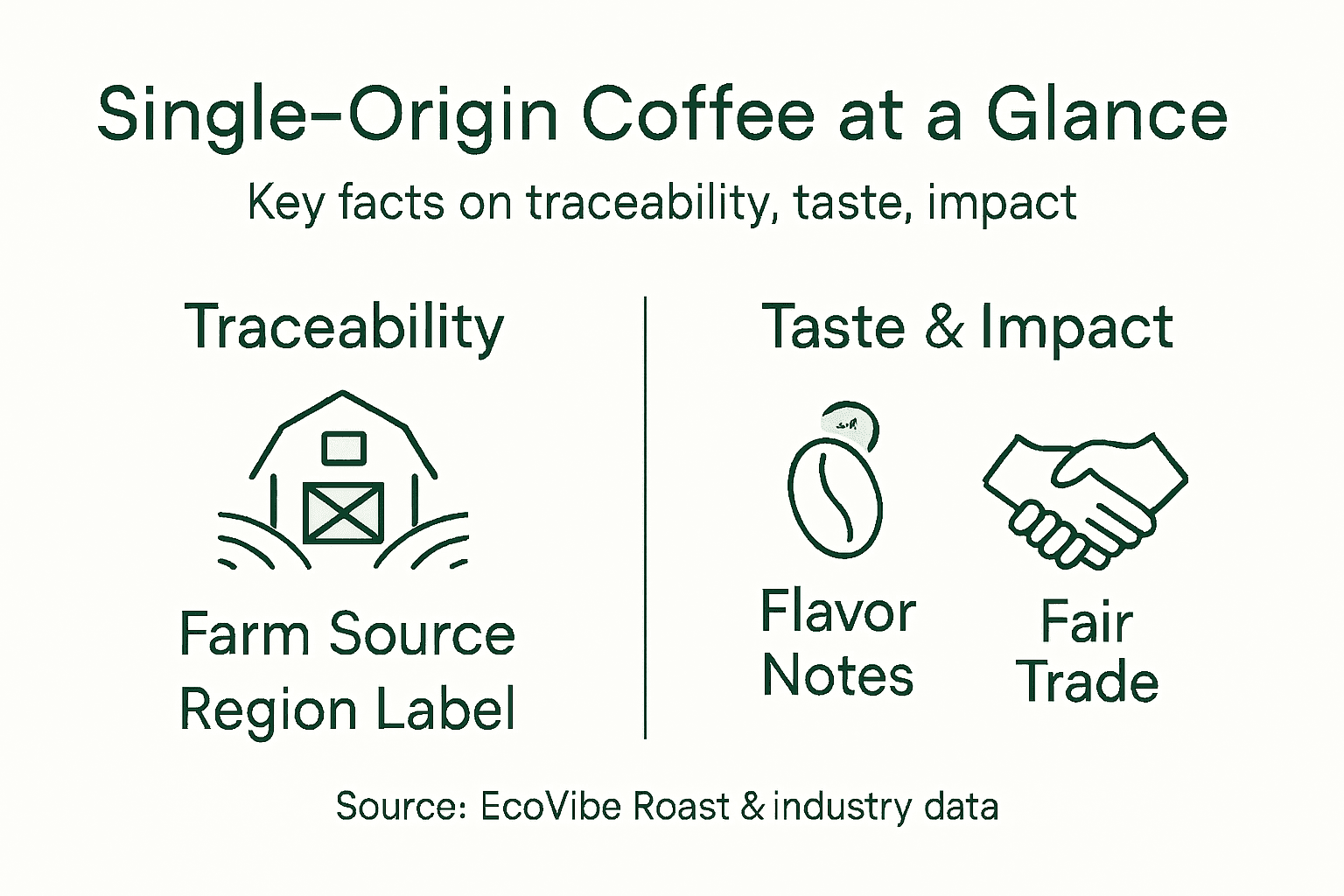
- Precise geographic traceability
- Unique flavor notes tied to local growing conditions
- Direct connection to specific farming communities
- Enhanced transparency in production methods
Authenticity is paramount in single-origin coffee. Advanced identification techniques using molecular biology help verify the true origin and quality of these specialty beans. Each lot represents a microcosm of its environment - reflecting soil composition, altitude, rainfall, and local agricultural practices.
The complexity of single-origin coffee extends beyond flavor. It represents a commitment to supporting small-scale farmers, understanding agricultural ecosystems, and appreciating the intricate journey from seed to cup. By choosing single-origin beans, consumers participate in a global narrative of sustainable agriculture and cultural preservation.
Pro tip: When exploring single-origin coffees, ask your roaster about the specific farm or region to understand the unique story behind each batch.
How Single-Origin Differs from Coffee Blends
Coffee blends and single-origin coffees represent two distinct approaches to experiencing and appreciating coffee. While they might appear similar at first glance, these two categories offer fundamentally different taste experiences, sourcing philosophies, and consumer objectives.
The primary differences between single-origin and blended coffees can be understood through several key characteristics:
-
Origin Complexity
- Single-origin: Beans from one specific location
- Blends: Beans combined from multiple regions or countries
-
Flavor Profile
- Single-origin: Unique, distinctive taste reflecting local terroir
- Blends: Balanced, consistent flavor designed for broad appeal
-
Traceability
- Single-origin: High transparency about specific farming practices
- Blends: Less detailed information about individual bean sources
Single-origin coffees are essentially a deep dive into a specific microclimate’s coffee production. They showcase the nuanced flavor characteristics influenced by local soil composition, altitude, and agricultural practices. Blends, by contrast, aim to create a more uniform taste experience that remains consistent across different batches.

The choice between single-origin and blended coffees ultimately depends on individual preference. Some coffee enthusiasts appreciate the storytelling aspect of single-origin beans, while others prefer the reliable, balanced taste of carefully crafted blends. Each approach offers its own unique value to the coffee drinking experience.
Pro tip: Experiment with both single-origin and blended coffees to discover your personal flavor preferences and support diverse coffee farming communities.
World Regions and Flavor Profiles Explained
Global coffee flavor profiles reveal a fascinating tapestry of taste experiences rooted in distinctive geographical and environmental conditions. Each coffee-growing region offers a unique sensory journey, transforming the humble coffee bean into a complex expression of local terroir.
Coffee flavor characteristics can be broadly categorized by continental regions:
-
Latin American Coffees
- Balanced and bright flavor profile
- Predominant notes: Nutty, chocolate, and fruity undertones
- Countries: Colombia, Brazil, Guatemala
-
African Coffees
- Complex and vibrant flavor characteristics
- High acidity with floral and citrus notes
- Notable origins: Ethiopia, Kenya, Rwanda
-
Asian Coffees
- Bold and full-bodied taste
- Earthy and robust flavor profile
- Key regions: Indonesia, Vietnam, Sumatra
The intricate relationship between altitude, soil composition, rainfall, and local agricultural practices dramatically influences each region’s coffee flavor. Mountain-grown beans from high-altitude regions typically develop more complex and nuanced taste profiles compared to lowland varieties. Climate, processing methods, and farming techniques further refine these distinctive regional characteristics.
Understanding regional flavor profiles allows coffee enthusiasts to explore global diversity through their taste buds. Each sip becomes a sensory exploration, connecting consumers with distant farming communities and their unique agricultural traditions.
Here’s how different coffee regions influence flavor and experience:
| Region | Typical Flavor Notes | Signature Countries | Processing Influence |
|---|---|---|---|
| Latin America | Nutty, chocolate, fruity | Colombia, Brazil, Guatemala | Washed methods highlight brightness |
| Africa | Citrus, floral, high acidity | Ethiopia, Kenya, Rwanda | Natural/dry methods add complexity |
| Asia-Pacific | Earthy, bold, herbal | Indonesia, Vietnam, Sumatra | Wet-hulled process boosts body |
Pro tip: Sample coffees from different global regions to develop a more sophisticated palate and appreciate the incredible diversity of coffee flavor profiles.
Sustainability and Ethical Sourcing Impacts
Ethical sourcing in coffee production represents a critical intersection of economic justice and environmental responsibility, challenging consumers and producers to reimagine traditional supply chain dynamics. The global coffee market’s complex ecosystem demands a holistic approach that prioritizes fair compensation and sustainable agricultural practices.
Key challenges in ethical coffee sourcing include:
-
Economic Disparities
- Significant income gaps between producers and market prices
- Limited economic opportunities for small-scale farmers
- Unequal value distribution across the supply chain
-
Environmental Considerations
- Sustainable farming practices
- Conservation of biodiversity
- Reduced carbon footprint
-
Social Impact
- Fair wages and working conditions
- Community development initiatives
- Preservation of traditional agricultural knowledge
The current coffee industry model often perpetuates systemic inequalities, with many small-scale producers struggling to achieve living incomes despite the premium pricing of single-origin coffees. Transparency and direct trade relationships emerge as crucial mechanisms for addressing these structural challenges, enabling more equitable economic interactions.
Consumers play a powerful role in driving systemic change through intentional purchasing decisions that prioritize ethical sourcing and sustainability. By supporting brands and initiatives committed to fair compensation and environmental stewardship, coffee drinkers can contribute to meaningful transformations in global agricultural practices.
Key ethical sourcing models and their impacts at a glance:
| Sourcing Model | Economic Impact | Environmental Benefit | Social Impact |
|---|---|---|---|
| Direct Trade | Higher farmer earnings | Encourages sustainable methods | Builds producer relationships |
| Fair Trade Certification | Minimum price guaranteed | Bans harmful agrochemicals | Supports community projects |
| Commodity Market | Low, fluctuating income | Often unsustainable | Minimal community benefit |
Pro tip: Research coffee brands that provide detailed information about their sourcing practices and commit to transparent, fair trade relationships with farming communities.
Why Single-Origin Costs More Than Blends
Distinctive production methods and limited supply contribute to single-origin coffee’s premium pricing, creating a significantly different economic model compared to traditional coffee blends. The journey from seed to cup involves intricate processes that dramatically impact the final product’s cost and value.
Key factors driving the higher price of single-origin coffee include:
-
Harvesting Complexity
- Hand-picked selection of ripe beans
- Careful individual bean evaluation
- Labor-intensive collection methods
-
Geographic Limitations
- Restricted growing regions
- Smaller production volumes
- Challenging cultivation environments
-
Quality Control
- Rigorous selection processes
- Specialized processing techniques
- Detailed tracking and traceability
Unlike mass-produced blends that mix beans from multiple sources for consistency and cost-efficiency, single-origin coffees represent a commitment to preserving unique flavor profiles and supporting specific farming communities. Each batch tells a distinct story, reflecting the precise environmental conditions of its origin.
The premium pricing reflects not just the coffee itself, but the entire ecosystem of sustainable agriculture, fair compensation, and cultural preservation. Consumers who choose single-origin coffees are investing in a more transparent and equitable global agricultural model.
Pro tip: Consider the comprehensive value behind single-origin coffee pricing, understanding that each purchase supports more than just a beverage.
Discover Single-Origin Coffee That Aligns With Your Values
If you are passionate about the unique flavors and traceable origins of single-origin coffee, you also understand the importance of ethical sourcing and environmental impact. At EcoVibe Roast, we address the challenge of finding coffee that not only delights your palate but also supports small-scale farmers and sustainable agricultural practices. Our collection features carefully selected beans that reflect diverse terroirs and transparent farming methods, so you can enjoy every cup knowing it makes a positive difference.
Explore our Coffee and Tea example products – EcoVibe Roast to experience rich, distinct tastes that celebrate global coffee regions. Each purchase supports initiatives that plant mangrove trees and remove ocean-bound plastics, connecting your daily ritual with environmental stewardship.

Ready to elevate your coffee experience while championing sustainability? Visit EcoVibe Roast today and browse our Best Sellers – EcoVibe Roast for responsibly sourced coffee products that combine quality and impact. Act now and be part of a community that values both great taste and a healthier planet.
Frequently Asked Questions
What is single-origin coffee?
Single-origin coffee refers to coffee sourced from a specific geographic location, such as a country, region, or even a single farm. It showcases the unique flavors and characteristics influenced by that particular terroir.
How does single-origin coffee differ from blended coffee?
Single-origin coffee comes from one specific location and highlights distinctive flavors tied to that area, while blended coffee mixes beans from multiple sources to create a balanced flavor profile for consistency.
Why is single-origin coffee often more expensive than blends?
Single-origin coffee tends to be more expensive due to its labor-intensive harvesting methods, limited geographic production, and higher quality control standards, all of which contribute to a more complex production process.
How can I identify high-quality single-origin coffee?
Look for detailed information about the coffee’s origin, including specific farming practices and traceability, as well as any certifications related to sustainable and ethical sourcing to ensure quality and authenticity.


