

TL;DR:
- Sustainability in coffee and tea is increasingly measured and tied to business value in 2026.
- Consumer demand for ethical sourcing and transparency drives industry improvements and certifications.
- Small everyday choices, like selecting certified products and supporting transparent brands, make a big impact.
Your morning cup of coffee or tea carries more weight than you might think. Coffee and tea choices ripple across global supply chains, affecting forests, farmers, and ocean ecosystems with every sip. Yet with so many certifications, buzzwords, and “eco-friendly” labels flooding the market, knowing what actually makes a difference can feel overwhelming. That’s exactly why we put this guide together. Whether you’re a daily espresso drinker or a loose leaf tea enthusiast, 2026 brings exciting new standards and real opportunities to align your beverage ritual with your values. Let’s cut through the noise together.
Table of Contents
- Key sustainability trends to watch in 2026
- Ethical sourcing and production: Progress and pitfalls
- The rise of consumer action: Driving real change
- Circular economy and climate action: New industry norms
- Applying 2026 sustainability trends: A practical guide for your cup
- A fresh perspective: What most sustainability guides miss in 2026
- Discover eco-friendly beverages made for 2026’s standards
- Frequently asked questions
Key Takeaways
| Point | Details |
|---|---|
| Biggest trends | Circular economy, Scope 3 emissions, and AI integration define true sustainability in 2026. |
| Know what’s real | Look for supply chain transparency and third-party certifications, not just ‘green’ marketing. |
| Consumer power | Your demand for ethical coffee and tea choices is pushing brands to higher standards. |
| Simple actions matter | Choosing certified products and using reusables makes a measurable difference daily. |
Key sustainability trends to watch in 2026
Let’s set the stage with the big picture before zooming into coffee and tea. Sustainability in 2026 isn’t just a feel-good concept anymore. It’s being measured, tracked, and tied directly to business value in ways that affect what ends up on your shelf.
Here are the major shifts reshaping the landscape right now:
- Financial value-driven sustainability is gaining ground, meaning companies are proving eco-investments pay off.
- Energy transition is accelerating, with global renewable capacity now exceeding 4,200 GW worldwide.
- AI and smart technology are helping brands measure their environmental footprint with far greater accuracy.
- Scope 3 emissions tracking is expanding fast, with 89% of organizations planning to broaden their monitoring programs.
- Circular economy models are no longer niche. As circular economy approaches embed into mainstream business, packaging, sourcing, and waste systems are being redesigned from the ground up.
Here’s a quick snapshot of where the numbers stand:
| Indicator | 2026 Status |
|---|---|
| Global renewable energy capacity | 4,200+ GW |
| CO2 emissions globally | 37.8 Gt |
| Organizations expanding Scope 3 tracking | 89% |
| Circular economy adoption | Mainstream across sectors |
These trends matter directly to you as a coffee or tea drinker. When you explore sustainability trends in coffee, you’ll see that the industry is responding to these global forces in real, tangible ways. And the circular economy for beverages is one of the most exciting areas to watch.
Ethical sourcing and production: Progress and pitfalls
With the big trends in mind, here’s how they play out in the coffee and tea you drink every day. Ethical sourcing sounds simple, but the reality is layered and sometimes uncomfortable.
Forced labor remains a serious issue. The industry average score for forced labor prevention in coffee sits at just 15 out of 100. That’s a sobering number. Deforestation is another persistent challenge, with Brazil’s coffee sector alone accounting for 5% of the country’s agricultural greenhouse gas emissions, and 60% of wild coffee species currently at risk of extinction.
On the brighter side, the certified sustainable coffee market has grown to over $12 billion, showing that consumer demand for ethical sourcing is genuinely moving the needle.
| Feature | Certified supply chain | Conventional supply chain |
|---|---|---|
| Labor standards | Third-party verified | Often unverified |
| Deforestation risk | Lower, monitored | Higher, less oversight |
| Farmer wages | Fair wage commitments | Market-rate, variable |
| Environmental audits | Regular | Rare or absent |
When you’re shopping, look for organic, fair trade, or Rainforest Alliance seals. But don’t stop there. Dig into responsible sourcing for coffee and tea and ask brands directly about their supply chain transparency reports.
“Certifications are a starting point, not a finish line. The brands worth supporting are the ones who share the messy details, not just the polished badges.”
Pro Tip: When evaluating a brand, search for their annual sustainability or impact report. If they don’t publish one, that tells you something important. You can also explore ethical sourcing examples to see what genuine transparency looks like in practice.
The rise of consumer action: Driving real change
Knowing the ethical and environmental hurdles, let’s look at what’s driving brands to step up their game. The answer is you, and millions of people like you.
Millennials and Gen Z are leading a powerful shift in purchasing habits. 70% of US consumers say they want sustainable coffee, and 68% are actively aware of sustainability certifications when making choices. That’s not a niche audience anymore. That’s the mainstream.
Loose leaf teas are surging in popularity, partly because of growing concern about microplastics found in conventional tea bags. Choosing loose leaf is a small switch with a meaningful payoff.
Here’s how you can make a real difference as a conscious consumer:
- Research before you buy. Check if a brand publishes sourcing details, not just marketing copy.
- Choose certified products. Look for fair trade, organic, or Rainforest Alliance labels as a baseline.
- Support transparent brands. Reward companies that openly share their supply chain stories.
- Switch to loose leaf tea. Reduce microplastic exposure and packaging waste in one move.
- Speak up. Ask your local cafe or favorite brand where their coffee and tea come from.
When you support eco-conscious brands, your buying power becomes a vote for better industry standards. And when you integrate eco-friendly coffee and tea into your daily routine, those small choices add up to something genuinely significant.
Pro Tip: Green labels are a helpful signal, but they’re not the whole story. A brand that plants trees and publishes a supply chain audit is doing far more than one that simply slaps an “eco” badge on its packaging.
Circular economy and climate action: New industry norms
Let’s explore how circularity and climate action are reshaping your daily cup and the industry at large. The circular economy isn’t just a trendy phrase. It’s becoming the operating standard for forward-thinking beverage brands.
Circular economy models, Scope 3 tracking, and mangrove planting are now embedded across the beverage industry as core climate strategies, not optional extras. Scope 3 emissions, which cover everything from farming to shipping to your home brewing method, can make up as much as 75% of a company’s total carbon footprint. That’s why brands serious about climate action are looking beyond their own factories.
Here’s what circular action looks like in the coffee and tea world:
- Compostable or reusable packaging replacing single-use plastics
- Regenerative farming practices that restore soil health and biodiversity
- Mangrove planting for coffee sustainability to offset carbon and protect coastlines
- Take-back programs for used pods and packaging
- Reusable drinkware partnerships, like sustainable drinkware options that replace disposable cups
| Old practice | New sustainable norm |
|---|---|
| Single-use plastic packaging | Compostable or reusable packaging |
| Conventional monoculture farming | Regenerative, shade-grown farming |
| No emissions tracking | Full Scope 3 emissions reporting |
| Linear supply chains | Circular, waste-reducing supply chains |
Understanding the environmental impact of coffee production helps you see why these shifts matter so much. And sustainable agriculture’s role in protecting biodiversity and water systems makes it one of the most powerful levers for change.
Applying 2026 sustainability trends: A practical guide for your cup
Here’s how you can bring all these trends home to your next cup and make a real impact. The good news? You don’t need to overhaul your entire lifestyle. Small, consistent choices matter enormously.
The organic certified coffee market now surpasses $12 billion, driven by consumers who demand transparency and quality. Your choices are already shaping this market. Here’s how to make them count:
- Start with certified products. Choose coffee or tea with fair trade, organic, or Rainforest Alliance certification as your baseline.
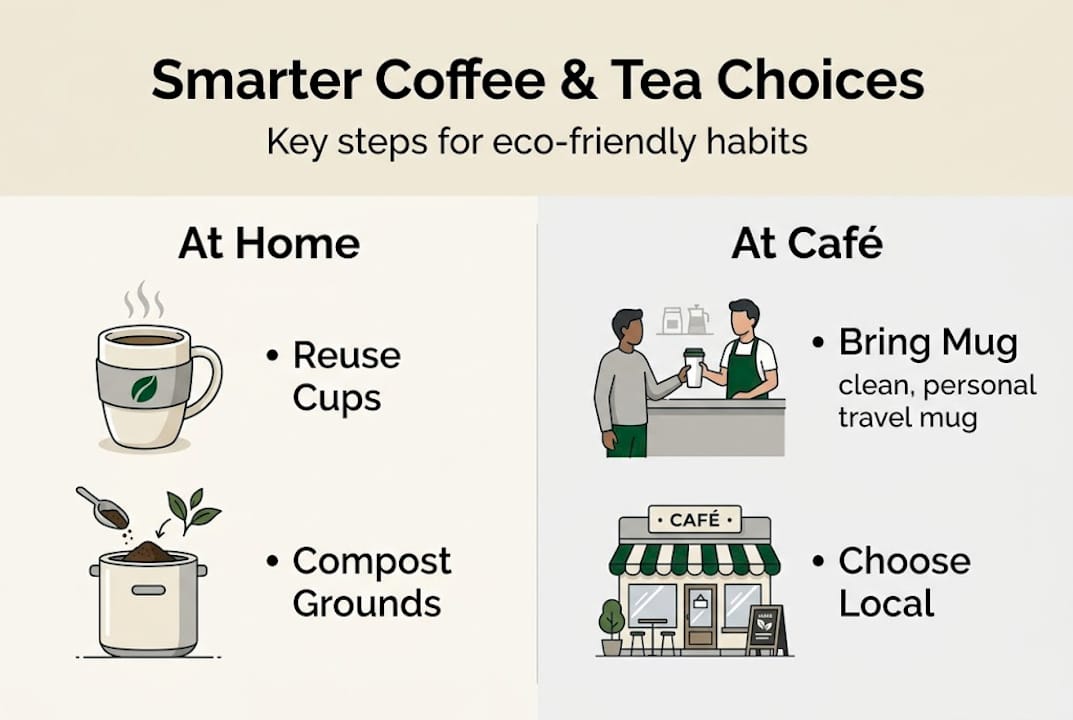
- Invest in a reusable vessel. A quality travel mug or French press reduces single-use waste every single day.
- Research your brand. Visit their website and look for an impact or sourcing report before buying.
- Try cold brew or filter methods. These brewing styles tend to have a lower energy footprint compared to pod machines or electric espresso makers.
- Ask questions at your local cafe. Where is the coffee from? Is it shade-grown? Do they compost grounds?
- Support brands that give back. Tree planting, ocean plastic removal, and regenerative farming partnerships are signs of genuine commitment.
Building eco-friendly habits around your morning ritual doesn’t have to feel like a chore. Think of it as a warm hug for both you and Mother Earth, one aromatic cup at a time.
Pro Tip: Cold brew coffee uses no heat energy and can be made in bulk, reducing both your electricity use and packaging waste. It’s one of the easiest low-impact swaps you can make right now.
A fresh perspective: What most sustainability guides miss in 2026
Stepping back, let’s talk candidly about what makes a meaningful difference. Most guides hand you a checklist and call it done. But here’s what we’ve learned: certifications are a floor, not a ceiling.
A fair trade label tells you a brand met a minimum standard at a point in time. It doesn’t tell you whether farmers are thriving today, whether the packaging is actually being recycled, or whether the company is genuinely reducing emissions year over year. Real sustainability is a living, evolving commitment, not a badge you earn once.
Many “trendy” eco options are more marketing than substance. Biodegradable packaging that only breaks down in industrial facilities, or carbon offsets purchased without any actual emissions reduction, are examples of polish over progress. The brands worth your loyalty are the ones who choose truly ethical beverages and share the real story behind every product.
You make more progress as a persistent, questioning customer than as a passive one. Ask hard questions. Celebrate honest answers. And remember: you don’t need to be perfect. Every small action, multiplied across millions of people, is exactly how industry norms shift for good.
Discover eco-friendly beverages made for 2026’s standards
Ready to put your values in your cup? At EcoVibe Roast, we go beyond minimum standards because we believe your morning ritual should feel good inside and out.

With every purchase, we plant mangrove trees and remove ocean-bound plastics, so your aromatic cup of tea or coffee does real good in the world. Explore our Hibiscus Berry Tea for a vibrant, fruity brew that’s as kind to the planet as it is to your taste buds, or try our delicate Jasmine Tea for a calming, fragrant ritual you can feel great about. Want to see exactly how your purchase makes a difference? Visit our EcoVibe’s environmental impact page and see the numbers for yourself.
Frequently asked questions
What makes coffee or tea sustainable in 2026?
Sustainable coffee and tea come from brands that use certified sourcing, reduce supply chain emissions, and provide transparent supply chain practices. Look for companies that go beyond labels and publish real Scope 3 emissions tracking data and sourcing reports.
How can consumers identify greenwashing vs. real sustainability in beverage brands?
Look for independent third-party certifications, detailed transparency reports, and evidence that brands are reducing emissions or supporting reforestation. True accountability means sharing supply chain transparency details, not just attractive packaging claims.
Why is Scope 3 emissions focus important for coffee and tea brands?
Scope 3 emissions cover up to 75% of corporate footprints in the sector, meaning that farming, transport, and consumer use all count. Reducing Scope 3 is where the biggest climate gains actually live.
Are there trending sustainable options for tea drinkers in 2026?
Loose leaf teas in reusable packaging and teas sourced from certified regenerative farms are the most sustainable choices in 2026. Loose leaf also avoids microplastics from tea bags, making it a win for your health and the planet.
Recommended
- Sustainability Trends in Coffee 2026: Impact on Ethical Choices – EcoVibe Roast
- Sustainable gift trends: eco-friendly coffee & tea guide – EcoVibe Roast
- Sustainable packaging in beverages: eco-conscious guide 2026 – EcoVibe Roast
- Why Support Eco-Friendly Coffee & Tea in 2026: Cut 50% Carbon – EcoVibe Roast


